Results by title
22 books match the query 'Equipment and supplies'
A History of the Garden in Fifty Tools
Bill Laws
University of Chicago Press, 2014
As Laws reveals, gardening tools have coevolved with human society, and the story of these fifty individual tools presents an innovative history of humans and the garden over time. Laws takes us back to the Neolithic age, when the microlith, the first “all-in-one” tool was invented. Consisting of a small sharp stone blade that was set into a handle made of wood, bone, or antler, it was a small spade that could be used to dig, clip, and cut plant material. We find out that wheelbarrows originated in China in the second century BC, and their basic form has not changed much since. He also describes how early images of a pruning knife appear in Roman art, in the form of a scythe that could cut through herbs, vegetables, fruits, and nuts and was believed to be able to tell the gardener when and what to harvest.
Organized into five thematic chapters relating to different types of gardens: the flower garden, the kitchen garden, the orchard, the lawn, and ornamental gardens, the book includes a mix of horticulture and history, in addition to stories featuring well-known characters—we learn about Henry David Thoreau’s favorite hoe, for example. A History of the Garden in Fifty Tools will be a beautiful gift for any home gardener and a reassuring reminder that gardeners have always struggled with the same quandaries.
A Private War
An American Code Officer in the Belgian CongoRobert Laxalt
University of Nevada Press, 1998
In this vivid memoir, Laxalt recalls his service during WWII as a code officer in the Belgian Congo. In this remote jungle outpost, a secret war was being fought for control of the world’s future. Deep in the Congo lay a mine that produced a little-known substance called uranium, and for reasons no one then understood, the Allies and the Germans were struggling ferociously to control this mine and its ore. The cloth edition is a limited numbered, signed edition.
A Revolution in Arms
A History of the First Repeating RiflesJoseph G. Bilby
Westholme Publishing, 2005
Historians often call the American Civil War the first modern war, pointing to the use of observation balloons, the telegraph, trains, mines, ironclad ships, and other innovations. Although recent scholarship has challenged some of these “firsts,” the war did witness the introduction of the first repeating rifles. No other innovation of the turbulent 1860s would have a greater effect on the future of warfare. In A Revolution in Arms: A History of the First Repeating Rifles, historian Joseph G. Bilby unfolds the fascinating story of how two New England inventors, Benjamin Henry and Christopher Spencer, each combined generations of cartridge and rifle technology to develop reliable repeating rifles. In a stroke, the Henry rifle and Spencer rifle and carbine changed warfare forever, accelerating the abandonment of the formal battle line tactics of previous generations and when properly applied, repeating arms could alter the course of a battle. Although slow to enter service, the repeating rifle soon became a sought after weapon by both Union and Confederate troops. Oliver Winchester purchased the rights to the Henry and transformed it into “the gun that won the West.” The Spencer, the most famous of all Civil War small arms, was the weapon of choice for Federal cavalrymen. The revolutionary technology represented by repeating arms used in the American Civil War, including self-contained metallic cartridges, large capacity magazines, and innovative cartridge feeding systems, was copied or adapted by arms manufacturers around the world, and these features remain with us today.

Biologically-Inspired Radar and Sonar
Lessons from natureAlessio Balleri
The Institution of Engineering and Technology, 2017
Camera Geologica
An Elemental History of PhotographySiobhan Angus
Duke University Press, 2024
Civil War Heavy Explosive Ordnance
A Guide to Large Artillery Projectiles, Torpedoes, and MinesJack Bell
University of North Texas Press, 2003

Code of Practice for Building Automation and Control Systems
The Institution of Engineering and Technology
The Institution of Engineering and Technology, 2020
Digital Communications
Principles and systemsIfiok Otung
The Institution of Engineering and Technology, 2014

Fundamentals of Ground Radar for Air Traffic Control Engineers and Technicians
Ronald D. Bouwman
The Institution of Engineering and Technology, 2009

Hush
Media and Sonic Self-ControlMack Hagood
Duke University Press, 2019
I Live Underwater
The Thrilling Adventures of a Record-Breaking Diver, Treasure Hunter, and Deep-Sea ExplorerMax Nohl
Wisconsin Historical Society Press, 2025
I Live Underwater is the highly anticipated posthumous memoir of Max Nohl, a larger-than-life thrill seeker and treasure hunter who revolutionized deep-sea diving. Recounting harrowing experiences with tangled air-hoses, hungry sharks, untested scientific theories, and painful cases of the bends, Nohl’s vivid narrative shows how his unquenchable thirst for adventure propelled him to transcend fear and become one of the field’s great innovators—shattering the diving record in 1937 as the first person to dive deeper than 400 feet.
Beginning with the disquieting childhood experiences that inspired his obsession with the underwater world, Nohl goes on to discuss his innovative work on the first self-contained diving suit as a student at MIT and his risky experiments in breathing helium to achieve deeper dives. In addition to making vital contributions to the commercial diving industry, Nohl was a pioneer in underwater filming, developing equipment and techniques that were employed in many Hollywood film and television productions.
After Nohl’s sudden death in 1960 in a car accident, his nearly complete memoir sat in the Milwaukee Public Library Archives—unpublished, until now. Accompanying this page-turning text is a dynamic assortment of images, including Nohl’s original pen-and-ink sketches and historic photos of Nohl and his collaborators. A foreword by Wisconsin Historical Society maritime archaeologist Tamara Thomsen provides insights into Nohl’s many important contributions to the diving world and to Wisconsin history and culture.
Includes stories of dives in Lake Michigan (near Milwaukee), the North Atlantic (near Marblehead and Martha’s Vineyard), Walden Pond, the Gulf Coast (near Morgan City, Louisiana, and Panama City, Apalachicola, Wakulla Springs, and Tarpon Springs in Florida), and the Caribbean (near Haiti and the Dominican Republic).
Lincoln and the Tools of War
Robert V. Bruce
University of Illinois Press, 1989

Making Jet Engines in World War II
Britain, Germany, and the United StatesHermione Giffard
University of Chicago Press, 2016
Giffard compares the approaches of Britain, Germany, and the United States. Each approached jet engines in different ways because of its own war aims and industrial expertise. Germany, which produced more jet engines than the others, did so largely as replacements for more expensive piston engines. Britain, on the other hand, produced relatively few engines—but, by shifting emphasis to design rather than production, found itself at war's end holding an unrivaled range of designs. The US emphasis on development, meanwhile, built an institutional basis for postwar production. Taken together, Giffard's work makes a powerful case for a more nuanced understanding of technological innovation, one that takes into account the influence of the many organizational factors that play a part in the journey from idea to finished product.

Power System Protection
Application, Volume 3The Electricity Training Association Electricity Training Association
The Institution of Engineering and Technology, 1995

Power System Protection
Digital protection and signalling, Volume 4The Electricity Training Association Electricity Training Association
The Institution of Engineering and Technology, 1995

Power System Protection
Principles and components, Volume 1The Electricity Training Association Electricity Training Association
The Institution of Engineering and Technology, 1995

Power System Protection
Systems and methods, Volume 2The Electricity Training Association Electricity Training Association
The Institution of Engineering and Technology, 1995
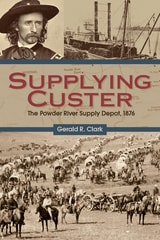
Supplying Custer
The Powder River Supply Depot, 1876Gerald R. Clark
University of Utah Press, 2014
The book details the items recovered archaeologically, including ale and soda bottles, cartridges, packing crates, and a horseshoe and ceramic doll. It also addresses the army’s knowledge of this area and how the supply depot fit into the broader military campaign. This book connects archaeology and history to explore how the American military planned, maneuvered, and operated on the northern plains from the end of the Civil War through 1876.

The Makerspace Librarian's Sourcebook
Ellyssa Kroski
American Library Association, 2017
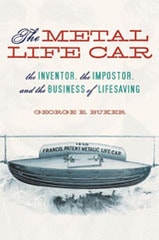
The Metal Life Car
The Inventor, the Impostor, and the Business of LifesavingGeorge E. Buker
University of Alabama Press, 2008
Engineering the battlefield—one armored advance at a time.
For centuries sailing vessels crept along the coastline, ready to flee ashore in case of danger or trouble; this worked well until weather or poor sailing drove these ships against an unforgiving coast. Saviors and salvors (often the same people) struggled to rescue both humans and cargo, often with results as tragic for them as for the sailors and passengers.
Joseph Francis (b. Boston, Massachusetts, 1801) was an inventor who also had the ability to organize a business to produce his inventions and the salesmanship to sell his products. His metal lifeboats, first used in survey expeditions in Asia Minor and Central America, came into demand among the world’s merchant marine, the U.S. Navy, and the U.S. Revenue Service. His corrugated “life car” was the keystone to development of the U.S. Life-Saving Service. Francis’s metal bateaux and lifeboats played an important role in the Third Seminole War in Florida. His metal pontoon army wagons served in the trans-Mississippi campaigns against the Indians.
In Europe, he was acclaimed as a genius and sold patent rights to shipyards in Liverpool and the Woolwich Arsenal in England, Le Havre seaport in France, in the free city of Hamburg, and in the Russian Empire. But while Francis was busy in Europe, Captain Douglass Ottinger, U.S. Revenue Marine Service, claimed to be the inventor of Francis’s life car and obtained support in the U.S. Congress and the Patent Office for his claim. Francis had to battle for decades to prove his rights, and Americans remained generally unfamiliar with his devices, thereby condemning Civil War armies to inferior copies while Europe was using, and acclaiming, his inventions.
Vietnam Zippos
American Soldiers' Engravings and Stories (1965-1973)Edited by Sherry Buchanan
University of Chicago Press, 2007
—from an engraving on a Vietnam-era Zippo lighter
In 1965, journalist Morley Safer followed the United States Marines on a search and destroy mission into Cam Ne. When the Marines he accompanied reached the village, they ordered the civilians there to evacuate their homes—grass huts whose thatched roofs they set ablaze with Zippo lighters. Safer’s report on the event soon aired on CBS and was among the first to paint a harrowing portrait of the War in Vietnam. LBJ responded to the segment furiously, accusing Safer of having “shat on the American flag.” For the first time since World War II, American boys in uniform had been portrayed as murderers instead of liberators. Our perception of the war—and the Zippo lighter—would never be the same.
But as this stunning book attests, the Zippo was far more than an instrument of death and destruction. For the American soldiers who wielded them, they were a vital form of social protest as well. Vietnam Zippos showcases the engravings made by U.S. soldiers on their lighters during the height of the conflict, from 1965 to 1973. In a real-life version of the psychedelic war portrayed in Francis Ford Coppola’s Apocalypse Now, Sherry Buchanan tells the fascinating story of how the humble Zippo became a talisman and companion for American GIs during their tours of duty. Through a dazzling array of images, we see how Zippo lighters were used during the war, and we discover how they served as a canvas for both personal and political expression during the Age of Aquarius, engraved with etchings of peace signs and marijuana leaves and slogans steeped in all the rock lyrics, sound bites, combat slang, and antiwar mottos of the time.
Death from Above. Napalm Sticks to Kids. I Love You Mom, From a Lonely Paratrooper. The engravings gathered in this copiously illustrated volume are at once searing, caustic, and moving, running the full emotional spectrum with both sardonic reflections—I Love the Fucking Army and the Army Loves Fucking Me—and poignant maxims—When the Power of Love Overcomes the Love of Power, the World Will Know Peace. Part pop art and part military artifact, they collectively capture the large moods of the sixties and the darkest days of Vietnam—all through the world of the tiny Zippo.
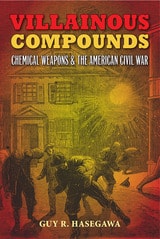
Villainous Compounds
Chemical Weapons and the American Civil WarGuy R. Hasegawa
Southern Illinois University Press, 2015
In chilling detail, Hasegawa describes the weapons proposed and prepared for use during the war and introduces the people behind the concepts. Although many of the ideas for chemical weapons had a historical precedent, most of the suggested agents were used in industry or medicine, and their toxicity was common knowledge. Proponents, including a surprisingly high number of civilian physicians, suggested a wide variety of potential chemical weapons—from liquid chlorine in artillery shells to cayenne pepper solution sprayed from fire engines. Some weapons advocates expressed ethical qualms, while others were silent on the matter or justified their suggestions as necessary under current circumstances.
As Hasegawa explains, bureaucrats in the war departments of both armies either delayed or rejected outright most of these unusual weapons, viewing them as unneeded or unworkable. Nevertheless, many of the proposed armaments presaged the widespread use of chemical weapons in the twentieth and twenty-first centuries. For example, while Civil War munitions technology was not advanced enough to deliver poison gas in artillery shells as some advocates suggested, the same idea saw extensive use during World War I. Similarly, forms of an ancient incendiary weapon, Greek fire, were used sparingly during the Civil War and appeared in later conflicts as napalm bombs and flamethrowers.
Especially timely with today’s increased chemical threats from terrorists and the alleged use of chemical agents in the Syrian Civil War, Villainous Compounds: Chemical Weapons and the American Civil War reveals the seldom-explored chemical side of Civil War armaments and illuminates an underappreciated stage in the origins of modern chemical warfare.