Results by title

7 books match the query 'Eritrea'
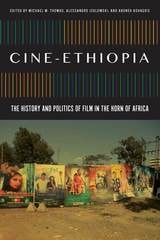
cover of Cine-Ethiopia: The History and Politics of Film in the Horn of Africa

Cine-Ethiopia

The History and Politics of Film in the Horn of Africa

Michael W. Thomas

Michigan State University Press, 2018

Over the past decade, Ethiopian films have come to dominate the screening schedules of the many cinemas in Ethiopia’s capital city of Addis Ababa, as well as other urban centers. Despite undergoing an unprecedented surge in production and popularity in Ethiopia and in the diaspora, this phenomenon has been broadly overlooked by African film and media scholars and Ethiopianists alike. This collection of essays and interviews on cinema in Ethiopia represents the first work of its kind and establishes a broad foundation for furthering research on this topic. Taking an interdisciplinary approach to the topic and bringing together contributions from both Ethiopian and international scholars, the collection offers new and alternative narratives for the development of screen media in Africa. The book’s relevance reaches far beyond its specific locale of Ethiopia as contributions focus on a broad range of topics—such as commercial and genre films, diaspora filmmaking, and the role of women in the film industry—while simultaneously discussing multiple forms of screen media, from satellite TV to “video films.” Bringing both historical and contemporary moments of cinema in Ethiopia into the critical frame offers alternative considerations for the already radically changing critical paradigm surrounding the understandings of African cinema.
 
[more]
cover of From Guerrillas To Government: The Eritrean People’s Liberation Front

From Guerrillas To Government

The Eritrean People’s Liberation Front

David Pool

Ohio University Press, 2001

In 1991 the Eritrean People’s Liberation Front (EPLF) took over Asmara and completed the liberation of Eritrea; formal independence came two years later after a referendum in May 1993. It was the climax of a thirty-year struggle, though the EPLF itself was formed only in the early 1970s.

From the beginning, Eritrean nationalism was divided. Ethiopia’s appeal to a joint Christian imperial past alienated the Muslim pastoral lowland people in the areas where Eritrean nationalism first appeared. It was not until the early 1970s that the Christian elements of the population finally joined the liberation struggle on a substantial scale.
[more]
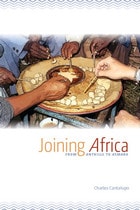
cover of Joining Africa: From Anthills to Asmara

Joining Africa

From Anthills to Asmara

Charles Cantalupo

Michigan State University Press, 2012

This eye-opening personal history tells the story of an American college professor’s twenty-year engagement with a thriving Africa rarely encountered by Western visitors, including an extraordinary connection to poets across the continent. At once adventurous, spiritual, political, dreamlike, and humorous, Joining Africa is a unique documentary of a journey through the continent, including an intense five-year encounter with economically struggling but culturally fertile Eritrea. The Africa presented here is neither a postcolonial study nor an exotic tourist destination. It is rich with the voices of its people, whose languages, Cantalupo argues, have greater potential to effect change than any NGO or high-profile celebrity. In vibrant prose, Cantalupo’s book extends a stirring invitation to reevaluate how we engage—both individually and collectively—with this remarkable part of the world.
[more]
cover of Nation as Network: Diaspora, Cyberspace, and Citizenship

Nation as Network

Diaspora, Cyberspace, and Citizenship

Victoria Bernal

University of Chicago Press, 2014

How is the internet transforming the relationships between citizens and states? What happens to politics when international migration is coupled with digital media, making it easy for people to be politically active in a nation from outside its borders? In Nation as Network, Victoria Bernal creatively combines media studies, ethnography, and African studies to explore this new political paradigm through a striking analysis of how Eritreans in diaspora have used the internet to shape the course of Eritrean history.
           
Bernal argues that Benedict Anderson’s famous concept of nations as “imagined communities” must now be rethought because diasporas and information technologies have transformed the ways nations are sustained and challenged. She traces the development of Eritrean diaspora websites over two turbulent decades that saw the Eritrean state grow ever more tyrannical. Through Eritreans’ own words in posts and debates, she reveals how new subjectivities are formed and political action is galvanized online. She suggests that “infopolitics”—struggles over the management of information—make politics in the 21st century distinct, and she analyzes the innovative ways Eritreans deploy the internet to support and subvert state power. Nation as Network is a unique and compelling work that advances our understanding of the political significance of digital media. 
[more]
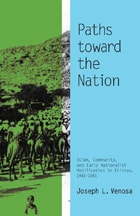
cover of Paths toward the Nation: Islam, Community, and Early Nationalist Mobilization in Eritrea, 1941–1961

Paths toward the Nation

Islam, Community, and Early Nationalist Mobilization in Eritrea, 1941–1961

Joseph L. Venosa

Ohio University Press, 2014
In the early and mid-1940s, during the period of British wartime occupation, community and religious leaders in the former Italian colony of Eritrea engaged in a course of intellectual and political debate that marked the beginnings of a genuine national consciousness across the region. During the late 1940s and 1950s, the scope of these concerns slowly expanded as the nascent nationalist movement brought together Muslim activists with the increasingly disaffected community of Eritrean Christians. The Eritrean Muslim League emerged as the first genuine proindependence organization in the country to challenge both the Ethiopian government’s calls for annexation and international plans to partition Eritrea between Sudan and Ethiopia. The league and its supporters also contributed to the expansion of Eritrea’s civil society, formulating the first substantial arguments about what made Eritrea an inherently separate national entity. These concepts were essential to the later transition from peaceful political protest to armed rebellion against Ethiopian occupation. Paths toward the Nation is the first study to focus exclusively on Eritrea’s nationalist movement before the start of the armed struggle in 1961.
[more]
cover of The Conscript: A Novel of Libya’s Anticolonial War

The Conscript

A Novel of Libya’s Anticolonial War

Gebreyesus Hailu

Ohio University Press, 2013
Eloquent and thought-provoking, this classic novel by the Eritrean novelist Gebreyesus Hailu, written in Tigrinya in 1927 and published in 1950, is one of the earliest novels written in an African language and will have a major impact on the reception and critical appraisal of African literature. The Conscript depicts, with irony and controlled anger, the staggering experiences of the Eritrean ascari, soldiers conscripted to fight in Libya by the Italian colonial army against the nationalist Libyan forces fighting for their freedom from Italy’s colonial rule. Anticipating midcentury thinkers Frantz Fanon and Aimé Césaire, Hailu paints a devastating portrait of Italian colonialism. Some of the most poignant passages of the novel include the awakening of the novel’s hero, Tuquabo, to his ironic predicament of being both under colonial rule and the instrument of suppressing the colonized Libyans. The novel’s remarkable descriptions of the battlefield awe the reader with mesmerizing images, both disturbing and tender, of the Libyan landscape—with its vast desert sands, oases, horsemen, foot soldiers, and the brutalities of war—uncannily recalled in the satellite images that were brought to the homes of millions of viewers around the globe in 2011, during the country’s uprising against its former leader, Colonel Gaddafi.
[more]
cover of The Struggling State: Nationalism, Mass Militarization, and the Education of Eritrea

The Struggling State

Nationalism, Mass Militarization, and the Education of Eritrea

Jennifer Riggan

Temple University Press, 2016

A 2003 law in Eritrea—a notoriously closed-off, heavily militarized, and authoritarian country—mandated an additional year of school for all children and stipulated that the classes be held at Sawa, the nation’s military training center. As a result, educational institutions were directly implicated in the making of soldiers, putting Eritrean teachers in the untenable position of having to navigate between their devotion to educating the nation and their discontent with their role in the government program of mass militarization.
 
In her provocative ethnography, The Struggling State, Jennifer Riggan examines the contradictions of state power as simultaneously oppressive to and enacted by teachers. Riggan, who conducted participant observation with teachers in and out of schools, explores the tenuous hyphen between nation and state under lived conditions of everyday authoritarianism.
 
The Struggling State shows how the hopes of Eritrean teachers and students for the future of their nation have turned to a hopelessness in which they cannot imagine a future at all.
[more]