Results by title
11 books match the query 'Ethics, Modern'
Casuistry and Modern Ethics
A Poetics of Practical ReasoningRichard B. Miller
University of Chicago Press, 1996
Rejecting the packaging of moral experience within simple descriptions and inflexible principles, Miller argues instead for identifying and making sense of the ethically salient features of individual cases. Because this practical approach must cope with a diverse array of experiences, Miller draws on a wide variety of diagnostic tools from such fields as philosophy of science, legal reasoning, theology, literary theory, hermeneutics, and moral philosophy.
Opening new avenues for practical reasoning, Miller's interdisciplinary work will challenge scholars who are interested in the intersections of ethics and political philosophy, cultural criticism, and debates about method in religion and morality.
Critique of Freedom
The Central Problem of ModernityOtfried Höffe
University of Chicago Press, 2020
Neither rejecting nor defending freedom and modernity, he instead explores both from a Kantian point of view, looking closely at the facets of freedom’s role and the fundamental position it has taken at the heart of modern life. Expanding beyond traditional philosophy, Critique of Freedom develops the building blocks of a critical theory of technology, environmental protection, economics, politics, medicine, and education. With a sophisticated yet straightforward style, Höffe draws on a range of disciplines in order to clearly distinguish and appreciate the many meanings of freedom and the indispensable role they play in liberal society.
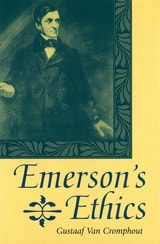
Emerson's Ethics
Gustaaf Van Cromphout
University of Missouri Press, 1999
Everyone knows that Emerson was a moralist, but what does that really mean? In an attempt to answer that question, Gustaaf Van Cromphout provides in Emerson's Ethics a detailed and philosophically grounded discussion of Emerson's moral thought. In this first comprehensive study of Emerson's ethics in the broader context of ethical theory, Van Cromphout explores Emerson's answers to what he considered the basic question facing any thinking human being: "How should I live?"
Van Cromphout begins by examining Emerson's college essays on ethics—essays that reflect his response to the moral thought prevailing in his intellectual environment. He then discusses the mature Emerson's attempt to establish ethics on a surer foundation than the religion inherited from his forebears, showing that Emerson was influenced significantly by Kant's moral thought.
He goes on to examine Emerson's search for a morally competent self in an age when the very notion of "self" was under serious threat. The ethical dimension of Emerson's politics and his theories of friendship and love, as well as the quest for a life worth living in the modern world, are also addressed. The last chapters are devoted to nature and literature. Van Cromphout explores Emerson's understanding of nature as a focus of ethical responsibility, and he examines the corruptibility of language, the ethics of self- expression, and the moral responsibilities of writers toward their audiences. Emerson believed that ethics permeated every aspect of human life. By examining Emerson's understanding of ethics and his contribution to ethical thought, Emerson's Ethics shows one of the truly great minds in American culture confronting issues of fundamental relevance to all human beings. Filling an important gap in Emerson studies, this book will appeal not only to readers interested in Emerson and his significance in American thought and literature but also to readers concerned with ethics and, more generally, with the interrelations of literature and philosophy.
Freedom and the End of Reason
On the Moral Foundation of Kant's Critical PhilosophyRichard L. Velkley
University of Chicago Press, 1989

Is There a Measure on Earth?
Foundations for a Nonmetaphysical EthicsWerner Marx
University of Chicago Press, 1987
The poet Hölderlin posed the question, "Is there a measure on earth?" His own answer was emphatic, "There is none," for he was convinced that the measure for man was to be found only in the domain of the heavenly beings. Such metaphysical assumptions, as well as the attempt to found ethical conduct in the nature of man as a rational being, have been rejected by many contemporary thinkers, particularly Heidegger. Yet these thinkers have not been able to provide a satisfactory alternative to metaphysical foundations of the standards for responsible human conduct.
Marx, therefore, goes beyond Heidegger in demonstrating how several of his most basic notions could be relevant to a secular morality in our age. It is death, Marx claims, that unsettles man and transforms his conduct toward his fellow man. the common experience of mortality nourishes ethical life—and leads to the measures of compassion, love, and recognition of one's fellow human beings.
"It is only on the basis of these 'traditional virtues,'" Marx writes, "that we can find a motive for averting the impending dangers which have often enough been described so vividly and convincingly."

Moral Philosophy Of Moore
Robert Peter Sylvester, edited by Ray Perkins, Jr. and R. W. Sleeper, foreword by Tom Regan
Temple University Press, 1990
This study of G. E. Moore’s work in moral philosophy draws upon a close examination of the early essays that preceded the writing of Principia Ethica in order to ground the author’s view that Moore’s famous "naturalistic fallacy argument" of Principia has been widely misunderstood. At the time of his death in 1986, Robert Peter Sylvester was in the process of preparing this book for publication. That process has been brought to completion by Ray Perkins, Jr., and R. W. Sleeper. Sylvester’s reappraisal of the moral philosophy of G. E. Moore argues that criticism of the work of this major twentieth-century British philosopher has been based on misinterpretation of his unified position. He treats Moore’s ideas about "What is Good?", "What things are Good?" and "What ought we to do?" as forming a coherent system.
To bring this work up to date since the author’s death, the editors have provided a bibliographic essay following each chapter in which recent scholarship is discussed.
Postmodern Fables
Jean-Francois Lyotard
University of Minnesota Press, 1999

Shadows of Ethics
Criticism and the Just SocietyGeoffrey Galt Harpham
Duke University Press, 1999
Ethics, he claims, has been seen by its most powerful theorists as a discourse of “shadows,” a characteristic disturbance of thought in the presence of the other, a source of doubts rather than certainty. At the same time, however, ethics includes an element of violence, even blindness and “fundamentalism,” a crushing drive to clarity and resolution. Contemporary thinkers, Harpham argues, have been unwilling to accept this account of ethics and the obligations it would impose, and have, as a consequence, cultivated social and intellectual marginality as the only site of virtue, the only position in which critical intelligence is at home. They have, he contends, failed to “imagine the center,” to take up the true intellectual and worldly challenge of ethics.
Tracking these issues and energies in debates about enlightenment, the politics of the aesthetic, the nature of rationality, and the worldly contexts of theory, Harpham demonstrates in compelling detail the ubiquity and true difficulty of ethics. Shadows of Ethics also revives a neglected genre, the intellectual portrait, with extended meditations on Jacques Derrida, Martha Nussbaum, Fredric Jameson, Geoffrey Hartman, and Noam Chomsky.
The book will interest literary critics, philosophers, cultural critics, and all those interested in the ethical character of intellectual work.
The Ethics of Postmodernity
Current Trends in Continental ThoughtGary B. Madison and Marty Fairbarn
Northwestern University Press, 1997
Contributors include Barry Allen, Caroline Bayard, Robert Bernasconi, Thomas W. Busch, M.C. Dillon, Marty Fairbairn, Paul Fairfield, Morny Joy, Richard Kearney, Gary B. Madison, Joseph Margolis, Tom Rockmore, Charles E. Scott, Evan Simpson, and Mark Williams.
The Fragile We
Ethical Implications Of Heidegger's "Being and Time"Lawrence Vogel
Northwestern University Press, 1994
In The Fragile "We": Ethical Implications of Heidegger's "Being and Time," Lawrence Vogel presents three interpretations of authentic existence—the existentialist, the historicist, and the cosmopolitan—each of which is a plausible version of the personal ideal depicted in Being and Time. He then draws parallels between these interpretations and three moments in the contemporary liberal-communitarian debate over the relationship of the "I" and the "We." His book contributes both to a diagnosis of what there is about Being and Time that invites moral nihilism and to a sense of how fundamental ontology might be recast so that "the other" is accorded an appropriate place in an account of human existence.
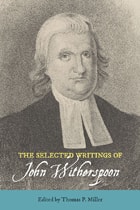
The Selected Writings of John Witherspoon
Edited by Thomas P. Miller
Southern Illinois University Press, 1990