Results by title
2 books match the query 'Ethnic food industry'
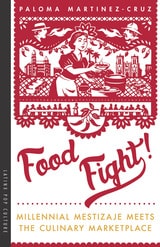
Food Fight!
Millennial Mestizaje Meets the Culinary MarketplacePaloma Martinez-Cruz
University of Arizona Press, 2019
From the racial defamation and mocking tone of “Mexican” restaurants geared toward the Anglo customer to the high-end Latin-inspired eateries with Anglo chefs who give the impression that the food was something unattended or poorly handled that they “discovered” or “rescued” from actual Latinos, the dilemma of how to make ethical choices in food production and consumption is always as close as the kitchen recipe, coffee pot, or table grape.
In Food Fight! author Paloma Martinez-Cruz takes us on a Chicanx gastronomic journey that is powerful and humorous. Martinez-Cruz tackles head on the real-world politics of food production from the exploitation of farmworkers to the appropriation of Latinx bodies and culture, and takes us right into transformative eateries that offer a homegrown, mestiza consciousness.
The hard-hitting essays in Food Fight! bring a mestiza critique to today’s pressing discussions of labeling, identity, and imaging in marketing and dining. Not just about food, restaurants, and coffee, this volume employs a decolonial approach and engaging voice to interrogate ways that mestizo, Indigenous, and Latinx peoples are objectified in mainstream ideology and imaginary.
[more]
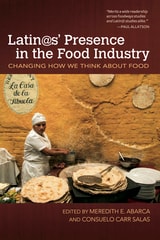
Latin@s' Presence in the Food Industry
Changing How We Think about FoodMeredith E. Abarca
University of Arkansas Press, 2016
Latin@s' Presence in the Food Industry takes the holistic culinary approach of bringing together multidisciplinary criticism to explore the diverse, and not always readily apparent, ways that Latin@s relate to food and the food industry.
The networks Latin@s create, the types of identities they fashion through food, and their relationship to the US food industry are analyzed to understand Latin@s as active creators of food-based communities, as distinctive cultural representations, and as professionals. This vibrant new collection acknowledges issues of labor conditions, economic politics, and immigration laws—structural vulnerabilities that certainly cannot be ignored—and strives to understand more fully the active and conscious ways that Latina@s create spaces to maneuver global and local food systems.
The networks Latin@s create, the types of identities they fashion through food, and their relationship to the US food industry are analyzed to understand Latin@s as active creators of food-based communities, as distinctive cultural representations, and as professionals. This vibrant new collection acknowledges issues of labor conditions, economic politics, and immigration laws—structural vulnerabilities that certainly cannot be ignored—and strives to understand more fully the active and conscious ways that Latina@s create spaces to maneuver global and local food systems.
[more]