Results by title
11 books match the query 'Ethnological collections'

Alutiit/Sugpiat
A Catalog of the Collections of the KunstkameraEdited by Yuri E. Berezkin
University of Alaska Press, 2012
This beautifully photographed book catalogs the collection of nearly five hundred Alutiiq cultural items held by the Peter the Great Museum of Anthropology and Ethnography, or the Kunstkamera, in St. Petersburg, Russia. Gathered between 1780 and 1867, many of the artifacts are composed of fur, feathers, gut, hair, and other delicate materials, which prevent their transport for display or study.
Crossroads of Culture
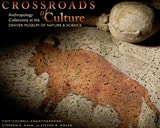
Anthropology Collections at the Denver Museum of Nature & ScienceChip Colwell
University Press of Colorado, 2010
The book presents 123 full-color images to highlight the museum's cultural treasures. Selected for their individual beauty, historic value, and cultural meaning, these objects connect different places, times, and people. From the mammoth hunters of the Plains to the first American pioneer settlers to the flourishing Hispanic and Asian diasporas in downtown Denver, the Rocky Mountain region has been home to a breathtaking array of cultures. Many objects tell this story of the Rocky Mountains' fascinating and complex past, whereas others serve to bring enigmatic corners of the globe to modern-day Denver.
Crossroads of Culture serves as a behind-the-scenes tour of the museum's anthropology collections. All the royalties from this publication will benefit the collections of the Denver Museum of Nature & Science's Department of Anthropology.
Gwich'in Athabascan Implements
History, Manufacture, and Usage According to Reverend David SalmonThomas A. O’Brien
University of Alaska Press, 2011
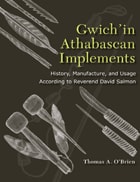
The most detailed and well-illustrated study of material culture for any northern Athabascan language group to date, Gwich’in Athabascan Implements reproduces pre- and early post-contact tools that are historically important to the Athabaskan people. A long-term collaboration between anthropologist Thomas O’Brien and Athabascan elder David Salmon, this volume provides more than one hundred one-to-one sketches of a wide variety of implements, many of which are no longer commonly found in use.
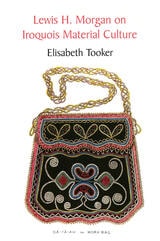
Lewis H. Morgan on Iroquois Material Culture
Elisabeth Tooker
University of Arizona Press, 1994
Navajo Textiles
The William Randolph Hearst CollectionNancy J. Blomberg
University of Arizona Press, 1988
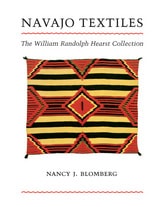
Over four decades he amassed a collection spanning more than a century of Navajo weaving and including nearly every major type produced from 1800 to 1920. Hearst's passion for American Indian artifacts was so strong that he had originally visualized his now-famous castle in San Simeon as a showplace for his Navajo textile collection. At a time when the Harvey Company was itself influencing the development of Indian handcrafts by opening up the tourist market, Hearst contributed to this influence by expressing his own artistic preference for rare and unusual pieces.
This catalogue raisonné, featuring nearly 200 illustrations, provides the general public with the first look at this important collection. Nancy Blomberg's narrative introduces the reader to the history of Navajo weaving and documents Hearst's role in its development. The heart of the book provides a detailed analysis of each textile: fibers, yarn types, dyes, and designs. Navajo Textiles thus constitutes an invaluable reference for scholars and collectors and will be enjoyed by anyone who appreciates these beautiful creations from the Navajo loom.
Political Identity & Arch
T Cuddy
University Press of Colorado, 2007

Races of Mankind
The Sculptures of Malvina HoffmanMarianne Kinkel
University of Illinois Press, 2011
A fascinating cultural history, Races of Mankind examines how we continually re-negotiate the veracity of race through collaborative processes involved in the production, display, and circulation of visual representations.
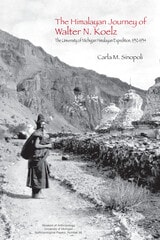
The Himalayan Journey of Walter N. Koelz
The University of Michigan Himalayan ExpeditionCarla M. Sinopoli
University of Michigan Press, 2013
In the fall of 1932, University of Michigan naturalist Walter N. Koelz traveled to northwest India to lead a scientific collecting expedition in the rugged Himalayan regions of Western Tibet. Some eighteen months later he returned to the United States with a remarkable collection of biological specimens and an array of objects—Buddhist paintings, ritual objects, textiles, and household goods—acquired from monasteries, households, and merchants. This book presents the diary entries Koelz wrote at the end of each day throughout his expedition, recounting in detail each day’s travels, bookended by a chapter contextualizing his acquisition of sacred Buddhist objects and an appendix that presents previously unpublished thangka paintings that he collected.
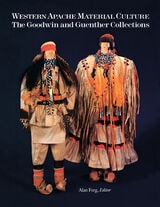
Western Apache Material Culture
The Goodwin and Guenther CollectionsAlan Ferg
University of Arizona Press, 1987
"This book will surely appeal not only to those who are interested in the Apache, material culture studies, or the potential of Native American museum resources as cultural and historical documents, but also to those who are concerned with the way humans adapted to the environment and thus 'utilized their world so well.'" —African Arts
"It is a remarkably beautiful and detailed catalog of the Goodwin and Guenther collections of Wester Apache artiffacts in the Arizona State Musuem—and a lot more! . . . A section of thirty-two color photographs by award-winning photographer Helga Teiwes is the delectable frosting on this rich and satisfying cake." —Journal of Arizona History
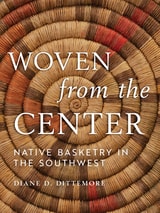
Woven from the Center
Native Basketry in the SouthwestDiane D. Dittemore
University of Arizona Press, 2024
Woven from the Center presents breathtaking basketry from some of the greatest weavers in the Southwest. Each sandal and mat fragment, each bowl and jar, every water bottle and whimsy is infused with layers of aesthetic, cultural, and historical meanings. This book offers stunning photos and descriptions of woven works from Tohono O’odham, Akimel O’odham, Hopi, Western Apache, Yavapai, Navajo, Pai, Paiute, New Mexico Pueblo, Eastern Apache, Seri, Yaqui, Mayo, and Tarahumara communities.
This richly illustrated volume stands on its own as a definitive look at basketry of the Greater Southwest, including northern Mexico. It also serves as a companion to the peerless collection of U.S. Southwest and Northwest Mexican Native American basketry curated at the Arizona State Museum in Tucson, Arizona. Comprehensive in its coverage, this work is based on decades of research on weavers, collectors, and donors. It includes ample illustrations of basket weavers, past and present, bringing to life the people behind these wonderful woven treasures.

Wrapped in Beauty
The Koelz Collection of Kashmiri ShawlsGrace Beardsley in collaboration with Carla M. Sinopoli
University of Michigan Press, 2005