Results by title
26 books match the query 'Ethnopsychology'
A Culture of Corruption?
Coping with Government in Post-communist EuropeWilliam L. Miller
Central European University Press, 2001
A Deeper Sense of Place
Stories and Journeys of Collaboration in Indigenous ResearchJay T. Johnson and Soren C. Larsen
Oregon State University Press, 2013
These first-person narratives offer insight into the challenges faced by Native and non-Native scholars to their academic and personal approaches during research with Indigenous communities. By addressing the ethical, political, intellectual, and practical meanings of collaboration with Indigenous peoples, A Deeper Sense of Place highlights the ways in which collaborative research can help Indigenous and settler communities find common ground through a shared commitment to land, people, and place.
A Deeper Sense of Place will inform students and academics engaged in research with Indigenous communities, as well as those interested in the challenges of employing critical, qualitative methodologies.

Anthropology of the Self
The Individual in Cultural PerspectiveBrian Morris
Pluto Press, 1994
Cultural Divides
Understanding and Overcoming Group ConflictDeborah Prentice
Russell Sage Foundation, 1999

Culture and Human Nature
Theoretical Papers of Melford E. SpiroMelford E. Spiro
University of Chicago Press, 1987
This volume of Spiro's major theoretical writings concentrates on theories of culture and human nature, functional analysis, and religion. Spiro argues that important dimensions of the human family are the same everywhere and that a theory of human nature is both possible and necessary. He discusses religious beliefs, analyzing not only their structures but also the ways such beliefs are held and the meanings attributed to them. This analysis, Spiro shows, can be done most successfully by means of a theory of the human family, of infant and child development and socialization, of panhuman unconscious processes, and of universal psychodynamic constellations such as the Oedipus complex.
Culture
A Problem That Cannot Be SolvedCharles W. Nuckolls
University of Wisconsin Press, 1998
French historian Alexis de Tocqueville observed that the conflict between the ideals of individualism and community defines American culture. In this groundbreaking new work, anthropologist Charles Nuckolls discovers that every culture consists of such paradoxes, thus making culture a problem that cannot be solved. He does, however, find much creative tension in these unresolvable opposites.
Nuckolls presents three fascinating case studies that demonstrate how values often are expressed in the organization of social roles. First he treats the Micronesian Ifaluks’ opposition between cooperation and self-gratification by examining the nature versus nurture debate. Nuckolls then shifts to the values of community and individual adventure by looking at the conflicts in the identities of public figures in Oklahoma. Finally, he investigates the cultural significance in the diagnostic system and practices of psychiatry in the United States. Nuckolls asserts that psychiatry treats genders differently, assigning dependence to women and independence to men and, in some cases, diagnoses the extreme forms of these values as disorders.
Nuckolls elaborates on the theory of culture that he introduced in his previous book, The Cultural Dialectics of Knowledge and Desire, which proposed that the desire to resolve conflicts is central to cultural knowledge. In Culture: A Problem that Cannot Be Solved, Nuckolls restores the neglected social science concept of values, which addresses both knowledge and motivation. As a result, he brings together cognition and psychoanalysis, as well as sociology and psychology, in his study of cultural processes.
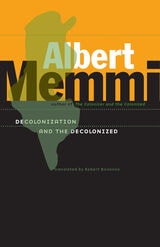
Decolonization and the Decolonized
Albert Memmi
University of Minnesota Press, 2006
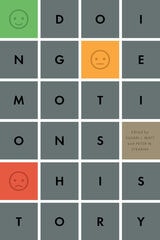
Doing Emotions History
Edited by Susan Matt and Peter N. Stearns
University of Illinois Press, 2013
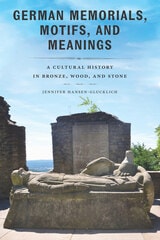
German Memorials, Motifs, and Meanings
A Cultural History in Bronze, Wood, and StoneJennifer Hansen-Glucklich
University of Massachusetts Press, 2025
German Memorials, Motifs, and Meanings offers a unique cultural history of German memorialization. The book focuses not on a single, isolated era, but rather on enduring memorial motifs—enchanted stones, magical trees, raised fists, stone circles, and similar evocative symbols derived from myth, folklore, Christianity, national iconography, and post-Holocaust imagery. It thus takes a long-duration perspective, sweeping across the centuries to explore abiding themes such as death, rebirth, and redemption; violence and reconciliation; and sacrifice, identity, and community. Along with a consideration of the historical and social circumstances of each memorial and its motifs, author Jennifer Hansen-Glucklich answers the questions of why and how these cultural markers survive the passage of time and how they endure amidst cultural, social, and political upheavals that include the rise and fall of empires, catastrophes of war and occupation, and genesis of new national identities. She uniquely focuses on lesser-known or unknown memorials found either in smaller German cities or tucked away in villages and hamlets.
These memorials tell colorful, often ambiguous and problematic stories in contrast to the vaunted monuments of Germany’s post-WWII era, such as Berlin’s Memorial to the Murdered Jews of Europe. Through vivid descriptions and deep analysis of the narratives and aesthetics of key monuments and motifs, Hansen-Glucklich details the remarkable story of German memorial culture from medieval times to the present day.

Impasse of the Angels
Scenes from a Moroccan Space of MemoryStefania Pandolfo
University of Chicago Press, 1997
Impasse of the Angels explores what it means to be a subject in the historical and poetic imagination of a southern Moroccan society. Passionate and lyrical, ironic and tragic, the book listens to dissonant, often idiosyncratic voices—poetic texts, legends, social spaces, folktales, conversations—which elaborate in their own ways the fractures, wounds, and contradictions of the Maghribî postcolonial present. Moving from concrete details in a traditional ethnographic sense to a creative, experiential literary style, Impasse of the Angels is a tale of life and death compellingly addressing readers from anthropology, literature, philosophy, postcolonial criticism, and Middle Eastern studies.
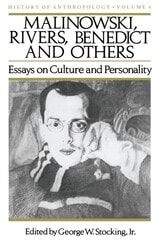
Malinowski, Rivers, Benedict and Others
Essays on Culture and PersonalityEdited by George W. Stocking, Jr.
University of Wisconsin Press, 1988
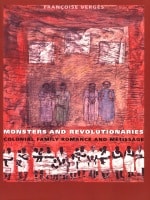
Monsters and Revolutionaries
Colonial Family Romance and MetissageFrançoise Vergès
Duke University Press, 1999
Originally settled by sugar plantation owners and their Indian and African slaves following a seventeenth-century French colonial decree, Réunion abolished slavery in 1848. Because plantation owners continued to import workers from India, Africa, Asia, and Madagascar, the island was defined as a place based on mixed heritages, or métissage. Vergès reads the relationship between France and the residents of Réunion as a family romance: France is the seemingly protective mother, La Mère-Patrie, while the people of Réunion are seen and see themselves as France’s children. Arguing that the central dynamic in the colonial family romance is that of debt and dependence, Verges explains how the republican ideals of the French Revolution and the Enlightenment are seen as gifts to Réunion that can never be repaid. This dynamic is complicated by the presence of métissage, a source of anxiety to the colonizer in its refutation of the “purity” of racial bloodlines. For Vergès, the island’s history of slavery is the key to understanding métissage, the politics of assimilation, constructions of masculinity, and emancipatory discourses on Réunion.

National Identity
Anthony D. Smith
University of Nevada Press, 1993
Prospero and Caliban
The Psychology of ColonizationO. Mannoni
University of Michigan Press, 1990
Noted anthropologist Maurice Bloch has written a powerful and critical new foreword to the English translation, which allows the reader to view Mannoni’s unique work in its historical and intellectual context.
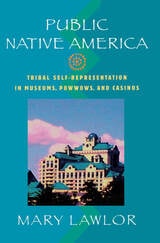
Public Native America
Tribal Self-Representations in Museums, Powwows, and CasinosLawlor, Mary
Rutgers University Press, 2006
The Native American casino and gaming industry has attracted unprecedented American public attention to life on reservations. Other tribal public venues, such as museums and powwows, have also gained in popularity among non-Native audiences and become sites of education and performance.
In PublicNative America, Mary Lawlor explores the process of tribal self-definition that the communities in her study make available to off-reservation audiences. Focusing on architectural and interior designs as well as performance styles, she reveals how a complex and often surprising cultural dynamic is created when Native Americans create lavish displays for the public’s participation and consumption.
Drawing on postcolonial and cultural studies, Lawlor argues that these venues serve as a stage where indigenous communities play out delicate negotiations—on the one hand retaining traditional beliefs and rituals, while on the other, using what they have learned about U.S. politics, corporate culture, tourism, and public relations to advance their economic positions.
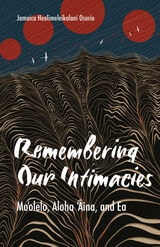
Remembering Our Intimacies
Mo'olelo, Aloha 'Aina, and EaJamaica Heolimeleikalani Osorio
University of Minnesota Press, 2021
Recovering Kānaka Maoli (Native Hawaiian) relationality and belonging in the land, memory, and body of Native Hawai’i
Hawaiian “aloha ʻāina” is often described in Western political terms—nationalism, nationhood, even patriotism. In Remembering Our Intimacies, Jamaica Heolimeleikalani Osorio centers in on the personal and embodied articulations of aloha ʻāina to detangle it from the effects of colonialism and occupation. Working at the intersections of Hawaiian knowledge, Indigenous queer theory, and Indigenous feminisms, Remembering Our Intimacies seeks to recuperate Native Hawaiian concepts and ethics around relationality, desire, and belonging firmly grounded in the land, memory, and the body of Native Hawai’i.
Remembering Our Intimacies argues for the methodology of (re)membering Indigenous forms of intimacies. It does so through the metaphor of a ‘upena—a net of intimacies that incorporates the variety of relationships that exist for Kānaka Maoli. It uses a close reading of the moʻolelo (history and literature) of Hiʻiakaikapoliopele to provide context and interpretation of Hawaiian intimacy and desire by describing its significance in Kānaka Maoli epistemology and why this matters profoundly for Hawaiian (and other Indigenous) futures.
Offering a new approach to understanding one of Native Hawaiians’ most significant values, Remembering Our Intimacies reveals the relationships between the policing of Indigenous bodies, intimacies, and desires; the disembodiment of Indigenous modes of governance; and the ongoing and ensuing displacement of Indigenous people.
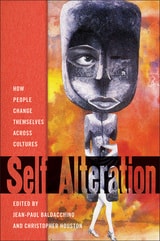
Self-Alteration
How People Change Themselves across CulturesJean-Paul Baldacchino
Rutgers University Press, 2024

Siberia, Siberia
Valentin Rasputin
Northwestern University Press, 1997
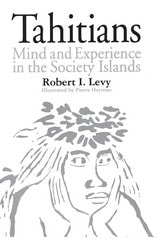
Tahitians
Mind and Experience in the Society IslandsRobert I. Levy llustrated by Pierre Heyman
University of Chicago Press, 1973
"This is a unique addition to anthropological literature. . . . No review could substitute for reading it."—Margaret Mead, American Anthropologist
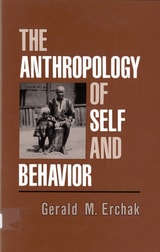
The Anthropology of Self and Behavior
Erchak, Gerald M
Rutgers University Press, 1992
Each chapter reviews the literature, not as a scholar would, but rather to provide an overview of central issues in the field. Each chapter also provides case material, some of which is drawn from Erchak's own work on West African socialization, Micronesian social change, family violence, initiation rites, and alcoholism. His examples are drawn from the U.S. as well as non-Western cultures. This book will be of particular interest to teachers looking for new texts for undergraduate courses in anthropology, psychology, and sociology.
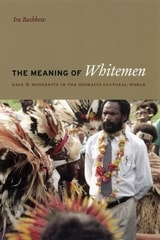
The Meaning of Whitemen
Race and Modernity in the Orokaiva Cultural WorldIra Bashkow
University of Chicago Press, 2006
While Papua New Guinea’s resident white population has been severely reduced due to postcolonial white flight, the whiteman remains a significant racial and cultural other here—not only as an archetype of power and wealth in the modern arena, but also as a foil for people’s evaluations of themselves within vernacular frames of meaning. As Ira Bashkow explains, ideas of self versus other need not always be anti-humanistic or deprecatory, but can be a creative and potentially constructive part of all cultures.
A brilliant analysis of whiteness and race in a non-Western society, The Meaning of Whitemen turns traditional ethnography to the purpose of understanding how others see us.

The Psychological Mystique
Stewart Justman
Northwestern University Press, 1998
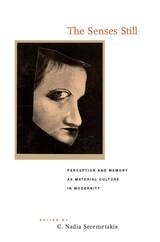
The Senses Still
C. Nadia Seremetakis
University of Chicago Press, 1996
The contributors are Susan Buck-Morss, Allen Feldman, Jonas Frykman, C. Nadia Seremetakis, and Paul Stoller.
C. Nadia Seremetakis is Advisor to the Minister of Public Health in Greece and visiting professor at the National School of Public Heath in Athens. She is the author of The Last Word: Women, Death, and Divination in Inner Mani, available from the University of Chicago Press.
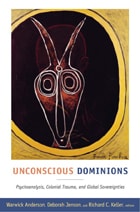
Unconscious Dominions
Psychoanalysis, Colonial Trauma, and Global SovereigntiesWarwick Anderson, Deborah Jenson, and Richard C. Keller, eds.
Duke University Press, 2011
Our understandings of culture, citizenship, and self have a history that is colonial and psychoanalytic, but, until now, this intersection has scarcely been explored, much less examined in comparative perspective. Taking on that project, Unconscious Dominions assembles essays based on research in Australia, Brazil, France, Haiti, and Indonesia, as well as India, North Africa, and West Africa. Even as they reveal the modern psychoanalytic subject as constitutively colonial, they shed new light on how that subject went global: how people around the world came to recognize the hybrid configuration of unconscious, ego, and superego in themselves and others.
Contributors
Warwick Anderson
Alice Bullard
John Cash
Joy Damousi
Didier Fassin
Christiane Hartnack
Deborah Jenson
Richard C. Keller
Ranjana Khanna
Mariano Plotkin
Hans Pols
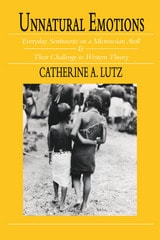
Unnatural Emotions
Everyday Sentiments on a Micronesian Atoll and Their Challenge to Western TheoryCatherine A. Lutz
University of Chicago Press, 1988

Wild Thought
A New Translation of “La Pensée sauvage”Claude Lévi-Strauss
University of Chicago Press, 2021
Controversially titled The Savage Mind when it was first published in English in 1966, the original translation nevertheless sparked a fascination with Lévi-Strauss’s work among Anglophone readers. Wild Thought rekindles that spark with a fresh and accessible new translation. Including critical annotations for the contemporary reader, it restores the accuracy and integrity of the book that changed the course of intellectual life in the twentieth century, making it an indispensable addition to any philosophical or anthropological library.