Results by title
9 books match the query 'Etiology'
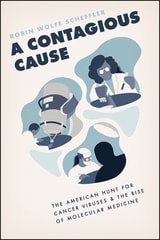
A Contagious Cause
The American Hunt for Cancer Viruses and the Rise of Molecular MedicineRobin Wolfe Scheffler
University of Chicago Press, 2019
A Contagious Cause is the first book to trace the century-long hunt for a human cancer virus in America, an effort whose scale exceeded that of the Human Genome Project. The government’s campaign merged the worlds of molecular biology, public health, and military planning in the name of translating laboratory discoveries into useful medical therapies. However, its expansion into biomedical research sparked fierce conflict. Many biologists dismissed the suggestion that research should be planned and the idea of curing cancer by a vaccine or any other means as unrealistic, if not dangerous. Although the American hunt was ultimately fruitless, this effort nonetheless profoundly shaped our understanding of life at its most fundamental levels. A Contagious Cause links laboratory and legislature as has rarely been done before, creating a new chapter in the histories of science and American politics.

Addiction
Entries and ExitsJon Elster
Russell Sage Foundation, 1999
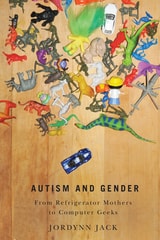
Autism and Gender
From Refrigerator Mothers to Computer GeeksJordynn Jack
University of Illinois Press, 2014
In Autism and Gender: From Refrigerator Mothers to Computer Geeks, Jack focuses on the ways gender influences popular discussion and understanding of autism's causes and effects. She identifies gendered theories like the “refrigerator mother” theory, for example, which blames emotionally distant mothers for autism, and the “extreme male brain” theory, which links autism to the modes of systematic thinking found in male computer geeks. Jack's analysis reveals how people employ such highly gendered theories to craft rhetorical narratives around stock characters--fix-it dads, heroic mother warriors rescuing children from autism--that advocate for ends beyond the story itself while also allowing the storyteller to gain authority, understand the disorder, and take part in debates.
Autism and Gender reveals the ways we build narratives around controversial topics while offering new insights into the ways rhetorical inquiry can and does contribute to conversations about gender and disability.

Etiology, Concept and Prophylaxis of Childbed Fever
Ignaz Semmelweis; Translated by K. Codell Carter
University of Wisconsin Press, 1983
In 1859 a Hungarian obstetrician named Ignaz Semmelweis, reflecting on his years as resident in the Vienna maternity clinic, wrote a graphic account of his attempt to diagnose and eliminate the then epidemic scourge of childbed fever. The resulting Etiology triggered an immediate and international squall of protest from Semmelweis’s colleagues; today it is recognized as a pioneering classic of medical history. Now, for the first time in many years, Codell Carter makes that classic available to the English-speaking reader in this vivid translation of the 1861 original, augmented by footnotes and an explanatory introduction. For students and scholars of medical history and philosophy, obstetrics and women’s studies, the accessibility of this moving and revolutionary work, important both as an historical document and as a groundbreaking precursor of modern medical theory, is long overdue.
Semmelweis’s exposure to the childbed fever was concurrent with his appointment to the Vienna maternity hospital in 1846. Like many similar hospitals and clinics in the major cities of nineteenth-century Europe and America, where death rates from the illness sometimes climbed as high as 40 percent of admitted patients, the Viennese wards were ravaged by the fever. Intensely troubled by the tragic and baffling loss of so many young mothers, Semmelweis sought answers. The Etiology was testimony to his success. Based on overwhelming personal evidence, it constituted a classic description of a disease, its causes, and its prevention. It also allowed a necessary response to the obstetrician’s already vocal, rabid, and perhaps predictable critics. For Semmelweis’s central thesis was a startling one - the fever, he correctly surmised, was caused not by epidemic or endemic influences but by unsterilized and thus often contaminated hands of the attending physicians themselves.
Carter’s translation of this radical work, judiciously abridged and extensively footnoted, captures all the drama and impassioned conviction of the original. Complementing this translation is a lucid introduction that places Semmelweis’s Etiology in historical perspective and clarifies its contemporary value. That value, Carter argues, is considerable. Important as a model of clinical analysis and as a chronicle of early nineteenth-century obstetrical practices, the Etiology is also a revolutionary polemic in its innovative doctrine of antisepsis and in its unique etiological explanation of disease. As such its recognition and reclamation allows a crucial understanding, one that clarifies the roots and theory of modern medicine and ultimately redeems and important, resolute, pathfinder.
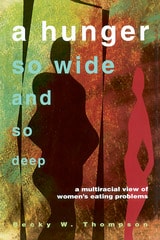
Hunger So Wide And So Deep
A Multiracial View of Women’s Eating ProblemsBecky Thompson
University of Minnesota Press, 1996
A new feminist classic--now in paper!
Based on in-depth life history interviews with African-American, Latina, and white women-both lesbian and heterosexual-this book chronicles the effects of racism, sexism, acculturation, and sexual abuse on women’s bodies and eating patterns.
“A wonderful book: gripping, creative and profoundly humane. In lucid prose Thompson offers an original explanation for women’s eating problems. She argues that many women turn to food-bingeing, dieting, purging, or starving- as a sensible means of coping with physical and psychic ‘atrocities’ deriving from ‘racism, sexism, homophobia, classism, the stress of acculturation, and emotional, physical, and sexual abuse.’” Women’s Review of Books“Surprising and alarming. . . . Thompson urges a second look at our national obsession with weight and proffers theories and practices that could save the lives of women of all colors and sexual orientations.” Lambda Book Report“Thompson breaks new ground and offers hope for the multitudes of women who have swallowed their pain.” Evelyn C. White, Editor, The Black Women's Health Book
Obesity among Poor Americans
Is Public Assistance the Problem?Patricia K. Smith
Vanderbilt University Press, 2009
This book investigates the controversial claim by welfare critics that public assistance programs like Food Stamps and the National School Lunch programs contribute to obesity among the poor. The author synthesizes empirical evidence from an array of disciplines--anthropology, economics, epidemiology, medicine, nutrition science, marketing, psychology, public health, sociology, and urban planning--to test this claim and to test whether other causal processes are at work.
With a lucid presentation that makes it a model for applying research to questions of social policy, the book lays out the different hypotheses and the possible causal pathways within each. The four central chapters test whether "public assistance causes obesity," "obesity causes public assistance," "poverty causes both public assistance and obesity," and "Factor X causes both." The factors in the last category that may relate to both public assistance and obesity include stress, disability, and physical abuse.

Origins of Psychopathology
The Phylogenetic and Cultural Basis of Mental IllnessFábrega Jr., Horacio
Rutgers University Press, 2002
In Origins of Psychopathology, Horacio Fárega Jr. employs principles of evolutionary biology to better understand the significance of mental illness. He explores whether what psychiatry has categorized as mental disorders could have existed during earlier phases of human evolution. Fábrega approaches the prominent features of mental disorders as adaptive responses to the environment and life’s circumstances, which in turn can only be understood in the context of our evolutionary past. Taking his cue from theoretical issues raised by research into primate behavior and early hominid evolution, he poses the question: What, if any, aspects of mental illness are rooted in our evolution? Does mental illness occur in primates and other animals, and if so, what does this tell us about mental illness in human evolution? How has mental illness played an adaptive role? How has the development of language and higher cognitive functions affected characteristics of psychopathology? Fábrega synthesizes insights from both the clinical and the evolutionary points of view. This facet of psychopathology, which involves its origins and manifestations viewed across the expanse of human evolution, has, until now, been largely neglected in psychiatric education, theory, and practice.
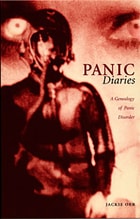
Panic Diaries
A Genealogy of Panic DisorderJackie Orr
Duke University Press, 2006
Orr, who has experienced panic attacks herself, kept a diary of her participation as a research subject in clinical trials for the Upjohn Company’s anti-anxiety drug Xanax. This “panic diary” grounds her study and suggests the complexity of her desire to track the diffusion and regulation of panic in U.S. society. Orr’s historical research, theoretical reflections, and biographical narrative combine in this remarkable and compelling genealogy, which documents the manipulation of panic by the media, the social sciences and psychiatry, the U.S. military and government, and transnational drug companies.

The Book of Minor Perverts
Sexology, Etiology, and the Emergences of SexualityBenjamin Kahan
University of Chicago Press, 2019
Statue-fondlers, wanderlusters, sex magicians, and nymphomaniacs: the story of these forgotten sexualities—what Michel Foucault deemed “minor perverts”—has never before been told. In The Book of Minor Perverts, Benjamin Kahan sets out to chart the proliferation of sexual classification that arose with the advent of nineteenth-century sexology. The book narrates the shift from Foucault’s “thousand aberrant sexualities” to one: homosexuality. The focus here is less on the effects of queer identity and more on the lines of causation behind a surprising array of minor perverts who refuse to fit neatly into our familiar sexual frameworks. The result stands at the intersection of history, queer studies, and the medical humanities to offer us a new way of feeling our way into the past.