Results by title
34 books match the query 'Europe, Western'

Birth Figures
Early Modern Prints and the Pregnant BodyRebecca Whiteley
University of Chicago Press, 2023
Birth figures are printed images of the pregnant womb, always shown in series, that depict the variety of ways in which a fetus can present for birth. Historian Rebecca Whiteley coined the term and here offers the first systematic analysis of the images’ creation, use, and impact. Whiteley reveals their origins in ancient medicine and explores their inclusion in many medieval gynecological manuscripts, focusing on their explosion in printed midwifery and surgical books in Western Europe from the mid-sixteenth to the mid-eighteenth century. During this period, birth figures formed a key part of the visual culture of medicine and midwifery and were widely produced. They reflected and shaped how the pregnant body was known and treated. And by providing crucial bodily knowledge to midwives and surgeons, birth figures were also deeply entangled with wider cultural preoccupations with generation and creativity, female power and agency, knowledge and its dissemination, and even the condition of the human in the universe.
Birth Figures studies how different kinds of people understood childbirth and engaged with midwifery manuals, from learned physicians to midwives to illiterate listeners. Rich and detailed, this vital history reveals the importance of birth figures in how midwifery was practiced and in how people, both medical professionals and lay readers, envisioned and understood the mysterious state of pregnancy.

Caribbean Migration to Western Europe and the United States
Essays on Incorporation, Identity, and Citizenshipedited by Margarita Cervantes-Rodriguez, Ramon Grosfoguel and Eric Mielants
Temple University Press, 2009
Caribbean Migration to Western Europe and the United States features a diverse group of scholars from across academic disciplines studying the transnational paths of Caribbean migration. How has the colonial path of the Caribbean influenced migration with regard to power relations, ethnic identities and transnational processes?
Through a series of case studies, the contributors to this volume examine the experiences of Caribbean immigrants to Spain, France, the United Kingdom and the Netherlands as well as the United States. They show the demographic, socioeconomic, political and cultural impact migrants have, as well as their role in the development of transnational social fields. Caribbean Migration to Western Europe and the United States also examines how contrasting discourses of democracy and racism, xenophobia and globalization shape issues pertaining to citizenship and identity.
Contributors: Elizabeth Aranda, Mary Chamberlain, Michel Giraud, Lisa Maya Knauer, John R. Logan, Monique Milia-Marie-Luce, Laura Oso Casas, Livio Sansone, Nina Glick Schiller,Charles (Wenquan) Zhang and the editors.

Cleavage Politics and the Populist Right
The New Cultural Conflict in Western EuropeAuthored by Simon Bornschier
Temple University Press, 2010
Over the last two decades, right-wing populist parties in Western Europe have gained sizable vote shares and power, much to the fascination and consternation of political observers. Meshing traditionalism and communitarian ideals, right-wing populist parties have come to represent a polar normative ideal to the New Left in Western Europe. In his dynamic study Cleavage Politics and the Populist Right, Simon Bornschier applies a cultural as well as political dimension to analyze the parties of both the right and left in six countries. He develops a theory that integrates the role of political conflict around both established cleavages and party strategies regarding new divisions to explain the varying fortunes of the populist right.

Divine Presence in Spain and Western Europe 1500–1960
Visions, Religious Images and PhotographsWilliam A. Christian Jr.
Central European University Press, 2012
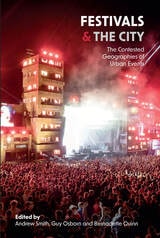
Festivals and the City
The Contested Geographies of Urban EventsAndrew Smith, Guy Osborn, Bernadette Quinn, Andrew Smith, Guy Osborn and Bernadette Quinn
University of Westminster Press, 2022
This book explores how festivals and events affect urban places and public spaces, with a particular focus on their role in fostering inclusion. The ‘festivalisation’ of culture, politics and space in cities is often regarded as problematic, but this book examines the positive and negative ways that festivals affect cities by examining festive spaces as contested spaces. The book focuses on Western European cities, a particularly interesting context given the social and cultural pressures associated with high levels of in-migration and concerns over the commercialisation and privatisation of public spaces.
The key themes of this book are the quest for more inclusive urban spaces and the contested geographies of festival spaces and places. Festivals are often used by municipal authorities to break down symbolic barriers that restrict who uses public spaces and what those spaces are used for. However, the rise of commercial festivals and ticketed events means that they are also responsible for imposing physical and financial obstacles that reduce the accessibility of city parks, streets and squares.
Alongside addressing the contested effects of urban festivals on the character and inclusivity of public spaces, the book addresses more general themes including the role of festivals in culture-led regeneration. Several chapters analyse festivals and events as economic development tools, and the book also covers contested representations of festival cities and the ways related images and stories are used in place marketing.
A range of cases from Western Europe are used to explore these issues, including chapters on some of the world’s most significant and contested festival cities: Venice, Edinburgh, London and Barcelona. The book covers a wide range of festivals, including those dedicated to music and the arts, but also events celebrating particular histories, identities and pastimes. A series of fascinating cases are discussed - from the Venice Biennale and Dublin Festival of History, to Rotterdam’s music festivals and craft beer festivals in Manchester. The diverse and innovative qualities of the book are also evident in the range of urban spaces covered: obvious examples of public spaces – such as parks, streets, squares and piazzas – are addressed, but the book includes chapters on enclosed public spaces (e.g., libraries) and urban blue spaces (waterways) too. This reflects the interpretation of public spaces as socio-material entities: they are produced informally through their use (including for festivals and events), as well as through their formal design and management.

Flip the Script
European Hip Hop and the Politics of PostcolonialityJ. Griffith Rollefson
University of Chicago Press, 2017
Through analysis of recorded music and other media, as well as interviews and fieldwork with hip hop communities, J. Griffith Rollefson shows how this music created by black Americans is deployed by Senegalese Parisians, Turkish Berliners, and South Asian Londoners to both differentiate themselves from and relate themselves to the dominant culture. By listening closely to the ways these postcolonial citizens in Europe express their solidarity with African Americans through music, Rollefson shows, we can literally hear the hybrid realities of a global double consciousness.
Freedom for Publishing, Publishing for Freedom
Timothy Garton Ash
Central European University Press, 1995
From Multiculturalism to Democratic Discrimination
The Challenge of Islam and the Re-emergence of Europe’s NationalismAlberto Spektorowski and Daphna Elfersy
University of Michigan Press, 2020

From the Far Right to the Mainstream
Islamophobia in Party Politics and the MediaEdited by Humayun Ansari and Farid Hafez
Campus Verlag, 2012

Lee Miller
A LifeCarolyn Burke
University of Chicago Press, 2007

More Bad News From Israel
Greg Philo and Mike Berry
Pluto Press, 2011
Building on rigorous research by the world-renowned Glasgow University Media Group, More Bad News From Israel examines media coverage of the current conflict in the Middle East and the impact it has on public opinion.
The book brings together senior journalists and ordinary viewers to examine how audiences understand the news and how their views are shaped by media reporting. In the largest study ever undertaken in this area, the authors focus on television news. They illustrate major differences in the way Israelis and Palestinians are represented, including how casualties are shown and the presentation of the motives and rationales of both sides. They combine this with extensive audience research involving hundreds of participants from the USA, Britain and Germany. It shows extraordinary differences in levels of knowledge and understanding, especially amongst young people from these countries.
Covering recent developments, including the Israeli attacks on Lebanon and Gaza, this authoritative and up-to-date study will be an invaluable tool for journalists, activists and students and researchers of media studies.
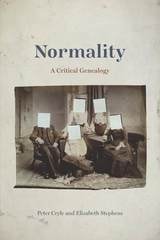
Normality
A Critical GenealogyPeter Cryle and Elizabeth Stephens
University of Chicago Press, 2017
In Normality, Peter Cryle and Elizabeth Stephens offer an intellectual and cultural history of what it means to be normal. They explore the history of how communities settle on any one definition of the norm, along the way analyzing a fascinating series of case studies in fields as remote as anatomy, statistics, criminal anthropology, sociology, and eugenics. Cryle and Stephens argue that since the idea of normality is so central to contemporary disability, gender, race, and sexuality studies, scholars in these fields must first have a better understanding of the context for normality. This pioneering book moves beyond binaries to explore for the first time what it does—and doesn’t—mean to be normal.
Origins of Liberal Dominance
State, Church, and Party in Nineteenth-Century EuropeAndrew C. Gould
University of Michigan Press, 1999

PARTY DISCIPLINE AND PARLIAMENTARY GOVERNMENT
SHAUN BOWLER
The Ohio State University Press, 1999
Parliamentary government is generally taken to mean party government. Party cohesion and discipline are usually seen as central to the maintenance of parliamentary democracy. This overlap, between disciplined parties on the one hand and parliamentary government on the other, is often seen as so complete and so automatic that the question of party discipline is pushed to the sidelines and rarely studied. Yet, if individual legislators remain an undisciplined mob, parliaments could easily become unruly and anarchical.
How and why party discipline arises and is maintained are thus central questions of importance in legislative, and especially parliamentary, studies. Our knowledge of these topics, however, suffers from substantial gaps, especially with regard to the practice of party cohesion outside the relatively familiar Anglo-American setting.
This book marks a step toward filling some of those gaps. The collection of essays presented here provides theoretical background and comparative studies of legislatures in a wide range of settings. Well-developed democracies such as Britain, Finland, Ireland, Italy, The Netherlands, Norway, and Switzerland are covered, as are the more recent democracies of Spain and Hungary, and the unique case of the transnational European Parliament.
Partnering with Extremists
Coalitions between Mainstream and Far-Right Parties in Western EuropeKimberly A. Twist
University of Michigan Press, 2019
As long as far-right parties—known chiefly for their vehement opposition to immigration—have competed in contemporary Western Europe, many have worried about these parties’ acceptability to democratic voters and mainstream parties. Yet, rather than treating the far right as pariahs, major mainstream-right parties have included the far right in 15 governing coalitions from 1994 to 2017. Parties do not care equally about all issues at any given time, and Kimberly Twist demonstrates that far-right parties will agree to support the mainstream right’s goals more readily than many other parties, making them appealing partners.
Partnering with Extremists builds on existing work on coalition formation and party goals to propose a theory of coalition formation that works across countries and over time. The evidence comes from 19 case studies of coalition formation in Austria and the Netherlands, countries where far-right parties have been excluded when they could have been included and included when the mainstream right had other options. The argument is then extended to countries where coalitions are less common, France and the United Kingdom, and to cases of mainstream-right adoption of far-right themes. Twist incorporates both office and policy considerations in her argument and reimagines “policy” to be a two-dimensional factor; it matters not just where parties are located on an issue but how firmly they hold those positions.
Phantom Byzantium
Europe, Empire, and Identity from Late Antiquity to World War IIAnthony Kaldellis
University of Chicago Press, 2026
Unveiling the ideological foundations of Byzantine studies, Phantom Byzantium is a pioneering survey of western European perceptions of the eastern Roman empire (also known as Byzantium) spanning late antiquity to World War II. Through ten chronological chapters, Anthony Kaldellis makes the case that western Europe gradually formed its identity by adopting prestigious cultural elements from the eastern empire but simultaneously portraying the east as inferior. The West modeled its Roman imperial style on Constantinople while minimizing the latter as Greek rather than Roman; appropriated a host of Christian traditions from the east while casting the east as schismatic, heretical, or treacherous; and, during the Renaissance, used classical Hellenic philology from Greek scholars before marginalizing them as unworthy bearers of that tradition. This orientalizing impulse worked to buttress western exceptionalism and resulted in the fictitious construction of “Byzantium” as Europe’s evil doppelgänger, embodying the worst versions of traditions fundamental to European identity and casting the region as despotic, superstitious, and degenerate.
Explaining the creation, history, and functions of the ideological construct of Byzantium in the western imagination and European self-fashioning, this book has critical implications for contemporary views of European history.
Policing Protest
The Control of Mass Demonstrations in Western DemocraciesDonatella della Porta Della Porta
University of Minnesota Press, 1998
The first international examination of how police respond to political protests.
The way in which police handle political demonstrations is always potentially controversial. In contemporary democracies, police departments have two different, often conflicting aims: keeping the peace and defending citizens’ right to protest. This collection, the only resource to examine police interventions cross-nationally, analyzes a wide array of policing styles. The contributors look at cultures and political power to examine the methods, the trends and cycles, and the consequences of policing protest.
Focusing on Italy, France, Germany, Great Britain, Switzerland, Spain, the United States, and South Africa, the contributors explore the various police strategies of coercion, negotiation, and information surveillance. They discuss protest policing in relation to specific countries’ governments and consider public opinion, media, and the police’s perception of reality to illustrate the reciprocal ways in which police and protest are defined. Moreover, this volume considers the profound changes from the forceful 1960s to a “softer” 1990s, including the consequences of this move.Comparative and innovative, Policing Protest highlights the crucial influences of demonstration interventions and lends greater understanding to the study of social movements and their relationship to the state. Contributors: Rocco De Biasi, U of Genoa; Olivier Fillieule, Institute of Political Science, Paris; Oscar Jaime-Jiménez, Universidad Nacional de Educación a Distancia, Madrid; Fabien Jobard, U of Rouen, France; Hanspeter Kriesi, U of Geneva; Gary T. Marx, Massachusetts Institute of Technology and U of Colorado, Boulder; John McCarthy, Catholic U of America; Clark McPhail, U of Illinois; Fernando Reinares, Universidad Nacional de Educación a Distancia, Madrid; Robert Reiner, London School of Economics; David Schweingruber; P. A. J. Waddington, U of Reading, UK; Martin Winter, U of Halle, Germany; Dominique Wisler, U of Geneva.Racism And Anti-Racism In Europe
Alana Lentin
Pluto Press, 2004

Radicalization in Theory and Practice
Understanding Religious Violence in Western EuropeThierry Balzacq and Elyamine Settoul, Editors
University of Michigan Press, 2022
Radicalization is a major challenge of contemporary global security. It conjures up images of violent ideologies, “homegrown” terrorists and jihad in both the academic sphere and among security and defense experts. While the first instances of religious radicalization were initially limited to second-generation Muslim immigrants, significant changes are currently impacting this phenomenon. Technology is said to amplify the dissemination of radicalism, though there remains uncertainty as to the exact weight of technology on radical behaviors. Moreover, far from being restricted to young men of Muslim heritage suffering from a feeling of social relegation, radicalism concerns a significant number of converted Muslims, women and more heterogeneous profiles (social, academic and geographic), as well as individuals that give the appearance of being fully integrated in the host society. These new and striking dynamics require innovative conceptual lenses.
Radicalization in Theory and Practice identifies the mechanisms that explicitly link radical religious beliefs and radical actions. It describes its nature, singles out the mechanisms that enable radicalism to produce its effects, and develops a conceptual architecture to help scholars and policy-makers to address and evaluate radicalism—or what often passes as such. A variety of empirical chapters fed by first-hand data probe the relevance of theoretical perspectives that shape radicalization studies. By giving a prominent role to first-hand empirical investigations, the authors create a new framework of analysis from the ground up. This book enhances the quality of theorizing in this area, consolidates the quality of methodological enquiries, and articulates security studies insights with broader theoretical debates in different fields including sociology, social psychology, economics, and religious studies.
Rationality of Irrationality
Political Determinants and Effects of Party Position BlurringKyung Joon Han
University of Michigan Press, 2022
Citizens in democracies complain that political parties’ positions on major issues are too ambiguous for them to confidently understand. Why is party position ambiguity so common? Are party positions ambiguous because political parties fail in forming clear policies or because they deliberately blur their positions? Rationality of Irrationality argues that political parties are motivated to strategically blur their position on an issue when they struggle with a certain disadvantage in the issue. Specifically, political parties present an ambiguous position when their own supporters are divided in their stances on the issue. A political party also blurs position stances when voters do not acknowledge that the party has the ability and integrity to solve problems related to the issue. Political parties blur their position in these cases because ambiguous party positions divert voters’ attention from the issue. Voters support a political party whose policy positions on major issues are close to their own stances. However, voters cannot confidently and exactly estimate party positions on an issue when they are only ambiguous.

Reading History Sideways
The Fallacy and Enduring Impact of the Developmental Paradigm on Family LifeArland Thornton
University of Chicago Press, 2005
In Reading History Sideways, leading family scholar Arland Thornton demonstrates how this approach, though long since discredited, has permeated Western ideas and values about the family. Further, its domination of social science for centuries caused the misinterpretation of Western trends in family structure, marriage, fertility, and parent-child relations. Revisiting the "developmental fallacy," Thornton here traces its central role in changes in the Western world, from marriage to gender roles to adolescent sexuality. Through public policies, aid programs, and colonialism, it continues to reshape families in non-Western societies as well.

Sephardi Family Life in the Early Modern Diaspora
Edited by Julia R. Lieberman
Brandeis University Press, 2010

Sheer Misery
Soldiers in Battle in WWIIMary Louise Roberts
University of Chicago Press, 2021
Sheer Misery trains a humane and unsparing eye on the corporeal experiences of the soldiers who fought in Belgium, France, and Italy during the last two years of the war. In the horrendously unhygienic and often lethal conditions of the front line, their bodies broke down, stubbornly declaring their needs for warmth, rest, and good nutrition. Feet became too swollen to march, fingers too frozen to pull triggers; stomachs cramped, and diarrhea stained underwear and pants. Turning away from the accounts of high-level military strategy that dominate many WWII chronicles, acclaimed historian Mary Louise Roberts instead relies on diaries and letters to bring to life visceral sense memories like the moans of the “screaming meemies,” the acrid smell of cordite, and the shockingly mundane sight of rotting corpses. As Roberts writes, “For soldiers who fought, the war was above all about their bodies.”
The Changing Face of World Cities
Young Adult Children of Immigrants in Europe and the United StatesMaurice Crul
Russell Sage Foundation, 2013

The Emergence of a Euro-American Radical Right
Kaplan, Jeffrey
Rutgers University Press, 1998
The United States and Western Europe are experiencing a new and important cultural and political development: the appearance of a right wing extremist movement that crosses the Atlantic Ocean and transcends national boundaries with as much ease as do e-mail messages on the Internet. In this book, Jeffrey Kaplan and Leonard Weinberg argue that there now exists a set of conditions common to the United States and Western Europe that draws right wing radicals on both sides of the Atlantic closer together. These conditions, based on demographic pressures, social dislocation, economic changes, and technological advances, have set the stage for the formation of a new Euro-American radical right movement whose motives and characteristics differ from the right wing groups of the early twentieth century.
During the first thirty years of this century, radical right wing ideas and material support flowed primarily from Europe to the United States. In recent years, the inspiration for the movement has tended to flow in the opposite direction, with the establishment of various American-based groups, like the Ku Klux Klan and the White Aryan Resistance, on European soil. Kaplan and Weinberg contend that unlike their predecessors contemporary Western right wing groups develop a common identity based more on racial solidarity than on national identity. To support their argument, the authors provide a history of extreme right wing activity in the West and a comprehensive, detailed overview of major figures, groups, and characteristics that comprise the Euro-American radical right. They discuss the role of the Internet in facilitating the transatlantic community and offer personal, inside accounts of people involved in the various movements.

The Immigrant Threat
The Integration of Old and New Migrants in Western Europe since 1850Leo Lucassen
University of Illinois Press, 2005
Leo Lucassen tackles the question of whether the integration process of these recent immigrants will fundamentally differ in the long run (over multiple generations) from the experiences of similar immigrant groups in the past. For comparison, Lucassen focuses on "large and problematic groups" from Western Europe's past (the Irish in the United Kingdom, the Poles in Germany, and the Italians in France) and demonstrates a number of structural similarities in the way migrants and their descendants integrated into these nation states. Lucassen emphasizes that the geographic sources of the "threat" have changed and that contemporaries tend to overemphasize the threat of each successive wave of immigrants, in part because the successfully incorporated immigrants of the past have become invisible in national histories.
The Legacy of Division
East and West after 1989Ferenc Laczó
Central European University Press, 2020
This volume examines the legacy of the East–West divide since the implosion of the communist regimes in Europe. The ideals of 1989 have largely been frustrated by the crises and turmoil of the past decade. The liberal consensus was first challenged as early as the mid-2000s. In Eastern Europe, grievances were directed against the prevailing narratives of transition and ever sharper ethnic-racial antipathies surfaced in opposition to a supposedly postnational and multicultural West. In Western Europe, voices regretting the European Union's supposedly careless and premature expansion eastward began to appear on both sides of the left–right and liberal–conservative divides. The possibility of convergence between Europe's two halves has been reconceived as a threat to the European project.
In a series of original essays and conversations, thirty-three contributors from the fields of European and global history, politics and culture address questions fundamental to our understanding of Europe today: How have perceptions and misperceptions between the two halves of the continent changed over the last three decades? Can one speak of a new East–West split? If so, what characterizes it and why has it reemerged? The contributions demonstrate a great variety of approaches, perspectives, emphases, and arguments in addressing the daunting dilemma of Europe's assumed East–West divide.
The Medieval Invention of Travel
Shayne Aaron Legassie
University of Chicago Press, 2017
Exploring this phenomenon, The Medieval Invention of Travel draws on an impressive array of sources to develop original readings of canonical figures such as Marco Polo, John Mandeville, and Petrarch, as well as a host of lesser-known travel writers. As Shayne Aaron Legassie demonstrates, the Middle Ages inherited a Greco-Roman model of heroic travel, which viewed the ideal journey as a triumph over temptation and bodily travail. Medieval travel writers revolutionized this ancient paradigm by incorporating practices of reading and writing into the ascetic regime of the heroic voyager, fashioning a bold new conception of travel that would endure into modern times. Engaging methods and insights from a range of disciplines, The Medieval Invention of Travel offers a comprehensive account of how medieval travel writers and their audiences reshaped the intellectual and material culture of Europe for centuries to come.
The Radical Right in Western Europe
A Comparative AnalysisHerbert Kitschelt
University of Michigan Press, 1996
Winner of the American Political Science Association's 1996 Woodrow Wilson Foundation Award.
The rise of new political competitors on the radical right is a central feature of many contemporary European party systems. The first study of its kind based on a wide array of comparative survey data, The Radical Right in Western Europe: A Comparative Analysis provides a unifying framework to explain why rightist parties are electorally powerful in some countries but not in others. The book argues that changes in social structure and the economy do not by themselves adequately explain the success of extremist parties. Instead, we must look to the competitive struggles among parties, their internal organizational patterns, and their long-term ideological traditions to understand the principles governing their success. Radical right authoritarian parties tend to emerge when moderate parties converge toward the median voter. But the success of these parties depends on the strategy employed by the right-wing political actors. Herbert Kitschelt's in-depth analysis, based on the experiences of rightist parties in Austria, Denmark, France, Germany, Italy, Norway, and Britain, reveals that the broadest appeal is enjoyed by parties that couple a fierce commitment to free markets with authoritarian, ethnocentric--or even racist--messages. The author also shows how a country's particular political constituency or its intellectual and organizational legacies may allow right-wing parties to diverge from these norms and still find electoral success. The book concludes by exploring the interaction between the development of the welfare state, cultural pluralization through immigrants, and the growth of the extreme right.

The Stranger, the Tears, the Photograph, the Touch
Divine Presence in Spain and Europe since 1500William A. Christian Jr.
Central European University Press, 2017
The Whiteness Between Us
Early Modern Playbooks of Racial TriangulationNoémie Ndiaye
University of Chicago Press, 2026
A theorization of the representational juxtapositions, frictions, and connections between Black people and other non-white people in early modern European theatre.
Over the course of the seventeenth century, European drama was an important tool for whiteness to imagine itself at the top of an aspirational structure of power relations. Indeed, that structure could only be aspirational at a time when Europeans were profoundly divided along easily racializable religious and ethnic lines, and when their sovereignty was threatened by the Ottoman empire. It was to strengthen this emerging consciousness of racial whiteness, Noémie Ndiaye argues, that European drama engaged in a form of racial triangulation, fitting Muslim, Jewish, Indigenous, Romani, and Asian characters into a spurious black/white racial binary.
Focusing on English, Spanish, and French drama from 1580 to 1715, The Whiteness Between Us shows how plays became a crucial tool to position not only black people but any non-white community in the new racial architecture that white supremacy sought to build. Ndiaye reveals the stage of this era as a space for wish fulfillment, enabling participants to imagine and work towards a whiter future.
The early modern playbooks of racial triangulation that Ndiaye brings to light can and have been reactivated for white supremacist purposes in our own day and age. Partly in response to the contemporary threat of white nationalism, scholars and students have sought to unearth the early modern roots of racial whiteness and white supremacy. Ndiaye’s book participates in this wave of interest, offering several innovations, including its capacious transnational claims.

When is Daddy Coming Home?
An American Family during World War IIRichard Carlton Haney
Wisconsin Historical Society Press, 2024
World War II was coming to a close in Europe and Richard Haney was only four years old when the telegram arrived at his family's home in Janesville, Wisconsin. That moment, when Haney learned of his father's death in the final months of fighting, changed his and his mother's lives forever.
In this powerful book, Haney explores the impact of war on an American family. He skillfully weaves together those memories with his parents' wartime letters and his mother's recollections to create a unique blend of history and memoir. Through his father's letters he reveals the war's effect on a man who fought in the Battle of the Bulge with the 17th Airborne but wanted nothing more than to return home. Haney illuminates life on the home front in small-town America as well, describing how profoundly the war changed such communities.
With When Is Daddy Coming Home?, Richard Haney makes an exceptional contribution to the literature on the Greatest Generation—one that is both devastatingly personal and representative of what families all over America endured during that testing time.

Winter Notes on Summer Impressions
Fyodor Dostoevsky
Northwestern University Press, 1997
In June 1862, Dostoevsky left Petersburg on his first excursion to Western Europe. Ostensibly making the trip to consult Western specialists about his epilepsy, he also wished to see firsthand the source of the Western ideas he believed were corrupting Russia. Over the course of his journey he visited a number of major cities, including Berlin, Paris, London, Florence, Milan, and Vienna. He recorded his impressions in Winter Notes on Summer Impressions, which were first published in the February 1863 issue of Vremya (Time), the periodical of which he was the editor.
Among other themes, Dostoevsky reveals his Pan-Slavism, rejecting European culture as corrupt and exhorting Russians to resist the temptation to emulate or adopt European ways of life.
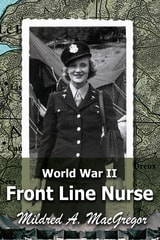
World War II Front Line Nurse
Mildred A. MacGregor
University of Michigan Press, 2008
In late 1942, along with so many others who signed up to support the war effort, thirty-year-old Mildred Radawiec left a comfortable position as a nurse at the University of Michigan Hospital and postponed her marriage to a soon-to-be doctor to volunteer as a surgical nurse in the major battle theaters of the war. Radawiec was one of thirty volunteers from the hospital surgical staff that comprised the University of Michigan Unit, the 298th General Hospital, as the University of Michigan Hospital was called.
Radawiec's first-person history recounts her wartime experience with sharp detail and grace and sets the stage for a you-are-there experience---from the thrill of signing up and shipping out; to the harrowing ocean crossing and the arduous trip through the Sahara; to dangerous air raids and moving at a moment's notice, often at night with the lights off to avoid attacks. Radawiec was near Omaha Beach in France soon after D-Day, June 6, 1944, and details stories of marathon stints assisting the injured on the front lines as they poured in by the hundreds. Radawiec also traveled to Belgium and Germany and set up in the area near Aachen in the fall of 1944. In Germany she experienced Buzz Bombs---pilotless flying bombs---and even witnessed the death of a fellow nurse in a bombing attack in which medics brought in wounded soldiers by the truckload. Radawiec also leavens her story with uplifting tales of heroism and courage and intersperses the narrative with poignant letters from her family and fiancé.
This stirring personal account of war will mesmerize anyone interested in World War II history and women's too-often-overlooked role in it.