Results by title
19 books match the query 'Everything'
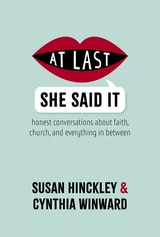
At Last She Said It
Honest Conversations About Faith, Church, and Everything in BetweenSusan Hinckley and Cynthia Winward
Signature Books, 2025
“Women of faith, discussing complicated things.” That’s how authors Susan Hinckley and Cynthia Winward describe At Last She Said It, and they don’t expect the knots to untangle themselves. Even with two very different personalities and a decade or so between them, as their friendship developed they kept stumbling onto what felt like an uncanny amount of common ground in their church experiences. Often their conversations ended with, “Why isn’t anyone talking about this? Someone should do a podcast!” So they did. They had a hunch they weren’t the only women wishing they had a place to discuss the things they were thinking about, a lot of which they’d never said—or heard—out loud. That hunch was right. Their 200-and-counting recorded conversations have been downloaded some two million times. Hinckley and Winward have learned, right along with their listeners, that there’s no power quite like finding out you’re not alone.
Their book now asks Latter-day Saints to think about old ideas in new ways. Stretching can be uncomfortable, but the willingness to consider diverse perspectives—even on the things we hold most dear—feels essential in an evolving world. So does being open to changing our minds, including how we think about ourselves. Faith is alive when it’s growing, and growing means change. Hopefully, these conversations will be the beginning of thousands more.
At Last She Said It
Honest Conversations About Faith, Church, and Everything in BetweenSusan Hinckley and Cynthia Winward
Signature Books, 2025
“Women of faith, discussing complicated things.” That’s how authors Susan Hinckley and Cynthia Winward describe At Last She Said It, and they don’t expect the knots to untangle themselves. Even with two very different personalities and a decade or so between them, as their friendship developed they kept stumbling onto what felt like an uncanny amount of common ground in their church experiences. Often their conversations ended with, “Why isn’t anyone talking about this? Someone should do a podcast!” So they did. They had a hunch they weren’t the only women wishing they had a place to discuss the things they were thinking about, a lot of which they’d never said—or heard—out loud. That hunch was right. Their 200-and-counting recorded conversations have been downloaded some two million times. Hinckley and Winward have learned, right along with their listeners, that there’s no power quite like finding out you’re not alone.
Their book now asks Latter-day Saints to think about old ideas in new ways. Stretching can be uncomfortable, but the willingness to consider diverse perspectives—even on the things we hold most dear—feels essential in an evolving world. So does being open to changing our minds, including how we think about ourselves. Faith is alive when it’s growing, and growing means change. Hopefully, these conversations will be the beginning of thousands more.
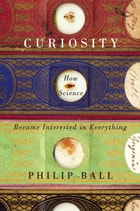
Curiosity
How Science Became Interested in EverythingPhilip Ball
University of Chicago Press, 2013
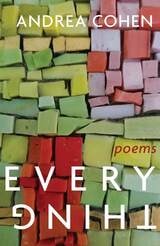
Everything
Andrea Cohen
Four Way Books, 2021
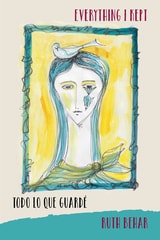
Everything I Kept
Todo Lo Que GuardéRuth Behar
Swan Isle Press, 2018
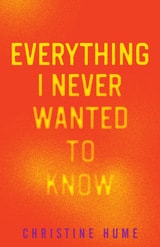
Everything I Never Wanted to Know
Christine Hume
The Ohio State University Press, 2023
In Everything I Never Wanted to Know, Christine Hume confronts the stigma and vulnerability of women’s bodies in the US. She explores bodily autonomy and sexual assault alongside the National Sex Offender Registry in order to invoke not solutions but a willingness to complicate our ideas of justice and defend every human’s right to be treated like a member of the community. Feminist autobiography threads into historical narrative and cultural criticism about the Victorian-era Frozen Charlotte doll; the Nylon Riots of the 1940s; the movie Halloween; Larry Nassar, who practiced in Hume’s home state of Michigan; and other material. In these reflections on sexuality, gender, criminality, and violence, Hume asks readers to reconsider what we have collectively normalized and how we are each complicit, writing through the darkness of what we don’t want to see, what we’d rather not believe, and what some of us have long tried to forget.
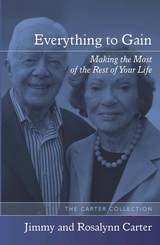
Everything to Gain
Making the Most of the Rest of Your LifeJimmy Carter
University of Arkansas Press, 1995
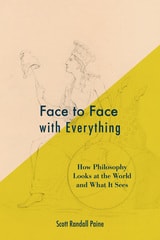
Face to Face with Everything
How Philosophy Looks at the World and What It SeesScott Randall Paine
St. Augustine's Press, 2025
Among a myriad of books on philosophy, Paine celebrates the true philosopher: the reader who seeks to know that which has a bearing on everything. This is a book unlike any other. The reality we live in has a kind of 'face', and philosophy is a way of engaging this entity. "Who are you? What can you tell me about being human?" Can certain encounters in science and other branches of knowledge be like seeing the half-smile of Mona Lisa? What a tease and yet how much to be discovered upon the right inquiry! Philosophy in this regard can be incredibly daunting, as it brings us face to face not just with particulars, but with everything.
Paine's trajectory is captured in his table of contents. First, he approaches synoptic and cenoscopic philosophy, and then he deals with philosophy and the following categories: humanities, production and liberal arts, physical sciences, life sciences, social sciences, religion, modernity, idioscopy, and the range of the cenoscopic. Paine is successful in his attempt to be exemplary more than strictly conclusive. This is a book for highly engaged (but not necessarily technical) individuals who need to remember to stay hungry.
Heaven, Hell, and Everything in Between
Murals of the Colonial AndesBy Ananda Cohen-Aponte
University of Texas Press, 2016
Examining the vivid, often apocalyptic church murals of Peru from the early colonial period through the nineteenth century, Heaven, Hell, and Everything in Between explores the sociopolitical situation represented by the artists who generated these murals for rural parishes. Arguing that the murals were embedded in complex networks of trade, commerce, and the exchange of ideas between the Andes and Europe, Ananda Cohen-Aponte also considers the ways in which artists and viewers worked through difficult questions of envisioning sacredness.
This study brings to light the fact that, unlike the murals of New Spain, the murals of the Andes possess few direct visual connections to a pre-Columbian painting tradition; the Incas’ preference for abstracted motifs created a problem for visually translating Catholic doctrine to indigenous congregations, as the Spaniards were unable to read Inca visual culture. Nevertheless, as Cohen Suarez demonstrates, colonial murals of the Andes can be seen as a reformulation of a long-standing artistic practice of adorning architectural spaces with images that command power and contemplation. Drawing on extensive secondary and archival sources, including account books from the churches, as well as on colonial Spanish texts, Cohen Suarez urges us to see the murals not merely as decoration or as tools of missionaries but as visual archives of the complex negotiations among empire, communities, and individuals.
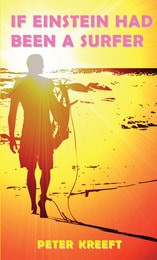
If Einstein Had Been a Surfer
A Surfer, a Scientist, and a Philosopher Discuss a "Universal Wave Theory" or "Theory of Everything"Peter Kreeft
St. Augustine's Press, 2009
In this book all three dimensions of consciousness not only speak about a “theory of everything” but speak to each other in dialog. The three voices are incarnated in three characters from an upcoming novel, An Ocean Full of Angels: Evan Jellema is a theoretical physicist (and a clumsy Dutchman), ’Isa Ben Adam is a philosophical Muslim (and cantankerously clear), and Libby Rawls is a poet, mystic, and surfer (and a sassy, classy Black feminist).
Isn’t “surfer” a bit of a stretch? Not at all. Actually, the papers reported last year that an amateur scientist has in fact finally discovered, or claimed to have discovered, the “theory of everything” that Einstein failed to find and that scientists have been searching for ever since – and he is a surfer! Perhaps this is no accident, but a natural connection: the mind of the “soul surfer,” having become one with the sea, has awakened its “third eye” which alone gives the scientist the binocular vision, the synoptic perspective, that he lacks. And perhaps only a philosopher can mediate the two other modes of vision, as Aquinas mediated and synthesized the science of Albert the Great and Aristotle with the poetry and symbolism of mystics like Augustine.
This lively trialog, full of irony, intellectual surprise, and humor, is a serious call for a post-medieval synthesis. It does not claim to have arrived anywhere near the end of a journey to a “Theory of Everything,” only to have begun it. Even that modest ambition will certainly be criticized a priori as impossibly ambitious. Does that tell you anything about the book, or does it tell you something about the critic?

Intellectual Property
Everything the Digital-Age Librarian Needs to KnowTimothy Lee American Library Association
American Library Association, 2008
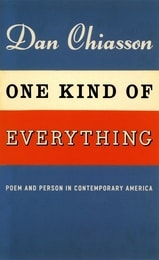
One Kind of Everything
Poem and Person in Contemporary AmericaDan Chiasson
University of Chicago Press, 2007
One Kind of Everything elucidates the uses of autobiography and constructions of personhood in American poetry since World War II, with helpful reference to American literature in general since Emerson. Taking on one of the most crucial issues in American poetry of the last fifty years, celebrated poet Dan Chiasson explores what is lost or gained when real-life experiences are made part of the subject matter and source material for poetry. In five extended, scholarly essays—on Robert Lowell, Elizabeth Bishop, Frank Bidart, Frank O’Hara, and Louise Glück—Chiasson looks specifically to bridge the chasm between formal and experimental poetry in the United States. Regardless of form, Chiasson argues that recent American poetry is most thoughtful when it engages most forcefully with autobiographical material, either in an effort to embrace it or denounce it.
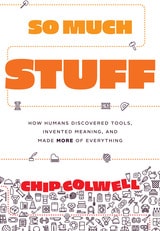
So Much Stuff
How Humans Discovered Tools, Invented Meaning, and Made More of EverythingChip Colwell
University of Chicago Press, 2023
Over three million years ago, our ancient ancestors realized that rocks could be broken into sharp-edged objects for slicing meat, making the first knives. This discovery resulted in a good meal and eventually changed the fate of our species and our planet.
With So Much Stuff, archaeologist Chip Colwell sets out to investigate why humankind went from self-sufficient primates to nonstop shoppers, from needing nothing to needing everything. Along the way, he uncovers spectacular and strange points around the world—an Italian cave with the world’s first known painted art, a Hong Kong skyscraper where a priestess channels the gods, and a mountain of trash that rivals the Statue of Liberty. Through these examples, Colwell shows how humanity took three leaps that led to stuff becoming inseparable from our lives, inspiring a love affair with things that may lead to our downfall. Now, as landfills brim and oceans drown in trash, Colwell issues a timely call to reevaluate our relationship with the things that both created and threaten to undo our overstuffed planet.
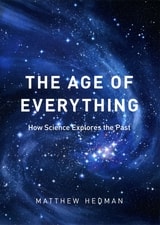
The Age of Everything
How Science Explores the PastMatthew Hedman
University of Chicago Press, 2007
Hedman details, for example, how interdisciplinary studies of the Great Pyramids of Egypt can determine exactly when and how these incredible structures were built. He shows how the remains of humble trees can illuminate how the surface of the sun has changed over the past ten millennia. And he also explores how the origins of the earth, solar system, and universe are being discerned with help from rocks that fall from the sky, the light from distant stars, and even the static seen on television sets.
Covering a wide range of time scales, from the Big Bang to human history, The Age of Everything is a provocative and far-ranging look at how science has determined the age of everything from modern mammals to the oldest stars, and will be indispensable for all armchair time travelers.
“We are used to being told confidently of an enormous, measurable past: that some collection of dusty bones is tens of thousands of years old, or that astronomical bodies have an age of some billions. But how exactly do scientists come to know these things? That is the subject of this quite fascinating book. . . . As told by Hedman, an astronomer, each story is a marvel of compressed exegesis that takes into account some of the most modern and intriguing hypotheses.”—Steven Poole, Guardian
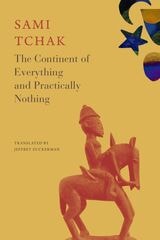
The Continent of Everything and Practically Nothing
Sami Tchak
Seagull Books, 2026
A Togolese novel that delivers a rich, intimate portrait of a scholar whose life is inextricably bound to Africa.
For the French ethnologist Maurice Boyer, Africa isn't just a place; it’s a mirage, an enigma, a mirror reflecting his desires and doubts. The fieldwork he undertook in Tèdi, Togo, where he lived for years among the Tem people and tried to understand their customs and rituals, has left him with questions that have lingered: Who was a friend and who was a foe? Which stories were true and which were illusions? As decades pass and the roles of Aurélie, his wife, and Safi, his former student, begin to shift, Boyer finds himself wrestling not only with his own choices but with the legacy of knowledge itself.
Through the lens of this profound postcolonial quest, Sami Tchak explores Africa’s rich, complex reality through this intimate story of a scholar reconsidering his own understanding of culture, ethnology, and history. The Continent of Everything and Practically Nothing asks whether assembling more data can truly capture the complexity of a continent, and explores how academic ambition, history, and emotion shape how we understand the world, and how we live in it.
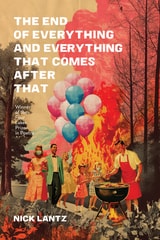
The End of Everything and Everything That Comes after That
Nick Lantz
University of Wisconsin Press, 2024
Mixing sincerity with irony, lyric with vernacular, Lantz’s collisions of style and subject are at their most vibrant in the long sequence at the center of the collection, a series of poems that brilliantly capture the disruption and disorder of our lives during the COVID-19 pandemic in breathless, unpunctuated verse. Depicting the uncanny dissonance of living during and beyond events that feel world ending, this volume reminds us of the ways in which we carry our own traumas and the traumas of history with us in our daily lives.
Life is all gilded frescoes
and Arnold Palmers
at the clubhouse until Titus and his men
pass through with torches,
until Cortés and his men
pass through with torches, until Sherman
and his men and so on,
until men forget
what their hands looked like without torches.
—Excerpt from “Ruin”
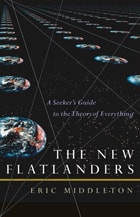
The New Flatlanders
A Seeker's Guide to the Theory of EverythingEric Middleton
Templeton Press, 2007
In The New Flatlanders, teacher, scientist, and chaplain Eric Middleton challenges traditional ways of looking at reality by engaging readers in a "voyage of discovery starting with questions." The book engagingly begins with a discussion group embarking on an exploratory conversation about the nature of the universe and the place of human beings in it. Daunting questions emerge, such as "How can there possibly be a tear or hole in three-dimensional space? And if there is a hole, can something fall through it? Where would it fall to?" In short order, students and teacher are on a quest to develop a "working theory of everything" that takes them from stone circles to quarks, superstrings, quantum theory, the anthropic principle, evolution, consciousness, miracles, chaos, and the spiritual universe.
The key to exploring these questions is finding a language with which to talk about the awe and wonder of today's science alongside the joy of experiencing the spiritual. This is done by interweaving into the discussions the philosophy of "Flatland," a nonreligious entry point to Jesus posited by nineteenth-century clergyman and educator Edwin A. Abbott in his classic parable Flatland: A Romance of Many Dimensions.
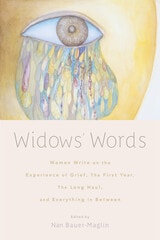
Widows' Words
Women Write on the Experience of Grief, the First Year, the Long Haul, and Everything in BetweenRutgers University Press, 2019
Some were widowed young, while others were married for decades. Some cared for their late partners through long terminal illnesses, while others lost their partners suddenly. Some had male partners, while others had female partners. Yet each of these women faced the same basic dilemma: how to go on living when a part of you is gone.
Widows’ Words is arranged chronologically, starting with stories of women preparing for their partners’ deaths, followed by the experiences of recent widows still reeling from their fresh loss, and culminating in the accounts of women who lost their partners many years ago but still experience waves of grief. Their accounts deal honestly with feelings of pain, sorrow, and despair, and yet there are also powerful expressions of strength, hope, and even joy. Whether you are a widow yourself or have simply experienced loss, you will be sure to find something moving and profound in these diverse tales of mourning, remembrance, and resilience.
ePortfolios@edu
What We Know, What We Don’t Know, and Everything In-BetweenMary Ann Dellinger
University Press of Colorado, 2021
This book is also available as an open access ebook through the WAC Clearinghouse.