Results by title
7 books match the query 'Evidence-based medicine'
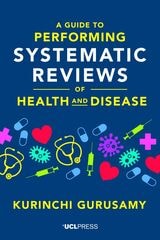
A Guide to Performing Systematic Reviews of Health and Disease
Kurinchi Gurusamy
University College London, 2025
Systematic reviews are the foundation of evidence-based healthcare, shaping treatment decisions and public health policies. A Guide to Performing Systematic Reviews of Health and Disease is a practical, step-by-step resource designed to help students and health professionals conduct high-quality reviews with confidence, even without extensive statistical training. This guide walks readers through the entire review process using free, open-source software. Each chapter features clear learning objectives and integrated videos to support hands-on learning.
Written by leading expert Kurinchi Gurusamy, this book simplifies complex research methodologies, making systematic reviews more accessible to a broad audience. Whether you are a novice researcher or a healthcare professional seeking to refine your evidence-based practice, this guide provides the essential tools to critically synthesize medical research. With an emphasis on clarity and real-world application, A Guide to Performing Systematic Reviews of Health and Disease is an indispensable resource for anyone looking to contribute to the ever-evolving landscape of healthcare research.
Bodies in Flux
Scientific Methods for Negotiating Medical UncertaintyChrista Teston
University of Chicago Press, 2017
Bodies in Flux explores the inventive ways humans and nonhumans work together to manufacture medical evidence. Each chapter draws on rhetorical theory to investigate a specific scientific method for negotiating medical uncertainty in cancer care, including evidential visualization, assessment, synthesis, and computation. Case studies unveil how doctors rely on visuals when deliberating about a patient’s treatment options, how members of the FDA use inferential statistics to predict a drug’s effectiveness, how researchers synthesize hundreds of clinical trials into a single evidence-based recommendation, and how genetic testing companies compute and commoditize human health. Teston concludes by advocating for an ethic of care that pushes back against the fetishization of certainty—an ethic of care that honors human fragility and bodily flux.
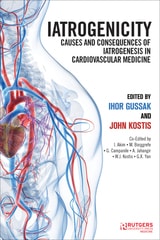
Iatrogenicity
Causes and Consequences of Iatrogenesis in Cardiovascular MedicineGussak, Ihor B
Rutgers University Press, 2017
Edited by two renowned cardiology experts, Iatrogenicity: Causes and Consequences of Iatrogenesis in Cardiovascular Medicine addresses both the iatrogenicity that arises with cardiovascular interventions, as well as non-cardiovascular interventions that result in adverse consequences on the cardiovascular system. The book aims to achieve three things: to summarize the available information on this topic in a single high-yield volume; to highlight the human and financial cost of iatrogenesis; and to describe and propose potential interventions to ameliorate the effects of iatrogenesis. This accessible book is a practical reference for any practicing physician who sees patients with cardiovascular issues. .
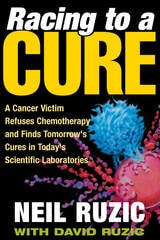
Racing to a Cure
A Cancer Victim Refuses Chemotherapy and Finds Tomorrow's Cures in Today's Scientific LaboratoriesNeil Ruzic
University of Illinois Press, 2003
Although chemotherapy harms the immune system and is increasingly demonstrated to be an ineffective long-term cure for the vast majority of cancers, it remains the standard treatment for most cancer patients. Ruzic, a former scientific magazine publisher and originator of a science center, refused to accept this status quo, and instead plunged into the world of cutting-edge treatments, exploring the frontiers of cancer science with revolutionary results.
Ruzic went on the offensive: visiting scores of laboratories, gathering information, talking to researchers, and effectively becoming his own patient-care advocate. This book presents his findings. A scathing critique of the chemotherapy culture as well as unscientific "alternative" therapies, the book endorses state-of-the-art molecularly based technologies, making it an illuminating and necessary read for anyone interested in cancer research, especially patients and their families and physicians.
Neil Ruzic was expected to die within two years of his initial diagnosis. Five years later he has been declared cancer-free and considers himself cured.
Research on Human Subjects
Problems of Social Control in Medical ExperimentationBernard Barber
Russell Sage Foundation, 1973
The Gold Standard
The Challenge Of Evidence-Based MedicineStefan Timmermans and Marc Berg
Temple University Press, 2003
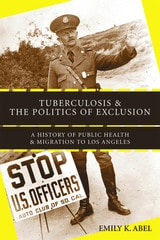
Tuberculosis and the Politics of Exclusion
A History of Public Health and Migration to Los AngelesAbel, Emily K.
Rutgers University Press, 2007
Winner of the 2008 Arthur J. Viseltear Prize from the American Public Health Association and Nominated for the 2008 William H. Welch Medal, AAHM
Though notorious for its polluted air today, the city of Los Angeles once touted itself as a health resort. After the arrival of the transcontinental railroad in 1876, publicists launched a campaign to portray the city as the promised land, circulating countless stories of miraculous cures for the sick and debilitated. As more and more migrants poured in, however, a gap emerged between the city’s glittering image and its dark reality.
Emily K. Abel shows how the association of the disease with “tramps” during the 1880s and 1890s and Dust Bowl refugees during the 1930s provoked exclusionary measures against both groups. In addition, public health officials sought not only to restrict the entry of Mexicans (the majority of immigrants) during the 1920s but also to expel them during the 1930s.
Abel’s revealing account provides a critical lens through which to view both the contemporary debate about immigration and the U.S. response to the emergent global tuberculosis epidemic.