Results by title
24 books match the query 'Exchange'
Ancestral Zuni Glaze-Decorated Pottery
Viewing Pueblo IV Regional Organization through Ceramic Production and ExchangeDeborah L. Huntley
University of Arizona Press, 2008
Archaeological Approaches to Market Exchange in Ancient Societies
Christopher P. Garraty
University Press of Colorado, 2010
Drawing from historical documents and archaeological records from Mesoamerica, the U.S. Southwest, East Africa, and the Andes, this volume reveals the complexity of ancient marketplace development and economic behavior both in hierarchical and non-hierarchical societies. Highlighting four principal themes-the defining characteristics of market exchange; the recognition of market exchange archaeologically; the relationship among market, political, and other social institutions; and the conditions in which market systems develop and change-the book contains a strong methodological and theoretical focus on market exchange.
Diverse contributions from noted scholars show the history of market exchange and other activities to be more dynamic than scholars previously appreciated. Archaeological Approaches to Market Exchange in Ancient Societies will be of interest to archaeologists, anthropologists, material-culture theorists, economists, and historians.

Chipped Stone Technological Organization
Central Place Foraging and Exchange on the Northern Great PlainsCraig M. Johnson
University of Utah Press, 2019
Central place foraging theory, through the field processing model, posits that the farther a source material is from the central living area, the more it will be processed before it is transported back, to avoid hauling heavy, nonusable parts on long trips. Johnson’s data support this theory and demonstrate that this model applies not only to nomadic hunter-gatherers but also to semisedentary farmer-hunters. His results also indicate that toolstone usage creates distinctive spatial patterns along the Missouri River, largely related to village distance from the sources. This is best illustrated with Knife River flint, which gradually declines in popularity downriver from its source in west-central North Dakota but increases in central South Dakota because of exchange.
Craft and the Kingly Ideal
Art, Trade, and PowerBy Mary W. Helms
University of Texas Press, 1993
In ancient Mediterranean cultures, diamonds were thought to endow their owners with invincibility. In contemporary United States culture, a foreign-made luxury car is believed to give its owner status and prestige. Where do these beliefs come from?
In this study of craft production and long-distance trade in traditional, nonindustrial societies, Mary W. Helms explores the power attributed to objects that either are produced by skilled artisans and/or come from "afar." She argues that fine artisanship and long-distance trade, both of which are more available to powerful elites than to ordinary people, are means of creating or acquiring tangible objects that embody intangible powers and energies from the cosmological realms of gods, ancestors, or heroes. Through the objects, these qualities become available to human society and confer honor and power on their possessors.
Helms’ novel approach equates trade with artistry and emphasizes acquisition rather than distribution. She rejects the classic Western separation between economics and aesthetics and offers a new paradigm for understanding traditional societies that will be of interest to all anthropologists and archaeologists.

Dangerous Gifts
Gender and Exchange in Ancient GreeceBy Deborah Lyons
University of Texas Press, 2012
Deianeira sends her husband Herakles a poisoned robe. Eriphyle trades the life of her husband Amphiaraos for a golden necklace. Atreus’s wife Aerope gives away the token of his sovereignty, a lamb with a golden fleece, to his brother Thyestes, who has seduced her. Gifts and exchanges always involve a certain risk in any culture, but in the ancient Greek imagination, women and gifts appear to be a particularly deadly combination.
This book explores the role of gender in exchange as represented in ancient Greek culture, including Homeric epic and tragedy, non-literary texts, and iconographic and historical evidence of various kinds. Using extensive insights from anthropological work on marriage, kinship, and exchange, as well as ethnographic parallels from other traditional societies, Deborah Lyons probes the gendered division of labor among both gods and mortals, the role of marriage (and its failure) in transforming women from objects to agents of exchange, the equivocal nature of women as exchange-partners, and the importance of the sister-brother bond in understanding the economic and social place of women in ancient Greece. Her findings not only enlarge our understanding of social attitudes and practices in Greek antiquity but also demonstrate the applicability of ethnographic techniques and anthropological theory to the study of ancient societies.
Deconstructing Communication
Representation, Subject, and Economies of ExchangeBriankle Chang
University of Minnesota Press, 1996
A philosophical critique of modern communication theories.
Situated at the intersection of current debates regarding meaning and representation, Deconstructing Communication casts doubt on the seeming innocence of the activity of communication. Using poststructuralist literary theory and philosophy, Briankle G. Chang argues that modern communication theories fail to provide an adequate explanation for how communication is possible.
Through a detailed examination of the basis of the idea of communication-with its semantic core of “commonality” or the transcendence of difference-Chang argues against the tendency of theorists to value understanding over misunderstanding, clarity over ambiguity, order over disorder. To this end the author revisits the thought of Derrida and considers deconstruction in general. Specifically, he uses the critique of the phenomenological tradition emerging from poststructuralism to clarify the commitments and assumptions inherent in models of communication. Chang then discusses the contributions of Husserl, particularly regarding the interconnections between concepts, metaphors, and rhetoric. He develops the strategy of deconstruction through a comparative analysis of Heidegger and Derrida, ultimately linking communication theory to the general question of philosophical reason. Chang concludes with a set of key questions about theory formation in the field, questions that elucidate the future direction for critical reflection in the philosophy of communication. A seminal work in communication theory, Deconstructing Communication will serve as the guiding framework for a constructive debate about the future direction of the field.
Economic Citizens
A Narrative of Asian American VisibilityChristine So
Temple University Press, 2009
In the past fifty years, according to Christine So, the narratives of many popular Asian American books have been dominated by economic questions-what money can buy, how money is lost, how money is circulated, and what labor or objects are worth. Focusing on books that have achieved mainstream popularity, Economic Citizens unveils the logic of economic exchange that determined Asian Americans’ transnational migrations and national belonging.
With penetrating insight, So examines literary works that have been successful in the U.S. marketplace but have been read previously by critics largely as narratives of alienation or assimilation, including Fifth Chinese Daughter, Flower Drum Song, Falling Leaves and Turning Japanese. In contrast to other studies that have focused on the marginalization of Asian Americans, Economic Citizens examines how Asian Americans have entered into the public sphere.

Exchange and the Maiden
Marriage in Sophoclean TragedyBy Kirk Ormand
University of Texas Press, 1999
Marriage is a central concern in five of the seven extant plays of the Greek tragedian Sophocles. In this pathfinding study, Kirk Ormand delves into the ways in which these plays represent and problematize marriage, thus offering insights into how Athenians thought about the institution of marriage.
Ormand takes a two-fold approach. He first explores the legal and economic underpinnings of Athenian marriage, an institution designed to guarantee the legitimate continuation of patrilineal households. He then shows how Sophocles' plays Trachiniae, Electra, Antigone, Ajax, and Oedipus Tyrannus both reinforce and critique this ideology by representing marriage as a homosocial exchange between men, in which women are objects who may attempt—but always fail—to become self-acting subjects.
These fresh readings provide the first systematic study of marriage in Sophocles. They draw important connections between drama and marriage as rituals concerned with controlling potentially disruptive female subjectivities.
Exchange of Ideas
The Economy of Higher Education in Early AmericaAdam R. Nelson
University of Chicago Press, 2023
Exchange of Ideas launches a breathtakingly ambitious new economic history of American higher education. In this volume, Adam R. Nelson focuses on the early republic, explaining how knowledge itself became a commodity, as useful ideas became salable goods and American colleges were drawn into transatlantic commercial relations. American scholars might once have imagined that higher education could sit beyond the sphere of market activity—that intellectual exchange could transcend vulgar consumerism—but already by the end of the eighteenth century, they saw how ideas could be factored into the nation’s balance of trade. Moreover, they concluded that it was the function of colleges to oversee the complex process whereby knowledge could be priced and purchased. The history of capitalism and the history of higher education, Nelson reveals, are intimately intertwined—which raises a host of important and strikingly urgent questions. How do we understand knowledge and education as commercial goods? Who should pay for them? And, fundamentally, what is the optimal system of higher education in a capitalist democracy?
Exploration and Exchange
A South Seas Anthology, 1680-1900Edited by Jonathan Lamb, Vanessa Smith, and Nicholas Thomas
University of Chicago Press, 2001
As George Vason's anguished narrative shows, European encounters with Pacific peoples often proved as wrenching to the Europeans as to the natives. This anthology gathers some of the most vivid accounts of these cultural exchanges for the first time, placing the works of well-known figures such as Captain James Cook and Robert Louis Stevenson alongside the writings of lesser-known explorers, missionaries, beachcombers, and literary travelers who roamed the South Seas from the late seventeenth through the late nineteenth centuries.
Here we discover the stories of the British buccaneers and privateers who were lured to the Pacific by stories of fabulous wealth; of the scientists, cartographers, and natural historians who tried to fit the missing bits of terra incognita into a universal scheme of knowledge; and of the varied settlers who established a permanent European presence in Polynesia and Australia. Through their detailed commentary on each piece and their choice of selections, the editors—all respected scholars of the literature and cultures of the Pacific—emphasize the mutuality of impact of these colonial encounters and the continuity of Pacific cultures that still have the power to transform visitors today.
Intimate Commerce
Exchange, Gender, and Subjectivity in Greek TragedyBy Victoria Wohl
University of Texas Press, 1997
Exchanges of women between men occur regularly in Greek tragedy—and almost always with catastrophic results. Instead of cementing bonds between men, such exchanges rend them. They allow women, who should be silent objects, to become monstrous subjects, while men often end up as lifeless corpses. But why do the tragedies always represent the transferal of women as disastrous?
Victoria Wohl offers an illuminating analysis of the exchange of women in Sophocles' Trachiniae, Aeschylus' Agamemnon, and Euripides' Alcestis. She shows how the attempts of women in these plays to become active subjects rather than passive objects of exchange inevitably fail. While these failures seem to validate male hegemony, the women's actions, however futile, blur the distinction between male subject and female object, calling into question the very nature of the tragic self. What the tragedies thus present, Wohl asserts, is not only an affirmation of Athens' reigning ideologies (including its gender hierarchy) but also the possibility of resistance to them and the imagination of alternatives.
Perspectives on Prehistoric Trade and Exchange in California and the Great Basin
Richard E. Hughes
University of Utah Press, 2011
How does prehistoric material get from its place of origin to its location of archaeological recovery? While this question may seem basic, a moment’s reflection suggests that the answers carry important implications for arc-haeological interpretation about social organization, settlement, and subsistence practices. Archaeologists know much about the temporal and spatial distribution of materials in prehistoric western North America, but comparatively little has emerged regarding the causes of such distributions. Trade and exchange, mobility, and direct access all have been credited with observed distributions, but the reasons for settling on specific behavioral linkages is rarely made clear.
This volume investigates the circumstances and conditions under which trade/exchange, direct access, and/or mobility best account for material conveyance across varying distances at different times in the past. Each chapter contextualizes distributional and chemical data, evaluates competing distribution hypotheses, and addresses the reasoning and inferences employed to arrive at conclusions about the human behaviors responsible for the distributions of materials. Contributors showcase a range of diverse and creative ways of thinking about these issues in the California and Great Basin archaeological record, and why it matters.

Ravenna
its role in earlier medieval change and exchangeVolume editor Judith Herrin and Jinty Nelson
University of London Press, 2016
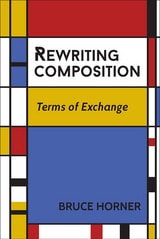
Rewriting Composition
Terms of ExchangeBruce Horner
Southern Illinois University Press, 2016
Each chapter of Rewriting Composition focuses on one key term, discussing how limitations set by dominant definitions shape and direct what compositionists do and how they think about their work. The first chapter, “Composition,” critiques a discourse of composition as lacking and therefore as in need of being either put to an end, renamed, aligned with other fields, or supplemented with work in other disciplines or other forms of composition. Rather than seeing composition as something to be abandoned, replaced, or supplemented, Horner suggests ways of productively engaging with the ordinary work of composition whose ostensible lack is assumed in the dominant discourse. Subsequent chapters apply this reconsideration to other key terms, critiquing dominant conceptions of “language” and English as stable; examining how “labor” in composition is divorced from the productive force of social relations to which language work contributes; rethinking the terms of value by which the labor of composition teachers, administrators, and students is measured; and questioning the application of conventional definitions of professional academic disciplinarity to composition. By exposing limitations in dominant conceptions of the work of composition and by modeling and opening up space for new conceptions of key terms, Rewriting Composition offers teachers of composition and rhetoric, writing scholars, and writing program administrators the critical tools necessary for charting the future of composition studies.
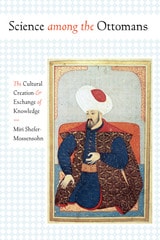
Science among the Ottomans
The Cultural Creation and Exchange of KnowledgeBy Miri Shefer-Mossensohn
University of Texas Press, 2015
Scholars have long thought that, following the Muslim Golden Age of the medieval era, the Ottoman Empire grew culturally and technologically isolated, losing interest in innovation and placing the empire on a path toward stagnation and decline. Science among the Ottomans challenges this widely accepted Western image of the nineteenth- and early twentieth-century Ottomans as backward and impoverished.
In the first book on this topic in English in over sixty years, Miri Shefer-Mossensohn contends that Ottoman society and culture created a fertile environment that fostered diverse scientific activity. She demonstrates that the Ottomans excelled in adapting the inventions of others to their own needs and improving them. For example, in 1877, the Ottoman Empire boasted the seventh-longest electric telegraph system in the world; indeed, the Ottomans were among the era’s most advanced nations with regard to modern communication infrastructure. To substantiate her claims about science in the empire, Shefer-Mossensohn studies patterns of learning; state involvement in technological activities; and Turkish- and Arabic-speaking Ottomans who produced, consumed, and altered scientific practices. The results reveal Ottoman participation in science to have been a dynamic force that helped sustain the six-hundred-year empire.

Tattoo
Bodies, Art, and Exchange in the Pacific and the WestNicholas Thomas, Anna Cole, and Bronwen Douglas, eds.
Duke University Press, 2005
The contributors examine the contexts in which Pacific tattoos were “discovered” by Europeans, track the history of the tattooing of Europeans visiting the region, and look at how Pacific tattooing was absorbed, revalued, and often suppressed by agents of European colonization. They consider how European art has incorporated tattooing, and they explore contemporary manifestations of Pacific tattoo art, paying particular attention to the different trajectories of Samoan, Tahitian, and Maori tattooing and to the meaning of present-day appropriations of tribal tattoos. New research has uncovered a fascinating visual archive of centuries-old tattoo images, and this richly illustrated volume includes a number of those—many published here for the first time—alongside images of contemporary tattooing in Polynesia and Europe. Tattoo offers a tantalizing glimpse into the plethora of stories and cross-cultural encounters that lie between the blood on a sailor’s backside in the eighteenth century and the hammering of a Samoan tattoo tool in the twenty-first.
Contributors. Peter Brunt, Anna Cole, Anne D’Alleva, Bronwen Douglas, Elena Govor, Makiko Kuwahara, Sean Mallon, Linda Waimarie Nikora, Mohi Rua, Cyril Siorat, Ngahuia Te Awekotuku, Nicholas Thomas, Joanna White
Terms of Exchange
Brazilian Intellectuals and the French Social SciencesIan Merkel
University of Chicago Press, 2022
Would the most recognizable ideas in the French social sciences have developed without the influence of Brazilian intellectuals? While any study of Brazilian social sciences acknowledges the influence of French scholars, Ian Merkel argues the reverse is also true: the “French” social sciences were profoundly marked by Brazilian intellectual thought, particularly through the University of São Paulo. Through the idea of the “cluster,” Merkel traces the intertwined networks of Claude Lévi-Strauss, Fernand Braudel, Roger Bastide, and Pierre Monbeig as they overlapped at USP and engaged with Brazilian scholars such as Mário de Andrade, Gilberto Freyre, and Caio Prado Jr..
Through this collective intellectual biography of Brazilian and French social sciences, Terms of Exchange reveals connections that shed new light on the Annales school, structuralism, and racial democracy, even as it prompts us to revisit established thinking on the process of knowledge formation through fieldwork and intellectual exchange. At a time when canons are being rewritten, this book reframes the history of modern social scientific thought.
The Commerce of War
Exchange and Social Order in Latin EpicNeil Coffee
University of Chicago Press, 2009
Latin epics such as Virgil’s Aeneid, Lucan’s Civil War, and Statius’s Thebaid addressed Roman aristocrats whose dealings in gifts, favors, and payments defined their conceptions of social order. In The Commerce of War, Neil Coffee argues that these exchanges play a central yet overlooked role in epic depictions of Roman society.
Tracing the collapse of an aristocratic worldview across all three poems, Coffee highlights the distinction they draw between reciprocal gift giving among elites and the more problematic behaviors of buying and selling. In the Aeneid, customary gift and favor exchanges are undermined by characters who view human interaction as short-term and commodity-driven. The Civil War takes the next logical step, illuminating how Romans cope once commercial greed has supplanted traditional values. Concluding with the Thebaid, which focuses on the problems of excessive consumption rather than exchange, Coffee closes his powerful case that these poems constitute far-reaching critiques of Roman society during its transition from republic to empire.
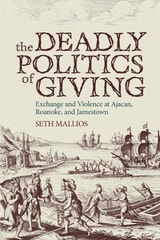
The Deadly Politics of Giving
Exchange and Violence at Ajacan, Roanoke, and JamestownSeth Mallios
University of Alabama Press, 2006
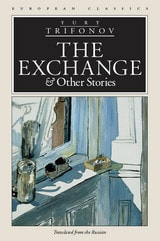
The Exchange and Other Stories
Yuri Trifonov
Northwestern University Press, 2002
Yury Trifonov took a turn toward the controversial, and a leap toward greatness, with the publication of the two novellas included in this collection. "The Exchange" and "The Long Goodbye" depict the complex dilemmas and compromises of Russian life after World War II. These works, along with the short stories "Games at Dusk" and "A Short Stay in the Torture Chamber," detail the moral and spiritual decline in Russia that resulted from the growing distance between the theoretical idealism of the Soviet state and the actual materialism and careerism that increasingly marked society.
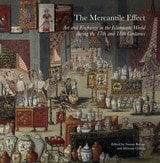
The Mercantile Effect
Art and Exchange in the Islamicate World During the 17th and 18th CenturiesEdited by Sussan Babaie and Melanie Gibson
Gingko, 2017
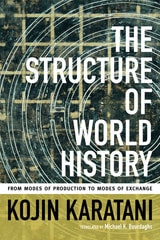
The Structure of World History
From Modes of Production to Modes of ExchangeKojin Karatani
Duke University Press, 2014
Tokens of Exchange
The Problem of Translation in Global CirculationsLydia H. Liu, ed.
Duke University Press, 1999
By studying the production and circulation of meaning as value in areas including history, religion, language, law, visual art, music, and pedagogy, essays consider exchanges between Jesuit and Protestant missionaries and the Chinese between the seventeenth and nineteenth centuries and focus on the interchanges occasioned by the spread of capitalism and imperialism. Concentrating on ideological reciprocity and nonreciprocity in science, medicine, and cultural pathologies, contributors also posit that such exchanges often lead to racialized and essentialized ideas about culture, sexuality, and nation. The collection turns to the role of language itself as a site of the universalization of knowledge in its contemplation of such processes as the invention of Basic English and the global teaching of the English language. By focusing on the moments wherein meaning-value is exchanged in the translation from one language to another, the essays highlight the circulation of the global in the local as they address the role played by historical translation in the universalizing processes of modernity and globalization.
The collection will engage students and scholars of global cultural processes, Chinese studies, world history, literary studies, history of science, and anthropology, as well as cultural and postcolonial studies.
Contributors. Jianhua Chen, Nancy Chen, Alexis Dudden Eastwood, Roger Hart, Larissa Heinrich, James Hevia, Andrew F. Jones, Wan Shun Eva Lam, Lydia H. Liu, Deborah T. L. Sang, Haun Saussy, Q. S. Tong, Qiong Zhang

Trust, Ethnicity, and Identity
Beyond the New Institutional Economics of Ethnic Trading Networks, Contract Law, and Gift-ExchangeJanet Tai Landa
University of Michigan Press, 1995
Trust, Ethnicity, and Identity deals with the economic role of laws and institutions in achieving social order in a decentralized economy. Specifically, this book considers the coordinating role of three major nonprice institutions--ethnic trading networks, contract law, and gift-exchange--in economizing on transaction costs and thus facilitating the process of exchange in decentralized economies in different historical contexts.
The major unifying theme of the book is this: identity matters when traders operate in an environment characterized by contract uncertainty, where the legal framework for the enforcement of contracts is not well developed. This in turn points out the importance of trust embedded in particularistic exchange relations such as kinship or ethnicity.
One unique facet of this book is that the author uses a property rights--public choice approach--part of the New Institutional Economics--to provide a unifying theoretical framework to explain such diverse exchange institutions as contract law, ethnic trading networks, and gift-exchange, In addition, it goes beyond the New Institutional Economics paradigm by incorporating some crucial concepts from sociology, anthropology, and bioeconomics, such as social structure, social norms, culture, reciprocity, and kin-related altruism. This broad interdisciplinary framework gives Landa's work a relevance beyond economics to law, political science, sociology, anthropology, and bioeconomics.