Results by title
21 books match the query 'Eye'

All about Your Eyes
Sharon Fekrat, M.D., FACS and Jennifer S. Weizer, M.D., eds.
Duke University Press, 2005
In this reliable guide, leading eye care experts:
—explain how healthy eyes work
—describe various eye diseases, including pink eye, cataract, glaucoma, age-related macular degeneration, and diabetic retinopathy
—provide up-to-date information on eye surgery, including refractive, laser, and cosmetic
For each eye problem, the authors describe in simple, straightforward language
—what it is
—the symptoms
—what, if anything, you can do to prevent it
—when to call the doctor
—the treatment
—the likelihood of recovery
All about Your Eyes includes a glossary of technical terms and, following each entry, links to web sites where further information may be found.
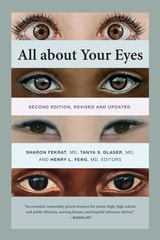
All about Your Eyes, Second Edition, revised and updated
Sharon Fekrat, Tanya S. Glaser, and Henry L. Feng, editors
Duke University Press, 2021
* explain eye anatomy and how healthy eyes work
* describe various eye diseases, including pink eye, cataract, glaucoma, age-related macular degeneration, and diabetic retinopathy
* provide up-to-date information on surgery
For each eye problem, the authors describe in simple, straightforward language:
* what it is
* the symptoms
* what, if anything, you can do to prevent it
* when to call the doctor
* diagnostic tests and treatment
* the likelihood of recovery
All about Your Eyes includes a glossary of technical terms and, following each entry, links to websites where further information may be found.
Contributors. Natalie A. Afshari, MD, Rosanna P. Bahadur, MD, Paramjit K. Bhullar, MD, Faith A. Birnbaum, MD, Cassandra C. Brooks, MD, Pratap Challa, MD, Melissa Mei-Hsia Chan, MBBS, Ravi Chandrashekhar, MD, MSEE, Nathan Cheung, OD, FAAO Claudia S. Cohen, MD, Vincent A. Deramo, MD, Cathy DiBernardo, RN, Laura B. Enyedi, MD, Sharon Fekrat, MD, Henry L. Feng, MD, Brenton D. Finklea, MD, Anna Ginter, MD, Tanya S. Glaser, MD, Michelle Sy Go, MD, MS, Mark Goerlitz-Jessen, MD, Herb Greenman, MD, Abhilash Guduru, MD, Preeya Gupta, MD, Renee Halberg, MSW, LCSW, S. Tammy Hsu, MD, Alessandro Iannaccone, MD, MS, FARVO, Charlene L. James, OD, Kim Jiramongkolchai, MD, Michael P. Kelly, FOPS, Muge R. Kesen, MD, Kirin Khan, MD, Wajiha Jurdi Kheir, MD, Jane S. Kim, MD, Jennifer Lira, MD, Katy C. Liu, MD, PhD, Ramiro S. Maldonado, MD, Ankur Mehra, MD, Priyatham S. Mettu, MD, Prithvi Mruthyunjaya, MD, MHS, Nisha Mukherjee, MD, Kenneth Neufeld, MD, Kristen Peterson, MD, James H. Powers, MD, S. Grace Prakalapakorn, MD, MPH, Michael Quist, MD, Leon Rafailov, MD, Roshni Ranjit-Reeves, MD, Nikolas Raufi, MD, William Raynor, BS, Cason Robbins, BS, Ananth Sastry, MD, Dianna L. Seldomridge, MD, MBA, Terry Semchyshyn, MD, Ann Shue, MD, Julia Song, MD, Brian Stagg, MD, Christopher Sun, MBBS, Anthony Therattil, BS, Daniel S.W. Ting, MBBS, Fay Jobe Tripp, MS, OTR/L, CLVT, CDRS, Obinna Umunakwe, MD, PhD, Lejla Vajzovic, MD, Susan M. Wakil, MD, C. Ellis Wisely, MD, MBA, Julie A. Woodward, MD
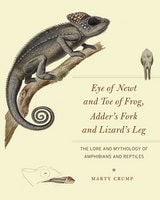
Eye of Newt and Toe of Frog, Adder's Fork and Lizard's Leg
The Lore and Mythology of Amphibians and ReptilesMarty Crump
University of Chicago Press, 2015
Frogs are worshipped for bringing nourishing rains, but blamed for devastating floods. Turtles are admired for their wisdom and longevity, but ridiculed for their sluggish and cowardly behavior. Snakes are respected for their ability to heal and restore life, but despised as symbols of evil. Lizards are revered as beneficent guardian spirits, but feared as the Devil himself.
In this ode to toads and snakes, newts and tuatara, crocodiles and tortoises, herpetologist and science writer Marty Crump explores folklore across the world and throughout time. From creation myths to trickster tales; from associations with fertility and rebirth to fire and rain; and from the use of herps in folk medicines and magic, as food, pets, and gods, to their roles in literature, visual art, music, and dance, Crump reveals both our love and hatred of amphibians and reptiles—and their perceived power. In a world where we keep home terrariums at the same time that we battle invasive cane toads, and where public attitudes often dictate that the cute and cuddly receive conservation priority over the slimy and venomous, she shows how our complex and conflicting perceptions threaten the conservation of these ecologically vital animals.
Sumptuously illustrated, Eye of Newt and Toe of Frog, Adder’s Fork and Lizard’s Leg is a beautiful and enthralling brew of natural history and folklore, sobering science and humor, that leaves us with one irrefutable lesson: love herps. Warts, scales, and all.
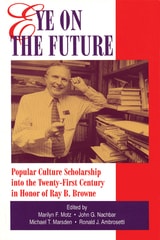
Eye on the Future
Popular Culture Scholarship into the Twenty-First Century in Honor of Ray B. BrowneMarilyn F. Motz
University of Wisconsin Press, 1994
This collection includes essays by scholars from around the world and five of Ray Browne's essays which he considers signal. The purpose of this book is to chart Popular Culture Studies into the next century.
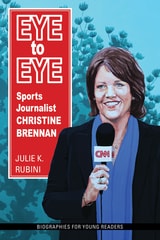
Eye to Eye
Sports Journalist Christine BrennanJulie K. Rubini
Ohio University Press, 2019
Christine Brennan, the USA Today sports columnist, author, and commentator, uses her voice to advocate for diversity and equality in the world of sports, and her wisdom to encourage future journalists. Her passion for sports was sparked by her dad, who encouraged her to participate in athletics and, as he said, “smell the game”—go watch baseball and football games together.
As a child, Christine wrote daily entries in her diary and listened to play-by-play coverage on her radio. She pursued this love of words through journalism school and applied her passion for sports by reporting on them for various newspapers. Since then, she has portrayed the setbacks and triumphs of athletes, all the while fighting her own battles for success—and respect—as a female journalist.
From knocking down barriers in NFL locker rooms to covering every Olympics since 1984 to being the go-to commentator whenever scandal occurs in the sports world, Christine Brennan has done it all. Eye to Eye invites young readers to learn more about this remarkable journalist and perhaps to nurture their own dreams of investigating and telling important stories.
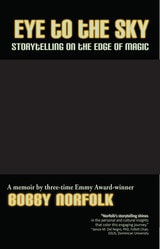
Eye to the Sky
Storytelling on the Edge of MagicBobby Norfolk
Parkhurst Brothers, Inc., 2016
Nobody knows how to tell a story like Bobby Norfolk, and here he tells his own life story. Norfolk grew up in hardscrabble neighborhoods of Saint Louis, Missouri, during the 1950s and 60s, sometimes walking to elementary school from an apartment his parents could not afford to heat. Lifting himself up by force of will and God-given talent, Norfolk defeated a childhood stutter to become a high school dramatist and later an exceptional college student. The path was never easy—and often frightening. With men of color being killed all-too-frequently in America, Norfolk sought a personal identity based upon talent and hard work, but also upon where safety and justice might be found. He tells these stories—some heartwarming or humorous, some frightful and treacherous—honestly, with a graceful mindfulness that all would do well to emulate.
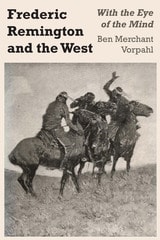
Frederic Remington and the West
With the Eye of the MindBy Ben Merchant Vorpahl
University of Texas Press, 1978
Frederic Remington and the West sheds new light on the remarkably complicated and much misunderstood career of Frederic Remington. This study of the complex relationship between Remington and the American West focuses on the artist’s imagination and how it expressed itself. Ben Merchant Vorpahl takes into account all the dimensions of Remington’s extensive work—from journalism to fiction, sculpture, and painting. He traces the events of Remington’s life and makes extensive use of literary and art criticism and nineteenth-century American social cultural and military history in interpreting his work.
Vorpahl reveals Remington as a talented, sensitive, and sometimes neurotic American whose work reflects with peculiar force the excitement and distress of the period between the Civil War and the Spanish-American War. Remington was not a “western” artist in the conventional sense; neither was he a historian: he lacked the historian’s breadth of vision and discipline, expressing himself not through analysis but through synthesis. Vorpahl shows that, even while Remington catered to the sometimes maudlin, sometimes jingoistic tastes of his public and his editors, his resourceful imagination was at work devising a far more demanding and worthwhile design—a composite work, executed in prose, pictures, and bronze. This body of work, as the author demonstrates, demands to be regarded as an interrelated whole. Here guilt, shame, and personal failure are honestly articulated, and death itself is confronted as the artist’s chief subject.
Because Remington was so prolific a painter, sculptor, illustrator, and writer, and because his subjects, techniques, and media were so apparently diverse, the deeper continuity of his work had not previously been recognized. This study is a major contribution to our understanding of an important American artist. In addition, Vorpahl illuminates the interplay between history, artistic consciousness, and the development of America’s sense of itself during Remington’s lifetime.
In the Eye of the Beholder
Critical Perspectives in Popular Film and TelevisionEdited by Gary R. Ederton, Michael T. Marsden, and Jack Nachbar
University of Wisconsin Press, 1997
Less than Meets the Eye
Foreign Policy Making and the Myth of the Assertive CongressBarbara Hinckley
University of Chicago Press, 1994
What Hinckley reveals is sharply at odds with conventional wisdom and unflattering to both the executive and the legislative branches of government. More than a critical reassessment, this book also proposes reforms than might result in real congressional participation in the making of foreign policy. With its insight into how our system of checks and balances works—and doesn't—this book takes a first step toward making the peoples' representatives accountable for crucial American interests in foreign matters.
More Than Meets the Eye
Revealing the Complexities of an Interpreted EducationMelissa B. Smith
Gallaudet University Press, 2013
Sign language interpreters often offer the primary avenue of access for deaf and hard of hearing students in public schools. More than 80% of all deaf children today are mainstreamed, and few of their teachers sign well enough to provide them with full access. As a result, many K-12 interpreters perform multiple roles beyond interpreting. Yet, very little is known about what they actually do and what factors inform their moment-to-moment decisions. This volume presents the range of activities and responsibilities performed by educational interpreters, and illuminates what they consider when making decisions.
To learn about the roles of K-12 interpreters, author Melissa B. Smith conducted in-depth analyses at three different schools. She learned that in response to what interpreters feel that their deaf students need, many focus on three key areas: 1) visual access, 2) language and learning, and 3) social and academic participation/inclusion. To best serve their deaf students in these contexts, they perform five critical functions: they assess and respond to the needs and abilities of deaf students; they interpret with or without modification as they deem appropriate; they capitalize on available resources; they rely on interactions with teachers and students to inform their choices; and they take on additional responsibilities as the need arises.
Pow! Right in the Eye!
Thirty Years behind the Scenes of Modern French PaintingBerthe Weill
University of Chicago Press, 2022
Berthe Weill, a formidable Parisian dealer, was born into a Jewish family of very modest means. One of the first female gallerists in the business, she first opened the Galerie B. Weill in the heart of Paris’s art gallery district in 1901, holding innumerable exhibitions over nearly forty years. Written out of art history for decades, Weill has only recently regained the recognition she deserves.
Under five feet tall and bespectacled, Weill was beloved by the artists she supported, and she rejected the exploitative business practices common among art dealers. Despite being a self-proclaimed “terrible businesswoman,” Weill kept her gallery open for four decades, defying the rising tide of antisemitism before Germany’s occupation of France. By the time of her death in 1951, Weill had promoted more than three hundred artists—including Henri Matisse, Pablo Picasso, Amedeo Modigliani, Diego Rivera, and Suzanne Valadon—many of whom were women and nearly all young and unknown when she first exhibited them.
Pow! Right in the Eye! makes Weill’s provocative 1933 memoir finally available to English readers, offering rare insights into the Parisian avant-garde and a lively inside account of the development of the modern art market.
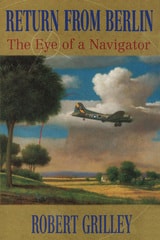
Return from Berlin
The Eye of a NavigatorRobert Grilley
University of Wisconsin Press, 2003
Wakened with flashlights on their faces in the predawn hours, he and his crew repeatedly face the Luftwaffe in battles five miles high, flying through flak "so thick you could get out and walk on it." Stretching their stamina to the limits, they succeed time after time in their missions to bomb munitions works, railyards, the Leüna synthetic oil plant at Merseburg in eastern Germany, the V2 rocket research center at Peenemünde on the distant Baltic Coast, and even to strike Hitler’s capital city, Berlin.
But Grilley finds interludes of unexpected grace and restoration on his days off, making serious drawings from nature at the neighboring Yokehill Farm. There he slowly cultivates a friendship with a curious eight-year-old, the lively child Elizabeth, who becomes for the combat flyer a symbol of survival.
The Affinity of the Eye
Writing Nikkei in PeruIgnacio López-Calvo
University of Arizona Press, 2013
In The Affinity of the Eye: Writing Nikkei in Peru, Ignacio López-Calvo rises above the political emergence of the Fujimori phenomenon and uses politics and literature to provide one of the first comprehensive looks at how the Japanese assimilated and inserted themselves into Peruvian culture. Through contemporary writers’ testimonies, essays, fiction, and poetry, López-Calvo constructs an account of the cultural formation of Japanese migrant communities. With deftly sensitive interviews and comments, he portrays the difficulties of being a Japanese Peruvian. Despite a few notable examples, Asian Peruvians have been excluded from a sense of belonging or national identity in Peru, which provides López-Calvo with the opportunity to record what the community says about their own cultural production. In so doing, López-Calvo challenges fixed notions of Japanese Peruvian identity.
The Affinity of the Eye scrutinizes authors such as José Watanabe, Fernando Iwasaki, Augusto Higa, Doris Moromisato, and Carlos Yushimito, discussing their literature and their connections to the past, present, and future. Whether these authors push against or accept what it means to be Japanese Peruvians, they enrich the images and feelings of that experience. Through a close reading of literary and cultural productions, López-Calvo’s analysis challenges and reframes the parameters of being Nikkei in Peru.
Covering both Japanese issues in Peru and Peruvian issues in Japan, the book is more than a compendium of stories, characters, and titles. It proves the fluid, enriching, and ongoing relationship that exists between Peru and Japan.
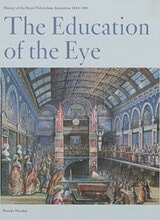
The Education of the Eye
History of the Royal Polytechnic Institution 1838-1881Brenda Weeden
University of Westminster Press, 2008
The Royal Polytechnic Institution's story is the first episode in the long, diverse history of the University of Westminster. Drawing on an extensive range of primary and secondary sources this book explores the Institution's reputation for visual spectacle and the popularisation of science. It is lavishly illustrated with contemporary images.
The Eye of Command
Kimberly Kagan
University of Michigan Press, 2006
Challenging Keegan's seminal work, The Eye of Command offers a new approach to studying and narrating battles, based upon an analysis of the works of the Roman military authors Julius Caesar and Ammianus Marcellinus. Kimberly Kagan argues that historians cannot explain a battle's outcome solely on the basis of soldiers' accounts of small-unit actions. A commander's view, exemplified in Caesar's narratives, helps explain the significance of a battle's major events, how they relate to one another and how they lead to a battle's outcome. The "eye of command" approach also answers fundamental questions about the way commanders perceive battles as they fight them-questions modern military historians have largely ignored.
"The Eye of Command is a remarkable book-smart, thoughtful, clear, vigorous, factual but creative, and grounded in the practical. It is at once scholarly and readable, combining classical scholarship and military theory. Rarely have I come across a book that makes two-thousand-year-old events seem so alive."
-Barry Strauss, Professor of History, Cornell University
"In a work well written, concisely presented, and convincingly argued, Kagan uses examples from Caesar's Gallic Wars to challenge John Keegan's focus on lower-echelon experiences of battle in favor of 'The eye of command': a narrative technique emphasizing decisions and events that shape a battle's outcome."
-Dennis Showalter, Professor of History, Colorado College
"To know whether a battle is won or lost is not enough. Kagan's deep analysis of theory and practice points to a new way of understanding complex army-commander and small-unit perspectives that can properly claim the status of history."
-Gordon Williams, Thacher Professor of Latin Emeritus, Yale University
Kimberly Kagan was an Assistant Professor of History at the United States Military Academy between 2000 and 2005. Since then, she has served as a lecturer in International Affairs, History, and the Humanities at Yale University and as an adjunct professor at Georgetown's Edmund A. Walsh School of Foreign Service and at American University's Department of History. She received her Ph.D. in Ancient History from Yale University.
The Eye of War
Military Perception from the Telescope to the DroneAntoine Bousquet
University of Minnesota Press, 2018
How perceptual technologies have shaped the history of war from the Renaissance to the present
From ubiquitous surveillance to drone strikes that put “warheads onto foreheads,” we live in a world of globalized, individualized targeting. The perils are great. In The Eye of War, Antoine Bousquet provides both a sweeping historical overview of military perception technologies and a disquieting lens on a world that is, increasingly, one in which anything or anyone that can be perceived can be destroyed—in which to see is to destroy.
Arguing that modern-day global targeting is dissolving the conventionally bounded spaces of armed conflict, Bousquet shows that over several centuries, a logistical order of militarized perception has come into ascendancy, bringing perception and annihilation into ever-closer alignment. The efforts deployed to evade this deadly visibility have correspondingly intensified, yielding practices of radical concealment that presage a wholesale disappearance of the customary space of the battlefield. Beginning with the Renaissance’s fateful discovery of linear perspective, The Eye of War discloses the entanglement of the sciences and techniques of perception, representation, and localization in the modern era amid the perpetual quest for military superiority. In a survey that ranges from the telescope, aerial photograph, and gridded map to radar, digital imaging, and the geographic information system, Bousquet shows how successive technological systems have profoundly shaped the history of warfare and the experience of soldiering.
A work of grand historical sweep and remarkable analytical power, The Eye of War explores the implications of militarized perception for the character of war in the twenty-first century and the place of human subjects within its increasingly technical armature.
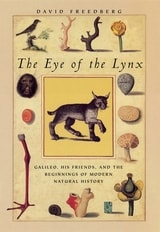
The Eye of the Lynx
Galileo, His Friends, and the Beginnings of Modern Natural HistoryDavid Freedberg
University of Chicago Press, 2003
Founded by Prince Federico Cesi in 1603, the Linceans took as their task nothing less than the documentation and classification of all of nature in pictorial form. In this first book-length study of the Linceans to appear in English, Freedberg focuses especially on their unprecedented use of drawings based on microscopic observation and other new techniques of visualization. Where previous thinkers had classified objects based mainly on similarities of external appearance, the Linceans instead turned increasingly to sectioning, dissection, and observation of internal structures. They applied their new research techniques to an incredible variety of subjects, from the objects in the heavens studied by their most famous (and infamous) member Galileo Galilei—whom they supported at the most critical moments of his career—to the flora and fauna of Mexico, bees, fossils, and the reproduction of plants and fungi. But by demonstrating the inadequacy of surface structures for ordering the world, the Linceans unwittingly planted the seeds for the demise of their own favorite method—visual description-as a mode of scientific classification.
Profusely illustrated and engagingly written, Eye of the Lynx uncovers a crucial episode in the development of visual representation and natural history. And perhaps as important, it offers readers a dazzling array of early modern drawings, from magnificently depicted birds and flowers to frogs in amber, monstrously misshapen citrus fruits, and more.
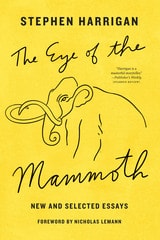
The Eye of the Mammoth
New and Selected EssaysBy Stephen Harrigan; foreword by Nicholas Lemann
University of Texas Press, 2013
History—natural history, human history, and personal history—and place are the cornerstones of The Eye of the Mammoth. Stephen Harrigan's career has taken him from the Alaska Highway to the Chihuahuan Desert, from the casinos of Monaco to his ancestors' village in the Czech Republic. And now, in this new edition, he movingly recounts in "Off Course" a quest to learn all he can about his father, who died in a plane crash six months before he was born.
Harrigan's deceptively straightforward voice belies an intense curiosity about things that, by his own admission, may be "unknowable." Certainly, we are limited in what we can know about the inner life of George Washington, the last days of Davy Crockett, the motives of a caged tiger, or a father we never met, but Harrigan's gift—a gift that has also made him an award-winning novelist—is to bring readers closer to such things, to make them less remote, just as a cave painting in the title essay eerily transmits the living stare of a long-extinct mammoth.
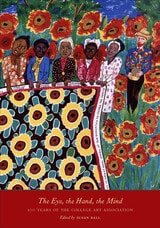
The Eye, the Hand, the Mind
100 Years of the College Art AssociationBall, Susan
Rutgers University Press, 2011
The Eye, the Hand, the Mind is a collaborative journey, filled with pictorial mementoes and enlivening stories and anecdotes. Its pages unfold along a path-an architectural framework-that connects the organization's sixteen goals and tells its rich, sometimes controversial, story. Readers will discover the important role the CAA played in major issues in higher education such as curriculum development, preservation of world monuments, workforce issues and market equity, intellectual property and free speech, capturing conflicts and reconciliations inherent among artists and art historians, pedagogical approaches and critical interpretations/interventions as played out in association publications, annual conferences, advocacy efforts, and governance.
Celebrating the centennial of CAA members and milestones, Susan Ball and renowned contributors honor the organization's complex history which, in part, also represents many learned societies and the humanities over the last one hundred years.
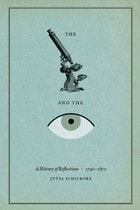
The Microscope and the Eye
A History of Reflections, 1740-1870Jutta Schickore
University of Chicago Press, 2007
Concentrating on Great Britain and the German lands—home to the period’s most significant developments in microscopy—The Microscope and the Eye examines debates about such subjects as the legitimacy of human trespassing on the microcosm and the nature of light. Schickore also explores the microscope’s role in investigations of the finer structure of the eye and the workings of nerve fibers and the microscopists’ reflections on vision, illusion, artifacts, and the merits of instruments. Fully considering the epistemological, metaphysical, and methodological implications of this centuries-old relationship, The Microscope and the Eye will be an important contribution to the history of the life sciences, vision studies, and scientific methodology.
The Wonderful Art of the Eye
A Critical Edition of the Middle English Translation of his De Probatissimo Arte OculorumL. M. Eldredge
Michigan State University Press, 1996
A thirteenth-century treatise on the theory and practice of ophthalmology, this unique work provides a window on what passed for medical knowledge of the eye during the late Middle Ages. Although little is known of the author, Benevenutus Grassus, he seems to have roamed Italy in the early thirteenth century as a medical practitioner specializing in diseases of the eye.