Results by title
39 books match the query 'Fagan, Teresa Lavender'
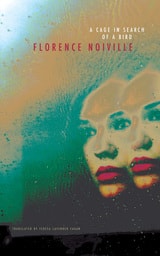
A Cage in Search of a Bird
Florence Noiville
Seagull Books, 2016
Laura Wilmote is a television journalist living in Paris. Her life couldn’t be better—a stimulating job, a loving boyfriend, interesting friends—until her phone rings in the middle of one night. It is C., an old school friend whom Laura recently helped find a job at the same television station: “My phone rang. I knew right away it was you.”
Thus begins the story of C.’s unrelenting, obsessive, incurable love/hatred of Laura. She is convinced that Laura shares her love, but cannot—or will not—admit it. C. begins to dress as Laura, to make her friends and family her own, and even succeeds in working alongside Laura on the unique program that is Laura’s signature achievement. The obsession escalates, yet is artfully hidden. It is Laura who is perceived as the aggressor at work, Laura who appears unwell, Laura who is losing it. Even Laura’s adoring boyfriend begins to question her. Laura seeks the counsel of a psychiatrist who diagnoses C. with De Clérambault syndrome—she is convinced that Laura is in love with her. And worse, the syndrome can only end in one of two ways: the death of the patient, or that of the object of the obsession.
A Cage in Search of a Bird is the gripping story of two women caught in the vise of a terrible delusion. Florence Noiville brilliantly narrates this story of obsession and one woman’s attempts to escape the irrational love of another—an inescapable, never-ending love, a love that can only end badly.
A Long Saturday
ConversationsGeorge Steiner with Laure Adler
University of Chicago Press, 2017
In a stimulating series of conversations, Steiner and journalist Laure Adler discuss a range of topics, including Steiner’s boyhood in Vienna and Paris, his education at the University of Chicago and Harvard, and his early years in academia. Books are a touchstone throughout, but Steiner and Adler’s conversations also range over music, chess, psychoanalysis, the place of Israel in Jewish life, and beyond. Blending thoughts on subjects of broad interest in the humanities—the issue of honoring Richard Wagner and Martin Heidegger in spite of their politics, or Virginia Woolf’s awareness of the novel as a multivocal form, for example—with personal reflections on life and family, Steiner demonstrates why he is considered one of today’s greatest minds. Revealing and exhilarating, A Long Saturday invites readers to pull up a chair and listen in on a conversation with a master.
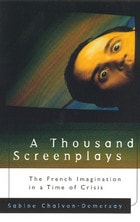
A Thousand Screenplays
The French Imagination in a Time of CrisisSabine Chalvon-Demersay
University of Chicago Press, 1999
The time of crisis presented by the amateur writers was not one of war, famine, or disease—it was the millennial dilemma of representation. In a world plagued by alienation, individualization, and a lack of mobility, how can members of a society combat their declining senses of self?
Although the contestants wrote about life in France, their concerns and struggles have a distinctly universal ring. A lucid, witty writer, Chalvon-Demersay offers a clear, if still developing, photograph of the contemporary imagination.
Afro-Decolonial Manifesto
Norman Ajari
Seagull Books, 2025
Offering a compelling call to arms while challenging the pervasive grip of colonialism on the Black psyche, this manifesto charts a course toward a future defined by autonomy, dignity, and radical liberation.
Delving into the historical currents of resistance—from Negritude to Black nationalism to pan-Africanism—this manifesto unapologetically confronts the insidious nature of modern colonialism. In a world where the very presence of the Black body incites fear and insecurity among white supremacists, Afro-Decolonial Manifesto exposes the fallacy of equating Black existence with reverse colonialism. It challenges the prevailing narratives of gratitude and guilt, asserting the right of the Black diaspora to reclaim its autonomy and dignity, and also examines the effectiveness of movements like Black Lives Matter, advocating for a renewed Black internationalism rooted in Africa’s unity and autonomy.
In a stirring call to arms, Afro-Decolonial Manifesto heralds a new era of resistance, where reparation becomes not just a demand for restitution, but a catalyst for radical change. This volume emboldens Black people to reclaim their narrative, their agency, and their future. It is a testament to the enduring spirit of liberation and the indomitable resilience of Black lives.
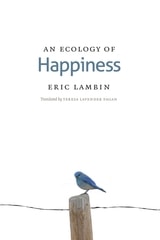
An Ecology of Happiness
Eric Lambin
University of Chicago Press, 2012
In this clever and wide-ranging work, Lambin draws on new scientific evidence in the fields of geography, political ecology, environmental psychology, urban studies, and disease ecology, among others, to answer such questions as: To what extent do we need nature for our well-being? How does environmental degradation affect our happiness? What can be done to protect the environment and increase our well-being at the same time? Drawing on case studies from Asia, Africa, Europe, and North America, Lambin makes a persuasive case for the strong link between healthy ecosystems and happy humans.
Unique in its scope and evenhanded synthesis of research from many fields, An Ecology of Happiness offers a compelling human-centered argument that is impossible to overlook when we marvel at murmurations of starlings or seek out the most brilliant fall foliage: nature makes our steps a little lighter and our eyes a little brighter. What better reason to protect an ecosystem or save a species than for our own pleasure?
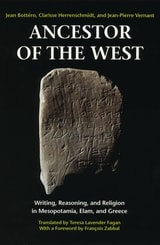
Ancestor of the West
Writing, Reasoning, and Religion in Mesopotamia, Elam, and GreeceJean Bottéro, Clarisse Herrenschmidt, and Jean-Pierre Vernant
University of Chicago Press, 2000
"Full of matter for anyone interested in language, religion, and politics in the ancient world."—R. T. Ridley, Journal of Religious History
"In this accessible introduction to the ancient world, three leading French scholars explore the emergence of rationality and writing in the West, tracing its development and its survival in our own traditions. . . . Jean Bottero focuses on writing and religion in ancient Mesopotamia, Clarisse Herrenschmidt considers a broader history of ancient writing, and Jean-Pierre Vernant examines classical Greek civilization in the context of Near Eastern history."—Translation Review
Bliss
Clara Magnani
Seagull Books, 2021
Rome, 2014, late summer. While he is reading on his sun-drenched terrace, Giangiacomo’s heart stops. A quick, painless death—something he had always hoped for, his daughter, Elvira, remembers. A few days later, Elvira comes across an unfinished manuscript in her father’s flat. In it, she discovers a love story between Giangiacomo—Gigi, to his loved ones—and a Belgian journalist, Clara, which had been going on for over four years. Gigi’s manuscript tells of how their “mature love,” an expression that became code between Gigi and Clara, blossomed unexpectedly and of the happiness of their meetings, the abandon of their bodies, their laughter, the films they watched and rewatched together. As she struggles to cope with the loss of Gigi, Clara writes her own version of their story. Her “journal of absence” is first addressed to Gigi, then, gradually, to Elvira. She confides in the young woman on the threshold of adult life, with discretion and tenderness, describing the fullness of the hidden love she shared with her father.

Blues in the Blood
Julien Delmaire
Seagull Books, 2023
Blues in the Blood is an ode to the spring of 1932 in the Mississippi delta, when stifling heat crushed the countryside and threatened the harvest, pervasive injustice ruled the day, and ghostly riders of the Ku Klux Klan spread terror. A panoramic historical and musical portrait, Blues in the Blood follows a poor young Black couple who believe their love for each other will save them from this devastation. Julien Delmaire introduces us to a gallery of figures: Blacks, Whites, Native Americans, mulattos, landowners, itinerant bluesmen, preachers, witches, corrupt politicians, prisoners, bootleggers, and Legba, the voodoo god, “master of crossroads,” who, like an otherworldly detective, watches over people’s destinies. As the story unfolds, a world is reborn: the delta, the birthplace of the blues, in which oppressed women and men rediscover the voices and rhythms of their humanity.
Einstein and the Quantum Revolutions
Alain Aspect
University of Chicago Press, 2024
At the start of the twentieth century, the first quantum revolution upset our vision of the world. New physics offered surprising realities, such as wave-particle duality, and led to major inventions: the transistor, the laser, and today’s computers. Less known is the second quantum revolution, arguably initiated in 1935 during a debate between giants Albert Einstein and Niels Bohr. This revolution is still unfolding. Its revolutionaries—including the author of this short accessible book, Nobel Prize–winning physicist Alain Aspect—explore the notion of entangled particles, able to interact at seemingly impossible distances. Aspect’s research has helped to show how entanglement may both upend existing technologies, like cryptography, and usher in entirely new ones, like quantum computing. Explaining this physics of the future, this work tells a story of how philosophical debates can shape new realities.
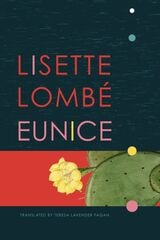
Eunice
Lisette Lombé
Seagull Books, 2026
Nineteen-year-old Eunice’s life is suddenly interrupted when she learns that her mother, Jane, is dead, found drowned in a river after leaving a nightclub. The police rule it an accident, but Eunice isn’t so sure. A red notebook, discovered in a hair salon, suggests there’s more to her mother’s story—cryptic initials, clues, fragments of a life Eunice never fully knew. As she begins to unravel the mystery, she’s forced to confront long-buried family secrets and the painful gaps in her own understanding of who her mother was.
Eunice is a novel about the fierce bond of sisterhood, complex legacies passed down through generations, and the transformative power of forgiveness. It poignantly touches on the power of awakening to tenderness and the hard-won grace of letting go, written in rhythmic, lyrical prose that bears the mark of author Lisette Lombé’s background in slam poetry.
Ghosts in the Middle Ages
The Living and the Dead in Medieval SocietyJean-Claude Schmitt
University of Chicago Press, 1998
"Valuable and highly readable. . . . [Ghosts in the Middle Ages] will be of interest to many students of medieval thought and culture, but especially to those seeking a general overview of this particularly conspicuous aspect of the medieval remembrance of the dead."—Hans Peter Broedel, Medieval Review
"A fascinating study of the growing prevalence of ghost imagery in ecclesiastical and popular writing from the fifth to the fifteenth century."—Choice
Google and the Myth of Universal Knowledge
A View from EuropeJean-Noël Jeanneney
University of Chicago Press, 2006
The recent announcement that Google will digitize the holdings of several major libraries sent shock waves through the book industry and academe. Google presented this digital repository as a first step towards a long-dreamed-of universal library, but skeptics were quick to raise a number of concerns about the potential for copyright infringement and unanticipated effects on the business of research and publishing.
Jean-Noël Jeanneney, president of France’s Bibliothèque Nationale, here takes aim at what he sees as a far more troubling aspect of Google’s Library Project: its potential to misrepresent—and even damage—the world’s cultural heritage. In this impassioned work, Jeanneney argues that Google’s unsystematic digitization of books from a few partner libraries and its reliance on works written mostly in English constitute acts of selection that can only extend the dominance of American culture abroad. This danger is made evident by a Google book search the author discusses here—one run on Hugo, Cervantes, Dante, and Goethe that resulted in just one non-English edition, and a German translation of Hugo at that. An archive that can so easily slight the masters of European literature—and whose development is driven by commercial interests—cannot provide the foundation for a universal library.
As a leading librarian, Jeanneney remains enthusiastic about the archival potential of the Web. But he argues that the short-term thinking characterized by Google’s digital repository must be countered by long-term planning on the part of cultural and governmental institutions worldwide—a serious effort to create a truly comprehensive library, one based on the politics of inclusion and multiculturalism.
Islam and the West
A Conversation with Jacques DerridaMustapha Chérif
University of Chicago Press, 2008

Journal III, 1970-1978
Mircea Eliade
University of Chicago Press, 1989
Quite apart from the personal, biographical interest the journal holds, it is a document of cultural and intellectual significance. Eliade remarks on such colleagues and friends as Jung, Dumézil, Ricoeur, Bellow, and Ionesco. Moreover, the period covered encompasses Eliade's most active years as a teacher, and the journal beautifully reflects his developing views on religion, history, and the nature of academic culture. Bits and pieces of Eliade's past life are juxtaposed with thoughts about ongoing projects and work yet to be undertaken as well as with anecdotes of his travels and comments on world events.
A genuine treat for Eliade readers and those interested in history of religions, Journal III provides new perspectives on many of Eliade's other works—the History of Religious Ideas, Ordeal by Labyrinth, the Autobiography. At the same time the journal is a mature scholar's record of the aftermath of the 1960s, a turbulent period that profoundly affected American university life. As such, these writings hold valuable insights into not only the life and work of one man but also the cultural history of an entire era.
Malraux, the Absolute Agnostic; or, Metamorphosis as Universal Law
Claude Tannery
University of Chicago Press, 1991
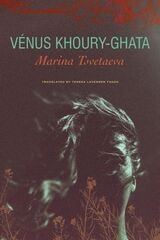
Marina Tsvetaeva
To Die in YelabugaVénus Khoury-Ghata
Seagull Books, 2022
The life of Marina Tsvetaeva (1892–1941) coincided with turbulent years in Russian history. She was an eminent Russian poet and a passionate lover involved with several men at the same time, including Rilke, who chose Lou Andreas-Salomé over her, and Pasternak, who married someone else, but protected her until her death. Her life included many trials such as her poverty during the grueling Russian civil war, her young daughter’s death from hunger in an orphanage, and the death of her husband, who fought against the Communist regime and was executed by the Soviet state. Rejected by official poets, then by the wealthy Russian diaspora in France, she finally returned to her country to end her wandering life. She hanged herself from a rope in an attic from which she could see the field where she had dug with bare hands for potatoes abandoned by local farmers. A poet-martyr of the Stalinist era—buried in an unmarked plot in the cemetery of Yelabuga—Tsvetaeva is brought to life in this poetic biographical novel by celebrated Lebanese author Vénus Khoury-Ghata.

Microbes from Hell
Patrick Forterre
University of Chicago Press, 2016
In Microbes from Hell, one of the world’s leading experts on archaea and hyperthermophiles, or organisms that have evolved to flourish in extreme temperatures, offers a colorful, engaging account of this taxonomic upheaval. Blending tales of his own search for thermophiles with discussions of both the physiological challenges thermophiles face and the unique adaptations they have evolved to live in high-temperature environments, Forterre illuminates our developing understanding of the relationship between archaea and the rest of Earth’s organisms. From biotech applications to the latest discoveries in thermophile research, from microbiomes to the communities of organisms that dwell on deep-sea vents, Forterre’s exploration of life-forms that seem to thrive at the mouth of hell provides a glimpse into the early days of Earth, offering deep insight into what life may have looked like in the extreme environments of our planet’s dawn.
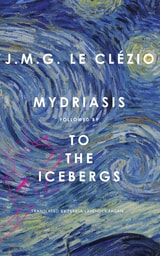
Mydriasis
Followed by ‘To the Icebergs’J.M.G. Le Clezio
Seagull Books, 2019
Michaux is, in fact, at the heart of To the Icebergs. Fascinated by his writing, Le Clézio includes Michaux’s "poem of the poem," "Iniji," thereby allowing the poet’s voice to emerge by itself. What follows is much more than a simple analysis of the poem; rather, it is an act of complete insight and understanding, a personal appropriation and elevation of the work. Written originally in the 1970s and now translated into English for the first time, these two brief, incisive and haunting texts will further strengthen the reputation of one of the world’s greatest and most visionary living writers.
On the Wrong Side
J. M. G. Le Clézio
Seagull Books, 2024
J. M. G. Le Clézio’s On the Wrong Side, a collection of eight short stories, continues the author’s life-long pursuit of granting visibility to the unseen and a voice to the voiceless. Here, the author focuses on the underclasses, primarily children who have been left behind, abandoned, and subjected to unspeakable violence.
In these haunting tales, we encounter Maureez Samson, a mistreated orphan from Rodrigues Island, who, thanks to her exceptional voice, becomes a famous singer and defies all expectations; some young Indians in Darién, a region straddling Panama and Colombia, struggle to raise their young son and save their idyllic land from its invasion and destruction by drug lords; Juanico and Chuche, two slave children who are taken in by the community of Saint Kateri Takakwitha after an arduous and perilous journey; and in Nogales, on the border between Mexico and the United States, the “street rats,” children who cross through the sewers to wreak havoc and perhaps indulge their dreams of life on the other side.
In Le Clézio’s own words, these stories are not simply meant to reveal or describe the plight of the “rejected,” but to “create in the reader a feeling of revolt in the face of the injustice of what is happening to them.”
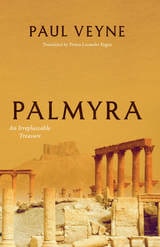
Palmyra
An Irreplaceable TreasurePaul Veyne
University of Chicago Press, 2017
In this concise and elegiac book, Paul Veyne, one of Palmyra’s most important experts, offers a beautiful and moving look at the history of this significant lost city and why it was—and still is—important. Today, we can appreciate the majesty of Palmyra only through its pictures and stories, and this book offers a beautifully illustrated memorial that also serves as a lasting guide to a cultural treasure.
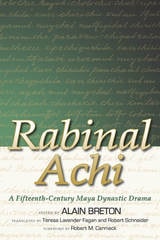
Rabinal Achi
A Fifteenth-Century Maya Dynastic DramaAlain Breton
University Press of Colorado, 2007
The drama is set in the Guatemalan highlands in the second half of the fifteenth century. In an exemplary trial that takes place in Kajyub, the capital of the Rabinaleb at that time, a captured enemy warrior (Quiché Achi) appears before the royal court. A series of combative dialogues pits the offending warrior against the local warrior (Rabinal Achi) and the king (Job Toj), reconstructing the deeds of those involved and retracing the antagonistic history of these two Mayan groups, the Quiché and the Rabinaleb.
Alain Breton approaches the text from an anthropological and ethnographical perspective, demonstrating that this indigenous text reenacts pre-Columbian historic paradigms. Breton's work is based on the Pérez Manuscript (1913), a facsimile of which is included in its entirety. Breton translated into French an entirely new transcription of the original text, and Teresa Lavender Fagan and Robert Schneider translated the text into English. Both the transcription and the translation are accompanied by detailed commentary and a glossary.
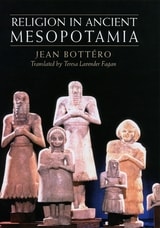
Religion in Ancient Mesopotamia
Jean Bottéro
University of Chicago Press, 2001
Roissy
Tiffany Tavernier
Seagull Books, 2021
Every day the narrator of this gripping novel hurries from one terminal to another in Charles de Gaulle Roissy airport, Paris, pulling her suitcase behind her, talking to people she meets—but she never boards an airplane. She becomes an “unnoticeable,” a homeless woman disguised as a passenger, protected by her anonymity. When a man who comes to the airport every day to await the Rio-to-Paris flight—the same route on which a plane crashed into the sea a few years earlier—attempts to approach her, she flees, terrified. But eventually, she accepts his kindness and understands his loss, and she gives in to the grief they share, forming a bond with him that becomes more than friendship. A magnificent portrait of a woman who rediscovers herself through a chance connection, Roissy is a powerful, polyphonic book, a glimpse at the infinite capacity of the human spirit to be reborn.
Sardinian Chronicles
Bernard Lortat-Jacob
University of Chicago Press, 1995
Through his sensitive portraits of music makers and their families, Lortat-Jacob overcomes some of the epistemological and methodological dilemmas facing his field today, while also giving the general reader a sense of the multiple and idiosyncratic ways that music is involved in everyday life. With a foreword by Michel Leiris and a compact disc containing samples of the music being discussed, this book constitutes a breakthrough in ethnomusicology that will also interest many in Mediterranean studies and European anthropology.
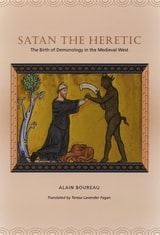
Satan the Heretic
The Birth of Demonology in the Medieval WestAlain Boureau
University of Chicago Press, 2006
Depicting this new demonology, Satan the Heretic considers the period between the mid-thirteenth and mid-fourteenth centuries when demons, in the eyes of Church authorities, suddenly burst forth, more real and more terrifying than ever before in the history of Christianity. Boureau argues that the rise in this obsession with demons occurs at the crossroads of the rise of sovereignties and of the individual, a rise that, tellingly, also coincides with the emergence of the modern legal system in the European West.
Teeming with original insights and lively anecdotes, Satan the Heretic is a significant contribution to the history of Christian demonology from one of the most original minds in the field of medieval studies today.
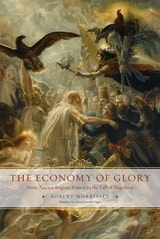
The Economy of Glory
From Ancien Régime France to the Fall of NapoleonRobert Morrissey
University of Chicago Press, 2013
The Fiancée Rode In on a Donkey
Vénus Khoury-Ghata
Seagull Books, 2023
For two days the rabbi rides on a donkey to find the ideal fiancée. Legs and arms shaved, hands dyed with henna, a girl to be married must shine like a mirror. Every girl hopes to be the chosen one and ride off on a donkey to live in the city. The desert is the domain of men; they believe they see oases and palm trees sagging with fruit, while women see only sand on top of sand. A rapid look-around at the girls in the circle was enough for the traveling rabbi to find the right one. He chooses Yudah because of her name, a contraction of Yahuda, and because she lowered her eyes when he looked at her.
The Fiancée Rode In on a Donkey tells Yudah’s story. Instead of experiencing her dream of being chosen and riding off on a donkey to live in a palace, she finds herself in an encampment of tents swaying in the wind. She also doesn’t find the Emir, who is battling on other fronts and soon surrenders. Yudah and the rest of his followers are exiled to Ile Sainte-Marguerite, where she pursues a tireless quest for her future husband in France, seeking a man she has never seen. Will the fantastic destiny of the young girl from the desert ever be fulfilled?
In lyrical novel after novel, Vénus Khoury-Ghata chooses overlooked individuals from history and brings them back to life on the page. Hauntingly unforgettable, The Fiancée Rode In on a Donkey is yet another poetic narrative from one of the most respected French authors of our times.
The First Line
Jean-Marie Laclavetine
Seagull Books, 2025
A sharp, witty send-up of the literary world, set in the world of book publishing—a must-read for anyone who’s ever dreamt of (or dreaded) getting published.
Cyril Cordouan is the beleaguered editor at Fulmen, a distinguished publishing house known for its solid but not particularly popular literary titles. Every day, Cyril faces an avalanche of subpar manuscripts, struggling to find a glimmer of quality amid the piles of drivel. Rejections are a routine part of his job, but aspiring authors don’t take kindly to their works being dismissed, and one distraught writer tragically ends his life after his manuscript is declined.
Devastated, Cyril decides to create an outlet for these rejected writers. Can group therapy for the hopelessly hopeful cure Cyril’s woes? Not quite. Between vengeful widows, surprise bestsellers, and a crippling crisis of conscience, Cyril’s life is a hilarious disaster.
With sharp wit and keen insight, Laclavetine, himself an industry insider, offers a satirical look at the literary world along with thought-provoking commentary on the nature of literary ambition, rejection, and the often ridiculous realities of the publishing industry.
The Greeks
Edited by Jean-Pierre Vernant
University of Chicago Press, 1995
The Greeks offers the most complete portraits available of typical Greek personages from Athens to Sparta, Arcadia, Thessaly and Epirus to the city-states of Asia Minor, to the colonies of the Black Sea, southern Italy, and Sicily. Looking at the citizen, the religious believer, the soldier, the servant, the peasant, and others, they show what—in the Greek relationships with the divine, with nature, with others, and with the self—made him "different" in his ways of acting, thinking, and feeling.
The contributors to this volume are Jean-Pierre Vernant, Claude Mosse, Yvon Garlan, Giuseppe Cambiano, Luciano Canfora, James Redfield, Charles Segal, Oswyn Murray, Mario Vegetti, and Philippe Borgeaud.
The Hidden Wealth of Nations
The Scourge of Tax HavensGabriel Zucman
University of Chicago Press, 2015
In The Hidden Wealth of Nations, Zucman offers an inventive and sophisticated approach to quantifying how big the problem is, how tax havens work and are organized, and how we can begin to approach a solution. His research reveals that tax havens are a quickly growing danger to the world economy. In the past five years, the amount of wealth in tax havens has increased over 25%—there has never been as much money held offshore as there is today. This hidden wealth accounts for at least $7.6 trillion, equivalent to 8% of the global financial assets of households. Fighting the notion that any attempts to vanquish tax havens are futile, since some countries will always offer more advantageous tax rates than others, as well the counter-argument that since the financial crisis tax havens have disappeared, Zucman shows how both sides are actually very wrong. In The Hidden Wealth of Nations he offers an ambitious agenda for reform, focused on ways in which countries can change the incentives of tax havens. Only by first understanding the enormity of the secret wealth can we begin to estimate the kind of actions that would force tax havens to give up their practices.
Zucman’s work has quickly become the gold standard for quantifying the amount of the world’s assets held in havens. In this concise book, he lays out in approachable language how the international banking system works and the dangerous extent to which the large-scale evasion of taxes is undermining the global market as a whole. If we are to find a way to solve the problem of increasing inequality, The Hidden Wealth of Nations is essential reading.
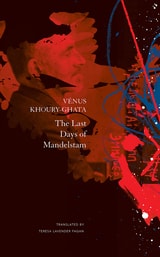
The Last Days of Mandelstam
Vénus Khoury-Ghata
Seagull Books, 2020
With her sensitive prose and innate sense of drama, French-Lebanese writer Vénus Khoury-Ghata brings Mandelstam back to life and allows him to have the last word—proving that literature is one of the surest means to fight against barbarism.
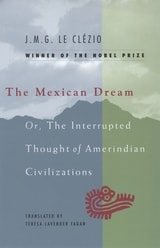
The Mexican Dream
Or, The Interrupted Thought of Amerindian CivilizationsJ. M. G. Le Clézio
University of Chicago Press, 1993
Winner of the 2008 Nobel Prize for Literature, J. M. G. Le Clézio here conjures the consciousness of Mexico, powerfully evoking the dreams that made and unmade an ancient culture. Le Clézio’s haunting book takes us into the dream that was the religion of the Aztecs, a religion whose own apocalyptic visions anticipated the coming of the Spanish conquerors. Here the dream of the conquistadores rises before us, too, the glimmering idea of gold drawing Europe into the Mexican dream. Against the religion and thought of the Aztecs and the Tarascans and the Europeans in Mexico, Le Clézio also shows us those of the “barbarians” of the north, the nomadic Indians beyond the pale of the Aztec frontier.
Finally, Le Clézio’s book is a dream of the present, a meditation on what in Amerindian civilizations—in their language, in their way of telling tales, of wanting to survive their own destruction—moved the poet, playwright, and actor Antonin Artaud and motivates Le Clézio in this book. His own deep identification with pre-Columbian cultures, whose faith told them the wheel of time would bring their gods and their beliefs back to them, finds fitting expression in this extraordinary book, which brings the dream around.
“We are lucky to have in Le Clézio a writer of great quality who brings his particular sensibility and talent here to remind us of the very nature of the rituals and myths of the civilizations of ancient Mexico; he provides us with descriptions as precise as they are mysterious.”—Le Figaro
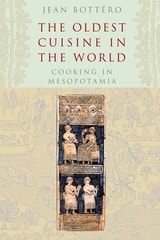
The Oldest Cuisine in the World
Cooking in MesopotamiaJean Bottéro
University of Chicago Press, 2004
In this intriguing blend of the commonplace and the ancient, Jean Bottéro presents the first extensive look at the delectable secrets of Mesopotamia. Bottéro’s broad perspective takes us inside the religious rites, everyday rituals, attitudes and taboos, and even the detailed preparation techniques involving food and drink in Mesopotamian high culture during the second and third millennia BCE, as the Mesopotamians recorded them.
Offering everything from translated recipes for pigeon and gazelle stews, the contents of medicinal teas and broths, and the origins of ingredients native to the region, this book reveals the cuisine of one of history’s most fascinating societies. Links to the modern world, along with incredible recreations of a rich, ancient culture through its cuisine, make Bottéro’s guide an entertaining and mesmerizing read.
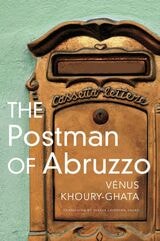
The Postman of Abruzzo
Vénus Khoury-Ghata
Seagull Books, 2023
Following the path of her late geneticist husband, Laure arrives in the town of Malaterra in the harsh mountains of Abruzzo in Italy, where her husband was studying the close-knit Albanian inhabitants. At first an intruder, she is gradually accepted by the population, which is made up of amusing, eccentric characters. Among them: Helena, who hanged her dishonored daughter from the fig tree in her garden, and who has been waiting for thirty years with her gun for her daughter’s rapist to return; the Kosovar, a distrusted bookseller languishing in his dusty shop; Mourad, the baker, who proposes marriage to Laure and every other woman who enters his bakery; and Yussuf, the postman, who makes his rounds even if there is no mail to deliver. We also meet the unfortunate assailant who returns from his exile to reclaim and restore his family home. With humor and compassion, this book brings to life the inhabitants of a small, remote town in the mountains of Abruzzo.
The Totalitarian Experience
Tzvetan Todorov
Seagull Books, 2011
The Wisdom of the World
The Human Experience of the Universe in Western ThoughtRémi Brague
University of Chicago Press, 2003
Before the Greeks, people thought human action was required to maintain the order of the universe and so conducted rituals and sacrifices to renew and restore it. But beginning with the Hellenic Age, the universe came to be seen as existing quite apart from human action and possessing, therefore, a kind of wisdom that humanity did not. Wearing his remarkable erudition lightly, Brague traces the many ways this universal wisdom has been interpreted over the centuries, from the time of ancient Egypt to the modern era. Socratic and Muslim philosophers, Christian theologians and Jewish Kabbalists all believed that questions about the workings of the world and the meaning of life were closely intertwined and that an understanding of cosmology was crucial to making sense of human ethics. Exploring the fate of this concept in the modern day, Brague shows how modernity stripped the universe of its sacred and philosophical wisdom, transforming it into an ethically indifferent entity that no longer serves as a model for human morality.
Encyclopedic and yet intimate, The Wisdom of the World offers the best sort of history: broad, learned, and completely compelling. Brague opens a window onto systems of thought radically different from our own.
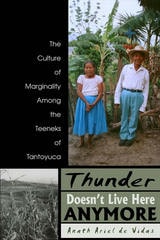
Thunder Doesn't Live Here Anymore
The Culture of Marginality Among the Teeneks of TantoyucaAnath Ariel de Vidas
University Press of Colorado, 2004
However, as Anath Ariel de Vidas argues in this masterful ethnography, this self-denigration - added to the absence among the Teeneks of emblematic Indian features such as traditional costumes, agricultural rituals, specific ceremonies, or systems of religious cargos or offices - are not synonymous with collective anomie. Rather, as Ariel de Vidas demonstrates, their seeming ontological acceptance of a marginal social and economic condition is - in its own peculiar way - a language of indigenous resistance.
Tristan
Clarence Boulay
Seagull Books, 2021
After a seven-day journey on the South Atlantic Ocean aboard a lobster boat servicing Cape Town, Ida arrives on the island of Tristan. In the little island community, a village nestled on the slopes of a volcano whose only limits are the immense sky and the ocean, her bearings are gradually shifted as time slowly begins to expand.
When a cargo ship runs aground near a neighboring island, spilling massive amounts of oil, there is suddenly frantic activity in the town. Ida eagerly joins a team of three men who go to the small island to rescue oil-drenched penguins. One night, one of the men walks her back to the cabin where she is staying. They experience a night of love that continues to grow on the secluded island. For two weeks away from the world—the sea is rough, no boat can come to pick them up—the dance of their bodies and their all-consuming love is their only horizon.
Following the rhythm of the ocean and the untamed wind, Clarence Boulay brilliantly gives flesh to a dizzying sensation of sensual abandonment. Tristan raises emotional sails and upends all certainty.
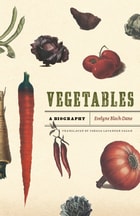
Vegetables
A BiographyEvelyne Bloch-Dano
University of Chicago Press, 2012
From Michael Pollan to locavores, Whole Foods to farmers' markets, today cooks and foodies alike are paying more attention than ever before to the history of the food they bring into their kitchens—and especially to vegetables. Whether it’s an heirloom tomato, curled cabbage, or succulent squash, from a farmers' market or a backyard plot, the humble vegetable offers more than just nutrition—it also represents a link with long tradition of farming and gardening, nurturing and breeding.
In this charming new book, those veggies finally get their due. In capsule biographies of eleven different vegetables—artichokes, beans, chard, cabbage, cardoons, carrots, chili peppers, Jerusalem artichokes, peas, pumpkins, and tomatoes—Evelyne Bloch-Dano explores the world of vegetables in all its facets, from science and agriculture to history, culture, and, of course, cooking. From the importance of peppers in early international trade to the most recent findings in genetics, from the cultural cachet of cabbage to Proust’s devotion to beef-and-carrot stew, to the surprising array of vegetables that preceded the pumpkin as the avatar of All Hallow’s Eve, Bloch-Dano takes readers on a dazzling tour of the fascinating stories behind our daily repasts.
Spicing her cornucopia with an eye for anecdote and a ready wit, Bloch-Dano has created a feast that’s sure to satisfy gardeners, chefs, and eaters alike.