Results by title

26 books match the query 'Family Law'

cover of Assuring Child Support: An Extension of Social Security

Assuring Child Support

An Extension of Social Security

Irwin Garfinkel

Russell Sage Foundation, 1992

In the United States, rates of divorce and out-of-wedlock childbirth are climbing so dramatically that over half of the next generation is likely to spend part of its childhood in single-mother families. As many as half of these families will live in poverty, caused in large measure by the failure of current government regulations to secure adequate child support from absent parents and to assure minimum support when parents cannot provide it. Assuring Child Support introduces the Child Support Assurance System, a remedy to this problem that is both feasible and affordable, a practical reform that is within the nation's grasp. "An extremely well-written and provocative book." —Eastern Economic Journal
[more]
cover of Battering States: The Politics of Domestic Violence in Israel

Battering States

The Politics of Domestic Violence in Israel

Madelaine Adelman

Vanderbilt University Press, 2017

Battering States explores the most personal part of people's lives as they intersect with a uniquely complex state system. The book examines how statecraft shapes domestic violence: how a state defines itself and determines what counts as a family; how a state establishes sovereignty and defends its borders; and how a state organizes its legal system and forges its economy. The ethnography includes stories from people, places, and perspectives not commonly incorporated in domestic violence studies, and, in doing so, reveals the transformation of intimate partner violence from a predictable form of marital trouble to a publicly recognized social problem.

The politics of domestic violence create novel entry points to understanding how, although women may be vulnerable to gender-based violence, they do not necessarily share the same kind of belonging to the state. This means that markers of identity and power, such as gender, nationality, ethnicity, religion and religiosity, and socio-economic and geographic location, matter when it comes to safety and pathways to justice.

The study centers on Israel, where a number of factors bring connections between the cultural politics of the state and domestic violence into stark relief: the presence of a contentious multinational and multiethnic population; competing and overlapping sets of religious and civil laws; a growing gap between the wealthy and the poor; and the dominant presence of a security state in people's everyday lives. The exact combination of these factors is unique to Israel, but they are typical of states with a diverse population in a time of globalization. In this way, the example of Israel offers insights wherever the political and personal impinge on one another.

[more]
cover of Belonging in an Adopted World: Race, Identity, and Transnational Adoption

Belonging in an Adopted World

Race, Identity, and Transnational Adoption

Barbara Yngvesson

University of Chicago Press, 2010

Since the early 1990s, transnational adoptions have increased at an astonishing rate, not only in the United States, but worldwide. In Belonging in an Adopted World, Barbara Yngvesson offers a penetrating exploration of the consequences and implications of this unprecedented movement of children, usually from poor nations to the affluent West. Yngvesson illuminates how the politics of adoption policy has profoundly affected the families, nations, and children involved in this new form of social and economic migration.

Starting from the transformation of the abandoned child into an adoptable resource for nations that give and receive children in adoption, this volume examines the ramifications of such gifts, especially for families created through adoption and later, the adopted adults themselves. Bolstered by an account of the author’s own experience as an adoptive parent, and fully attuned to the contradictions of race that shape our complex forms of family, Belonging in an Adopted World explores the fictions that sustain adoptive kinship, ultimately exposing the vulnerability and contingency behind all human identity.

[more]
cover of Butterfly, the Bride: Essays on Law, Narrative, and the Family

Butterfly, the Bride

Essays on Law, Narrative, and the Family

Carol Weisbrod

University of Michigan Press, 2004

Carol Weisbrod uses a variety of stories to raise important questions about how society, through law, defines relationships in the family. Beginning with a story most familiar from the opera Madame Butterfly, Weisbrod addresses issues such as marriage, divorce, parent-child relations and abuses, and non-marital intimate contact. Each chapter works with fiction or narratives inspired by biography or myth, ranging from the Book of Esther to the stories of Kafka. Weisbrod frames the book with running commentary on variations of the Madame Butterfly story, showing the ways in which fiction better expresses the complexities of intimate lives than does the language of the law.

Butterfly, the Bride looks at law from the outside, using narrative to provide a fresh perspective on the issues of law and social structure---and individual responses to law. This book thoroughly explores relationships between inner and public lives by examining what is ordinarily classified as the sphere of private life---the world of family relationships.
Carol Weisbrod is Ellen Ash Peters Professor of Law at the University of Connecticut. Her other books include The Boundaries of Utopia and Emblems of Pluralism.
[more]
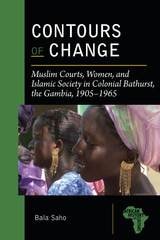
cover of Contours of Change: Muslim Courts, Women, and Islamic Society in Colonial Bathurst, the Gambia, 1905-1965

Contours of Change

Muslim Courts, Women, and Islamic Society in Colonial Bathurst, the Gambia, 1905-1965

Bala Saho

Michigan State University Press, 2018

Based on a previously unexamined body of qadi court records as well as two hundred oral interviews in Wolof and Mandinka, Contours of Change: Muslim Courts, Women, and Islamic Society in Colonial Bathurst, the Gambia, 1905–1965, offers a new perspective on the impact of British rule in West Africa. It focuses on the formation of present-day Banjul and the role of law, religion, and gender relations. Specifically, this volume explores how colonization affected the evolution of women’s understanding of the importance of law in securing their rights, and how urban women used the new qadi court system to fight for greater rights in the domestic sphere. The fascinating cases discussed in the text show that male Muslim judges often were sympathetic to women’s claims, and that, as a result, the qadi court created opportunities for women to acquire property rights and negotiate patriarchal relationships. Contours of Change sheds light on African subjectivities and the broader social, economic, and political changes taking place in colonial Gambian society during the first half of the twentieth century. This text breaks new ground in Senegambian history and makes a significant contribution to British colonial studies, African legal studies, Islam in Africa studies, and women’s history studies.
[more]
cover of Equal Before the Law: How Iowa Led Americans to Marriage Equality

Equal Before the Law

How Iowa Led Americans to Marriage Equality

Tom Witosky, Marc Hansen

University of Iowa Press, 2015

“We’ve been together in sickness and in health, through the death of his mother, through the adoption of our children, through four long years of this legal battle,” Jason Morgan told reporters of himself and his partner, Chuck Swaggerty. “And if being together through all of that isn’t love and commitment or isn’t family or isn’t marriage, then I don’t know what is.” Just minutes earlier on that day, April 3, 2009, the justices of the Iowa Supreme Court had agreed.

The court’s decision in Varnum v. Brien made Iowa only the third state in the nation to permit same-sex couples to wed—moderate, midwestern Iowa, years before such left-leaning coastal states as California and New York. And unlike the earlier decisions in Massachusetts and Connecticut, Varnum v. Brien was unanimous and unequivocal. It catalyzed the unprecedented and rapid shift in law and public opinion that continues today.

Equal Before the Law tells the stories behind this critical battle in the fight for marriage equality and traces the decision’s impact. The struggle began in 1998 with the easy passage of Iowa’s Defense of Marriage Act and took a turn, surprising to many, in 2005, when six ordinary Iowa couples signed on to Lambda Legal’s suit against the law. Their triumph in 2009 sparked a conservative backlash against the supreme court justices, three of whom faced tough retention elections that fall.
Longtime, award-winning reporters Tom Witosky and Marc Hansen talked with and researched dozens of key figures, including opponent Bob Vander Plaats, proponents Janelle Rettig and Sharon Malheiro, attorneys Roger Kuhle, Dennis Johnson, and Camilla Taylor, and politicians Matt McCoy, Mary Lundby, and Tom Vilsack, who had to weigh their careers against their convictions. Justice Mark Cady, who wrote the decision, explains why the court had to rule in favor of the plaintiffs. At the center of the story are the six couples who sacrificed their privacy to demand public respect for their families.

Through these voices, Witosky and Hansen show that no one should have been surprised by the 2009 decision. Iowans have a long history of leadership on civil rights. Just a year after Iowa became a state, its citizens adopted as their motto the phrase, “Our liberties we prize and our rights we will maintain.” And they still do today.
[more]
cover of Family Law Matters

Family Law Matters

Katherine O'Donovan

Pluto Press, 1993

[more]
cover of Family, Law, and Community: Supporting the Covenant

Family, Law, and Community

Supporting the Covenant

Margaret F. Brinig

University of Chicago Press, 2010

In the wake of vast social and economic changes, the nuclear family has lost its dominance, both as an ideal and in practice. Some welcome this shift, while others see civilization itself in peril—but few move beyond ideology to develop a nuanced understanding of how families function in society. In this provocative book, Margaret F. Brinig draws on research from a variety of disciplines to offer a distinctive study of family dynamics and social policy.

Concentrating on legal reform, Brinig examines a range of subjects, including cohabitation, custody, grandparent visitation, and domestic violence. She concludes that conventional legal reforms and the social programs they engender ignore social capital: the trust and support given to families by a community. Traditional families generate much more social capital than nontraditional ones, Brinig concludes, which leads to clear rewards for the children. Firmly grounded in empirical research, Family, Law, and Community argues that family policy can only be effective if it is guided by an understanding of the importance of social capital and the advantages held by families that accrue it.

[more]
cover of Fathers Under Fire: The Revolution in Child Support Enforcement

Fathers Under Fire

The Revolution in Child Support Enforcement

Irwin Garfinkel

Russell Sage Foundation, 1998
"This important and highly informative collection of studies on nonresidentfathers and child support should be of great value to scholars and policymakers alike." —American Journal of Sociology Over half of America's children will live apart from their fathers at some point as they grow up, many in the single-mother households that increasingly make up the nation's poor. Federal efforts to improve the collection of child support from fathers appear to have little effect on payments, and many critics have argued that forcing fathers to pay does more harm than good. Much of the uncertainty surrounding child support policies has stemmed from a lack of hard data on nonresident fathers. Fathers Under Fire presents the best available information on the financial and social circumstances of the men who are at the center of the debate. In this volume, social scientists and legal scholars explore the issues underlying the child support debate, chief among them on the potential repercussions of stronger enforcement. Who are nonresident fathers? This volume calls upon both empirical and theoretical data to describe them across a broad economic and social spectrum. Absentee fathers who do not pay child support are much more likely to be school dropouts and low earners than fathers who pay, and nonresident fathers altogether earn less than resident fathers. Fathers who start new families are not significantly less likely to support previous children. But can we predict what would happen if the government were to impose more rigorous child support laws? The data in this volume offer a clearer understanding of the potential benefits and risks of such policies. In contrast to some fears, stronger enforcement is unlikely to push fathers toward. But it does seem to have more of an effect on whether some fathers remarry and become responsible for new families. In these cases, how are subsequent children affected by a father's pre-existing obligations? Should such fathers be allowed to reduce their child support orders in order to provide for their current families? Should child support guidelines permit modifications in the event of a father's changed financial circumstances? Should government enforce a father's right to see his children as well as his obligation to pay support? What can be done to help under- or unemployed fathers meet their payments? This volume provides the information and insight to answer these questions. The need to help children and reduce the public costs of welfare programs is clear, but the process of achieving these goals is more complex. Fathers Under Fire offers an indispensable resource to those searching for effective and equitable solutions to the problems of child support.
[more]
cover of Gender and Justice in Family Law Disputes: Women, Mediation, and Religious Arbitration

Gender and Justice in Family Law Disputes

Women, Mediation, and Religious Arbitration

Edited by Samia Bano

Brandeis University Press, 2017
Recently, new methods of dispute resolution in matters of family law—such as arbitration, mediation, and conciliation—have created new forms of legal culture that affect minority communities throughout the world. There are now multiple ways of obtaining restitution through nontraditional alternative dispute resolution (ADR) mechanisms. For some, the emergence of ADRs can be understood as part of a broader liberal response to the challenges presented by the settlement of migrant communities in Western liberal democracies. Questions of rights are framed as “multicultural challenges” that give rise to important issues relating to power, authority, agency, and choice. Underpinning these debates are questions about the doctrine and practice of secularism, citizenship, belonging, and identity. Gender and Justice in Family Law Disputes offers insights into how women’s autonomy and personal decision-making capabilities are expressed via multiple formal and nonformal dispute-resolution mechanisms, and as part of their social and legal lived realities. It analyzes the specific ways in which both mediation and religious arbitration take shape in contemporary and comparative family law across jurisdictions. Demarcating lines between contemporary family mediation and new forms of religious arbitration, Bano illuminates the complexities of these processes across multiple national contexts.
[more]
cover of Gender, Religion, and Family Law: Theorizing Conflicts between Women’s Rights and Cultural Traditions

Gender, Religion, and Family Law

Theorizing Conflicts between Women’s Rights and Cultural Traditions

Edited by Lisa Fishbayn Joffe and Sylvia Neil

Brandeis University Press, 2012
In many regions of the world, rights guaranteed under the civil law, including rights to gender equality within marriage and rights in the distribution of family property and child custody upon divorce, are in conflict with the principles of religious law. Women’s rights issues are often at the heart of these tensions, which present pressing challenges for theorists, lawyers, and policymakers. This anthology brings together leading scholars and activists doing innovative work in Jewish law, Muslim law, Christian law, and African customary law. Using examples drawn from a variety of nations and religions, they interrogate the utility of recent theoretical models for engaging with gender and multicultural conflicts, explore contextual differences, and analyze and celebrate stories of successful initiatives that have transformed legal and cultural norms to improve women’s lives.
[more]
cover of Intimate Associations: The Law and Culture of American Families

Intimate Associations

The Law and Culture of American Families

J. Herbie DiFonzo and Ruth C. Stern

University of Michigan Press, 2013

The rise in divorce, cohabitation, single parenthood, and same-sex partnerships, along with an increase in surrogacy, adoption, and assisted reproductive technologies, has led to many diverse configurations of families, or intimate associations. J. Herbie DiFonzo and Ruth C. Stern chart these trends over the past several decades and investigate their social, legal, and economic implications.

Drawing upon a wealth of social science data, they show that, by a number of measures, children of married parents fare better than children in a household formed by cohabiting adults. This is not to condemn nontraditional families, but to point out that society and the law do not yet adequately provide for their needs. The authors applaud the ways in which courts and legislatures are beginning to replace rigid concepts of marriage and parenthood with the more flexible concept of “functional” family roles. In the conclusion, they call for a legal system that can adapt to the continually changing reality of family life.

[more]
cover of Law Beyond the State: Pasts and Futures

Law Beyond the State

Pasts and Futures

Edited by Rainer Hofmann and Stefan Kadelbach

Campus Verlag, 2016

Law beyond the State brings together contributions by renowned experts on international and European Union law to celebrate the centennial of Goethe‒Universität Frankfurt. The essays explore Frankfurt’s contribution to the development of international law; the historical development of international law; how this form of law can be used as a tool to improve the world and create a better future for all; the essential relevance of the spiritual dimension of legal orders, including the European Union, to ensuring their values will be taken seriously; and the possibility, offered by the Internet, for all persons concerned with global lawmaking to participate effectively in relevant decision-making processes.
[more]
cover of Legalizing Plural Marriage: The Next Frontier in Family Law

Legalizing Plural Marriage

The Next Frontier in Family Law

Mark Goldfeder

Brandeis University Press, 2017

Polygamous marriages are currently recognized in nearly fifty countries worldwide. Although polygamy is technically illegal in the United States, it is practiced by members of some religious communities and a growing number of other “poly” groups. In the radically changing and increasingly multicultural world in which we live, the time has come to define polygamous marriage and address its legal feasibilities. Although Mark Goldfeder does not argue the right or wrong of plural marriage, he maintains that polygamy is the next step—after same-sex marriage—in the development of U.S. family law. Providing a road map to show how such legalization could be handled, he explores the legislative and administrative arguments which demonstrate that plural marriage is not as farfetched—or as far off—as we might think. Goldfeder argues not only that polygamy is in keeping with the legislative values and freedoms of the United States, but also that it would not be difficult to manage or administrate within our current legal system. His legal analysis is enriched throughout with examples of plural marriage in diverse cultural and historical contexts. Tackling the issue of polygamy in the United States from a legal perspective, this book will engage anyone interested in constitutional law, family law, or criminal law, along with sociologists and those who study gender and culture in modern times.
[more]
cover of Making Fathers Pay: The Enforcement of Child Support

Making Fathers Pay

The Enforcement of Child Support

David L. Chambers

University of Chicago Press, 1979

A couple with children divorce. A court orders the father to pay child support, but the father fails to pay. This pattern repeats itself thousands of times every year in nearly every American state.

Making Fathers Pay is David L. Chambers's study of the child-support collection process in Michigan, the state most successful in inducing fathers to pay. He begins by reporting the perilous financial problems of divorced mothers with children, problems faced even by mothers who work full time and receive child support. The study then examines the characteristics of fathers who do and do not pay support and the characteristics of collections systems that work.

Chambers's findings are based largely on records of fathers' support payments in twenty-eight Michigan counties, some of which jail hundreds of men for nonpayment every year. Chambers finds that in places well organized to collect support, jailing nonpayers seems to produce higher payments from men jailed and from men not jailed, but only at a high social cost. He also raises grave doubts about the fairness of the judicial process that leads to jail. While Chambers's total sample includes 12,000 men, he interweaves through his text moving interviews with members of one family caught in the painful predicaments that men, women, and children face upon separation.

To increase support for children at lower social costs, Chambers advocates a national system of compulsory deductions from the wages of non-custodial parents who earn more than enough for their own subsistence.

 
[more]
cover of Marriage and Divorce in the Jewish State: Israel's Civil War

Marriage and Divorce in the Jewish State

Israel's Civil War

Susan M. Weiss and Netty C. Gross-Horowitz

Brandeis University Press, 2012

Israel currently has two recognized systems of law operating side by side: civil and religious. Israeli religious courts possess the exclusive right to conduct and terminate marriages. There is no civil marriage or divorce in Israel, irrespective of one’s religious inclinations. All Muslims must marry and divorce in accordance with shariya laws, all Catholics in accordance with canon law, and all Jews in accordance with Torah law (halakha). The interpretation and implementation of Torah law is in the hands of the Orthodox religious establishment, the only stream of Judaism that enjoys legal recognition in Israel. The rabbinic courts strenuously oppose any changes to this so-called status quo arrangement between religious and secular authorities. In fact, religious courts in Israel are currently pressing for expanded jurisdiction beyond personal status, stressing their importance to Israel’s growing religious community. This book shows how religious courts, based on centuries-old patriarchal law, undermine the full civil and human rights of Jewish women in Israel. Making a broad argument for civil marriage and divorce in Israel, the authors also emphasize that religious marriages and divorces, when they do occur, must benefit from legislation that makes divorce easier to obtain. Making this issue their focal point, they speak to a larger question: Is Israel a democracy or a theocracy?
[more]
cover of Polygamy in Primetime: Media, Gender, and Politics in Mormon Fundamentalism

Polygamy in Primetime

Media, Gender, and Politics in Mormon Fundamentalism

Janet Bennion

Brandeis University Press, 2011
Recently, polygamy has become a “primetime” phenomenon. Television shows like Big Love and Sister Wives demonstrate the “progressive” side of polygamy, while horror stories from victims of abusive marriages offer less upbeat experiences among the adherents of the fundamentalist Church of Jesus Christ of Latter Day Saints (FLDS Church). Bennion, herself a product of Mormon polygamy, seeks to dispel the myths and misinformation that surround this topic. This study, based on seventeen years of ethnographic research among the Allred Group (Apostolic United Brethren) and on an analysis of recent blog journal entries written by a range of polygamous women, examines the variety and complexity of contemporary Mormon fundamentalist life in the Intermountain West. Although Bennion highlights problems associated with polygamy, including evidence that some forms are at high risk for father-child incest, she challenges the media-driven depiction of plural marriage as uniformly abusive and harmful to women. She shows how polygamist families can provide both economic security and social sustenance for some women, and how the authority of the husband can be undermined by the stresses of providing for multiple wives and children. Going beyond the media’s obsession with the sexual aspects of polygamous marriage, Bennion offers a rich description of familial, social, and legal contexts. Throughout, she makes the case for legalizing polygamy in order to allow greater visibility and regulation of the practice.
[more]
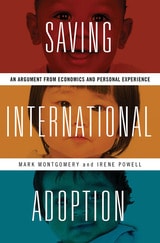
cover of Saving International Adoption: An Argument from Economics and Personal Experience

Saving International Adoption

An Argument from Economics and Personal Experience

Mark Montgomery

Vanderbilt University Press, 2018

Choice Outstanding Academic Title of 2018

International adoption is in a state of virtual collapse, rates having fallen by more than half since 2004 and continuing to fall. Yet around the world millions of orphaned and vulnerable children need permanent homes, and thousands of American and European families are eager to take them in. Many government officials, international bureaucrats, and social commentators claim these adoptions are not "in the best interests" of the child. They claim that adoption deprives children of their "birth culture," threatens their racial identities, and even encourages widespread child trafficking. Celebrity adopters are publicly excoriated for stealing children from their birth families.

This book argues that opposition to adoption ostensibly based on the well-being of the child is often a smokescreen for protecting national pride. Concerns about the harm done by transracial adoption are largely inconsistent with empirical evidence. As for trafficking, opponents of international adoption want to shut it down because it is too much like a market for children. But this book offers a radical challenge to this view—that is, what if instead of trying to suppress market forces in international adoption, we embraced them so they could be properly regulated? What if the international system functioned more like open adoption in the United States, where birth and adoptive parents can meet and privately negotiate the exchange of parental rights? This arrangement, the authors argue, could eliminate the abuses that currently haunt international adoption.

The authors challenge the prevailing wisdom with their economic analyses and provocative analogies from other policy realms. Based on their own family's experience with the adoption process, they also write frankly about how that process feels for parents and children.
[more]
cover of Silent Revolution: The Transformation of Divorce Law in the United States

Silent Revolution

The Transformation of Divorce Law in the United States

Herbert Jacob

University of Chicago Press, 1988

Conflict and controversy usually accompany major social changes in America. Such issues as civil rights, abortion, and the proposed Equal Rights Amendment provoke strong and divisive reactions, attract extensive media coverage, and generate heated legislative debate. Some theorists even claim that only mobilization and publicity can stimulate significant legislative change. How is it possible, then, that a wholesale revamping of American divorce law occurred with scarcely a whisper of controversy and without any national debate? This is the central question posed—and authoritatively answered—in Herbert Jacob's Silent Revolution.

Since 1966, divorce laws in the United States have undergone a radical transformation. No-fault divorce is now universally available. Alimony functions simply as a brief transitional payment to help a dependent spouse become independent. Most states divide assets at divorce according to a community property scheme, and, whenever possible, many courts prefer to award custody of children to the mother and the father jointly.

These changes in policy represent a profound departure from traditional American values, and yet the legislation by which they were enacted was treated as a technical correction of minor problems. No-fault divorce, for example, was a response to the increasing number of fraudulent divorce petitions. Since couples were often forced to manufacture the evidence of guilt that many states required, and since judges frequently looked the other way, legal reformers sought no more than to bring divorce statutes into line with current practice.

On the basis of such observations, Jacob formulates a new theory of routine—as opposed to conflictual—policy-making processes. Many potentially controversial policies—divorce law reforms among them—pass unnoticed in America because legislators treat them as matters of routine. Jacob's is indeed the most plausible account of the enormous number and steady flow of policy decisions made by state legislatures. It also explains why no attention was paid to the effect divorce reform would have on divorced women and their children, a subject that has become increasingly controversial and that, consequently, is not likely to be handled by the routine policy-making process in the future.

[more]
cover of Some Reflections Upon Marriage

Some Reflections Upon Marriage

Mary Astell. Introduction by John A. Dussinger

University of Illinois Press, 2015
Published anonymously in 1700, Some Reflections upon Marriage lamented the inequities of the institution of marriage and reasoned against it with both traditional and innovative arguments. Mary Astell's tract, written in response to an infamous divorce case, forcefully argued against the grim but all-too-common prospect of a marriage of necessity to a man in search of power, money, or a trophy wife. Astell proposed education as the solution to women's second-class status, stating that knowledge alone could lead to a partnership based on friendship and respect. "Let us learn to pride ourselves in something more excellent than the invention of a fashion," she wrote, and her well-reasoned arguments soon won her a wide readership.
 
[more]
cover of Taking Juvenile Justice Seriously: Developmental Insights and System Challenges

Taking Juvenile Justice Seriously

Developmental Insights and System Challenges

Christopher J. Sullivan

Temple University Press, 2019

The juvenile justice system navigates a high degree of variation in youthful offenders. While professionals with insights about reform and adolescent development consider the risks, the needs, and the patterns of delinquency of youth, too little attention is paid to the responses and practicalities of a system that is both complex and limited in its resources. 

In his essential book, Taking Juvenile Justice Seriously, Christopher Sullivan systematically analyzes key facets of justice-involved youth populations and parses cases to better understand core developmental influences that affect delinquency. He takes a comprehensive look at aspects of the life-course affected by juvenile justice as well as at the juvenile justice system’s operations and its multifaceted mission of delivering both treatment and sanctions to a varied population of youths.

Taking Juvenile Justice Seriously first provides an overview of the youth who encounter the system, then describes its present operations and obstacles, synthesizes relevant developmental insights, and reviews current practices. Drawing on research, theory, and evidence regarding innovative policies, Sullivan offers a series of well-grounded recommendations that suggest how to potentially—and realistically—implement a more effective juvenile justice system that would benefit all.
[more]
cover of The Illusion of Equality: The Rhetoric and Reality of Divorce Reform

The Illusion of Equality

The Rhetoric and Reality of Divorce Reform

Martha Albertson Fineman

University of Chicago Press, 1991

How do "no-fault," "gender-neutral" divorce reforms actually harm the lives of women and children they are designed to protect? Focusing on the language and symbols of reform, Martha Fineman argues that by advocating measures based on equality of treatment rather than of outcome, liberal feminists disregarded the socioeconomic factors that simultaneously place women at a disadvantage in the market and favor their taking on primary domestic responsibilities. She traces in persuasive detail the detrimental effects of equality rhetoric in shaping divorce law — such as the legal separation of parents' and children's interests; equality replacing need as the prime criterion for settlements; and the increase of state intervention into family life. More than a critique, this book is an incisive argument for adopting outcome-oriented measures and a valuable overview of the pitfalls of uncritically implementing any rhetoric as social policy.
[more]
cover of The Transformation of Family Law: State, Law, and Family in the United States and Western Europe

The Transformation of Family Law

State, Law, and Family in the United States and Western Europe

Mary Ann Glendon

University of Chicago Press, 1989

Mary Ann Glendon offers a comparative and historical analysis of rapid and profound changes in the legal system beginning in the 1960s in England, France, West Germany, Sweden, and the United States, while bringing new and insightful interpretation and critical thought to bear on the explosion of legislation in the last decade.

"Glendon is generally acknowledged to be the premier comparative law scholar in the area of family law. This volume, which offers an analytical survey of the changes in family law over the past twenty-five years, will burnish that reputation. Essential reading for anyone interested in evaluating the major changes that occurred in the law of the family. . . . [And] of serious interest to those in the social sciences as well."—James B. Boskey, Law Books in Review

"Poses important questions and supplies rich detail."—Barbara Bennett Woodhouse, Texas Law Review

"An impressive scholarly documentation of the legal changes that comprise the development of a conjugally-centered family system."—Debra Friedman, Contemporary Sociology

"She has painted a portrait of the family in which we recognize not only ourselves but also unremembered ideological forefathers. . . . It sends our thoughts out into unexpected adventures."—Inga Markovits, Michigan Law Review

[more]
cover of Translating the Ketubah: The Jewish Marriage Contract in America and England

Translating the Ketubah

The Jewish Marriage Contract in America and England

Benjamin Steiner

University of Alabama Press, 2025

A groundbreaking exploration of the Jewish marriage contract and its evolution in English translation

Translating the Ketubah offers a fresh perspective on the ketubah, the Jewish marriage contract. Traditionally composed in Aramaic, ketubot have been examined in other books within the frameworks of Jewish law and Jewish art. Here, however, Benjamin Steiner shows how translations of the ketubah into English helped Jews adapt to changing social and economic circumstances across more than two centuries.

Steiner uses ketubot to trace the intricate relationship between religious law and secular law, the changing status of women within and outside Judaism, and the complex desire of Jews to be both authentically Jewish and fully acculturated. Steiner further shows how ketubah translation aided Jews to achieve different cultural goals. It has been used to uphold rabbinic law in communities where religious affiliation was voluntary to ensure women's economic security. It has also facilitated socialization with non-Jews and addressed perceived crises within the Jewish family.

Through a nuanced analysis of ketubah translations from England and various regions of the United States from the late eighteenth century to the present, Steiner offers a detailed look at how Jews have adapted ancient tradition to meet the challenges and opportunities of different historical contexts. His work sheds new light on the rich history of American and British Jewry.

[more]
cover of Virginia Hasn't Always Been for Lovers: Interracial Marriage Bans and the Case of Richard and Mildred Loving

Virginia Hasn't Always Been for Lovers

Interracial Marriage Bans and the Case of Richard and Mildred Loving

Phyl Newbeck

Southern Illinois University Press, 2004

This landmark volume chronicles the history of laws banning interracial marriage in the United States with particular emphasis on the case of Richard and Mildred Loving, a white man and a black woman who were convicted by the state of Virginia of the crime of marrying across racial lines in the late 1950s. The Lovings were not activists, but their battle to live together as husband and wife in their home state instigated the 1967 U.S. Supreme Court ruling that antimiscegenation laws were unconstitutional, which ultimately resulted in the overturning of laws against interracial marriage that were still in effect in sixteen states by the late 1960s.

[more]
cover of Women and the Law

Women and the Law

Susan Atkins and Brenda Hoggett

University of London Press, 2018

Women and the Law is a pioneering study of the way in which the law has treated women – at work, in the family, in matters of sexuality and fertility, and in public life. It was first published in 1984 by Susan Atkins and Brenda Hoggett, then University teachers. The authors examine the origins of British law’s attitude to women, trace the development of the law and ways in which it reflects the influence of economic, social and political forces and the dominance of men. They illustrate the tendency, despite formal equality, for deep-rooted problems of encoded gender inequality to remain. Since 1984 the authors have achieved distinguished careers in law and public service. This 2018 Open Access edition provides a timely opportunity to revisit their ground-breaking analysis and reflect on how much has changed, and how much has stayed the same. 
[more]