Results by title
10 books match the query 'Fantasy fiction, American'

A World of Words
Language and Displacement in the Fiction of Edgar Allan PoeMichael J. S. Williams
Duke University Press, 1988
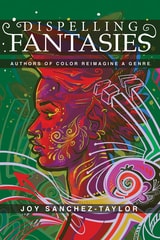
Dispelling Fantasies
Authors of Color Reimagine a GenreJoy Sanchez-Taylor
The Ohio State University Press, 2025
In Dispelling Fantasies, Joy Sanchez-Taylor examines how authors of color, such as R. F. Kuang, N. K. Jemisin, Nnedi Okorafor, Tomi Adeyemi, Tasha Suri, Aiden Thomas, Nghi Vo, and Marlon James, among others, offer critical counterpoints to the history of white-dominated, Eurocentric fantasy. The traditional fantasy that these authors are writing against reinforces Christian virtues and colonial, white supremacist structures; Sanchez-Taylor argues that its racial tropes are tied to a history of colonization and Christian missionary practices, with popular fantasy narratives often depicting Indigenous groups as primitive, deviant peoples in need of salvation. Such representations are based on a Western binary of rational versus magical and are influenced by tenets of Christianity, ultimately contributing to depictions of “the dark fantastic” or fantasy worlds where dark and othered characters are implicitly portrayed as evil and irredeemable. Organized around four Christian ideals that appear frequently in Western fantasy texts—virtue, envy, patriarchy, and salvation—Dispelling Fantasies demonstrates how non-Eurocentric fantasy worlds offer alternative versions of morality, race, gender, and sexuality and make space for authors to move away from hierarchical, binary systems of good and evil.
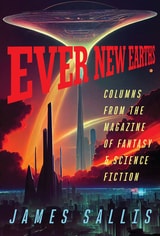
Ever New Earths
Columns from the Magazine of Fantasy & Science FictionSallis, James
University of Iowa Press, 2026
Ever New Earths gathers twenty-five years of book columns written by legendary writer James Sallis and published in The Magazine of Fantasy & Science Fiction to offer an exceptional overview of developments in contemporary science fiction, fully appreciating the genre’s traditions while recognizing its reach, its potential. This is a rare view of the genre from the inside, written toward outsiders with reason to learn and understand more: critics, historians, writers, editors.

Lost in the Rentharpian Hills
Spanning the Decades with Carl JacobiR. Dixon Smith
University of Wisconsin Press, 1985
R. Dixon Smith has captured the enchanting story of the well known pulp writer Carl Jacobi. Jacobi wrote many fantasy and weird tales, while leading a somewhat bizarre yet magical life.
Mutants and Mystics
Science Fiction, Superhero Comics, and the ParanormalJeffrey J. Kripal
University of Chicago Press, 2011
But that's just scratching the surface, says Jeffrey Kripal. In Mutants and Mystics, Kripal offers a brilliantly insightful account of how comic book heroes have helped their creators and fans alike explore and express a wealth of paranormal experiences ignored by mainstream science. Delving deeply into the work of major figures in the field—from Jack Kirby’s cosmic superhero sagas and Philip K. Dick’s futuristic head-trips to Alan Moore’s sex magic and Whitley Strieber’s communion with visitors—Kripal shows how creators turned to science fiction to convey the reality of the inexplicable and the paranormal they experienced in their lives. Expanded consciousness found its language in the metaphors of sci-fi—incredible powers, unprecedented mutations, time-loops and vast intergalactic intelligences—and the deeper influences of mythology and religion that these in turn drew from; the wildly creative work that followed caught the imaginations of millions. Moving deftly from Cold War science and Fredric Wertham's anticomics crusade to gnostic revelation and alien abduction, Kripal spins out a hidden history of American culture, rich with mythical themes and shot through with an awareness that there are other realities far beyond our everyday understanding.
A bravura performance, beautifully illustrated in full color throughout and brimming over with incredible personal stories, Mutants and Mystics is that rarest of things: a book that is guaranteed to broaden—and maybe even blow—your mind.
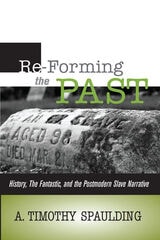
RE-FORMING THE PAST
HISTORY, THE FANTASTIC, & THE POSTMODERN SLAVE NARRATIVEA. Timothy Spaulding
The Ohio State University Press, 2005
In their rejection of mimetic representation and traditional historiography, Spaulding contextualizes postmodern slave narrative. By addressing both literary and popular African American texts, Re-Forming the Past expands discussions of both the African American literary tradition and postmodern culture.
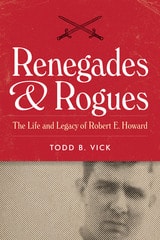
Renegades and Rogues
The Life and Legacy of Robert E. HowardBy Todd B. Vick
University of Texas Press, 2021
2022 Atlantean Award, Robert E. Howard Foundation
You may not know the name Robert E. Howard, but you probably know his work. His most famous creation, Conan the Barbarian, is an icon of popular culture. In hundreds of tales detailing the exploits of Conan, King Kull, and others, Howard helped to invent the sword and sorcery genre.
Todd B. Vick delves into newly available archives and probes Howard’s relationships, particularly with schoolteacher Novalyne Price, to bring a fresh, objective perspective to Howard's life. Like his many characters, Howard was an enigma and an outsider. He spent his formative years visiting the four corners of Texas, experiences that left a mark on his stories. He was intensely devoted to his mother, whom he nursed in her final days, and whose impending death contributed to his suicide in 1936 when he was just thirty years old.
Renegades and Rogues is an unequivocal journalistic account that situates Howard within the broader context of pulp literature. More than a realistic fantasist, he wrote westerns and horror stories as well, and engaged in avid correspondence with H. P. Lovecraft and other pulp writers of his day. Vick investigates Howard’s twelve-year writing career, analyzes the influences that underlay his celebrated characters, and assesses the afterlife of Conan, the figure in whom Howard's fervent imagination achieved its most durable expression.
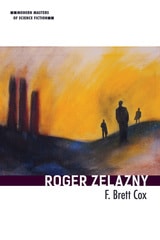
Roger Zelazny
F. Brett Cox
University of Illinois Press, 2021
Roger Zelazny combined poetic prose with fearless literary ambition to become one of the most influential science fiction writers of the 1960s. Yet many critics found his later novels underachieving and his turn to fantasy a disappointment. F. Brett Cox surveys the landscape of Zelazny's creative life and contradictions. Launched by the classic 1963 short story "A Rose for Ecclesiastes," Zelazny soon won the Hugo Award for Best Novel with …And Call Me Conrad and two years later won again for Lord of Light. Cox looks at the author's overnight success and follows Zelazny into a period of continued formal experimentation, the commercial triumph of the Amber sword and sorcery novels, and renewed acclaim for Hugo-winning novellas such as "Home Is the Hangman" and "24 Views of Mt. Fuji, by Hokusai." Throughout, Cox analyzes aspects of Zelazny's art, from his preference for poetically alienated protagonists to the ways his plots reflected his determined individualism.
Clear-eyed and detailed, Roger Zelazny provides an up-to-date reconsideration of an often-misunderstood SF maverick.
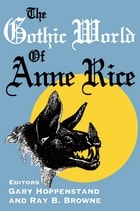
The Gothic World of Anne Rice
Edited by Gary Hoppenstand and Ray B. Browne
University of Wisconsin Press, 1996
This anthology argues for the serious study of the literary oeuvre of Anne Rice, a major figure in today’s popular literature. The essays assert that Rice expands the conventions of the horror genre’s formula to examine important social issues. Like a handful of authors working in this genre, Rice manipulates its otherwise predictable narrative structures so that a larger, more interesting cultural mythology can be developed. Rice searches for philosophical truth, examining themes of good and evil, the influence on people and society of both nature and nurture, and the conflict and dependence of humanism and science.
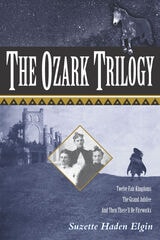
The Ozark Trilogy
Twelve Fair Kingdoms, The Grand Jubilee, And Then There’ll Be FireworksSuzette Haden Elgin
University of Arkansas Press, 2000
The Ozark Trilogy (previously published in 1981, Doubleday) is a widely acclaimed fantasy/science fiction story with, as the title suggests, very strong ties to the Ozark region. Twelve Fair Kingdoms, The Grand Jubilee, And Then There’ll Be Fireworks—the books that comprise the trilogy—chronicle life on the planet Ozark and its Confederation of Continents, which are appropriately named Arkansaw, Oklahomah, Mizzurah, Tinaseeh, Kintucky, and Marktwain. However, the story told here involves much more than a mere transplant of Ozark culture and heritage onto a new planet. While this new Ozark culture maintains and even intensifies many of the “real” Ozark traditions and customs (for instance, “Grannys” hold significant, stabilizing social roles and are important sources of wisdom), the planet Ozark combines many new, fantastical elements with traditional ways. Mules on Ozark fly, and the wise “Grannys” also work magic.
The protagonist of The Ozark Trilogy, Responsible of Brightwater, appears at the center of Ozark society, a society she must save from evil magic, civil war, and, ultimately, alien invasion. As Responsible travels from continent to continent in an attempt to discover and squelch the evil magic and calm the civil unrest, we are witness to many dangerous and sometimes comical adventures along the way, including a spectacular flying Mule crash and a magic duel with a Granny gone bad.
Elgin has created a fantastic world infused with the folk traditions, social and familial hierarchies, and traditional dialect of the Ozarks. While parallels might be drawn between, for example, the break-up of the Confederacy of Continents on planet Ozark and the American Civil War, Elgin comments on aspects of Ozark history and tradition in a non didactic way. The trilogy, with its strong heroine and witty engagement of tradition, is a classic of Ozark literature.