Results by title
24 books match the query 'Fatherhood'
Attachments
Essays on Fatherhood and Other PerformancesLucas Mann
University of Iowa Press, 2024
Birthing Fathers
The Transformation of Men in American Rites of BirthRichard K. Reed
Rutgers University Press, 2005
In the past two decades, men have gone from being excluded from the delivery room to being admitted, then invited, and, finally, expected to participate actively in the birth of their children. No longer mere observers, fathers attend baby showers, go to birthing classes, and share in the intimate, everyday details of their partners' pregnancies.
In this unique study, Richard Reed draws on the feminist critique of professionalized medical birthing to argue that the clinical nature of medical intervention distances fathers from child delivery. He explores men's roles in childbirth and the ways in which birth transforms a man's identity and his relations with his partner, his new baby, and society. In other societies, birth is recognized as an important rite of passage for fathers. Yet, in American culture, despite the fact that fathers are admitted into delivery rooms, little attention is given to their transition to fatherhood.
The book concludes with an exploration of what men's roles in childbirth tell us about gender and American society. Reed suggests that it is no coincidence that men's participation in the birthing process developed in parallel to changing definitions of fatherhood more broadly. Over the past twenty years, it has become expected that fathers, in addition to being strong and dependable, will be empathetic and nurturing.
Well-researched, candidly written, and enriched with personal accounts of over fifty men from all parts of the world, this book is as much about the birth of fathers as it is about fathers in birth.
Blood Ties
A Story of Falconry and FatherhoodBen Crane
University of Chicago Press, 2020
In this artful and moving memoir, we follow Crane on his remarkable journey of flight and return. Traveling from the United Kingdom to Pakistan, we learn first about the history and practice of falconry, a beautiful and brutal partnership between humans and birds that has persisted for thousands of years. And as Crane’s personal story unfolds, we come to understand how he found solace and insight through his relationships with these animals. “I saw that my feelings toward nature, and birds of prey in particular, ran in parallel with my feelings for my son,” Crane writes. “I worked out that they were, in fact, two sides of the same coin—the deep love of one could, with gentle observation, inform and unlock the deep love for the other. . . . Perhaps this then is the central theme of my story.”
Many of us rely upon animal companions to provide a sense of joy, compassion, and empathy. But as Blood Ties teaches us, our relationships with the creatures among us can also transform us, illuminating what it means both to be human and to be part of the greater wild—what it means to be alive.
Dads, Kids, and Fitness
A Father's Guide to Family HealthMarsiglio, William
Rutgers University Press, 2016
Now more than ever, American dads act as hands-on caregivers who are devoted to keeping themselves and their families healthy. Yet, men are also disproportionately likely to neglect their own health care, diets, and exercise routines—bad habits that they risk passing on to their children.
In Dads, Kids, and Fitness, William Marsiglio challenges dads to become more health-conscious in how they live and raise their children. His conclusions are drawn not only from his revealing interviews with a diverse sample of dads and pediatric healthcare professionals, but also from his own unique personal experiences—as a teenage father who, thirty-one years later, became a later-life dad to a second son. Marsiglio’s research highlights the value of treating dads as central players in what he calls the social health matrix, which can serve both healthy children and those with special needs. He also outlines how schools, healthcare facilities, religious groups, and other organizations can help dads make a positive imprint on their families’ health, fitness, and well-being.
Anchored in compelling life stories of joy, tragedy, and resilience, Dads, Kids, and Fitness extends and deepens public conversation about health at a pivotal historical moment. Its progressive message breathes new life into discussions about fathering, manhood, and health.
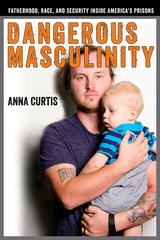
Dangerous Masculinity
Fatherhood, Race, and Security Inside America's PrisonsAnna Curtis
Rutgers University Press, 2019
Death of a Ventriloquist
Gibson Fay-LeBlanc
University of North Texas Press, 2012
Degas at the Gas Station
EssaysThomas Beller
Duke University Press, 2025
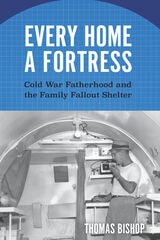
Every Home a Fortress
Cold War Fatherhood and the Family Fallout ShelterThomas Bishop
University of Massachusetts Press, 2020

Father Nature
Fathers as Guides to the Natural WorldPaul S. & Stan Piper & Tag
University of Iowa Press, 2003
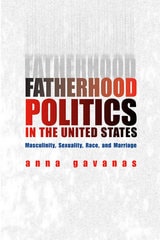
Fatherhood Politics in the United States
Masculinity, Sexuality, Race, and MarriageAnna Gavanas
University of Illinois Press, 2004
Unlike previous investigations that rely on literary or other secondary sources, Fatherhood Politics works from primary ethnographic material to represent a wider range of voices and actors. Interacting with and interviewing members of the most powerful and well-known national fatherhood organizations, Gavanas observed Promise Keeper rallies, men's workshops, and conferences on masculinity, fatherhood, and marriage.
Providing a detailed overview of the different organizations involved and their various rhetorical strategies, Gavanas breaks down the FRM into two major wings. The "pro-marriage" wing sees marriage as the key to solving all social problems, while the "fragile family" organizations worry about unemployment, racism, and discrimination. Gavanas uses her extensive anthropological fieldwork as the basis for discussions of gender, sexuality, and race in her analysis of these competing voices.
Taking us inside the internal struggles, tensions, and political machinations of the FRM, Gavanas offers a behind-the-scenes look at a movement having real impact on current social policy. Fatherhood Politics is an essential work for anyone interested in the politics of masculinity, parenthood, marriage, race, and sexuality.
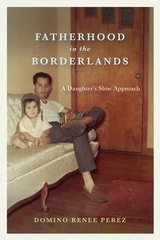
Fatherhood in the Borderlands
A Daughter's Slow ApproachDomino Renee Perez
University of Texas Press, 2022
2026 Best Book Award, Association for Borderlands Studies
2023 Finalist, Best Academic Themed Book, College Level – English, International Latino Book Awards
A contemplative exploration of cultural representations of Mexican American fathers in contemporary media.
As a young girl growing up in Houston, Texas, in the 1980s, Domino Perez spent her free time either devouring books or watching films—and thinking, always thinking, about the media she consumed. The meaningful connections between these media and how we learn form the basis of Perez’s “slow” research approach to race, class, and gender in the borderlands. Part cultural history, part literary criticism, part memoir, Fatherhood in the Borderlands takes an incisive look at the value of creative inquiry while it examines the nuanced portrayal of Mexican American fathers in literature and film.
Perez reveals a shifting tension in the literal and figurative borderlands of popular narratives and shows how form, genre, and subject work to determine the roles Mexican American fathers are allowed to occupy. She also calls our attention to the cultural landscape that has allowed such a racialized representation of Mexican American fathers to continue, unopposed, for so many years. Fatherhood in the Borderlands brings readers right to the intersection of the white cultural mainstream in the United States and Mexican American cultural productions, carefully considering the legibility and illegibility of Brown fathers in contemporary media.
Fathers' Fair Share
Helping Poor Men Manage Child Support and FatherhoodEarl S. Johnson
Russell Sage Foundation, 1999
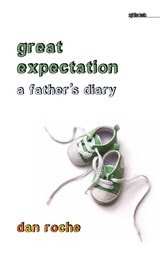
Great Expectation
A Father's DiaryDan Roche
University of Iowa Press, 2008
With five years of parenting his irrepressible daughter Maeve under his belt, Roche, already forty-five years old, and his wife, Maura, face the prospect of another arrival and the myriad of emotions that come with a second child. From revelling in the joys of pregnancy such as Maura's delight at "having cleavage" and being able to eat whatever she desires; to assuaging the parental anxieties of choosing the right obstetrician, correcting the mistakes one made with the first child, and sending children to college in the future; to navigating the unforeseen, experiencing the unexpected death of a parent, and feeling trepidation toward the thought of having a son, Roche records his emotions with unusual candidness and intimacy.
Reflecting on day-to-day events and their significance in his family’s life together, Roche wonders what he is getting himself into and how much deeper he can immerse himself into parenting. Together, he and his wife face the bittersweet intersections of death and new life, menace and hopefulness. With sincerity and a mature wit, Great Expectation stands as a wise recounting of nine months’ time, with all of its chaos and charms, and offers a fresh perspective for first-time and veteran parents alike.
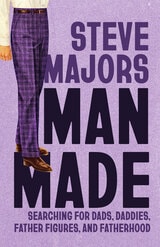
Man Made
Searching for Dads, Daddies, Father Figures, and FatherhoodSteve Majors
University of Wisconsin Press, 2025
In this poignant and provocative memoir, Steve Majors takes us on a journey of his own self-discovery as he grows from a gay boy in search of a father figure to a gay man grappling with what it means to be a father himself. In doing so, Majors creates various snapshots of time in which his—and the world’s—understanding of what it means to be a gay man changes.
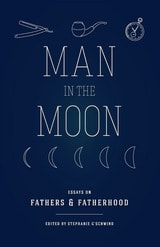
Man in the Moon
Essays on Fathers and FatherhoodStephanie G'Schwind
University Press of Colorado, 2014
"Science claims it will one day be able to eliminate fathers from the equation by mating bone marrow with ovum. When that day comes, I imagine this book, along with a handful of other works (King Lear, Fun Home) will become even more necessary. Herein find the blueprints for the mystery, the maps for the uncharted, the keys to the archetype."
—Nick Flynn, author of The Reenactments and Another Bullshit Night in Suck City
"At this moment, I find myself at loose ends, lost in the various vacuums left by my father's dying and my sons' departures out into the voids. Yet this stunning constellation of essays centered me, became for me fine instruments of reckoning of where to stand in the ceaseless entropic dynamic of kin, of paternal keening. These waxing meditations demonstrate the inflationary universe, the heft and velocity of that big ol' nothing. They elegantly fill, with sober hope and the balm of joy, the terrifying, infinite spaces between those waning stars."
—Michael Martone, author of Michael Martone and Four for a Quarter
"What an unreachable mystery the father is, preoccupied, unknowable, pervasive. In these fascinating essays, a shared portrait emerges as writers articulate the perpetual puzzle of the father and, with grace and candor, explore what it means to not know him, to never know him. As one voice, these essays investigate the man—his inventories, his myths, his mere traces—who makes up our horizons, who forever shimmers there beyond our collective grasp."
—Susanna Sonnenberg, author of Her Last Death and She Matters: A Life in Friendships
Selected from the country's leading literary journals and publications—Crazyhorse, Colorado Review, The Nervous Breakdown, Creative Nonfiction, Georgia Review, Gulf Coast, The Missouri Review, The Normal School, and others—Man in the Moon brings together essays in which sons, daughters, and fathers explore the elusive nature of this intimate relationship and find unique ways to frame and understand it: through astronomy, arachnology, storytelling, map-reading, television, puzzles, DNA, and so on. In the collection's title essay, Bill Capossere considers the inextricable link between his love of astronomy and memories of his father: "The man in the moon is no stranger to me,” he writes. "I have seen his face before, and it is my father's, and his father's, and my own.” Other essays include Dinty Moore's "Son of Mr. Green Jeans: A Meditation on Missing Fathers,” in which Moore lays out an alphabetic investigation of fathers from popular culture—Ward Cleaver, Jim Anderson, Ozzie Nelson—while ruminating on his own absent father and hesitation to become a father himself. In "Plot Variations,” Robin Black attempts to understand, through the lens of teaching fiction to creative writing students, her inability to attend her father's funeral. Deborah Thompson tries to reconcile her pride in her father's pioneering research in plastics and her concerns about their toxic environmental consequences in "When the Future Was Plastic.” At turns painfully familiar, comic, and heartbreaking, the essays in this collection also deliver moments of seari
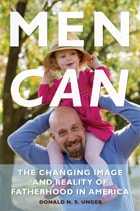
Men Can
The Changing Image and Reality of Fatherhood in AmericaDonald N.S. Unger
Temple University Press, 2010
Fatherhood is evolving in America. Stay at home dads are becoming more commonplace; men are becoming more visible in domestic, caregiving activities. In Men Can, writer, teacher, and father Donald Unger uses his personal experiences, stories of real-life families, as well as representations of fathers in film, on television, and in advertising, to illuminate the role of men in the increasingly fluid domestic sphere.
In thoughtful interviews, Don Unger tells the stories of a half dozen families—of varied ethnicities, geographical locations, and philosophical orientations—in which fathers are either primary or equally sharing parents, personalizing what is changing in how Americans care for their children. These stories are complemented by a discussion of how the language of parenting has evolved and how media representations of fathers have shifted over several decades.
Men Can shows how real change can take place when families divide up domestic labor on a gender-neutral basis. The families whose stories he tells offer insights into the struggles of—and opportunities for—men caring for children. When it comes to taking up the responsibility of parenting, his argument, ultimately, is in favor of respecting personal choices and individual differences, crediting and supporting functional families, rather than trying to force every household into a one-size-fits-all mold.
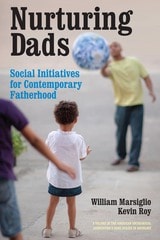
Nurturing Dads
Fatherhood Initiatives Beyond the WalletWilliam Marsiglio
Russell Sage Foundation, 2012
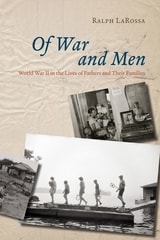
Of War and Men
World War II in the Lives of Fathers and Their FamiliesRalph LaRossa
University of Chicago Press, 2011
Fathers in the fifties tend to be portrayed as wise and genial pipe-smokers or distant, emotionless patriarchs. This common but limited stereotype obscures the remarkable diversity of their experiences and those of their children. To uncover the real story of fatherhood during this transformative era, Ralph LaRossa takes the long view—from the attack on Pearl Harbor up to the election of John F. Kennedy—revealing the myriad ways that World War II and its aftermath shaped men.
Offering compelling accounts of people both ordinary and extraordinary, Of War and Men digs deep into the terrain of fatherhood. LaRossa explores the nature and aftereffects of combat, the culture of fear during the Cold War, the ways that fear altered the lives of racial and sexual minorities, and how the civil rights movement affected families both black and white. Overturning some calcified myths, LaRossa also analyzes the impact of suburbanization on fathers and their kids, discovering that living in the suburbs often strengthened their bond. And finally, looking beyond the idealized dad enshrined in TV sitcoms, Of War and Men explores the brutal side of family life in the postwar years. LaRossa’s richly researched book dismantles stereotypes while offering up a fascinating and incisive chronicle of fatherhood in all its complexity.
Package Deal
Marriage, Work And Fatherhood In Men'S LivesNicholas W. Townsend
Temple University Press, 2002
Papa, PhD
Essays on Fatherhood by Men in the AcademyMarotte, Mary Ruth
Rutgers University Press, 2010
In Papa, PhD, Mary Ruth Marotte, Paige Martin Reynolds, and Ralph James Savarese bring together a group contributors from a variety of backgrounds and disciplines. They are white, black, South Asian, Asian, and Arab. They are gay and straight, married and divorced. They are tenured and untenured, at research-one universities and at community colleges. Some write at the beginning of their careers, others at the end. But, perhaps most important they do not look back-they look forward to new parental and professional synergies as they reflect on what it means to be a father in the academy.
The fathers writing in Papa, PhD seek to expand their children's horizons, giving them the gifts of better topic sentences and a cosmopolitan sensibility. They seriously consider the implications of gender theory and queer theory-even Marxist theory-and make relevant theoretical connections between their work and the less abstract, more pragmatic, world of fathering. What resonates is the astonishing range of forms that fatherhood can take as these dads challenge traditional norms by actively questioning the status quo.
Soft Patriarchs, New Men
How Christianity Shapes Fathers and HusbandsW. Bradford Wilcox
University of Chicago Press, 2004
According to W. Bradford Wilcox, the divergent family ideologies of evangelical and mainline churches do not translate into large differences in family behavior between evangelical and mainline Protestant men who are married with children. Mainline Protestant men, he contends, are "new men" who take a more egalitarian approach to the division of household labor than their conservative peers and a more involved approach to parenting than men with no religious affiliation. Evangelical Protestant men, meanwhile, are "soft patriarchs"—not as authoritarian as some would expect, and given to being more emotional and dedicated to their wives and children than both their mainline and secular counterparts. Thus, Wilcox argues that religion domesticates men in ways that make them more responsive to the aspirations and needs of their immediate families.
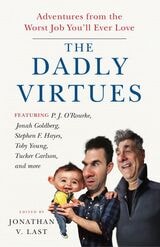
The Dadly Virtues
Adventures from the Worst Job You'll Ever LoveJonathan V. Last
Templeton Press, 2015
The Dadly Virtues is a tongue-in-cheek collection of encouragement and guidance for any stage of fatherhood, from pacifying babies to prepping for senior prom, from cutting the cord to getting the first, “Best Grandpa” t-shirt. P.J. O’Rourke sets the stage with the chapter, “What Do Men Get from Fatherhood? Besides What They Put In …” and then is followed by:
•Matthew Continetti’s, “Newborn Terror: The Moment You Realize that ‘Bundle of Joy’ Is a Euphemism for Something Very Different.”
•Stephen F. Hayes’ “Siblings: The Best Gift You’ll Ever Give Your Kids.”
•Jonah Goldberg’s “Get Your Kid a Dog: The Moral Case for Pets.”
•Tucker Carlson’s “In Praise of Adventure: How to Fill a Child’s Life with Excitement and Danger (without Getting Them Killed).”
•Michael Graham’s, “Dating: Enjoy the Movie and Please Keep the Impregnation to a Minimum.”
•Christopher Caldwell’s “College: It’s Not as Bad as You Think; It’s Worse.”
•Andrew Ferguson’s “Emerging Adults and Empty Nesters: Just When You Had Fatherhood All Figured Out.”
•Toby Young’s “The Dark Side: Bad Parenting and the Things We Think, but Do Not Say.”
•Joseph Epstein’s “Thanks, Grandpa: Grandfatherhood and the Spirit of the Age.”
•And more.
Father-to-be, two-time-dad, or granddad, each essay will make you laugh and, at the same time, reinforce your commitment to the virtuous—the dadly—life.
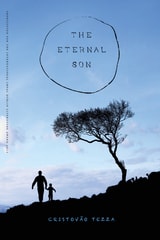
The Eternal Son
Cristovão Tezza
Tagus Press, 2013
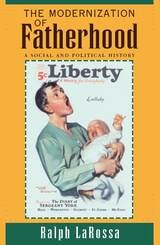
The Modernization of Fatherhood
A Social and Political HistoryRalph LaRossa
University of Chicago Press, 1997
LaRossa explains that during the interwar period the image of the father as economic provider, pal, and male role model, all in one, became institutionalized. Using personal letters and popular magazine and newspaper sources, he explores how the social and economic conditions of the Roaring Twenties and the Great Depression—a period of technical innovation as well as economic hardship—fused these expectations into a cultural ideal. With chapters on the U.S. Children's Bureau, the fathercraft movement, the magazine industry and the development of Parent's Magazine, and the creation of Father's Day, this book is a major addition to the growing literature on masculinity and fatherhood.