Results by title
38 books match the query 'Fathers and daughters'
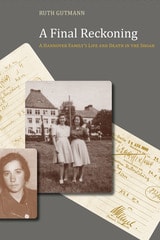
A Final Reckoning
A Hannover Family's Life and Death in the ShoahRuth Gutmann, Foreword by Kenneth Waltzer
University of Alabama Press, 2013
A work of both childhood memory and adult reflection undergirded with scholarly research
Ruth Herskovits Gutmann’s powerful memoir recounts her life not only as a concentration camp inmate and survivor, but also as a sister and daughter. Born in 1928, Gutmann and her twin sister, Eva, escaped the growing Nazi threat in Germany on a Kindertransport to Holland in 1939.
Gutmann’s compelling story captures many facets of the Jewish experience in Nazi Germany. She describes her early life in Hannover as the daughter of a prominent and patriotic member of the Jewish community. Her flight on the Kindertransport offers a vivid, firsthand account of that effort to save the children of Jewish families. Her memories of the camps include coming to the attention of Josef Mengele, who often used twins in human experiments. Gutmann writes with moving clarity and nuance about the complex feelings of survivorship.
A Final Reckoning provides not only insights into Gutmann’s own experience as a child in the midst of the atrocities of the Holocaust, but also a window into the lives of those, like her father, who were forced to carry on and comply with the regime that would ultimately bring about their demise.
As You Like It
William Shakespeare
Arizona Center for Medieval and Renaissance Studies, 2021
Actor and director David Ivers presents As You Like It, as you’d like to hear it today. Presenting a new translation of Shakespeare into contemporary English, Ivers reimagines Shakespeare’s comedy from an actor’s point of view. Analyzing the play line by line to uncover the meaning of every joke, pun, and witty aside, Ivers repurposes Shakespeare’s language while maintaining an homage to the original rhythm, cadence, and structure. An accomplished actor and director, and a lifelong lover of the Bard, Ivers is the perfect writer to bring As You Like It into the present moment.
This translation of As You Like It was written as part of the Play On! Shakespeare project, an ambitious undertaking from the Oregon Shakespeare Festival that commissioned new translations of 39 Shakespeare plays. These translations present the Bard’s work in language accessible to modern audiences while never losing the beauty of Shakespeare’s verse. Enlisting the talents of a diverse group of contemporary playwrights, screenwriters, and dramaturges from diverse backgrounds, this project reenvisions Shakespeare for the twenty-first century. These volumes make these works available for the first time in print—a new First Folio for a new era.

Boy
Tracy Youngblom
CavanKerry Press, 2023
The death of a youngest child. An alcoholic and distant father. A grief-stricken family. A tentative faith. These are the building blocks of Boy, a sequence of poems that explores how death and loss color memory and influence the ways family members relate to each other and to their shared history.
Inspired by the death of her own younger brother, Tracy Youngblom has written a poetry collection that serves as a companion to grief. This book is for those who love poetry and those who are intimidated by it, those interested in the way childhood experience shapes life, and those interested in the psychology of addiction.
Club Icarus
Matt W. Miller
University of North Texas Press, 2013
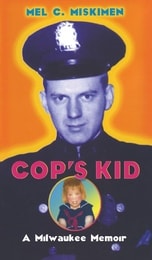
Cop's Kid
A Milwaukee MemoirMel C. Miskimen
University of Wisconsin Press, 2003
B-Day, as it came to be known, finally arrived. It was a Friday. A school day. I identified with Cinderella as I watched Dad get ready for work. Holster, check. Gun, check. Billy club, check. Handcuffs, check. . . . Saturday morning I got up early. Dad was already gone. Back to work. Ushering the Beatles out of town. On the table . . . there were two small bars of soap, slightly used, the words "Coach House Inn" still legible. One book of matches with four missing. And a note from Dad, "From their room." . . . No one else’s dad comes home from work with something that might, just might, have been intimate with a Beatle.
Growing up, Mel Miskimen thought that a gun and handcuffs on the kitchen table were as normal as a gallon of milk and a loaf of Mrs. Karl’s bread. Her father, a Milwaukee cop for almost forty years was part Super Hero (He simply held up his hand and three lanes of traffic came to a screeching halt) and part Supreme Being (He could be anywhere at anytime. I never knew when or where he would pop up.) Miskimen’s memoir, told in humorous vignettes, tells what it was like for a girl growing up with a dad who packed a lunch and packed heat.
Cymbeline
William Shakespeare
Arizona Center for Medieval and Renaissance Studies, 2023
In her modern translation of Cymbeline, Andrea Thome takes up one of Shakespeare’s most complex plays. Thome’s update brings the play’s language into the present, highlighting new resonances and providing a more accessible version of Shakespeare’s play for today’s audiences. One of Shakespeare’s final plays, Cymbeline tells the story of the British king Cymbeline and his daughter, Imogen. It is a tale of deceit and jealousy, with accusations of infidelity that often draw comparisons to Othello and The Winter’s Tale.
This translation of Cymbeline was written as part of the Oregon Shakespeare Festival’s Play On! project, which commissioned new translations of thirty-nine Shakespeare plays. These translations present the work of “The Bard” in language accessible to modern audiences while never losing the beauty of Shakespeare’s verse. Enlisting the talents of a diverse group of contemporary playwrights, screenwriters, and dramaturges from diverse backgrounds, this project reenvisions Shakespeare for the twenty-first century. These volumes make these works available for the first time in print—a new First Folio for a new era.
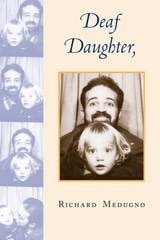
Deaf Daughter, Hearing Father
Richard Medugno
Gallaudet University Press, 2005
Medugno first researched the best communication mode for Miranda. Quickly dismissing the speech pathology model, he and his wife chose ASL alone as the best, natural language for Miranda. He surrounded his daughter with opportunities to learn ASL, by arranging to meet deaf individuals and families, and also by hiring deaf babysitters. He also determined to learn ASL himself, to ensure communication with his daughter. As Miranda neared school age, Medugno spearheaded a transcontinental search for exactly the right school for her education. So that Miranda could attend the California School for the Deaf (CSD), the Medugno family moved from Toronto, Canada to Fremont, CA.
In Deaf Daughter, Hearing Father, Medugno shares practical information on many of the common challenges faced by hearing parents. He provides a list of games that hearing and deaf children can play together, an important consideration for many families. His enthusiasm for all possibilities, from exploring the potential of video phones to helping stage CSD musicals, reveals his abiding devotion to Miranda. Such a foundation has enabled her to feel proud, confident, and happy in her pursuits. At the same time, Medugno recognizes that the rewards of having a deaf daughter are far greater than he could have hoped for or imagined.
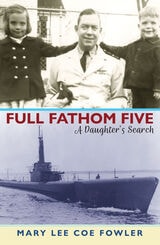
Full Fathom Five
A Daughter's SearchMary Lee Coe Fowler
University of Alabama Press, 2008
One woman’s quest for knowledge of her father lost at sea
Mary Lee Coe Fowler was a posthumous child, born after her father, a submarine skipper in the Pacific, was lost at sea in 1943. Her mother quickly remarried into a difficult and troubled relationship, and Mary Lee’s biological father was never mentioned. It was not until her mother died and Mary Lee was a middle-aged adult that she set out to learn not only who her father was, but what happened to him and his crew, and why—and also to confront why she had shied away from asking these questions until it was nearly too late.
Fowler searched through old ships’ logs, letters, and naval communiqués; visited submarine museums, the Naval Academy, and other pertinent sites; interviewed old friends and crew members who knew her dad and mom or served concurrently; and slowly reconstructed the world in which they lived. Beautifully written, Fowler’s memoir reveals what she eventually learned: of the perils and harships of submarine service in wartime, of the tragic irony of how her father’s sub was probably lost, and of the long-term damage experienced by the families of those who do not come home from war.
Havana and Other Missing Fathers
Mia Leonin
University of Arizona Press, 2009
Shortly after her sixteenth birthday, Leonin learned from her mother that her father, a Cuban exile, was very much alive and living in Florida. Her attempts to contact him, however, were thwarted until four years later, when she left home in search of her roots.
She meets her father, but trying to discover the truth behind him proves to be a more daunting task. Her journey takes her to Miami, Colombia, and Cuba, and her search for cultural identity leads her to create memories, friendships, and romances. She finds moments of connection and redemption, ending up in Havana not as a cultural tourist but as an illegitimate daughter of Cuba looking for validation. What she discovers is an island bereft of fathers and brimming with paternalism. As she becomes entangled with two different men, she descends further into the Havana of poverty, humiliation, and despair, as well as the ever-inventive city that is as passionate as it is contradictory.
Insightful, imaginative, and often poetic, Havana and Other Missing Fathers is Mia Leonin’s recollection of this journey and her longing to learn more about her origins. In the end, she must learn to accept the answers she discovers as well as the questions that remain.
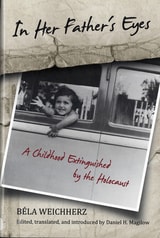
In Her Father's Eyes
A Childhood Extinguished by the HolocaustBéla Weichherz, Edited by Daniel H. Magilow
Rutgers University Press, 2008
In Her Father's Eyes is a moving tale about Jewish life and a father's profound love for his only child. By bridging prewar and wartime periods, the diary also provides a rich context for understanding the history from which the Holocaust emerged.
King Lear
William Shakespeare
Arizona Center for Medieval and Renaissance Studies, 2022
Marcus Gardley’s translation of King Lear renews the language of one of Shakespeare’s most frequently staged tragedies for a modern audience. Gardley’s update allows audiences to hear the play anew while still finding themselves in the tragic midst of Shakespeare’s play.
This translation of King Lear was written as part of the Oregon Shakespeare Festival’s Play On! project, which commissioned new translations of thirty-nine Shakespeare plays. These translations present the work of “The Bard” in language accessible to modern audiences while never losing the beauty of Shakespeare’s verse. Enlisting the talents of a diverse group of contemporary playwrights, screenwriters, and dramaturges from diverse backgrounds, this project reenvisions Shakespeare for the twenty-first century. These volumes make these works available for the first time in print—a new First Folio for a new era.
Lucky That Way
Rediscovering My Father's WorldPamela Gerhardt
University of Missouri Press, 2013
“I decide that from now on we should listen to him. His lip may be deflated and his left side paralyzed, but he knows. And he has made terrible mistakes. But he knows. He knows. We are lucky that way.”
Lucky That Way, a nuanced, richly engaging memoir, chronicles the joys and tribulations of a daughter who rediscovers her father as he nears the end of his life. Ernie Gerhardt, an artist and teacher, is largely estranged from his five children, but when he suffers a debilitating stroke, his daughter Pamela must fly to Las Vegas to tend to him. When she arrives to find Ernie newly and shockingly fragile, she is hit by an unexpected wave of tenderness.
As she watches over him in intensive care, she recalls turning points in her family history—the early death of her mother and her father’s turn to heavy drinking--and reflects on the idiosyncrasies that make an imperfect and unique family, on what it means to become old, on what happens when parents are no longer the caregivers but the cared-for, and on how a family copes with their responsibility to the elderly.
Written in a crisp, engaging style, the story is less about the drudgery of finding the right mix of medicines, at-home caregivers, and rehabilitation centers and more about the emotional ramifications of caring for the sick under the weight of sometimes flawed attachments.
People make mistakes, grow old, get sick, and pass on from this world. Lucky That Way examines the irritations and comforts of contemporary family bonds. Gerhardt sifts through the complicated, multi-layered relationships for both wry comedy and high drama and records a string of triumphs and mishaps as Ernie and his five adult children struggle to manage his life and find meaning before their time runs out.
The emerging theme of imperfect humans struggling with life's great mysteries will strike a chord of recognition with the tens of thousands of Baby-Boomers and Gen-Xers who are currently facing similar circumstances with their elderly loved ones. Pamela Gerhardt’s heartfelt story about a family coming to terms with their aging father’s illness and imminent death takes readers on an emotional roller coaster that highlights love, loss, humor, and sadness.
Man in the Moon
Essays on Fathers and FatherhoodStephanie G'Schwind
University Press of Colorado, 2014
"Science claims it will one day be able to eliminate fathers from the equation by mating bone marrow with ovum. When that day comes, I imagine this book, along with a handful of other works (King Lear, Fun Home) will become even more necessary. Herein find the blueprints for the mystery, the maps for the uncharted, the keys to the archetype."
—Nick Flynn, author of The Reenactments and Another Bullshit Night in Suck City
"At this moment, I find myself at loose ends, lost in the various vacuums left by my father's dying and my sons' departures out into the voids. Yet this stunning constellation of essays centered me, became for me fine instruments of reckoning of where to stand in the ceaseless entropic dynamic of kin, of paternal keening. These waxing meditations demonstrate the inflationary universe, the heft and velocity of that big ol' nothing. They elegantly fill, with sober hope and the balm of joy, the terrifying, infinite spaces between those waning stars."
—Michael Martone, author of Michael Martone and Four for a Quarter
"What an unreachable mystery the father is, preoccupied, unknowable, pervasive. In these fascinating essays, a shared portrait emerges as writers articulate the perpetual puzzle of the father and, with grace and candor, explore what it means to not know him, to never know him. As one voice, these essays investigate the man—his inventories, his myths, his mere traces—who makes up our horizons, who forever shimmers there beyond our collective grasp."
—Susanna Sonnenberg, author of Her Last Death and She Matters: A Life in Friendships
Selected from the country's leading literary journals and publications—Crazyhorse, Colorado Review, The Nervous Breakdown, Creative Nonfiction, Georgia Review, Gulf Coast, The Missouri Review, The Normal School, and others—Man in the Moon brings together essays in which sons, daughters, and fathers explore the elusive nature of this intimate relationship and find unique ways to frame and understand it: through astronomy, arachnology, storytelling, map-reading, television, puzzles, DNA, and so on. In the collection's title essay, Bill Capossere considers the inextricable link between his love of astronomy and memories of his father: "The man in the moon is no stranger to me,” he writes. "I have seen his face before, and it is my father's, and his father's, and my own.” Other essays include Dinty Moore's "Son of Mr. Green Jeans: A Meditation on Missing Fathers,” in which Moore lays out an alphabetic investigation of fathers from popular culture—Ward Cleaver, Jim Anderson, Ozzie Nelson—while ruminating on his own absent father and hesitation to become a father himself. In "Plot Variations,” Robin Black attempts to understand, through the lens of teaching fiction to creative writing students, her inability to attend her father's funeral. Deborah Thompson tries to reconcile her pride in her father's pioneering research in plastics and her concerns about their toxic environmental consequences in "When the Future Was Plastic.” At turns painfully familiar, comic, and heartbreaking, the essays in this collection also deliver moments of seari
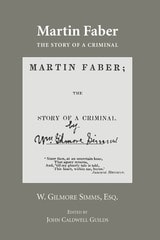
Martin Faber
The Story of a Criminal with "Confessions of a Murder"William Gilmore Simms
University of Arkansas Press, 2006
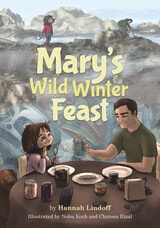
Mary's Wild Winter Feast
Hannah Lindoff
University of Alaska Press, 2014
Featuring brilliant collages from artists Nobu Koch and Clarissa Rizal, Mary’s Wild Winter Feast is a celebration of food, family, and finding fun in unexpected places.
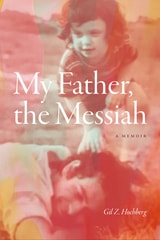
My Father, the Messiah
A MemoirGil Z. Hochberg
Duke University Press, 2026
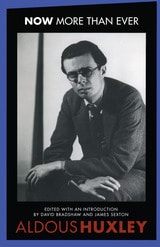
Now More Than Ever
By Aldous Huxley
University of Texas Press, 2000
Over the course of his career, British writer Aldous Huxley (1894-1963) shifted away from elitist social satires and an atheistic outlook toward greater concern for the masses and the use of religious terms and imagery. This change in Huxley's thinking underlies the previously unpublished play Now More Than Ever.
Written in 1932-1933 just after Brave New World, Now More Than Ever is a response to the social, economic, and political upheavals of its time. Huxley's protagonist is an idealistic financier whose grandiose schemes for controlling the means of production drive him to swindling and finally to suicide. His fate allows Huxley to expose the evils he perceives in free-market capitalism while pleading the case for national economic planning and the rationalization of Britain's industrial base.
This volume contains the full text of Now More Than Ever, which was believed to be lost until 1976, when a copy was found at the Harry Ransom Humanities Research Center of the University of Texas at Austin. A "thinker's play" that has never been produced on stage, it is the last previously unpublished piece of Huxley's major writings and immensely important to understanding his development as a writer. The editors of this volume have annotated the play for contemporary readers. Their introduction sets the play in the context of Huxley's intellectual life.
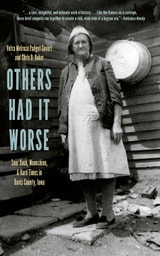
Others Had It Worse
Sour Dock, Moonshine, and Hard Times in Davis County, IowaVetra Melrose Padget Covert and Chris D. Baker
University of Iowa Press, 2013
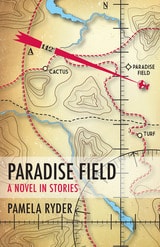
Paradise Field
A Novel in StoriesPamela Ryder
University of Alabama Press, 2017
When life dwindles to its irrevocable conclusion, recollections are illuminated, even unto the grave. Such is the narrative of Paradise Field: A Novel in Stories, whose title is taken from a remote airfield in the American Southwest, and while the father recalls his flying days, his daughter—who nurses the old man—reflects as well.
Pamela Ryder’s stories vary in style and perspective, and time lines overlap as death advances and retreats. This unique and shifting narrative explores the complexities of a relationship in which the father—who has been a high-flying outsider—descends into frailty and becomes dependent upon the daughter he has never really known.
The opening story, “Interment for Yard and Garden,” begins as a simple handbook for Jewish burial and bereavement, although the narrator cannot help but reveal herself and her motives. From there, the telling begins anew and unfolds chronologically, returning to the adult daughter’s childhood: a family vacation in France, the grotesqueries of the dinner table, the shadowy sightings of a father who has flown away.
A final journey takes father and daughter back to the Southwest in search of Paradise Field. Their travels through that desolate landscape foreshadow the father’s ultimate decline, as portrayed in the concluding stories that tell of the uneasy transformation in the bond between them and in the transcendence of his demise. Taken together, the stories in Paradise Field are an eloquent but unsparing depiction of infirmity and death, as well as solace and provocation for anyone who has been left to stand graveside and confront eternity.
Playing with Dynamite
Sharon Harrigan
University of Wisconsin Press, 2017
Playing with Dynamite is about the family secrets that can distance us from each other and the honesty that can bring us closer. It’s about a daughter who goes looking for her father but finds her mother instead. It’s about memory and truth, grieving and growing, and what it means to go home again.
Returning to My Father's Kitchen
EssaysMonica Macansantos
Northwestern University Press, 2025
Feeling untethered after her beloved poet father passes away while she is living abroad, Monica Macansantos decides to return to the Philippines to regain her bearings. But with her father gone and her adult life rooted in the United States and New Zealand, can the land of her birth still serve as a place of healing?
In fifteen richly felt essays, Macansantos considers her family’s history in the Philippines, her own experiences as an exile, and the parent who was the heart of her family’s kitchen, whether standing at the stove to prepare dinner or sitting at the table to scribble in his notebook. Macansantos finds herself remaking her father’s chicken adobo, but also closely rereading his poems. As she reckons with his identity as an artist, she also comes into her own as a writer, and she invites us to consider whether it is possible to carry our homes with us wherever we go.
Reunited
The Correspondence of Anaïs and Joaquín Nin, 1933–1940Anaïs Nin
Ohio University Press, 2020
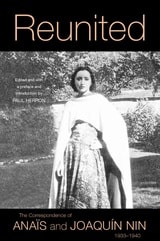
The incestuous affair between the writer Anaïs Nin and her father, the pianist-composer Joaquín Nin, is well documented in the volume of her unexpurgated diary published under the title Incest. What has been missing from that account is Joaquín’s point of view. Reunited: The Correspondence of Anaïs and Joaquín Nin, 1933–1940 presents more than one hundred intimate communications between these two artistic geniuses, revealing not only the dynamics of their complex relationship but also why Anaïs spent her life in a never-ending battle to feel loved, appreciated, and understood.
Reunited collects the correspondence between Anaïs and Joaquín just before, during, and after the affair, which commenced in 1933, twenty years after he had abandoned his ten-year-old daughter and the rest of his family. These letters were long believed to have been destroyed and lost to history. In 2006, however, a folder containing Joaquín’s original letters to his daughter was discovered in Anaïs’s Los Angeles home, along with a second folder of her letters to him. Together, these letters tell the story of an absent father’s attempt to reconnect with his adult daughter and how that rapprochement quickly turned into an illicit sexual relationship.
Secrets of the Sun
A MemoirMako Yoshikawa
The Ohio State University Press, 2024
So Far Away
A Daughter's Memoir of Life, Loss, and LoveChristine W. Hartmann
Vanderbilt University Press, 2011
Christine's father, as it turned out, prepared too slowly for old age. Before he had made any decision, fate disabled him through a series of strokes. Confined to a nursing home, severely impaired by dementia and frustrated by his circumstances, his life epitomized the predicament her mother wanted to avoid.
So Far Away gives us an intimate view of a person interacting with and reacting to her parents at the ends of their lives. In a richly detailed, poignant story of family members' separate yet interwoven journeys, it underscores the complexities and opportunities that life presents each one of us.
Sustaining Activism
A Brazilian Women's Movement and a Father-Daughter CollaborationJeffrey W. Rubin and Emma Sokoloff-Rubin
Duke University Press, 2013
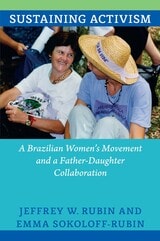
Starting in 2002, Rubin and Sokoloff-Rubin traveled together to southern Brazil, where they interviewed activists over the course of ten years. Their vivid descriptions of women’s lives reveal the hard work of sustaining a social movement in the years after initial victories, when the political way forward was no longer clear and the goal of remaking gender roles proved more difficult than activists had ever imagined. Highlighting the tensions within the movement about how best to effect change, Sustaining Activism ultimately shows that democracies need social movements in order to improve people’s lives and create a more just society.

The Heritage
A Daughter's Memoir Of Louis BromfieldEllen Bromfield Geld
Ohio University Press, 1999
This lively, outspoken, and affectionate memoir preserves all things Louis Bromfield fought for or against in a life marked by surging vitality and gusto. He came from an Ohio family whose roots were in the land before the land was lost. He had his father's love of the land, and from his willful mother a hunger to know the world. From the New York City of theaters, concerts, parties, and novels, and a life in France that his success allowed, he finally returned to Ohio and established a new order for his family and friends, and for his followers, a new orbit into which they were drawn.
Ellen Bromfield Geld wrote a memoir of the man who was Louis Bromfield, father and friend, tyrant and “Boss,” alive always to whatever was worth responding to in people and in places, yet complex and lonely as a writer must essentially be to work at his craft. Now revived in paperback thirty-five years after its first publication, The Heritage remains a moving tribute and the recreation of a remarkable human being.

The Most Beautiful Girl in the World
Judy Doenges
University of Michigan Press, 2006
Trapped in a house scarily alive with a rogues gallery of hapless and often hilarious crooks, misfits, and hangers-on, Robin must look elsewhere for stability, befriending the son of the neighborhood's only African American family-a boy whose unimpeachable manners and flawless grades mask his own sexuality-while falling in love with the high school beauty.
Wry, edgy, and smart, The Most Beautiful Girl in the World offers a new kind of young heroine, one who stands fearlessly at the precipice of her family and her town's self-destruction, defiantly fighting to save herself.
The Tempest
William Shakespeare
Arizona Center for Medieval and Renaissance Studies, 2021
Cavander’s translation of The Tempest, which premiered at the Alabama Shakespeare Festival in 2017, was written as part of the Play On! Shakespeare project, an ambitious undertaking from the Oregon Shakespeare Festival that commissioned new translations of 39 Shakespeare plays. These translations present the Bard’s work in language accessible to modern audiences while never losing the beauty of Shakespeare’s verse. Enlisting the talents of a diverse group of contemporary playwrights, screenwriters, and dramaturges from diverse backgrounds, this project reenvisions Shakespeare for the twenty-first century. These volumes make these works available for the first time in print—a new First Folio for a new era.
The Winter's Tale
William Shakespeare
Arizona Center for Medieval and Renaissance Studies, 2023
The Winter’s Tale is one of Shakespeare’s most challenging explorations of redemption and rebirth. Driven by extreme jealousy, Leontes, the King of Sicily, accuses his wife Hermione of infidelity and orders his newborn daughter to be abandoned. Sixteen years later, Leontes must reckon with the consequences of his rash decisions. Tracy Young’s version of The Winter’s Tale transforms the theatergoing experience from Shakespeare’s time to ours. This translation updates Shakespeare’s language, wordplay, and wit to engage audiences the way they would have been engaged in the early modern theater.
This translation of The Winter’s Tale was written as part of the Oregon Shakespeare Festival’s Play On! project, which commissioned new translations of thirty-nine Shakespeare plays. These translations present work from “The Bard” in language accessible to modern audiences while never losing the beauty of Shakespeare’s verse. Enlisting the talents of a diverse group of contemporary playwrights, screenwriters, and dramaturges from diverse backgrounds, this project reenvisions Shakespeare for the twenty-first century. These volumes make these works available for the first time in print—a new First Folio for a new era.
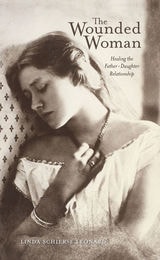
The Wounded Woman
Healing the Father-Daughter RelationshipLinda Schierse Leonard
Ohio University Press, 1982
This book is an invaluable key to self-understanding. Using examples from her own life and the lives of her clients, as well as from dreams, fairy tales, myths, films, and literature, Linda Schierse Leonard, a Jungian analyst, exposes the wound of the spirit that both men and women of our culture bear—a wound that is grounded in a poor relationship between masculine and feminine principles.
Leonard speculates that when a father is wounded in his own psychological development, he is not able to give his daughter the care and guidance she needs. Inheriting this wound, she may find that her ability to express herself professionally, intellectually, sexually, and socially is impaired. On a broader scale, Leonard discusses how women compensate for cultural devaluation, resorting to passive submission (“the Eternal Girl”), or a defensive imitation of the masculine (“the Armored Amazon”).
The Wounded Woman shows that by understanding the father-daughter wound and working to transform it psychologically, it is possible to achieve a fruitful, caring relationship between men and women, between fathers and daughters, a relationship that honors both the mutuality and the uniqueness of the sexes.

Thrill-Bent
Jan Richman
Tupelo Press, 2013
Twelfth Night
William Shakespeare
Arizona Center for Medieval and Renaissance Studies, 2023
Shakespeare’s Twelfth Night centers on power and love. One of the most perennially produced of Shakespeare’s comedies, it talks about shipwrecked twins, gender-bending romance, and a bumper crop of fools, from the wise to the ridiculous. Modernizing the language of the play, Alison Carey’s translation revives the joy of this comedy, taking the archaic humor and renewing it for a contemporary audience.
This translation of Twelfth Night was written as part of the Oregon Shakespeare Festival’s Play On! project, which commissioned new translations of thirty-nine Shakespeare plays. These translations present the work of “The Bard” in language accessible to modern audiences while never losing the beauty of Shakespeare’s verse. Enlisting the talents of a diverse group of contemporary playwrights, screenwriters, and dramaturges from diverse backgrounds, this project reenvisions Shakespeare for the twenty-first century. These volumes make these works available for the first time in print—a new First Folio for a new era.
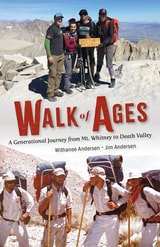
Walk of Ages
A Generational Journey from Mt. Whitney to Death ValleyWithanee Andersen
University of Nevada Press, 2024
With hopes of being listed in the Guinness Book of World Records, Jim led the first documented walk from the highest to lowest point in the contiguous United States in 1974. He lived, albeit just barely, to tell the tale to his daughter, sparking a desire in Withanee to retrace his steps in his honor. In 2017, she took on the incredible task of recreating Jim’s legacy trek of 131 miles with the help of divine intervention, ice-cold beer, and her parents, who were following along as the support party.
Walk of Ages humorously relates the parallel journey of an epic adventure told from two perspectives—a daughter’s difficult quest, and a father who supports her through it while recalling his own experiences from four decades earlier. Throughout this momentous odyssey, readers will realize how a once-in-a-generation adventure leads to life-changing transformation, and that the bond between father and daughter knows no bounds.
Welcome to Wherever We Are
A Memoir of Family, Caregiving, and RedemptionDeborah J. Cohan
Rutgers University Press, 2020
ESS Public Sociology Award
Recommended Book in Domestic Violence by DomesticShelters.org
How do you go about caregiving for an ill and elderly parent with a lifelong history of abuse and control, intertwined with expressions of intense love and adoration? How do you reconcile the resulting ambivalence, fear, and anger?
Welcome to Wherever We Are is a meditation on what we hold onto, what we let go of, how we remember others and ultimately how we’re remembered. Deborah Cohan shares her story of caring for her father, a man who was simultaneously loud, gentle, loving and cruel and whose brilliant career as an advertising executive included creating slogans like “Hey, how ‘bout a nice Hawaiian punch?” Wrestling with emotional extremes that characterize abusive relationships, Cohan shows how she navigated life with a man who was at once generous and affectionate, creating magical coat pockets filled with chocolate kisses when she was a little girl, yet who was also prone to searing, vicious remarks like “You’d make my life easier if you’d commit suicide.”
In this gripping memoir, Cohan tells her unique personal story while also weaving in her expertise as a sociologist and domestic abuse counselor to address broader questions related to marriage, violence, divorce, only children, intimacy and loss. A story most of us can relate to as we reckon with past and future choices against the backdrop of complicated family dynamics, Welcome to Wherever We Are is about how we might come to live our own lives better amidst unpredictable changes through grief and healing.
Questions for Discussion (https://d3tto5i5w9ogdd.cloudfront.net/wp-content/uploads/2020/05/11140346/Cohan_Discussion.docx)

Where Love Leaves Us
Renee Manfredi
University of Iowa Press, 1994
These nine superbly crafted stories, set primarily in Pittsburgh's Italian American neighborhoods, concentrate on families, on the poignant nature of father-daughter relationships, and on the fate of those who are refugees from their physical or spiritual communities. “Love is born only out of wreckage,” Manfredi's characters declare bravely. Her vigorous families are both the wrecking crews and the architects of the human foundation.
In “The Projectionist,” a displaced Sicilian is forced to confront the family he lost in war-torn Italy at the same time that his current family is disintegrating; his disillusionment with the American dream overwhelms him when his oldest daughter exchanges Old World values for the hippie-inspired climate of permissiveness. Ten-year-old Elena, in “Bocci,” takes the teachings of her strict Catholic upbringing to the extreme, and it is her devoutness that is cruelly used against her when violence compels her to reject becoming “a nun or a saint.” The father in “Tall Pittsburgh” sends his daughter to charm school at Sears, then enters her in a beauty pageant for tall women. Distraught in spite of her second-place win, he begins to relive his grief over the death of his beautiful wife.
Many of Manfredi's vital, luminous characters are outsiders, dispossessed by their inability to bridge the gap between the self and others, forced to deal with loss through death and lapse of faith, yet always managing to survive despite their place on the bewildering margins. Manfredi reveals an affirmation, finally, that hope is a permanent possession of every human spirit.
Whitehorn's Windmill
Kazys Boruta
Central European University Press, 2009
You Got Older
A PlayClare Barron
Northwestern University Press, 2017
Winner of a 2015 Obie Award for Playwriting
Mae has returned home to help her father while he undergoes treatment for cancer. But she needs a little help herself. She’s just lost her boyfriend and her job. (It turns out there are consequences to dating your boss . . .) And she’s desperately craving intimacy of any sort. Mae escapes into the the arms of a chain-smoking, imaginary Cowboy who turns her on and ties her up. And she escapes into chatter with her siblings as they attempt to distract and entertain themselves in a hospital waiting room. But ultimately, it’s her deep love for her father that teaches Mae to remain optimistic and ambitious in the face of suffering and that gets her back on track.
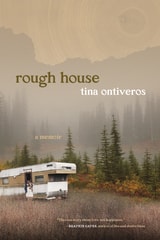
rough house
a memoirTina Ontiveros
Oregon State University Press, 2020
Tina Ontiveros was born into timber on both sides of the family. Her mother spent summers driving logging trucks for her family’s operation, and her father was the son of an itinerant logger, raised in a variety of lumber towns, as Tina herself would be.
A story of growing up in turmoil, rough house recounts a childhood divided between a charming, mercurial, abusive father in the forests of the Pacific Northwest and a mother struggling with small-town poverty. It is also a story of generational trauma, especially for the women—a story of violent men and societal restrictions, of children not always chosen and frequently raised alone.
Ontiveros’s father, Loyd, looms large. Reflecting on his death and long absence from her life, she writes, “I had this ridiculous hope that I would get to enjoy a functional relationship with my father, on my own terms, now that I was an adult.” In searingly honest, straightforward prose, rough house is her attempt to carve out this relationship, to understand her father and her family from an adult perspective.
While some elements of Ontiveros’s story are universal, others are indelibly grounded in the logging camps of the Pacific Northwest at the end of the twentieth century, as the lumber industry shifted and contracted. Tracing her childhood through the working-class towns and forests of Washington and Oregon, Ontiveros explores themes of love and loss, parents and children, and her own journey to a different kind of adulthood.