Results by title
14 books match the query 'Federal'
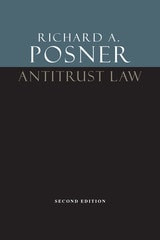
Antitrust Law, Second Edition
Richard A. Posner
University of Chicago Press, 2001
Antitrust Law was fundamental to redefining the field of antitrust law and it remains the definitive textbook for those teaching or learning the subject, Richard Posner's book has played a major role in transforming the field of antitrust law into a body of economically rational principles largely in accord with the ideas set forth in the first edition. Today's antitrust professionals may disagree on specific practices and rules, but most litigators, prosecutors, judges, and scholars agree that the primary goal of antitrust laws should be to promote economic welfare, and that economic theory should be used to determine how well business practices conform to that goal.
In this thoroughly revised edition, Posner explains the economic approach to new generations of lawyers and students.
"The antitrust laws are here to stay," Posner writes, "and the practical question is how to administer them better-more rationally, more accurately, more expeditiously, more efficiently." This fully revised classic will continue to be the standard work in the field.
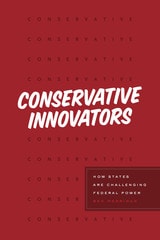
Conservative Innovators
How States Are Challenging Federal PowerBen Merriman
University of Chicago Press, 2019
Conservative Innovators traces the activity of far-right conservatives in Kansas who have in the past decade used the powers of state-level offices to fight federal regulation on a range of topics from gun control to voting processes to Medicaid. Telling their story, Ben Merriman then expands the scope of the book to look at the tactics used by conservative state governments across the country to resist federal regulations, including coordinated lawsuits by state attorneys general, refusals to accept federal funds and spending mandates, and the creation of programs designed to restrict voting rights. Through this combination of state-initiated lawsuits and new administrative practices, these state officials weakened or halted major parts of the Obama Administration’s healthcare, environmental protection, and immigration agendas and eroded federal voting rights protections. Conservative Innovators argues that American federalism is entering a new, conflict-ridden era that will make state governments more important in American life than they have been at any time in the past century.
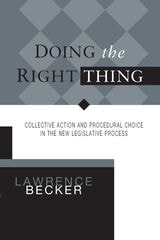
DOING THE RIGHT THING
Collective Action and Procedural Choice in the New Legislative ProcessLawrence Becker
The Ohio State University Press, 2005
Doing the Right Thing examines the use of extraordinary legislative procedures in four cases in the U.S. Congress to accomplish policy objectives that many political scientists would argue are impossible to achieve. It not only shows that Congress is capable of imposing parochial costs in favor of general benefits but it argues that Congress is able to do so in a variety of policy areas through the use of very different kinds of procedural mechanisms that are underappreciated.
The book opens by developing a theory of procedural choice to explain why Congress chooses to delegate in differing degrees in dealing with similar kinds of policy problems. The theory is then applied to four narrative case studies—military base closures, the Yucca Mountain Project, NAFTA, and the Tax Reform Act of 1986—that both show the variety of factors that impact procedural choice and highlight how our national legislature was able to “do the right thing.”
The book concludes by pointing to the variety of ways in which Congress will be confronted with similar policy problems in the coming years and offering some lessons from these cases about what kinds of procedures and policy outcomes we might expect. In short, Congress is remarkably adept at “doing the right thing,” even under difficult circumstances, but only when legislators are willing to manipulate procedures in all the necessary ways.
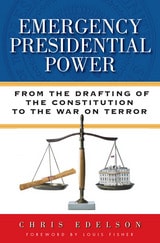
Emergency Presidential Power
From the Drafting of the Constitution to the War on TerrorChris Edelson; Foreword by Louis Fisher
University of Wisconsin Press, 2013
Winner, Crader Family Book Prize in American Values, Department of History and Crader Family Endowment for American Values, Southeast Missouri State University

Fifty-Eight Lonely Men
Southern Federal Judges and School DesegregationJ. W. Peltason
University of Illinois Press, 1971
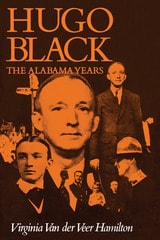
Hugo Black
The Alabama YearsVirginia Van Der Veer Hamilton
University of Alabama Press, 1982
The making of a Supreme Court justice in the crucible of Alabama politics.
Hugo Black: The Alabama Years by Virginia Van der Veer Hamilton is a richly researched political biography that explores the formative experiences of Hugo L. Black, one of the most influential justices in the history of the United States Supreme Court. Focusing on his early life and career in Alabama, Hamilton traces Black's journey from his rural upbringing and legal training to his emergence as a prominent attorney, politician, and United States senator. Through careful analysis of Alabama's social, economic, and political landscape, the book reveals the forces that shaped Black's ideas about government, democracy, and constitutional rights.
Hamilton examines Black's rise during a period of profound change in the South, highlighting the alliances, controversies, and challenges that defined his political career. The study places Black within the broader context of Progressive Era reform, the transformation of Southern politics, and the expanding role of the federal government in American life. At the same time, it provides a nuanced portrait of a complex public figure whose beliefs and actions continue to inspire debate among historians and legal scholars.
Essential reading for students of legal history, political science, Southern studies, and American government, this volume offers valuable insight into the Alabama roots of a justice who would profoundly influence modern constitutional interpretation and civil liberties jurisprudence.
Last Resort
The Financial Crisis and the Future of BailoutsEric A. Posner
University of Chicago Press, 2018
The answer, according to Eric A. Posner, is no. The federal government freely and frequently violated the law with the bailouts—but it did so in the public interest. An understandable lack of sympathy toward Wall Street has obscured the fact that bailouts have happened throughout economic history and are unavoidable in any modern, market-based economy. And they’re actually good. Contrary to popular belief, the financial system cannot operate properly unless the government stands ready to bail out banks and other firms. During the recent crisis, Posner agues, the law didn’t give federal agencies sufficient power to rescue the financial system. The legal constraints were damaging, but harm was limited because the agencies—with a few exceptions—violated or improvised elaborate evasions of the law. Yet the agencies also abused their power. If illegal actions were what it took to advance the public interest, Posner argues, we ought to change the law, but we need to do so in a way that also prevents agencies from misusing their authority. In the aftermath of the crisis, confusion about what agencies did do, should have done, and were allowed to do, has prevented a clear and realistic assessment and may hamper our response to future crises.
Taking up the common objections raised by both right and left, Posner argues that future bailouts will occur. Acknowledging that inevitability, we can and must look ahead and carefully assess our policy options before we need them.
Sport and the Law
Historical and Cultural IntersectionsSamuel O. Regalado
University of Arkansas Press, 2014

The Collected Works of William Howard Taft, Volume VIII
“Liberty under Law” and Selected Supreme Court OpinionsFrancis Graham Lee
Ohio University Press, 2004
William Howard Taft’s presidency (1909-1913), succeeding Theodore Roosevelt’s, was mired in bitter partisan fighting, and Taft sometimes blundered politically. However, this son of Cincinnati assumed his true calling when President Warren G. Harding appointed him to the U.S. Supreme Court in 1921. Taft remains the only person to have served both as president of the United States and as chief justice of the Supreme Court.
The Collected Works of William Howard Taft, Volume VIII, consists of “Liberty under Law” and selected Supreme Court opinions, among the most instructive accomplishments of Taft’s ten years at the helm of the court. The writings reveal the sober judgments of a federalist who viewed state regulation with suspicion, championed national government, and saw an independent and powerful judiciary as the bulwark protecting the “vested rights” that the framers of the U.S. Constitution sought to guarantee.
Whatever his failings as a politician, Taft was an intellectual powerhouse who knew how to use the law as a lever to encourage society to move toward more stable and productive ends. Although Taft is considered an average president at best, historians and political scientists rank him among fifteen “near greats” who have served on the high court. His ability and his love for the law shine through in Volume VIII, the concluding volume of The Collected Works of William Howard Taft. As Taft reportedly said to President Harding upon his appointment as chief justice, “I love judges and I love courts. They are my ideals on earth of what we shall meet afterward in heaven under a just God.”
The Constitution of the United States
A Primer for the PeopleDavid P. Currie
University of Chicago Press, 2000
A masterly introduction to the United States Constitution, this slim book leads the reader through a concise overview of the document's individual articles and amendments. With clear and accessible language, Currie then examines each of the three branches of the federal government and explains the relation between the federal and state governments. He analyzes those constitutional provisions that are designed to protect citizens from governmental interference, such as the due process and equal protection clauses and the confusing first amendment provisions respecting the separation of church and state, and includes discussions of judicial review and freedom of speech and of the press.
A sympathetic yet critical guide, Currie's book enables students and laypersons to understand one of the cornerstones of the Western political tradition. The second edition, along with an updated chronology and bibliography, incorporates the Supreme Court decisions over the past decade that have affected constitutional interpretation.
"Superb . . . highly recommended for those seeking a reliable, understandable, and useful introduction to our constitution."—Appellate Practice Journal and Update
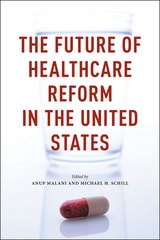
The Future of Healthcare Reform in the United States
Edited by Anup Malani and Michael H. Schill
University of Chicago Press, 2015
In the years since the passage of the Patient Protection and Affordable Care Act (PPACA, or, colloquially, Obamacare), most of the discussion about it has been political. But as the politics fade and the law's many complex provisions take effect, a much more interesting question begins to emerge: How will the law affect the American health care regime in the coming years and decades?
This book brings together fourteen leading scholars from the fields of law, economics, medicine, and public health to answer that question. Taking discipline-specific views, they offer their analyses and predictions for the future of health care reform. By turns thought-provoking, counterintuitive, and even contradictory, the essays together cover the landscape of positions on the PPACA's prospects. Some see efficiency growth and moderating prices; others fear a strangling bureaucracy and spiraling costs. The result is a deeply informed, richly substantive discussion that will trouble settled positions and lay the groundwork for analysis and assessment as the law's effects begin to become clear.
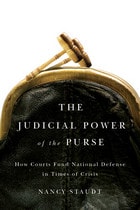
The Judicial Power of the Purse
How Courts Fund National Defense in Times of CrisisNancy Staudt
University of Chicago Press, 2011
Congress and the president are not the only branches that deal with fiscal issues in times of war. In this innovative book, Nancy Staudt focuses on the role of federal courts in fiscal matters during warfare and high-cost national defense emergencies. There is, she argues, a judicial power of the purse that becomes evident upon examining the budgetary effects of judicial decision making. The book provides substantial evidence that judges are willing—maybe even eager—to redirect private monies into government hands when the country is in peril, but when the judges receive convincing cues that ongoing wartime activities undermine the nation’s interests, they are more likely to withhold funds from the government by deciding cases in favor of private individuals and entities who show up in court.
In stark contrast with conventional legal, political, and institutional thought that privileges factors associated with individual preferences, The Judicial Power of the Purse sheds light on environmental factors in judicial decision making and will be an excellent read for students of judicial behavior in political science and law.
The Policy Dilemma
Federal Crime Policy and the Law Enforcement Assistance Administration, 1968-1978Malcolm Feeley
University of Minnesota Press, 1981
The Supreme Court Review, 2022
Edited by David A. Strauss, Geoffrey R. Stone, Justin Driver, and William Baude
University of Chicago Press Journals, 2023
Since it first appeared in 1960, the Supreme Court Review has won acclaim for providing a sustained and authoritative survey of the implications of the Court's most significant decisions. SCR is an in-depth annual critique of the Supreme Court and its work, analyzing the origins, reforms, and modern interpretations of American law. SCR is written by and for legal academics, judges, political scientists, journalists, historians, economists, policy planners, and sociologists.