Results by title

7 books match the query 'Feminism and the arts'
cover of Breathing Aesthetics

Breathing Aesthetics

Jean-Thomas Tremblay

Duke University Press, 2022
In Breathing Aesthetics Jean-Thomas Tremblay argues that difficult breathing indexes the uneven distribution of risk in a contemporary era marked by the increasing contamination, weaponization, and monetization of air. Tremblay shows how biopolitical and necropolitical forces tied to the continuation of extractive capitalism, imperialism, and structural racism are embodied and experienced through respiration. They identify responses to the crisis in breathing in aesthetic practices ranging from the film work of Cuban American artist Ana Mendieta to the disability diaries of Bob Flanagan, to the Black queer speculative fiction of Renee Gladman. In readings of these and other minoritarian works of experimental film, endurance performance, ecopoetics, and cinema-vérité, Tremblay contends that articulations of survival now depend on the management and dispersal of respiratory hazards. In so doing, they reveal how an aesthetic attention to breathing generates historically, culturally, and environmentally situated tactics and strategies for living under precarity.
[more]
cover of Chicana Art: The Politics of Spiritual and Aesthetic Altarities

Chicana Art

The Politics of Spiritual and Aesthetic Altarities

Laura E. Pérez

Duke University Press, 2007

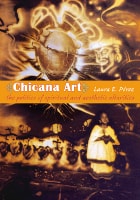
In Alma Lopez’s digital print Lupe & Sirena in Love (1999), two icons—the Virgin of Guadalupe and the mermaid Sirena, who often appears on Mexican lottery cards—embrace one another, symbolically claiming a place for same-sex desire within Mexican and Chicano/a religious and popular cultures. Ester Hernandez’s 1976 etching Libertad/Liberty depicts a female artist chiseling away at the Statue of Liberty, freeing from within it a regal Mayan woman and, in the process, creating a culturally composite Lady Liberty descended from indigenous and mixed bloodlines. In her painting Coyolxauhqui Last Seen in East Oakland (1993), Irene Perez reimagines as whole the body of the Aztec warrior goddess dismembered in myth. These pieces are part of the dynamic body of work presented in this pioneering, lavishly illustrated study, the first book primarily focused on Chicana visual arts.

Creating an invaluable archive, Laura E. Pérez examines the work of more than forty Chicana artists across a variety of media including painting, printmaking, sculpture, performance, photography, film and video, comics, sound recording, interactive CD-ROM, altars and other installation forms, and fiction, poetry, and plays. While key works from the 1960s and 1970s are discussed, most of the pieces considered were produced between 1985 and 2001. Providing a rich interpretive framework, Pérez describes how Chicana artists invoke a culturally hybrid spirituality to challenge racism, bigotry, patriarchy, and homophobia. They make use of, and often radically rework, pre-Columbian Mesoamerican and other non-Western notions of art and art-making, and they struggle to create liberating versions of familiar iconography such as the Virgin of Guadalupe and the Sacred Heart. Filled with representations of spirituality and allusions to non-Western visual and cultural traditions, the work of these Chicana artists is a vital contribution to a more inclusive canon of American arts.

[more]
cover of Feelin: Creative Practice, Pleasure, and Black Feminist Thought

Feelin

Creative Practice, Pleasure, and Black Feminist Thought

Bettina Judd

Northwestern University Press, 2023

How creativity makes its way through feeling—and what we can know and feel through the artistic work of Black women
 
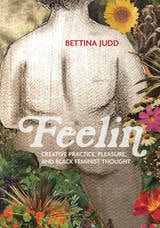
Feeling is not feelin. As the poet, artist, and scholar Bettina Judd argues, feelin, in African American Vernacular English, is how Black women artists approach and produce knowledge as sensation: internal and complex, entangled with pleasure, pain, anger, and joy, and manifesting artistic production itself as the meaning of the work. Through interviews, close readings, and archival research, Judd draws on the fields of affect studies and Black studies to analyze the creative processes and contributions of Black women—from poet Lucille Clifton and musician Avery*Sunshine to visual artists Betye Saar, Joyce J. Scott, and Deana Lawson.
 
Feelin: Creative Practice, Pleasure, and Black Feminist Thought makes a bold and vital intervention in critical theory’s trend toward disembodying feeling as knowledge. Instead, Judd revitalizes current debates in Black studies about the concept of the human and about Black life by considering how discourses on emotion as they are explored by Black women artists offer alternatives to the concept of the human. Judd expands the notions of Black women’s pleasure politics in Black feminist studies that include the erotic, the sexual, the painful, the joyful, the shameful, and the sensations and emotions that yet have no name. In its richly multidisciplinary approach, Feelin calls for the development of research methods that acknowledge creative and emotionally rigorous work as productive by incorporating visual art, narrative, and poetry.

[more]
cover of Jill Johnston in Motion: Dance, Writing, and Lesbian Life

Jill Johnston in Motion

Dance, Writing, and Lesbian Life

Clare Croft

Duke University Press, 2024
Performer, activist, and writer Jill Johnston was a major queer presence in the history of dance and 1970s feminism. She was the first critic to identify postmodernism’s arrival in American dance and was a fierce advocate for the importance of lesbians within feminism. In Jill Johnston in Motion, Clare Croft tracks Johnston’s entwined innovations and contributions to dance and art criticism and activism. She examines Johnston’s journalism and criticism—in particular her Village Voice columns published between 1960 and 1980—and her books of memoir and biography. At the same time, Croft attends to Johnston’s appearances as both dancer and audience member and her physical and often spectacular participation at feminist protests. By bringing together Johnston’s criticism and activism, her writing and her physicality, Croft emphasizes the effect that the arts, particularly dance, had on Johnston’s feminist thinking in the 1970s and traces lesbian feminism’s roots in avant-garde art practice.
[more]
cover of The Color Pynk: Black Femme Art for Survival

The Color Pynk

Black Femme Art for Survival

Omise'eke Natasha Tinsley

University of Texas Press, 2022

2023 John Leo & Dana Heller Award for Best Single Work, Anthology, Multi-Authored, or Edited Book in LGBTQ Studies, Popular and American Culture Association (PACA) / Popular Culture Association (PCA)

2023 Honorable Mention, Harry Shaw and Katrina Hazzard-Donald Award for Outstanding Work in African-American Popular Culture Studies, Popular and American Culture Association (PACA) / Popular Culture Association (PCA)

2024 MPCA/ACA Best Single Work by One or More Authors, Midwest Popular Culture Association / Midwest American Culture Association (MPCA/ACA)


A celebration of the distinctive and politically defiant art of Black queer, cis-, and transfemmes, from the work of Janelle Monáe and Janet Mock to that of Indya Moore and Kelsey Lu.

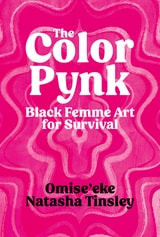
The Color Pynk is a passionate exploration of Black femme poetics of survival. Sidelined by liberal feminists and invisible to mainstream civil rights movements, Black femmes spent the Trump years doing what they so often do best: creating politically engaged art, entertainment, and ideas. In the first full-length study of Black queer, cis-, and trans-femininity, Omise’eke Natasha Tinsley argues that this creative work offers a distinctive challenge to power structures that limit how we color, gender, and explore freedom.

Tinsley engages 2017–2020 Black femme cultural production that colorfully and provocatively imagines freedom in the stark white face of its impossibility. Looking to the music of Janelle Monáe and Kelsey Lu, Janet Mock’s writing for the television show Pose, the fashion of Indya Moore and (F)empower, and the films of Tourmaline and Juliana Huxtable, as well as poetry and novels, The Color Pynk conceptualizes Black femme as a set of consciously, continually rescripted cultural and aesthetic practices that disrupts conventional meanings of race, gender, and sexuality. There is an exuberant defiance in queer Black femininity, Tinsley finds—so that Black femmes continue to love themselves wildly in a world that resists their joy.

[more]
cover of The Essential Jill Johnston Reader

The Essential Jill Johnston Reader

Jill Johnston. Edited by Clare Croft

Duke University Press, 2024

Jill Johnston began the 1960s as an influential dance columnist for the Village Voice and by the start of the next decade she was known as a keen observer of postmodern art and lesbian feminist life who challenged how dance, art, and women can and should be seen. The Essential Jill Johnston Reader collects dozens of pieces of her writing from across her career. These writings—many of which appeared in the Village Voice and the New York Times—survey the breadth of her work, braiding together her thinking, writing, and activism. From personal essays, travel writing, and artist profiles to dance and visual art reviews as well as her infamous series of columns for the Voice in which she came out as a lesbian, these pieces demonstrate the evolution of her philosophies and writing style. Illustrating how Johnston drew on lessons from dance to reconsider what it means to be a woman, this collection brings a fascinating and brilliant voice of American arts criticism, radical feminism, and gay liberation back to contemporary audiences.
[more]
cover of The Play in the System: The Art of Parasitical Resistance

The Play in the System

The Art of Parasitical Resistance

Anna Watkins Fisher

Duke University Press, 2020

What does artistic resistance look like in the twenty-first century, when disruption and dissent have been co-opted and commodified in ways that reinforce dominant systems? In The Play in the System Anna Watkins Fisher locates the possibility for resistance in artists who embrace parasitism—tactics of complicity that effect subversion from within hegemonic structures. Fisher tracks the ways in which artists on the margins—from hacker collectives like Ubermorgen to feminist writers and performers like Chris Kraus—have willfully abandoned the radical scripts of opposition and refusal long identified with anticapitalism and feminism. Space for resistance is found instead in the mutually, if unevenly, exploitative relations between dominant hosts giving only as much as required to appear generous and parasitical actors taking only as much as they can get away with. The irreverent and often troubling works that result raise necessary and difficult questions about the conditions for resistance and critique under neoliberalism today.
[more]