Results by title
6 books match the query 'Ferber, Edna'
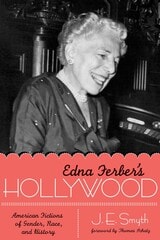
Edna Ferber's Hollywood
American Fictions of Gender, Race, and HistoryBy J. E. Smyth
University of Texas Press, 2009
Edna Ferber's Hollywood reveals one of the most influential artistic relationships of the twentieth century—the four-decade partnership between historical novelist Edna Ferber and the Hollywood studios. Ferber was one of America's most controversial popular historians, a writer whose uniquely feminist, multiracial view of the national past deliberately clashed with traditional narratives of white masculine power. Hollywood paid premium sums to adapt her novels, creating some of the most memorable films of the studio era—among them Show Boat, Cimarron, and Giant. Her historical fiction resonated with Hollywood's interest in prestigious historical filmmaking aimed principally, but not exclusively, at female audiences.
In Edna Ferber's Hollywood, J. E. Smyth explores the research, writing, marketing, reception, and production histories of Hollywood's Ferber franchise. Smyth tracks Ferber's working relationships with Samuel Goldwyn, Leland Hayward, George Stevens, and James Dean; her landmark contract negotiations with Warner Bros.; and the controversies surrounding Giant's critique of Jim-Crow Texas. But Edna Ferber's Hollywood is also the study of the historical vision of an American outsider—a woman, a Jew, a novelist with few literary pretensions, an unashamed middlebrow who challenged the prescribed boundaries among gender, race, history, and fiction. In a masterful film and literary history, Smyth explores how Ferber's work helped shape Hollywood's attitude toward the American past.
Emma McChesney and Co.
Edna Ferber
University of Illinois Press, 2002
In this final of three volumes chronicling the travels and trials of Emma McChesney, first published in 1915, Emma's son, Jock, has moved to Chicago with his new wife. Struggling with a newly emptied nest, Emma dives into a whirlwind South American sales tour to prove she hasn't lost her touch.
Back in New York, Emma and her business partner, T. A. Buck Jr., try to disguise their budding romance from colleagues. After months of acting like a "captain of finance when he feels like a Romeo," T. A. convinces Emma they should marry. Emma tries to "be what the yellow novels call a doll-wife" but trades in her fancy dressing gowns for more sensible business suits and heads back to the office.
With one hand writing advertising copy and the other wrapped around a pair of shears, Emma saves the company from financial peril amid the arrival of some flustering, if exciting, news from Jock. By turns sales pro, newlywed, fashion maven, and anxious grandmother, Emma symbolizes the ideal woman at the dawn of the twentieth century: sharp, capable, charming, and progressive. Emma McChesney and Co. is enhanced by the illustrations of James Montgomery Flagg, one of the most highly regarded book illustrators of the period.

Fanny Herself
Edna Ferber
University of Illinois Press, 1917
"You could not have lived a week in Winnebago without being aware of Mrs. Brandeis," Ferber begins, and likewise the story of Fanny Brandeis is inextricable from that of her vigorous, enterprising mother. Molly Brandeis is the owner and operator of Brandeis' Bazaar, a modest general store left to her by her idealistic, commercially inept late husband. As Fanny strives to carve out her own sense of herself, Molly becomes the standard by which she measures her intellectual and spiritual progress.
Fanny's ambivalent feelings about being Jewish, her self-deprecating attitude toward her gift for sketching and drawing, and her inspired success as a businesswoman all contribute to the flesh-and-blood complexity of Ferber's youthful, eminently believable protagonist. She is accompanied on her journey by impeccably drawn characters such as Father Fitzpatrick, the Catholic priest in Winnebago; Ella Monahan, buyer for the glove department of the Haynes-Cooper mail order house; Fanny's brother, Theodore, a gifted violinist for whose musical education Molly sacrifices Fanny's future; and Clarence Heyl, the scrappy columnist who never forgot how Fanny rescued him from the school bullies.
Ferber's only work of fiction with a strong autobiographical element, Fanny Herself showcases the author's enduring interest in the capacity of strong women to transcend the limitations of their environment and control their own circumstances. Through Fanny's honest struggle with conflicting values–financial security and corporate success versus altruism and artistic integrity–Ferber grapples with some of the most deeply embedded contradictions of the American spirit.
Half Portions
Edna Ferber
University of Illinois Press, 2002
A collection of short stories from Pultizer Prize winner, Edna Ferber
The short stories in this collection take the reader from small-town Wisconsin to the bustling streets of New York and Chicago and back again. While they range greatly in length and tone, they all share the trademark wit and affectionate insight of Edna Ferber.
Showcasing the facility with words that made her a mainstay at the Algonquin round table, Ferber explores some of her favorite themes: the role of women (especially strong or unconventional women) in modern society, the mores of the midwestern small town, and the changes over time in relationships between parents and children.
In “The Maternal Feminine,” a plain, overlooked child grows into a strong, resourceful businesswoman and forms a strong motherly bond with the children of her more attractive sister. In “April 25th, As Usual,” an aging Wisconsin couple reluctantly join their successful daughter in New York, where they try to adjust to a very different lifestyle. “Old Lady Mandle” is a bittersweet tale about an elderly Chicago mother coming to terms with the fact that she is no longer the most important woman in the life of her grown son. “One Hundred Per Cent” features Ferber’s celebrated heroine Emma McChesney, now re-married, seeing her husband off to war.
The stories gathered here are beautifully observed chronicles of early twentieth-century life and are filled with characters who, despite their very human foibles, are all bestowed by Ferber with warmth and dignity.
Personality Plus
Some Experiences of Emma McChesney and Her Son, JockEdna Ferber
University of Illinois Press, 2002
In this second of three volumes chronicling the travels and trials of Emma McChesney, the plucky heroine trades in her traveling bag and coach tickets for an office and a position a T. A. Buck Jr.'s business partner. Along with this well-earned promotion comes the home–-with a fireplace–-that she had longed for during her ten years on the road.
Her dashing son Jock, now twenty-one, has just entered the business world himself with the Berg, Shriner Advertising company. His colleagues believe that with his heritage he "ought to be able to sell ice to an eskimo." Indeed, Jock dazzles them with his keen business sense and exemplary work ethic, but goes overboard on the charm and ends up alienating clients, unnerving his boss, and even patronizing his business-savvy mother. When his company takes on the challenge of creating a zippy advertising campaign for T. A. Buck's no-frills petticoats, Jock comes through, but not without a reminder that mother always knows best.
In this bracingly modern novel, first published in 1914, Ferber contrasts the virtues of talent with those of experience to provide a fresh, readable, and smartly entertaining contest between a mother and her adult son.
Roast Beef, Medium
The Business Adventures of Emma McChesneyEdna Ferber
University of Illinois Press, 1913
Edna Ferber, Pulitzer Prize-winning author of Show Boat and Giant, achieved her first great success with a series of stories she published in American Magazine between 1911 and 1913. The stories featured Emma McChesney: smart, savvy, stylish, divorced mother, and Midwest traveling sales representative for T. A. Buck's Featherloom skirts and petticoats. With one hand on her sample case and the other fending off advances from salesmen, hotel clerks, and other predators, Emma holds on tightly to her reputation: honest, hardworking, and able to outsell the slickest salesman.
Like her compact bag of traveling necessities, Emma has her life boiled down to essentials: her work and her seventeen-year-old son, Jock. Her experience has taught her that it's best to stick to roast beef, medium--avoiding both physical and moral indigestion--rather than experiment with fancy sauces and exotic dishes. Yet she never shies away from a challenge, and her sharp instincts and common sense serve her well in dealing with the likes of Ed Meyer, a smooth-talking, piano-playing salesman; Blanche LeHay, prima donna of the Sam Levin Crackerjack Belles; and T. A. Buck Jr., the wet-behind-the-ears son of the founder of Featherloom.
Roast Beef, Medium is the first of three volumes chronicling the travels and trials of Emma McChesney. The illustrations by James Montgomery Flagg, one of the most highly regarded book illustrators of the period, enhance both the humor and the vivid characterization in this wise and high-spirited tale.