Results by title
72 books match the query 'Field Guide' and 11 start with a

A FIELD Guide to Contemporary Poetry and Poetics
Edited by Stuart Friebert, David Walker, andDavid Young
Oberlin College Press, 1997

A Field Guide to Mushrooms of the Ozarks
Alan E. Bessette
University of Arkansas Press, 2027
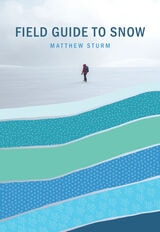
A Field Guide to Snow
Matthew Sturm
University of Alaska Press, 2020
In A Field Guide to Snow, veteran snow scientist Matthew Sturm answers those questions and more. Drawing on decades of study, he explains in clear and simple ways how and why snow works the way it does. The perfect companion a ski trip or a hike in the snowy woods, A Field Guide to Snow will give you a new appreciation for the science behind snow’s beauty.

A Field Guide to a New Meta-field
Bridging the Humanities-Neurosciences DivideEdited by Barbara Maria Stafford
University of Chicago Press, 2011
Barbara Stafford is a pioneering art historian whose research has long helped to bridge the divide between the humanities and cognitive sciences. In A Field Guide to a New Meta-Field, she marshals a distinguished group of thinkers to forge a ground-breaking dialogue between the emerging brain sciences, the liberal arts, and social sciences.
Stafford’s book examines meaning and mental function from this dual experimental perspective. The wide-ranging essays included here—from Frank Echenhofer’s foray into shamanist hallucinogenic visions to David Bashwiner’s analysis of emotion and danceability—develop a common language for implementing programmatic and institutional change. Demonstrating how formerly divided fields are converging around shared issues, A Field Guide to a New Meta-Field maps a high-level, crossdisciplinary adventure from one of our leading figures in visual studies.
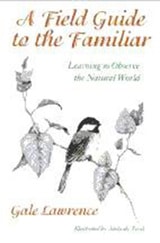
A Field Guide to the Familiar
Learning to Observe the Natural WorldGale Lawrence
Brandeis University Press, 1998
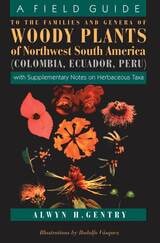
A Field Guide to the Families and Genera of Woody Plants of Northwest South America
With Supplementary Notes on Herbaceous TaxaAlwyn H. Gentry llustrated by Rodolfo Vasquez
University of Chicago Press, 1993
As a consummate field researcher, Gentry designed this guide to be not just comprehensive, but also easy to use in rigorous field conditions. Unlike many field guides, which rely for their identifications on flowers and fruits that are only present during certain seasons, Gentry's book focuses on characters such as bark, leaves, and odor that are present year-round. His guide is filled with clear illustrations, step-by-step keys to identification, and a wealth of previously unpublished data.
All biologists, wildlife managers, conservationists, and government officials concerned with the tropical rain forests will need and use this field guide.
Alwyn Gentry was one of the world's foremost experts on the biology of tropical plants. He was senior curator at the Missouri Botanical Garden, and was a member of Conservation International's interdisciplinary Rapid Assessment Program (RAP) team, which inventories the biodiversity of the most threatened tropical areas. From 1967 to 1993 he collected more than 80,000 plant specimens, many of them new to science.

A Field Guide to the Heavens
Frank X. Gaspar
University of Wisconsin Press, 1999
Frank X. Gaspar’s collection of poems is haunted by the presence of mystics and visionaries: Mohammed, Buddha, St. Paul, Augustine, George Herbert, Emily Dickinson, Blake, Milton, Rilke. A Field Guide to the Heavens is punctuated with designs of science, the wondering and rapt observations of the sky made at the eyepiece of a backyard telescope. We come to know Gaspar’s city streets, the neighbors and strangers that walk them, the wreckage of past lives, the ocean, the gardens, the orchards and alleys and parking lots, all spread out under the vast sky.
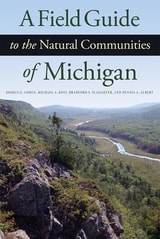
A Field Guide to the Natural Communities of Michigan
Joshua G. Cohen
Michigan State University Press, 2014
The culmination of three decades of work by Michigan Natural Features Inventory ecologists, this essential guidebook to the natural communities of Michigan introduces the diverse terrain of a unique state. Small enough to carry in a backpack, this field guide provides a system for dividing the complex natural landscape of Michigan into easily understood and describable components called natural communities. Providing a new way to explore Michigan’s many environments, this book details natural communities ranging from patterned fen to volcanic bedrock glade and beyond. The descriptions are supplemented with distribution maps, vibrant photographs, and comprehensive lists of characteristic plant species. The authors suggest places to visit to further study each type of natural community and provide a comprehensive glossary of ecological terms, as well as a dichotomous key for aiding field identification. An invaluable resource, this book is meant to serve as a tool for those seeking to understand, describe, document, conserve, and restore the diversity of natural communities native to Michigan.

A Field Guide to the Natural Communities of Michigan, 2nd edition
Joshua G. Cohen
Michigan State University Press, 2027
Discover Michigan’s rich ecological diversity with this indispensable field guide. Updated to reflect a decade of additional ecological surveys, continued learning, and new scientific discoveries, the second edition of A Field Guide to the Natural Communitiesof Michigan incorporates the latest understanding of the state’s natural landscapes. This revised edition adds three newly recognized natural community types; updates scientific nomenclature, photographs, distribution maps, species lists, and community descriptions; and refines the dichotomous keys to make field identification more accessible than ever. Drawing on more than four decades of intensive research by ecologists at the Michigan Natural Features Inventory, this essential guidebook introduces readers to Michigan’s remarkable ecological biodiversity. Compact enough to carry in a backpack, this field guide provides a practical framework for dividing Michigan’s complex natural landscape into easily understood and describable components called natural communities. Providing an enlightening way to explore Michigan’s many environments, this book details natural communities ranging from patterned fen to volcanic bedrock glade and beyond. The descriptions are supplemented with distribution maps, vibrant photographs, and comprehensive lists of characteristic plant species. The authors suggest places to visit to further study each natural community type and provide a comprehensive glossary of ecological terms, as well as dichotomous keys for aiding on-site classification. An invaluable resource, this book is meant to serve as a tool for those seeking to understand, describe, document, conserve, and restore the diversity of natural communities native to Michigan.
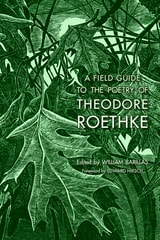
A Field Guide to the Poetry of Theodore Roethke
William Barillas
Ohio University Press, 2021
This volume is the first to reconsider Roethke’s work in terms of the expanded critical approaches to literature that have emerged since his death in 1963. Editor William Barillas and over forty contributors, including highly respected literary scholars, critics, and writers such as Peter Balakian, Camille Paglia, Jay Parini, and David Wojahn, collectively make a case for Roethke’s poetry as a complete, unified, and evolving body of work. The accessible essays employ a number of approaches, including formalism, ecocriticism, reader-response, and feminist critique to explicate the poetics, themes, and the biographical, historical, cultural, and literary contexts of Roethke’s work.
Contributors
Borja Aguiló Obrador
Peter Balakian
William Barillas
Don Bogen
Neal Bowers
Nicholas Bradley
Luke Brekke
Russell Brickey
Katharine Bubel
Norman Chaney
Jeffrey Clapp
Lyn Coffin
Kristin M. Distel
Carrie Duke
Laura Duncan
Laura Gill
Patrick Gill
Christopher Giroux
William Heyen
Trenton Hickman
Michael Hinds
Edward Hirsch
Brooke Horvath
Marcel Inhoff
Walter Kalaidjian
Frank J. Kearful
Andrew David King
Marc Malandra
John J. McKenna
Aaron M. Moe
Sarah Kathryn Moore
Edward Morin
Marcia Noe
Camille Paglia
Jay Parini
Rod Phillips
Ronald Primeau
Adam Putz
Bernard Quetchenbach
David Radavich
John Rohrkemper
Brandon Rushton
Joseph T. Thomas Jr.
Jeff Vande Zande
David Wojahn
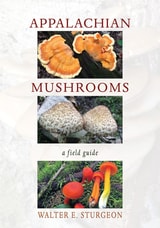
Appalachian Mushrooms
A Field GuideWalter E. Sturgeon
Ohio University Press, 2018
From one of the region’s foremost mushroom hunters—Walter E. Sturgeon—comes a long-overdue field guide to finding and identifying the mushrooms and fleshy fungi found in the Appalachian mountains from Canada to Georgia. Edibility and toxicity, habitat, ecology, and detailed diagnostic features of the disparate forms they take throughout their life cycles are all included, enabling the reader to identify species without the use of a microscope or chemicals.
Appalachian Mushrooms is unparalleled in its accuracy and currency, from its detailed photographs to descriptions based on the most advanced classification information available, including recent DNA studies that have upended some mushrooms’ previously accepted taxonomies. Sturgeon celebrates more than 400 species in all their diversity, beauty, and scientific interest, going beyond the expected specimens to include uncommon ones and those that are indigenous to the Appalachian region.
This guide is destined to be an indispensable authority on the subject for everyone from beginning hobbyists to trained experts, throughout Appalachia and beyond.