Results by title
13 books match the query 'Film and video adaptations'
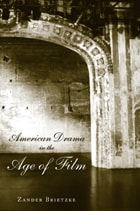
American Drama in the Age of Film
Zander Brietzke
University of Alabama Press, 2007
Is theater really dead? Does the theater, as its champions insist, really provide a more intimate experience than film? If so, how have changes in cinematic techniques and technologies altered the relationship between stage and film? What are the inherent limitations of representing three-dimensional spaces in a two-dimensional one, and vice versa?
American Drama in the Age of Film examines the strengths and weaknesses of both the dramatic and cinematic arts to confront the standard arguments in the film-versus-theater debate. Using widely known adaptations of ten major plays, Brietzke seeks to highlight the inherent powers of each medium and draw conclusions not just about how they differ, but how they ought to differ as well. He contrasts both stage and film productions of, among other works, David Mamet’s Glengarry Glen Ross, Sam Shepard’s True West, Edward Albee’s Who’s Afraid of Virginia Woolf, Margaret Edson’s Wit, Tony Kushner’s Angels in America, Tennessee Williams’s Cat on a Hot Tin Roof, Arthur Miller’s Death of a Salesman, and August Wilson’s The Piano Lesson. In reading the dual productions of these works, Brietzke finds that cinema has indeed stolen much of theater’s former thunder, by making drama more intimate, and visceral than most live events.
But theater is still vital and matters greatly, Brietzke argues, though for reasons that run counter to many of the virtues traditionally attributed to it as an art form, such as intimacy and spontaneity. Brietzke seeks to revitalize perceptions of theater by challenging those common pieties and offering a new critical paradigm, one that champions spectacle and simultaneity as the most, not least, important elements of drama.
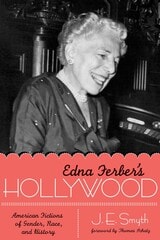
Edna Ferber's Hollywood
American Fictions of Gender, Race, and HistoryBy J. E. Smyth
University of Texas Press, 2009
Edna Ferber's Hollywood reveals one of the most influential artistic relationships of the twentieth century—the four-decade partnership between historical novelist Edna Ferber and the Hollywood studios. Ferber was one of America's most controversial popular historians, a writer whose uniquely feminist, multiracial view of the national past deliberately clashed with traditional narratives of white masculine power. Hollywood paid premium sums to adapt her novels, creating some of the most memorable films of the studio era—among them Show Boat, Cimarron, and Giant. Her historical fiction resonated with Hollywood's interest in prestigious historical filmmaking aimed principally, but not exclusively, at female audiences.
In Edna Ferber's Hollywood, J. E. Smyth explores the research, writing, marketing, reception, and production histories of Hollywood's Ferber franchise. Smyth tracks Ferber's working relationships with Samuel Goldwyn, Leland Hayward, George Stevens, and James Dean; her landmark contract negotiations with Warner Bros.; and the controversies surrounding Giant's critique of Jim-Crow Texas. But Edna Ferber's Hollywood is also the study of the historical vision of an American outsider—a woman, a Jew, a novelist with few literary pretensions, an unashamed middlebrow who challenged the prescribed boundaries among gender, race, history, and fiction. In a masterful film and literary history, Smyth explores how Ferber's work helped shape Hollywood's attitude toward the American past.
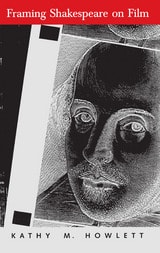
Framing Shakespeare on Film
How the Frame Reveals MeaningKathy M. Howlett
Ohio University Press, 2000
The aesthetics of frame theory form the basis of Framing Shakespeare on Film. This groundbreaking work expands on the discussion of film constructivists in its claim that the spectacle of Shakespeare on film is a problem-solving activity.
Kathy Howlett demonstrates convincingly how viewers’ expectations for understanding Shakespeare on film can be manipulated by the director’s cinematic technique. Emphasizing that the successful film can transform Shakespeare’s text while remaining rooted in Shakespearean conceptions, Howlett raises the question of how directors and audiences understand the genre of Shakespeare on film and reveals how the medium alters the patterns through which the audience views Shakespeare.
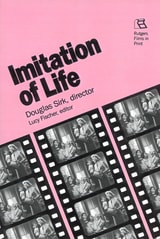
Imitation of Life
Douglas Sirk, DirectorFischer, Lucy
Rutgers University Press, 1991
Because of the special stamp he put on his melodramas, Sirk's best works transcend the constraints of their genre. In them, he both exemplified and critiqued postwar, conservative, materialistic life and its false value systems. There is much in Sirk, particularly in Imitation of Life, that is of interest to us today. The time seems to be right for a new look at the film, its reception amidst scandal over the affairs of its star—Lana Turner—the relationships between its mothers and daughters, the tensions between its men and its women, the friendships between its black and white women, and the ambiguous, controversial approach of Sirk to his material.
This volume includes the complete continuity script of the film, critical commentary and published reviews, interviews with the director, and a filmography and bibliography. It also includes an excellent introduction by Lucy Fischer.
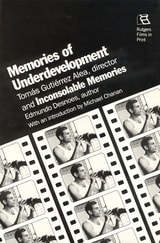
Memories Of Underdevelopment
Chanan, Michael
Rutgers University Press, 1990
This double volume includes the complete continuity script of Memories, as well as the complete novel, Inconsolable Memories, upon which the film is based. An interview with Alea is reproduced here, as well as documentation of the political controversy that surrounded the film in this country. Michael Chanan's introduction places the film in the context of Cuban political and cultural history. The volume also includes a biographical sketch of Alea, a chronology of the Cuban Revolution, reviews, commentary, a filmography, and a bibliography.Michael Chanan lives in England, where he teaches and writes on film. He is the author of The Cuban Image: Cinema and Cultural Politics in Cuba.
Multi-Mediated Dostoevsky
Transposing Novels into Opera, Film, and DramaAlexander Burry
Northwestern University Press, 2011
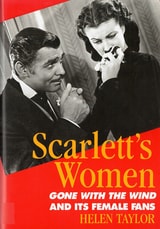
Scarlett's Women
Gone With the Wind and Its Female FansTaylor, Helen
Rutgers University Press, 1989
Scarlett's Women
Gone With the Wind and Its Female FansTaylor, Helen
Rutgers University Press, 1969
Screening the Beats
Media Culture and the Beat SensibilityDavid Sterritt
Southern Illinois University Press, 2004
Film critic David Sterritt’s Screening the Beats: Media Culture and the Beat Sensibility showcases the social and aesthetic viewpoints of lynchpin Beat writers Jack Kerouac, William S. Burroughs, and Allen Ginsberg, juxtaposing their artistry with 1950s culture and achieving what Kerouac might have called a “bookmovie” riff. In clear prose, Sterritt captures the raw energy of the Beats and joins in their celebration of aesthetic freakishness. Tapping into the diversified spirit of the Beat Generation and its nuanced relationship with postwar American culture, Sterritt considers how the Beats variously foreground, challenge, and illuminate major issues in Hollywood and avant-garde film, critical and cultural theory, and music in the mass-media age.
Sterritt engages the creative and spiritual facets of the Beats, emulating their desire to evoke ephemeral aspects of human existence. Dealing with both high and low cultures as well as various subcultures, he highlights the complementary contributions to cultural creativity made by these authors. Screening the Beats grapples with paradoxes in Beat writing, in particular the conflict between spiritual purity and secular connectedness, which often materialized in the beatific bebop spontaneity, Zen-like transcendentalism, and plain hipster smarts that characterized the writings of Kerouac, Burroughs, and Ginsberg.
This interdisciplinary study tackles such topics as Ginsberg’s and Kerouac’s uses of racial and ethnic stereotypes prevalent in the popular movies of the 1950s era; the uses and limitations of improvisation as a creative tool in literature, jazz, and film; Kerouac’s use of cinematic metaphor to evoke Buddhist concepts; and intersections of the grotesque and carnivalesque in works as seemingly diverse as autobiographical novels by Kerouac, a radio play by Antonin Artaud, cultural theories of Gilles Deleuze and Félix Guattari, and the boisterous lunacy of Three Stooges farce. Deftly threading literary, musical, and cinematic works with a colorful array of critical theories, Screening the Beats illuminates the relationship between American culture and the imaginative forces of the Beat Generation.
Shakespeare Observed
Studies in Performance on Stage and ScreenSamuel Crowl
Ohio University Press, 1993
Crowl’s study demonstrates the surprising resonances between Roman Polanski's 1971 film of Macbeth and Adrian Noble's heralded recent production of the play for The Royal Shakespeare Company; argues that Orson Welles's films of Othello and Cabins at Midnight are not only brilliant remaining of Shakespeare in another art form but make a powerful contribution to our contemporary understanding of performance as interpretation; and chronicles the impact of Peter Hall's creation of the Royal Shakespeare Company in 1960 on performance approaches to Shakespeare in the past thirty years.
Shakespeare Observed provides full interpretative readings of key recent Shakespeare productions in England and includes an intimate behind-the-scenes glimpse into the rehearsal process which produced Ron Daniels's emotionally charged version of Romeo and Juliet for the RSC in 1980. The final chapter uses Kenneth Branagh's highly successful film of Henry V as a summary example of the trends and influences Crowl's study traces, seeing the film as gathering its interpretative energies from both Olivier's famous film version of the play and Adrian Noble's stage production featuring Branagh as the king.
Written in a style which places a premium on capturing the vivid and often dazzling moments of stage and film performances of Shakespeare, Crowl's study will be of interest to the avid film and theatergoer as well as to the scholar and student. Shakespeare Observed joins a growing list of recent critical works which have significantly expanded and redefined the boundaries of Shakespeare studies in our time.

Shakespeare at the Cineplex
The Kenneth Branagh EraSamuel Crowl
Ohio University Press, 2005
Samuel Crowl’s Shakespeare at the Cineplex: The Kenneth Branagh Era is the first thorough exploration of the fifteen major Shakespeare films released since the surprising success of Kenneth Branagh’s Henry V (1989). Crowl presents the rich variety of these films in the “long decade: between the fall of the Berlin Wall and the terrorist attacks on September 11, 2001.” The productions range from Hollywood-saturated films such as Franco Zeffirelli’s Hamlet and Michael Hoffman’s A Midsummer Night’s Dream to more modest, experimental offerings, such as Christine Edzard’s As You Like It. Now available in paperback, Shakespeare at the Cineplex will be welcome reading for fans, students, and scholars of Shakespeare in performance.
Tolstoy on Screen
Edited by Lorna Fitzsimmons and Michael A. Denner
Northwestern University Press, 2015
Scholarship on screen adaptation has proliferated in recent years, but it has remained largely focused on English- and Romance-language authors. Tolstoy on Screen aims to correct this imbalance with a comprehensive examination of film and television adaptations of Tolstoy’s fiction. Spanning the silent era to the present day, these essays consider well-known as well as neglected works in light of contemporary adaptation and media theory. The book is organized to facilitate a comparative, cross-cultural understanding of the various practices employed in different eras and different countries to bring Tolstoy’s writing to the screen. International in scope and rigorous in analysis, the essays cast new light on Tolstoy’s work and media studies alike.

Victorian Vogue
British Novels on ScreenDianne F. Sadoff
University of Minnesota Press, 2009
Ranging from cinematic images of Jane Austen's estates to Oscar Wilde's drawing rooms, Dianne F. Sadoff looks at popular heritage films, often featuring Hollywood stars, that have been adapted from nineteenth-century novels.
Victorian Vogue argues that heritage films perform different cultural functions at key historical moments in the twentieth century. According to Sadoff, they are characterized by a double historical consciousness-one that is as attentive to the concerns of the time of production as to those of the Victorian period. If James Whale's Frankenstein and Tod Browning's Dracula exploited post-Depression fear in the 1930s, the horror films of the 1950s used the genre to explore homosexual panic, 1970s movies elaborated the sexuality only hinted at in the thirties, and films of the 1990s indulged the pleasures of consumption.
Taking a broad view of the relationships among film, literature, and current events, Sadoff contrasts films not merely with their nineteenth-century source novels but with crucial historical moments in the twentieth century, showing their cultural use in interpreting the present, not just the past.