Results by title

27 books match the query 'Finance, Public'
cover of A Hercules in the Cradle: War, Money, and the American State, 1783–1867

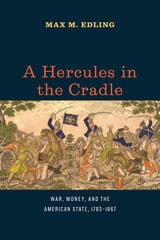
A Hercules in the Cradle

War, Money, and the American State, 1783–1867

Max M. Edling

University of Chicago Press, 2014

Explores the origin and evolution of American public finance and shows how the nation’s rise to great-power status in the nineteenth century rested on its ability to go into debt.

Two and a half centuries after the American Revolution the United States stands as one of the greatest powers on earth and the undoubted leader of the western hemisphere. This stupendous evolution was far from a foregone conclusion at independence. The conquest of the North American continent required violence, suffering, and bloodshed. It also required the creation of a national government strong enough to go to war against, and acquire territory from, its North American rivals.

In A Hercules in the Cradle, Max M. Edling argues that the federal government’s abilities to tax and borrow money, developed in the early years of the republic, were critical to the young nation’s ability to wage war and expand its territory. He traces the growth of this capacity from the time of the founding to the aftermath of the Civil War, including the funding of the War of 1812 and the Mexican War. Edling maintains that the Founding Fathers clearly understood the connection between public finance and power: a well-managed public debt was a key part of every modern state. Creating a debt would always be a delicate and contentious matter in the American context, however, and statesmen of all persuasions tried to pay down the national debt in times of peace. 
[more]
cover of A New Architecture for the U.S. National Accounts

A New Architecture for the U.S. National Accounts

Edited by Dale W. Jorgenson, J. Steven Landefeld, and William D. Nordhaus

University of Chicago Press, 2006

A New Architecture for the U.S. National Accounts brings together a distinguished group of contributors to initiate the development of a comprehensive and fully integrated set of United States national accounts. The purpose of the new architecture is not only to integrate the existing systems of accounts, but also to identify gaps and inconsistencies and expand and incorporate systems of nonmarket accounts with the core system. 

Since the United States economy accounts for almost thirty percent of the world economy, it is not surprising that accounting for this huge and diverse set of economic activities requires a decentralized statistical system. This volume outlines the major assignments among institutions that include the Bureau of Economic Analysis, the Bureau of Labor Statistics, the Department of Labor, the Census Bureau, and the Governors of the Federal Reserve System. 

An important part of the motivation for the new architecture is to integrate the different components and make them consistent. This volume is the first step toward achieving that goal.
[more]
cover of AMERICAN PUBLIC FINANCE 1700 1815

AMERICAN PUBLIC FINANCE 1700 1815

EDWIN PERKINS

The Ohio State University Press, 1997
[more]
cover of Behavioral Public Finance

Behavioral Public Finance

Edward J. McCaffery

Russell Sage Foundation, 2006
Behavioral economics questions the basic underpinnings of economic theory, showing that people often do not act consistently in their own self-interest when making economic decisions. While these findings have important theoretical implications, they also provide a new lens for examining public policies, such as taxation, public spending, and the provision of adequate pensions. How can people be encouraged to save adequately for retirement when evidence shows that they tend to spend their money as soon as they can? Would closer monitoring of income tax returns lead to more honest taxpayers or a more distrustful, uncooperative citizenry? Behavioral Public Finance, edited by Edward McCaffery and Joel Slemrod, applies the principles of behavioral economics to government's role in constructing economic and social policies of these kinds and suggests that programs crafted with rational participants in mind may require redesign. Behavioral Public Finance looks at several facets of economic life and asks how behavioral research can increase public welfare. Deborah A. Small, George Loewenstein, and Jeff Strnad note that public support for a tax often depends not only on who bears its burdens, but also on how the tax is framed. For example, people tend to prefer corporate taxes over sales taxes, even though the cost of both is eventually extracted from the consumer. James J. Choi, David Laibson, Brigitte C. Madrian, and Andrew Metrick assess the impact of several different features of 401(k) plans on employee savings behavior. They find that when employees are automatically enrolled in a retirement savings plan, they overwhelmingly accept the status quo and continue participating, while employees without automatic enrollment typically take over a year to join the saving plan. Behavioral Public Finance also looks at taxpayer compliance. While the classic economic model suggests that the low rate of IRS audits means far fewer people should voluntarily pay their taxes than actually do, John Cullis, Philip Jones, and Alan Lewis present new research showing that many people do not underreport their incomes even when the probability of getting caught is a mere one percent. Human beings are not always rational, utility-maximizing economic agents. Behavioral economics has shown how human behavior departs from the assumptions made by generations of economists. Now, Behavioral Public Finance brings the insights of behavioral economics to analysis of policies that affect us all.
[more]
cover of Beyond Debt: Islamic Experiments in Global Finance

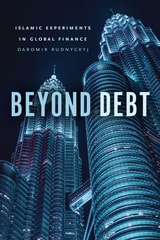
Beyond Debt

Islamic Experiments in Global Finance

Daromir Rudnyckyj

University of Chicago Press, 2018

Recent economic crises have made the centrality of debt, and the instability it creates, increasingly apparent. This realization has led to cries for change—yet there is little popular awareness of possible alternatives. 
 
Beyond Debt describes efforts to create a transnational economy free of debt. Based on ethnographic fieldwork in Malaysia, Daromir Rudnyckyj illustrates how the state, led by the central bank, seeks to make the country’s capital Kuala Lumpur “the New York of the Muslim world”—the central node of global financial activity conducted in accordance with Islam. Rudnyckyj shows how Islamic financial experts have undertaken ambitious experiments to create more stable economies and stronger social solidarities by facilitating risk- and profit-sharing, enhanced entrepreneurial skills, and more collaborative economic action. Building on scholarship that reveals the impact of financial devices on human activity, he illustrates how Islamic finance is deployed to fashion subjects who are at once more pious Muslims and more ambitious entrepreneurs. In so doing, Rudnyckyj shows how experts seek to create a new “geoeconomics”—a global Islamic alternative to the conventional financial network centered on New York, London, and Tokyo. A groundbreaking analysis of a timely subject, Beyond Debt tells the captivating story of efforts to re-center international finance in an emergent Islamic global city and, ultimately, to challenge the very foundations of conventional finance.  
[more]
cover of Creative Politics: Taxes and Public Goods in a Federal System

Creative Politics

Taxes and Public Goods in a Federal System

Glenn Beamer

University of Michigan Press, 2000
State legislators are constantly making tradeoffs between changing taxes and providing public services. Not only must they reconcile their own policy preferences with the preferences of their constituents, but they must consider the impact of actions taken by both the federal government and competing states. Glenn Beamer uses a series of in-depth case studies in eleven states to show how legislators made decisions dealing with taxation, economic development, education financing, and Medicaid.
Beamer identifies six factors that influence legislators' decisions: accountability, dependability, equity, obscurability, and horizontal and vertical transferability. Within the context created by citizen demands, intergovernmental politics, policy histories, court interventions, and state constitutions, this study analyzes how legislators employ these principles to develop and enact policies.
In addition to modeling state politics within the context of federalism, Creative Politics, reflecting the author's extensive interviews with legislators, is novel in its focus on politicians' views about public services, the strategies to finance them, and efforts to develop and maintain political support for them.
This book will be of interest to students and scholars of political science, economics, and public administration, and, more specifically, of federalism, state politics and policy, and legislative decision-making.
Glenn Beamer is Robert Wood Johnson Scholar in Health Policy Research, University of California, Berkeley, and Assistant Professor of Government, University of Virginia.
[more]
cover of Debt or Democracy: Public Money for Sustainability and Social Justice

Debt or Democracy

Public Money for Sustainability and Social Justice

Mary Mellor

Pluto Press, 2015

In the wake of the global financial crisis, most of the discussion has been focused on questions of debt. And the response, almost uniformly, has been austerity and privatization: cuts to services that have been painted as forms of reckless spending by a bloated public sector. In Debt or Democracy, Mary Mellor turns the whole conversation upside down, showing that the important question is not who owes what, but who controls the creation and circulation of money in the first place. When the problem is examined from that angle, it becomes clear that privatization, far from being the answer to our problem, is the very source of it—the subordination of public finance to private interest.
 
A direct challenge to conventional economic thinking, Debt or Democracy offers a bracing new analysis of our economic crisis and offers cogent, radical alternatives to create a more just and sustainable economic future.
[more]
cover of Deficit and Debt in Transition: The Political Economy of Public Finances in Central and Eastern Europe

Deficit and Debt in Transition

The Political Economy of Public Finances in Central and Eastern Europe

Istvan Benczes

Central European University Press, 2014
The adjustment problems of public finance in countries of Central and Eastern Europe (CEE) are often misunderstood and misinterpreted by western scholars. This book contributes to the bridging of the gap between what is being thought by external observers and what the actual public finance reality is, as described by competent local scholars. Popular political economy research has remained biased towards advanced countries and has neglected developing and transition economies. Publications on CEE countries' public finances seem to be reluctant to apply the conceptual framework of standard political economy to these countries because of the assumption that CEE economies are different from their Western peers. But is this really the case? Are CEE economies so much different that none of the well-known "Western" political economy concepts or models can be applied to the analysis of fiscal performance in the region? Benczes demonstrates that they can be safely applied in the context of CEE economies as well. He sees no need to develop a separate or unique theory designed for the study and understanding of (one-time) transition economies.
[more]
cover of Founding Finance: How Debt, Speculation, Foreclosures, Protests, and Crackdowns Made Us a Nation

Founding Finance

How Debt, Speculation, Foreclosures, Protests, and Crackdowns Made Us a Nation

By William Hogeland

University of Texas Press, 2014

Recent movements such as the Tea Party and anti-tax “constitutional conservatism” lay claim to the finance and taxation ideas of America’s founders, but how much do we really know about the dramatic clashes over finance and economics that marked the founding of America? Dissenting from both right-wing claims and certain liberal preconceptions, Founding Finance brings to life the violent conflicts over economics, class, and finance that played directly, and in many ways ironically, into the hardball politics of forming the nation and ratifying the Constitution—conflicts that still continue to affect our politics, legislation, and debate today.

Mixing lively narrative with fresh views of America’s founders, William Hogeland offers a new perspective on America’s economic infancy: foreclosure crises that make our current one look mild; investment bubbles in land and securities that drove rich men to high-risk borrowing and mad displays of ostentation before dropping them into debtors’ prisons; depressions longer and deeper than the great one of the twentieth century; crony mercantilism, war profiteering, and government corruption that undermine any nostalgia for a virtuous early republic; and predatory lending of scarce cash at exorbitant, unregulated rates, which forced people into bankruptcy, landlessness, and working in the factories and on the commercial farms of their creditors. This story exposes and corrects a perpetual historical denial—by movements across the political spectrum—of America’s all-important founding economic clashes, a denial that weakens and cheapens public discourse on American finance just when we need it most.

[more]
cover of Inspectors-General: Junkyard Dogs or Man's Best Friend?

Inspectors-General

Junkyard Dogs or Man's Best Friend?

Mark Moore

Russell Sage Foundation, 1986
In 1978, determined to combat fraud, waste, and abuse in government programs, Congress overwhelmingly approved the creation of special Offices of Inspectors-General (OIGs) in many federal departments. Moore and Gates here provide the first evaluation of this important institutional innovation. Clearly and objectively, they examine the powerful but often imprecisely defined concepts—wastefulness, accountability, performance—that underlie the OIG mandate. Their study conveys a realistic sense of how these offices operate and how their impact is affected by the changing dynamics of politics and personality. A Volume in the Russell Sage Foundation's Social Science Perspectives Series
[more]
cover of Justice Is an Option: A Democratic Theory of Finance for the Twenty-First Century

Justice Is an Option

A Democratic Theory of Finance for the Twenty-First Century

Robert Meister

University of Chicago Press, 2021

More than ten years after the worst crisis since the Great Depression, the financial sector is thriving. But something is deeply wrong. Taxpayers bore the burden of bailing out “too big to fail” banks, but got nothing in return. Inequality has soared, and a populist backlash against elites has shaken the foundations of our political order. Meanwhile, financial capitalism seems more entrenched than ever. What is the left to do?

Justice Is an Option uses those problems—and the framework of finance that created them—to reimagine historical justice. Robert Meister returns to the spirit of Marx to diagnose our current age of finance. Instead of closing our eyes to the political and economic realities of our era, we need to grapple with them head-on. Meister does just that, asking whether the very tools of finance that have created our vastly unequal world could instead be made to serve justice and equality. Meister here formulates nothing less than a democratic financial theory for the twenty-first century—one that is equally conversant in political philosophy, Marxism, and contemporary politics. Justice Is an Option is a radical, invigorating first page of a new—and sorely needed—leftist playbook.
[more]
cover of Measuring and Managing Federal Financial Risk

Measuring and Managing Federal Financial Risk

Edited by Deborah Lucas

University of Chicago Press, 2010

The U.S. government is the world’s largest financial institution, providing credit and assuming risk through diverse activities. But the potential cost and risk of these actions and obligations remain poorly understood and only partially measured. Government budgetary and financial accounting rules, which largely determine the information available to federal decision makers, have only just begun to address these issues. However, recently there has been a push to rethink how these programs are valued and accounted for, and some progress has been made in applying modern valuation methods—such as options pricing, risk-adjusted discount rates, and value at risk—to these types of obligations.

This book contains new research, both empirical and methodological, on the measurement and management of these costs and risks. The analyses encompass a broad spectrum of federal programs, including housing, catastrophe insurance, student loans, social security, and environmental liabilities. Collectively, the contributions gathered in Measuring and Managing Federal Financial Risk demonstrate that the logic of financial economics can be a useful tool for studying a range of federal activities.
[more]
cover of Public Dollars, Private Stadiums: The Battle over Building Sports Stadiums

Public Dollars, Private Stadiums

The Battle over Building Sports Stadiums

Delaney, Kevin J.

Rutgers University Press, 2003

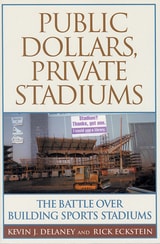
The authors provide an eye-opening account of recent battles over publicly financed stadiums in some of America’s largest cities. Their interviews with the key decision makers present a behind-the-scenes look at how and why powerful individuals and organizations foist these sports palaces on increasingly unreceptive communities.

 Delaney and Eckstein show that in the face of studies demonstrating that new sports facilities don’t live up to their promise of big money, proponents are using a new tactic to win public subsidies¾intangible “social” rewards, such as prestige and community cohesion. The authors find these to be empty promises as well, demonstrating that new stadiums may exacerbate, rather than erase, social problems in cities.
[more]
cover of Public Spending and Democracy in Classical Athens

Public Spending and Democracy in Classical Athens

By David M. Pritchard

University of Texas Press, 2015

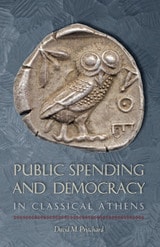
In his On the Glory of Athens, Plutarch complained that the Athenian people spent more on the production of dramatic festivals and “the misfortunes of Medeas and Electras than they did on maintaining their empire and fighting for their liberty against the Persians.” This view of the Athenians’ misplaced priorities became orthodoxy with the publication of August Böckh’s 1817 book Die Staatshaushaltung der Athener [The Public Economy of Athens], which criticized the classical Athenian dēmos for spending more on festivals than on wars and for levying unjust taxes to pay for their bloated government. But were the Athenians’ priorities really as misplaced as ancient and modern historians believed?

Drawing on lines of evidence not available in Böckh’s time, Public Spending and Democracy in Classical Athens calculates the real costs of religion, politics, and war to settle the long-standing debate about what the ancient Athenians valued most highly. David M. Pritchard explains that, in Athenian democracy, voters had full control over public spending. When they voted for a bill, they always knew its cost and how much they normally spent on such bills. Therefore, the sums they chose to spend on festivals, politics, and the armed forces reflected the order of the priorities that they had set for their state. By calculating these sums, Pritchard convincingly demonstrates that it was not religion or politics but war that was the overriding priority of the Athenian people.
[more]
cover of Retrospectives on Public Finance

Retrospectives on Public Finance

Lorraine Eden, ed.

Duke University Press, 1991

Retrospectives on Public Finance contains original analyses by internationally recognized public finance scholars, including Carl Sumner Shoup, one of the discipline’s most famous practitioners. Shoup, along with Richard Musgrave and his students, pioneered the “prescriptive” or “political economy school” of public finance known for its hands-on approach and its commitment to applying theory to real world problems.
Each contributor provides a retrospective on Shoup’s various contributions to the field, reviewing the literature and assessing its relevance to current problems in public finance theory and policy. The essays highlight and analyze fiscal theory and public policy developments from the 1930s to the present in four areas: the Shoup tax missions to Japan, Venezuela, and Liberia; the tax mix; the expenditure mix; and macro public finance.

Contributors. Lorraine Eden, Carl S. Shoup, Malcolm Gillis, Minoru Nakazato, Charles E. McLure Jr., John Bossons, Richard Goode, William Vickery, Wayne Thirsk, John Graham, Stanley Winer, W. Irwin Gillespie, Melville L. McMillan, Cliff Walsh, John G. Head, Enid Slack, Edwin G. West, Richard M. Bird, Peggy B. Musgrave, Douglas A. L. Auld, John B. Burbidge, Jack M. Mintz, John Sargent, Richard A. Musgrave
[more]
cover of Rules and Restraint: Government Spending and the Design of Institutions

Rules and Restraint

Government Spending and the Design of Institutions

David M. Primo

University of Chicago Press, 2007

Government spending has increased dramatically in the United States since World War II despite the many rules intended to rein in the insatiable appetite for tax revenue most politicians seem to share. Drawing on examples from the federal and state governments, Rules and Restraint explains in lucid, nontechnical prose why these budget rules tend to fail, and proposes original alternatives for imposing much-needed fiscal discipline on our legislators.

One reason budget rules are ineffective, David Primo shows, is that politicians often create and preserve loopholes to protect programs that benefit their constituents. Another reason is that legislators must enforce their own provisions, an arrangement that is seriously compromised by their unwillingness to abide by rules that demand short-term sacrifices for the sake of long-term gain. Convinced that budget rules enacted through such a flawed legislative process are unlikely to work, Primo ultimately calls for a careful debate over the advantages and drawbacks of a constitutional convention initiated by the states—a radical step that would bypass Congress to create a path toward change. Rules and Restraint will be required reading for anyone interested in institutional design, legislatures, and policymaking.
[more]
cover of Soldiers and Silver: Mobilizing Resources in the Age of Roman Conquest

Soldiers and Silver

Mobilizing Resources in the Age of Roman Conquest

By Michael J. Taylor

University of Texas Press, 2020
By the middle of the second century BCE, after nearly one hundred years of warfare, Rome had exerted its control over the entire Mediterranean world, forcing the other great powers of the region—Carthage, Macedonia, Egypt, and the Seleucid empire—to submit militarily and financially. But how, despite its relative poverty and its frequent numerical disadvantage in decisive battles, did Rome prevail? Michael J. Taylor explains this surprising outcome by examining the role that manpower and finances played, providing a comparative study that quantifies the military mobilizations and tax revenues for all five powers. Though Rome was the poorest state, it enjoyed the largest military mobilization, drawing from a pool of citizens, colonists, and allies, while its wealthiest adversaries failed to translate revenues into large or successful armies. Taylor concludes that state-level extraction strategies were decisive in the warfare of the period, as states with high conscription and low taxation raised larger, more successful armies than those that primarily sought to maximize taxation. Comprehensive and detailed, Soldiers and Silver offers a new and sophisticated perspective on the political dynamics and economies of these ancient Mediterranean empires.
[more]
cover of Starving the Beast: Ronald Reagan and the Tax Cut Revolution

Starving the Beast

Ronald Reagan and the Tax Cut Revolution

Monica Prasad

Russell Sage Foundation, 2018

Since the Reagan Revolution of the early 1980s, Republicans have consistently championed tax cuts for individuals and businesses, regardless of whether the economy is booming or in recession or whether the federal budget is in surplus or deficit. In Starving the Beast, sociologist Monica Prasad uncovers the origins of the GOP’s relentless focus on tax cuts and shows how this is a uniquely American phenomenon.

Drawing on never-before seen archival documents, Prasad traces the history of the 1981 tax cut—the famous “supply side” tax cut, which became the cornerstone for the next several decades of Republican domestic economic policy. She demonstrates that the main impetus behind this tax cut was not business group pressure, racial animus, or a belief that tax cuts would pay for themselves. 

Rather, the tax cut emerged because in America--unlike in the rest of the advanced industrial world—progressive policies are not embedded within a larger political economy that is favorable to business.  Since the end of World War II, many European nations have combined strong social protections with policies to stimulate economic growth such as lower taxes on capital and less regulation on businesses than in the United State.  Meanwhile, the United States emerged from World War II with high taxes on capital and some of the strongest regulations on business in the advanced industrial world.  This adversarial political economy could not survive the economic crisis of the 1970s.

Starving the Beast suggests that taking inspiration from the European model of progressive policies embedded in market-promoting political economy could serve to build an American economy that works better for all.

[more]
cover of State-building: A Comparative Study of Ukraine, Lithuania, Belarus, and Russia

State-building

A Comparative Study of Ukraine, Lithuania, Belarus, and Russia

Verena Fritz

Central European University Press, 2007
Looks at the process of state-building in Ukraine, Lithuania, Belarus, and Russia from a political economy and institutional perspective. Weak and distorted state capacity has come to be widely recognized as a key obstacle to successful transformation—including economic modernization and growth as well as the consolidation of democracy. However, so far little systematic research has been carried out on state capacity per se and on how to explain its development. The book provides new insights in considering the evolution of Ukraine since 1992, offering an in-depth view of institutional development in crucial areas and thus tracing the process of state-building. It draws comparisons with developments in Belarus, Lithuania, and Russia (based on field research). To capture the process of state-building empirically, focuses on the extraction and expenditure systems which are a central pillar of state capacity and also a central link between citizens and the state. The book also sheds light on how Ukraine’s potential ‘second transition’ currently under way will have an impact on its institutional system.
[more]
cover of Studies in State and Local Public Finance

Studies in State and Local Public Finance

Edited by Harvey S. Rosen

University of Chicago Press, 1986

In fiscal year 1981-82, state and local government spending actually exceeded federal nondefense spending. However, past research in public finance has focused on federal spending and policies and paid little attention to the economic problems of state and local governments. Studies in State and Local Public Finance goes far in correcting this omission.

Developed from a National Bureau of Economic Research conference on state and local financing, the volume includes papers summarizing and extending recent research as well as commentaries. Covering a wide range of topics, the papers share an empirical orientation and a concern with policy issues. The first two papers look at the role of tax-exempt bonds in local public finance. Their findings suggest that tax policies significantly affect municipal borrowing practices and that financial advantage can be achieved under certain of these practices. Other papers address specific issues related to state and local tax policy: the impact of local taxes on location decisions; efficient road-use charges for trucks; and the relation of income and general sales tax systems over time. Examining issues related to United States federalism, the last paper focuses on the impact of federal grant aid to states.

The research and findings these papers report make an important contribution to the study of local public finance and should be of particular interest to policymakers and those involved in private and public financing at the local, state, or federal level.
[more]
cover of The Bonds of Inequality: Debt and the Making of the American City

The Bonds of Inequality

Debt and the Making of the American City

Destin Jenkins

University of Chicago Press, 2021

Indebtedness, like inequality, has become a ubiquitous condition in the United States. Yet few have probed American cities’ dependence on municipal debt or how the terms of municipal finance structure racial privileges, entrench spatial neglect, elide democratic input, and distribute wealth and power.

In this passionate and deeply researched book, Destin Jenkins shows in vivid detail how, beyond the borrowing decisions of American cities and beneath their quotidian infrastructure, there lurks a world of politics and finance that is rarely seen, let alone understood. Focusing on San Francisco, The Bonds of Inequality offers a singular view of the postwar city, one where the dynamics that drove its creation encompassed not only local politicians but also banks, credit rating firms, insurance companies, and the national municipal bond market. Moving between the local and the national, The Bonds of Inequality uncovers how racial inequalities in San Francisco were intrinsically tied to municipal finance arrangements and how these arrangements were central in determining the distribution of resources in the city. By homing in on financing and its imperatives, Jenkins boldly rewrites the history of modern American cities, revealing the hidden strings that bind debt and power, race and inequity, democracy and capitalism.
 
[more]
cover of The People's Money: Pensions, Debt, and Government Services

The People's Money

Pensions, Debt, and Government Services

Edited by Michael A. Pagano

University of Illinois Press, 2019
American cities continue to experience profound fiscal crises. Falling revenues cannot keep pace with the increased costs of vital public services, infrastructure development and improvement, and adequately funded pensions. Chicago presents an especially vivid example of these issues, as the state of Illinois's rocky fiscal condition compounds the city's daunting budget challenges. In The People's Money, Michael A. Pagano curates a group of essays that emerged from discussions at the 2018 UIC Urban Forum. The contributors explore fundamental questions related to measuring the fiscal health of cities, including how cities can raise revenue, the accountability of today's officials for the future financial position of a city, the legal and practical obstacles to pension reform and a balanced budget, and whether political collaboration offers an alternative to the competition that often undermines regional governance.Contributors: Jered B. Carr, Rebecca Hendrick, Martin J. Luby, David Merriman, Michael A. Pagano, David Saustad, Casey Sebetto, Michael D. Siciliano, James E. Spiotto, Gary Strong, Shu Wang, and Yonghong Wu
[more]
cover of The Politics of Utopia: A New History of John Law's System, 1695–1795

The Politics of Utopia

A New History of John Law's System, 1695–1795

Arnaud Orain

University of Chicago Press, 2024

A fascinating retelling of the first banking and financial collapse in eighteenth-century France.
 
The Scottish economist John Law has been described as the architect of modern central banking. His “System,” established in Regency France between 1716 and 1720, saw the founding of a bank issuing paper money and the establishment of state commercial and colonial enterprises aimed at consolidating public debt. What at first seemed like financial wizardry, however, resulted in rampant speculation and, ultimately, economic collapse. In The Politics of Utopia, historian Arnaud Orain offers a provocative rereading of this well-known episode.
 
Starting his story in the seventeenth century, Orain reconstructs the figures and ideas, long predating Law, that anticipated and laid the groundwork for the System, which, he argues, is best understood as a failed social utopia aimed at the total transformation of society. Overturning familiar narratives of this seismic event, this book rewrites a stunning chapter in economic history by dealing with the cultural, colonial, religious, and political dimensions of the (in)famous System up to the French Revolution, revealing new lessons for today’s fraught financial landscape.
[more]
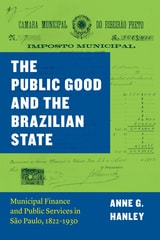
cover of The Public Good and the Brazilian State: Municipal Finance and Public Services in São Paulo, 1822–1930

The Public Good and the Brazilian State

Municipal Finance and Public Services in São Paulo, 1822–1930

Anne G. Hanley

University of Chicago Press, 2018

Who and what a government taxes, and how the government spends the money collected, are questions of primary concern to governments large and small, national and local. When public revenues pay for high-quality infrastructure and social services, citizens thrive and crises are averted. When public revenues are inadequate to provide those goods, inequality thrives and communities can verge into unrest—as evidenced by the riots during Greece’s financial meltdown and by the needless loss of life in Haiti’s collapse in the wake of the earthquake.

In The Public Good and the Brazilian State, Anne G. Hanley assembles an economic history of public revenues as they developed in nineteenth-century Brazil. Specifically, Hanley investigates the financial life of the municipality—a district comparable to the county in the United States—to understand how the local state organized and prioritized the provision of public services, what revenues paid for those services, and what happened when the revenues collected failed to satisfy local needs. Through detailed analyses of municipal ordinances, mayoral reports, citizen complaints, and financial documents, Hanley sheds light on the evolution of public finance and its effect on the early economic development of Brazilian society. This deeply researched book offers valuable insights for anyone seeking to better understand how municipal finance informs histories of inequality and underdevelopment. 
[more]
cover of The Theory of Public Choice-II

The Theory of Public Choice-II

James M. Buchanan and Robert D. Tollison, Editors

University of Michigan Press, 1984
The Theory of Public Choice is a landmark volume that brings together key essays and articles charting the rapid evolution of public choice theory during its most formative decade. Edited by James M. Buchanan and Robert D. Tollison—leading figures in the “Virginian School” of political economy—this collection synthesizes the major advances of public choice as it applies the tools of economic analysis to the workings of democratic and political institutions.The volume begins with overviews of the field’s development, highlighting public choice’s foundational challenge to “romantic” notions of government and its turn toward a more realistic, empirical understanding of collective decision-making. Renowned contributors—including Buchanan, Dennis Mueller, Gordon Tullock, and many others—explore subjects from voting theory and constitutional economics to rent-seeking, bureaucracy, and the political economy of welfare and regulation.Organized into topical sections covering theoretical advances, applications, empirical studies, and philosophical issues, The Theory of Public Choice illuminates how economics, political science, and policy analysis intersect. Whether addressing topics like political resource allocation, the logic of majority rule, or the emergence of tax and spending limitations, these essays demonstrate how public choice theory has reshaped the way scholars, policymakers, and citizens think about government.Accessible yet rigorous, this collection is essential for anyone seeking insight into the mechanisms of collective action, constitutional design, and the ongoing challenge of ensuring accountability and efficiency in public institutions. It stands as a vital resource for students and scholars in economics, political science, public policy, and related fields.
[more]
cover of Volatile States: Institutions, Policy, and the Performance of American State Economies

Volatile States

Institutions, Policy, and the Performance of American State Economies

W. Mark Crain

University of Michigan Press, 2003
Why do American state economies grow at such vastly different rates and manifest such wide differences in living standards? Volatile States identifies the sources of rising living standards by examining the recent economic and fiscal history of the American states. With new insights about the factors that contribute to state economic success, the book departs from traditional analyses of economic performance in its emphasis on the role of volatility.
Volatile States identifies institutions and policies that are key determinants of economic success and illustrates the considerable promise of a mean-variance criterion for assessing state economic performance. The mean-variance perspective amends applications of growth models that rely on the mobility of productive factors keyed to income levels alone. Simply measuring the level of growth in state economies reveals an incomplete and perhaps distorted picture of performance. Taking the volatility of state economies explicitly into account refines the whole notion of "economic success."
This book is essential reading for economists, political scientists, and policy-makers who routinely confront questions about the consequences of alternative institutional arrangements and economic policy choices.
W. Mark Crain is Professor of Economics and Research Associate, James M. Buchanan Center for Political Economy, George Mason University.
[more]
cover of World Economy and National Finance in Historical Perspective

World Economy and National Finance in Historical Perspective

Charles P. Kindleberger

University of Michigan Press, 1995

The World Economy and National Finance in Historical Perspective is a collection of essays and lectures by the distinguished economist, Charles P. Kindleberger. The main topic is the world economy of the past, present, and future, but the author also turns his deep historical understanding on a cluster of national financial problems faced by the United States and Germany. The essays deal with the world economy and the place within it of the United States and Europe. Other topics treated include the succession of world economic leaders, and the spread of booms and crashes from one country to another, the quality of debt, financial intermediation and disintermediation, and the German inflation of 1919-23. In an important discussion of the role of the United States in the world economy, the author places special emphasis on the responsibility that a country with such a leading economic role has of bringing about and maintaining economic stability. This will appeal to economists, especially economic historians, and will be of interest to the financial community.
[more]