Results by title
12 books match the query 'First World War'
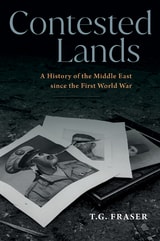
Contested Lands
A History of the Middle East From the First World War to the PresentT. G. Fraser
Haus Publishing, 2024
Until the First World War, the Ottoman Empire had dominated the Middle East for four centuries. Its collapse, coupled with the subsequent clash of European imperial policies, unleashed a surge of political feelings among the people of the Middle East as they vied for national self-determination. Over the century that followed, the region has become almost synonymous with unrest and conflict.
An accessible survey of the last century, Contested Lands tells the story of what happened in the Middle East and what it means today. T. G. Fraser analyzes the fault lines of the tension, including the damage brought by imperialism, the creation of the State of Israel, competition between secular rulers and emerging democratic and theocratic forces, and the rise of Arab Nationalism in the face of fraying regional alliances and the Islamic revival. Fraser offers a close look at how the events of the twenty-first century—the tragedy of 9/11, the Arab Spring, and Syria’s civil war—have combined with complex social and economic changes to transform the region. Untangling the history of the Middle East, this book offers a detailed and insightful picture of the region and why its heritage remains important today.
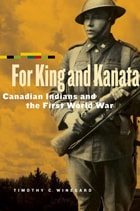
For King and Kanata
Canadian Indians and the First World WarTimothy C. Winegard
University of Manitoba Press, 2012

Masters of Their Own Destiny
Asians in the First World WarEdited by Claire Thi Liên Tran
National University of Singapore Press, 2026
An intervention in World War I historiography that foregrounds personal accounts of the conflict from its non-European participants and witnesses.
Accounts of World War I tend to focus on Europe, the epicenter of this conflict, and find in its battlefields the later death of empires, spreading revolution, and eventual decolonization. However, the war was also global, drawing in people from all over the world while rapidly circulating ideas and innovations far beyond Europe.
Almost two million non-Europeans participated in the war as soldiers, workers, and professionals, including Asians in particular. They could be found in the battlefields of France, behind the lines in munitions factories and military hospitals, in the frozen construction sites of the Murmansk Railway, and in Mesopotamia’s burning deserts. The voices of these volunteers and conscripts are rarely heard; the war’s narratives are mainly European. And yet, here and there, lone voices pierce the silence.
In a compelling intervention in World War I historiography, Masters of Their Own Destiny offers a history from below, demonstrating how rare personal accounts may illuminate broader historical forces. Alongside the story of Nguyen Xuan Mai, a Vietnamese military doctor whose pursuit of professional recognition ended in disillusionment with colonial promises, this study draws on a wealth of material like Indian soldiers’ letters, Vietnamese workers’ censored correspondence, and records of Chinese laborers who witnessed revolution in Russia. It gives voice to hitherto ignored wartime experiences that later transformed the expectations of millions of colonial subjects and seeded the anticolonial movements that followed.
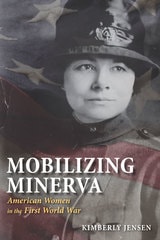
Mobilizing Minerva
American Women in the First World WarKimberly Jensen
University of Illinois Press, 2007
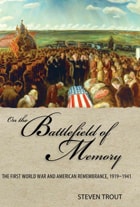
On the Battlefield of Memory
The First World War and American Remembrance, 1919–1941Steven Trout
University of Alabama Press, 2010
This work is a detailed study of how Americans in the 1920s and 1930s interpreted and remembered the First World War. Steven Trout asserts that from the beginning American memory of the war was fractured and unsettled, more a matter of competing sets of collective memories—each set with its own spokespeople— than a unified body of myth. The members of the American Legion remembered the war as a time of assimilation and national harmony. However, African Americans and radicalized whites recalled a very different war. And so did many of the nation’s writers, filmmakers, and painters.
Trout studies a wide range of cultural products for their implications concerning the legacy of the war: John Dos Passos’s novels Three Soldiers and 1919, Willa Cather’s One of Ours, William March’s Company K, and Laurence Stallings’s Plumes; paintings by Harvey Dunn, Horace Pippin, and John Steuart Curry; portrayals of the war in The American Legion Weekly and The American Legion Monthly; war memorials and public monuments like the Tomb of the Unknown Soldier; and commemorative products such as the twelve-inch tall Spirit of the American Doughboy statue.
Trout argues that American memory of World War I was not only confused and contradictory during the ‘20s and ‘30s, but confused and contradictory in ways that accommodated affirmative interpretations of modern warfare and military service. Somewhat in the face of conventional wisdom, Trout shows that World War I did not destroy the glamour of war for all, or even most, Americans and enhanced it for many.
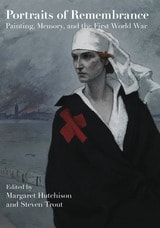
Portraits of Remembrance
Painting, Memory, and the First World WarEdited by Margaret Hutchison and Steven Trout
University of Alabama Press, 2020
Although photography and moving pictures achieved ubiquity during the First World War as technological means of recording history, the far more traditional medium of painting played a vital role in the visual culture of combatant nations. The public’s appetite for the kind of up-close frontline action that snapshots and film footage could not yet provide resulted in a robust market for drawn or painted battle scenes.
Painting also figured significantly in the formation of collective war memory after the armistice. Paintings became sites of memory in two ways: first, many governments and communities invested in freestanding panoramas or cycloramas that depicted the war or featured murals as components of even larger commemorative projects, and second, certain paintings, whether created by official artists or simply by those moved to do so, emerged over time as visual touchstones in the public’s understanding of the war.
Portraits of Remembrance: Painting, Memory, and the First World War examines the relationship between war painting and collective memory in Australia, Austria, Belgium, Canada, Croatia, France, Germany, Great Britain, New Zealand, Russia, Serbia, Turkey, and the United States. The paintings discussed vary tremendously, ranging from public murals and panoramas to works on a far more intimate scale, including modernist masterpieces and crowd-pleasing expressions of sentimentality or spiritualism. Contributors raise a host of topics in connection with the volume’s overarching focus on memory, including national identity, constructions of gender, historical accuracy, issues of aesthetic taste, and connections between painting and literature, as well as other cultural forms.
Secrets in a Dead Fish
The Spying Game in the First World WarMelanie King
Bodleian Library Publishing, 2014
Throughout World War I, spymasters and their networks of secret agents developed many clever—and sometimes comical—methods of covert communication. Stacks of bread in a bakery window, puffs of smoke from a chimney, and even woolen pullovers were all used to pass on secret messages that were decipherable only to the well-trained eye. Drawing on the memoirs of eight spies, Melanie King divulges these and other tricks of the trade while sharing details from their astonishing stories. Among her informants are British intelligence officers working undercover in Germany and France, including a former Metropolitan police officer who once hunted Jack the Ripper; a German secret service officer codenamed “Agricola;” an American newspaperman; and an Austrian agent who disguised himself during his career as everything from a Jewish peddler to a Russian officer.
A fascinating compendium of clever and long-forgotten ruses—interspersed with the stories of the spies themselves—Secrets in a Dead Fish sheds new light on the shadowy world of Great War espionage.
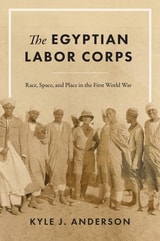
The Egyptian Labor Corps
Race, Space, and Place in the First World WarKyle J. Anderson
University of Texas Press, 2021
During World War I, the British Empire enlisted half a million young men, predominantly from the countryside of Egypt, in the Egyptian Labor Corps (ELC) and put them to work handling military logistics in Europe and the Middle East. British authorities reneged on their promise not to draw Egyptians into the war, and, as Kyle Anderson shows, the ELC was seen by many in Egypt as a form of slavery. The Egyptian Labor Corps tells the forgotten story of these young men, culminating in the essential part they came to play in the 1919 Egyptian Revolution.
Combining sources from archives in four countries, Anderson explores Britain’s role in Egypt during this period and how the ELC came to be, as well as the experiences and hardships these men endured. As he examines the ways they coped—through music, theater, drugs, religion, strikes, and mutiny—he illustrates how Egyptian nationalists, seeing their countrymen in a state akin to slavery, began to grasp that they had been racialized as “people of color.” Documenting the history of the ELC and its work during the First World War, The Egyptian Labor Corps also provides a fascinating reinterpretation of the 1919 revolution through the lens of critical race theory.
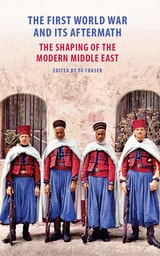
The First World War and Its Aftermath
The Shaping of the Modern Middle EastEdited by T.G. Fraser
Gingko, 2024
In addition to recounting the crucial international politics that drew fierce lines in the sands of the Middle East—a story of intrigue between the British, Russians, Ottomans, North Africans, Americans, and others—the contributors engage topics ranging from the war’s effects on women, the experience of the Kurds, sectarianism, the evolution of Islamism, and the importance of prominent intellectuals like Ziya Gökalp and Michel ‘Aflaq. They examine the dissolution of the Ottoman Empire, the exploitation of notions of Islamic unity and pan-Arabism, the influences of Woodrow Wilson and American ideals on Middle East leaders, and likewise the influence of Vladimir Lenin’s vision of a communist utopia. Altogether, they tell a story of promises made and promises broken, of the struggle between self-determination and international recognition, of centuries-old empires laying in ruin, and of the political poker of the twentieth century that carved up the region, separating communities into the artificial states we know today.
The First World War and Popular Cinema
1914 to the PresentParis, Michael
Rutgers University Press, 2000
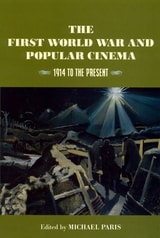
The Great War played an instrumental role in the development of cinema, so necessary was it to the mobilization efforts of the combatant nations. In turn, after the war, as memory began to fade, cinema continued to shape the war's legacy and eventually to determine the ways in which all warfare is imagined.
The First World War and Popular Cinema provides fresh insight into the role of film as an historical and cultural tool. Through a comparative approach, essays by contributors from Europe, Australia, Canada, and the United States enrich our understanding of cinematic depictions of the Great War in particular and combat in general. New historical research on both the uses of propaganda and the development of national cinemas make this collection one of the first to show the ways in which film history can contribute to our study of national histories. The contributors to the volume monitor popular perceptions of the war, the reshaping of the war's legacy, and the evolution of cinematic clichés that are perpetuated in filmmaking through the century. Some of the films they discuss are All Quiet on the Western Front, Gallipoli, The Grand Illusion, The Big Parade, Battle of the Somme, J'Accuse, Regeneration, and many more. The First World War and Popular Cinema is a vital addition to film studies and history, two fields only recently united in a productive way.
The Photographic Fix
Memory, Ideology, and the First World War in the Weimar RepublicJustin Court
University of Michigan Press, 2026
Violent Encounters
Gender, Colonialism, and the First World War in Cameroon, 1884–1916George N. Njung
Ohio University Press, 2027
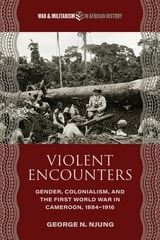
Violent Encounters offers a powerful and original gendered history of colonial rule and warfare in Cameroon from the advent of German imperialism to the end of the First World War. Centering German Cameroon as an understudied but pivotal site of empire and global conflict, George N. Njung demonstrates that violence was a calculated instrument of colonial governance, which was systematically organized along racial and gendered lines to conquer territory, discipline African communities, and suppress resistance.
Drawing on extensive archival research in Africa and Europe, oral traditions, and interdisciplinary gender analysis, Njung reconstructs how empire and war were lived differently by African men and women. He shows that gender-based violence—especially sexual abuse—functioned as a deliberate political strategy embedded in military campaigns, forced labor regimes, and systems of punishment. African women bore disproportionate burdens at the intersection of gender, race, and militarization, even as they acted as resisters, mobilizers, and negotiators. African men, meanwhile, experienced forced recruitment, battlefield violence, and profound challenges to social authority under colonial rule.
Reinterpreting the First World War in Africa as an escalation rather than a rupture, Violent Encounters situates wartime atrocities, mass displacement, and one of the twentieth century’s earliest refugee crises within a longer continuum of imperial violence. By foregrounding gender, the book repositions Cameroon—and Africa more broadly—as central to understanding the global dynamics of empire, militarization, and resistance in the early twentieth century.