Results by title

42 books match the query 'Flora'

cover of A Flora of Northeastern Minnesota

A Flora of Northeastern Minnesota

Olga Lakela

University of Minnesota Press, 1965

A Flora of Northeastern Minnesota was first published in 1965. Minnesota Archive Editions uses digital technology to make long-unavailable books once again accessible, and are published unaltered from the original University of Minnesota Press editions.

A manual for the identification of the ferns, fern allies, flowering plants, trees, shrubs, and herbs of Minnesota's Arrowhead region, this volume lists 113 botanic families and describes 1,300 species, with keys for identification. There are 80 line drawings of plant species and 419 maps showing distribution.
[more]
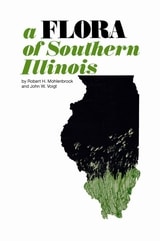
cover of A Flora of Southern Illinois

A Flora of Southern Illinois

Robert H. Mohlenbrock

Southern Illinois University Press, 1974

This book will be of particular interest to those inter­ested in applied fields of biology, such as conservation, forestry, and wild life. The southern twelve counties of Illinois, a total of 4,355square miles, comprise the area covered in this book. It is an area in which both northern and southern flora specimens abound. A wide variety of plant species grow in this area, and nearly 200 new plants not formerly identified with this area have been included in the listings.

Especially valuable to amateur botanists, the book is an important manual in identifying the plants that make up the native scenery of this region. Seventy-seven illustrations aid in identifying and understanding the plant communities.

[more]
cover of Designing Gardens with Flora of the American East

Designing Gardens with Flora of the American East

Summers, Carolyn

Rutgers University Press, 2010

Gardeners, with all good fortune and flora, are endowed with love for a hobby that has profound potential for positive change. The beautifully illustrated Designing Gardens with Flora of the American East approaches landscape design from an ecological perspective, encouraging professional horticulturalists and backyard enthusiasts alike to intensify their use of indigenous or native plants. These plants, ones that grow naturally in the same place in which they evolved, form the basis of the food web. Wildlife simply cannot continue to survive without them-nor can we.

Why indigenous plants, you may ask? What makes them so special to butterflies and bees and boys and girls? For Carolyn Summers, the answer is as natural as an ephemeral spring wildflower or berries of the gray dogwood, "As I studied indigenous plants, a strange thing happened. The plants grew on me. I began to love the plants themselves for their own unique qualities, quite apart from their usefulness in providing food and shelter for wildlife.

Emphasizing the importance of indigenous plant gardening and landscape design, Summers provides guidelines for skilled sowers and budding bloomers. She highlights . . .
  • The best ways to use exotic and non-indigenous plants responsibly
  • Easy-to-follow strategies for hosting wildlife in fields, forests, and gardens
  • Designs for traditional gardens using native trees, shrubs, groundcovers as substitutes for exotic plants
  • Examples of flourishing plant communities from freshwater streams to open meadows
  • How to control plant reproduction, choose cultivars, open-pollinated indigenous plants, and different types of hybrids, and practice “safe sex in the garden

From Maine to Kentucky and up and down the East Coast, Designing Gardens with Flora of the American East lays the "gardenwork" for protecting natural areas through the thoughtful planting of indigenous plants. Finally we can bask in the knowledge that it is possible to have loads of fun at the same time we are growing a better world.
[more]
cover of Designing Gardens with Flora of the American East, Revised and Expanded

Designing Gardens with Flora of the American East, Revised and Expanded

Carolyn Summers

Rutgers University Press, 2024

As recent years have seen alarming declines of insect and bird populations in many states, more gardeners have discovered the importance of including native plants in order to nurture these pollinators and sustain local ecosystems. But when so many popular landscaping designs involve exotic cultivars and invasive plant species, how can you create a garden that is both aesthetically pleasing and ecologically responsible? 
 
In this fully revised second edition of the classic guide Designing Gardens with Flora of the American East, gardening expert Carolyn Summers draws on the most recent research on sustainable landscaping. She is joined in this edition by her daughter, landscape designer Kate Brittenham, offering an intergenerational dialogue about the importance of using indigenous plants that preserve insect and bird habitats. The practical information they provide is equally useful for home gardeners and professionals, including detailed descriptions of keystone trees, shrubs, perennials, vines, and grasses that are native to the eastern United States. Accompanied by entirely new illustrations and updated plant lists, they offer chic yet eco-friendly landscape designs fully customized for different settings, from suburban yards to corporate office parks.

The states covered in this book are CT, DE, IA, IL, IN, KY, MA, MD, ME, MI, MN, MO, NC, NH, NJ, NY, OH, PA, RI, TN, VA, VT, WI, and WV, as well as southern Quebec and Ontario. 
[more]
cover of Fauna and Flora, Earth and Sky: Brushes with Nature's Wisdom

Fauna and Flora, Earth and Sky

Brushes with Nature's Wisdom

Trudy Dittmar

University of Iowa Press, 2003
"[Fauna and Flora, Earth and Sky] is, in fact, the most intelligent, thoughtful, original, challenging, and highly entertaining work of nature writing since Barry Lopez's Artic Dreams. . . . It is her broad scope of contemplation, combined with her fiercely beautiful and detailed renderings of passion, natural and human, that give Trudy Dittmar's first but fully mature book its remarkable originality and considerable power." --Robert Finch,Los Angeles Times Book Review "Honest self-scrutiny is irresistible, especially when told with a knack for diction of place, as this author demonstrates on every page. She is both of the landscape and an informed observer of it, willing to examine her conflicts between the experiences that play in her imagination and the scientific knowledge she's gleaned through training and reading." --The Bloomsbury Review "Trudy Dittmar is an elegant stylist and an acute observer. She's read everything there is to read about the physics of rainbows, the habits of the porcupine, the winter survival skills of the moose and the orbits of the planets, but even her learning is outdistanced by her patient powers of looking, smelling, hearing, touching and tasting. Her originality arises out of this patience. And, magically, she is able to read into and out of the rich, endangered natural world an Emersonian understanding of self. This is at once the most objective and subjective book I have ever read." --Edmund White, author of A Boy's Own Story "Dittmar writes about life with the precision of a scientist and the introspective lyricism of a poet, illuminating for us those parts of the world we barely remember to notice...from the complex emotional lives of cows and pronghorns to the dazzling leaves of a silver maple to the teeming hidden pools of bright salamanders. Reading this book is like finding a geode in a stream bed--crack it open and it sparkleso--Jo Ann Beard "Dittmar, who won a Rona Jaffe Foundation Writer' Award in 2000 and whose writings have appeared in numerous publications . . . provides a fascinating look at natural and personal history in these ten essays on animals, plants, and other natural phenomena. . . . An excellent choice for both public and academic libraries." --Library Journal In essays with settings that range from the Wind River Mountains of Wyoming, to the mountain town of Leadville, Colorado, to the Pine Barrens of New Jersey, Trudy Dittmar weaves personal experience with diverse threads of subject matter to create unexpected connections between human nature and nature at large. Life stories, elegantly combined with mindful observations of animals, plants, landscape and the skies, theories in natural science, environmental considerations, and touches of art criticism and popular culture, offer insights into the linked analogies of nature and soul. A glacial pond teeming with salamanders in arrested development is cause for reflection on the limits of a life that knows only bounty. The hot blue lights of celestial phenomena are a metaphor for fast, flashy men--he loves of a life--and a romantic career is interpreted. Watching a pronghorn buck battling for, and ultimately losing, his harem leads to a meditation on a kind of immortality. Fauna and Flora, Earth and Sky is testimony to the bearing and consequence of nature in one life, and to the richness of understanding it can bring to all human lives. Trudy Dittmar was born and raised in New Jersey farm country. In addition to holding an MA in English literature from the University of Chicago, she is a graduate of Columbia University's MFA program in writing and the founder and former director of a writing program at Brookdale Community College in New Jersey. Her work has appeared in such publications as The Norton Book of Nature Writing, Pushcart XXI, Georgia Review, and Orion. She divides her time between her family home in New Jersey and her cabin in Wyoming.
[more]
cover of Flora of Iraq Volume 6: Compositae

Flora of Iraq Volume 6

Compositae

Edited by Shahina A. Ghazanfar, John R. Edmondson, D. J. Nicholas Hind

Royal Botanic Gardens, Kew, 2019
The Flora of Iraq is the only flora for this region in the Middle East. It enables anyone documenting, studying, or managing Iraq’s vast and rich flora to identify the vascular cryptograms and flowering plants. In addition to the detailed taxonomic information, a large amount of supplementary data of general biological interest and economic interest is provided, as well as notes on vernacular names. Nearing completion, it fills a major gap in the floral knowledge of Iraq. Volume 6 covers the Compositae in its entirety.
[more]
cover of Flora of Iraq Volume 7: Solanaceae to Biebersteiniaceae

Flora of Iraq Volume 7

Solanaceae to Biebersteiniaceae

Edited by Shahina Ghazanfar, John Edmondson, and Ali Haboob

Royal Botanic Gardens, Kew, 2025

The authoritative flora for Iraq, featuring detailed plant descriptions and botanical illustrations to aid identification.

The Flora of Iraq is the only flora for this region in the Middle East. It enables anyone documenting, studying, or managing Iraq’s vast and rich flora to identify the vascular cryptograms and flowering plants. In addition to the detailed taxonomic information, a large amount of supplementary data of general biological interest and economic interest is provided, as well as notes on vernacular names. Nearing completion, the series fills a major gap in the floral knowledge of Iraq.
 
[more]
cover of Flora of Iraq Volume Five Part One: Elatinaceae to Sphenocleaceae

Flora of Iraq Volume Five Part One

Elatinaceae to Sphenocleaceae

Edited by Shahina A. Ghazanfar

Royal Botanic Gardens, Kew, 2015
The Flora of Iraq is the only botanical guide for this region in the Middle East. It enables anyone documenting, studying, or managing Iraq’s vast and rich flora to identify the area’s vascular cryptogams (plants that do not make seeds) as well as its flowering plants. In addition to detailed taxonomic information, a large amount of supplementary data of general biological and economic interest is provided, as well as notes on vernacular names. Rounding out a series decades in the making, it is a vital contribution to our floral knowledge of Iraq.
[more]
cover of Flora of Iraq, Volume Five, Part Two: Lythraceae to Campanulaceae

Flora of Iraq, Volume Five, Part Two

Lythraceae to Campanulaceae

Edited by Shahina A. Ghazanfar and John R. Edmondson

Royal Botanic Gardens, Kew, 2014

The Flora of Iraq is the only comprehensive reference for this region in the Middle East. It enables anyone documenting, studying, or managing Iraq’s vast and rich flora to identify the vascular cryptograms and flowering plants. In addition to detailed taxonomic information, it includes general biological and economic data, as well as notes on vernacular names. As this collection nears completion, it fills a major gap in the floral knowledge of Iraq.
 
Plant families included in Volume 5, Part 2 are Lythraceae, Onagraceae, Haloragaceae, Gentianaceae, Menyanthaceae, Primulaceae, Plumbaginaceae, Plantaginaceae, Crassulaceae, Saxifragaceae, Vahliaceae, Umbelliferae, Valerianaceae, Dipsaceae, and Campanulaceae.   
[more]
cover of Flora of Tropical East Africa: Acanthaceae II

Flora of Tropical East Africa

Acanthaceae II

Edited by H. J. Beentje and S. A. Ghazanfar

Royal Botanic Gardens, Kew, 2010
A descriptive account of the flowering plants and ferns native and naturalized in Kenya, Tanzania, and Uganda, together with information on exotic ornamental and crop plants. At least one species per genus is illustrated, and the bibliography and synonymy are sufficiently detailed to explain the nomenclature and taxonomic circumscriptions within a broad regional context. The Flora is a part work published in fascicles (paperback).
 
 
[more]
cover of Flora of Tropical East Africa: Acanthaceae Part 1

Flora of Tropical East Africa

Acanthaceae Part 1

H. J. Beentje

Royal Botanic Gardens, Kew, 2000
A descriptive account of the flowering plants and ferns native and naturalised in Kenya, Tanzania and Uganda, together with information on exotic ornamental and crop plants. Prepared at the Royal Botanic Gardens, Kew in co-operation with the East African Herbarium, the National Herbarium of Tanzania, and the Herbaria of Makerere University and Dar es Salaam University.
[more]
cover of Flora of Tropical East Africa: Apocynaceae II

Flora of Tropical East Africa

Apocynaceae II

Edited by Henk J. Beentje

Royal Botanic Gardens, Kew, 2012
The Flora of Tropical East Africa is a descriptive, extensively illustrated account of the flowering plants and ferns native and naturalized in Kenya, Tanzania, and Uganda, together with information on exotic ornamental and crop plants. At least one species of each genus is illustrated, and the bibliography and synonymy are sufficiently detailed to explain the nomenclature and taxonomic circumscriptions within a broad regional context. This part of the series is the second volume devoted to the Apocynaceae  family or dogbane, which includes trees, shrubs, herbs, and lianas.  
[more]
cover of Flora of Tropical East Africa: Asparagaceae

Flora of Tropical East Africa

Asparagaceae

Sebsebe Demissew

Royal Botanic Gardens, Kew, 2006

Being a descriptive account of the flowering plants and ferns native and naturalised in Kenya, Tanzania and Uganda, together with information on exotic ornamental and crop plants.

Prepared at the Royal Botanic Gardens, Kew in co-operation with the East African Herbarium, the National Herbarium of Tanzania, and the Herbaria of Makerere University and Dar es Salaam University.
[more]
cover of Flora of Tropical East Africa: Aspleniaceae

Flora of Tropical East Africa

Aspleniaceae

Kew Publishing

Royal Botanic Gardens, Kew, 2008

Being a descriptive account of the flowering plants and ferns native and naturalised in Kenya, Tanzania and Uganda, together with information on exotic ornamental and crop plants.

Prepared at the Royal Botanic Gardens, Kew in co-operation with the East African Herbarium, the National Herbarium of Tanzania, and the Herbaria of Makerere University and Dar es Salaam University.
[more]
cover of Flora of Tropical East Africa: Blechnaceae

Flora of Tropical East Africa

Blechnaceae

H. J. Beentje

Royal Botanic Gardens, Kew, 2006

Being a descriptive account of the flowering plants and ferns native and naturalised in Kenya, Tanzania and Uganda, together with information on exotic ornamental and crop plants.

Prepared at the Royal Botanic Gardens, Kew in co-operation with the East African Herbarium, the National Herbarium of Tanzania, and the Herbaria of Makerere University and Dar es Salaam University.
[more]
cover of Flora of Tropical East Africa: Colchicaceae

Flora of Tropical East Africa

Colchicaceae

H. J. Beentje

Royal Botanic Gardens, Kew, 2005

Being a descriptive account of the flowering plants and ferns native and naturalised in Kenya, Tanzania and Uganda, together with information on exotic ornamental and crop plants.

Prepared at the Royal Botanic Gardens, Kew in co-operation with the East African Herbarium, the National Herbarium of Tanzania, and the Herbaria of Makerere University and Dar es Salaam University.
[more]
cover of Flora of Tropical East Africa: Commelinaceae

Flora of Tropical East Africa

Commelinaceae

Edited by Henk Beentje

Royal Botanic Gardens, Kew, 2012

The Flora of Tropical East Africa is a descriptive, extensively illustrated account of the flowering plants and ferns native and naturalized in Kenya, Tanzania and Uganda, together with information on exotic ornamental and crop plants. At least one species of each genus is illustrated, and the bibliography and synonymy are sufficiently detailed to explain the nomenclature and taxonomic circumscriptions within a broad regional context. This part covers the Commelinaceae family.
[more]
cover of Flora of Tropical East Africa: Compositae (Part 3)

Flora of Tropical East Africa

Compositae (Part 3)

H. J. Beentje

Royal Botanic Gardens, Kew, 2005

Being a descriptive account of the flowering plants and ferns native and naturalised in Kenya, Tanzania and Uganda, together with information on exotic ornamental and crop plants.

Prepared at the Royal Botanic Gardens, Kew in co-operation with the East African Herbarium, the National Herbarium of Tanzania, and the Herbaria of Makerere University and Dar es Salaam University.
[more]
cover of Flora of Tropical East Africa: Cyatheaceae

Flora of Tropical East Africa

Cyatheaceae

H. J. Beentje

Royal Botanic Gardens, Kew, 2005

Being a descriptive account of the flowering plants and ferns native and naturalised in Kenya, Tanzania and Uganda, together with information on exotic ornamental and crop plants.

Prepared at the Royal Botanic Gardens, Kew in co-operation with the East African Herbarium, the National Herbarium of Tanzania, and the Herbaria of Makerere University and Dar es Salaam University.

[more]
cover of Flora of Tropical East Africa: Cyperaceae

Flora of Tropical East Africa

Cyperaceae

Edited by H. J. Beentje and S. A. Ghazanfar

Royal Botanic Gardens, Kew, 2010

The Flora of Tropical East Africa is a descriptive, extensively illustrated account of the flowering plants and ferns native and naturalized in Kenya, Tanzania and Uganda, together with information on exotic ornamental and crop plants. At least one species of each genus is illustrated with a fully annotated, and the bibliography and synonymy are sufficiently detailed to explain the nomenclature and taxonomic circumscriptions within a broad regional context.
This part is devoted to the substantial family of Cyperaceae - or sedges.
[more]
cover of Flora of Tropical East Africa: Dracaenaceae

Flora of Tropical East Africa

Dracaenaceae

Edited by H.J. Beentje and S.A. Ghazanfar

Royal Botanic Gardens, Kew, 2007

Being a descriptive account of the flowering plants and ferns native and naturalised in Kenya, Tanzania and Uganda, together with information on exotic ornamental and crop plants.

Prepared at the Royal Botanic Gardens, Kew in co-operation with the East African Herbarium, the National Herbarium of Tanzania, and the Herbaria of Makerere University and Dar es Salaam University.
[more]
cover of Flora of Tropical East Africa: Hymenophyllaceae

Flora of Tropical East Africa

Hymenophyllaceae

H. J. Beentje and S. A. Ghazanfar

Royal Botanic Gardens, Kew, 2000
A descriptive account of the flowering plants and ferns native and naturalised in Kenya, Tanzania and Uganda, together with information on exotic ornamental and crop plants. Prepared at the Royal Botanic Gardens, Kew in co-operation with the East African Herbarium, the National Herbarium of Tanzania, and the Herbaria of Makerere University and Dar es Salaam University.
[more]
cover of Flora of Tropical East Africa: Lamiaceae (Labiatae)

Flora of Tropical East Africa

Lamiaceae (Labiatae)

Edited by H.J. Beentje and S.A. Ghazanfar

Royal Botanic Gardens, Kew, 2010

Being a descriptive account of the flowering plants and ferns native and naturalised in Kenya, Tanzania and Uganda, together with information on exotic ornamental and crop plants.

Prepared at the Royal Botanic Gardens, Kew in co-operation with the East African Herbarium, the National Herbarium of Tanzania, and the Herbaria of Makerere University and Dar es Salaam University.
[more]
cover of Flora of Tropical East Africa: Malvaceae

Flora of Tropical East Africa

Malvaceae

Edited by H.J. Beentje and S.A. Ghazanfar

Royal Botanic Gardens, Kew, 2010

A descriptive account of the flowering plants and ferns native and naturalised in Kenya, Tanzania and Uganda, together with information on exotic ornamental and crop plants. At least one species in each genus is illustrated, and the bibliography and synonymy are sufficiently detailed to explain nomenclature and taxonomic circumscriptions within a broad regional context. The Flora is a part work published in paperback fascicles.
The 'Malvaceae' includes the genera Pavonia, Hibiscus and Abutilon.

[more]
cover of Flora of Tropical East Africa: Ochnaceae

Flora of Tropical East Africa

Ochnaceae

H. J. Beentje

Royal Botanic Gardens, Kew, 2000
A descriptive account of the flowering plants and ferns native and naturalised in Kenya, Tanzania and Uganda, together with information on exotic ornamental and crop plants. Prepared at the Royal Botanic Gardens, Kew in co-operation with the East African Herbarium, the National Herbarium of Tanzania, and the Herbaria of Makerere University and Dar es Salaam University.
[more]
cover of Flora of Tropical East Africa: Scrophulariaceae

Flora of Tropical East Africa

Scrophulariaceae

H. J. Beentje

Royal Botanic Gardens, Kew, 2008

Being a descriptive account of the flowering plants and ferns native and naturalised in Kenya, Tanzania and Uganda, together with information on exotic ornamental and crop plants.

Prepared at the Royal Botanic Gardens, Kew in co-operation with the East African Herbarium, the National Herbarium of Tanzania, and the Herbaria of Makerere University and Dar es Salaam University.
[more]
cover of Flora of Tropical East Africa: Solanaceae

Flora of Tropical East Africa

Solanaceae

Edited by Henk J. Beentje

Royal Botanic Gardens, Kew, 2012

The Flora of Tropical East Africa is a descriptive, extensively illustrated account of the flowering plants and ferns native and naturalized in Kenya, Tanzania, and Uganda, together with information on exotic ornamental and crop plants. At least one species of each genus is illustrated, and the bibliography and synonymy are sufficiently detailed to explain the nomenclature and taxonomic circumscriptions within a broad regional context. This part of the series is devoted to the Solanaceae or nightshade family, which includes both important agricultural crops as well as a number of toxic plants.

[more]
cover of Flora of the Gran Desierto and Río Colorado Delta

Flora of the Gran Desierto and Río Colorado Delta

Richard Stephen Felger

University of Arizona Press, 2001

From the Pinacate lava fields and expansive dunes to the shores of the Gulf of California, the Gran Desierto is one of the hottest and driest places in the Western Hemisphere. Yet this region in the state of Sonora in northwestern Mexico embraces a remarkable number of habitats with a fascinating and surprisingly rich flora. This is the heart of the Sonoran Desert, still in a largely primordial state, in juxtaposition with the ravished wetlands of the once great Río Colorado. Flora of the Gran Desierto is the culmination of more than twenty-five years of research in this magnificent desert and delta by botanist Richard Felger. This comprehensive floristic study of more than 565 species of vascular plants features original diagnostic descriptions and innovative identification keys to the families, genera, and species. Particular attention has been devoted to taxa that are poorly known. Even weeds and their histories are treated in detail. Hundreds of illustrations by such eminent botanical artists as Lucretia Brezeale Hamilton, Matt Johnson, and Bobbi Angell will aid in the identification of plants.

Common names of plants are given in English, Spanish, and O'odham. While emphasizing scientific accuracy, the book is written in an accessible style. Felger's observations and knowledge of plant ecology, geographic distribution, evolution, ethnobotany, plant variation and special adaptations, and the history of the region provides botanists, naturalists, ecologists, conservationists, and anyone else celebrating the desert with readable, interesting, and important information. With two of Mexico's newest biosphere reserves—the Pinacate and the Upper Gulf of California—this region is a keystone for desert conservation efforts. Its location linking vast preserves to the north makes this book especially useful for anyone interested in borderland studies and the Sonoran Desert. Flora of the Gran Desierto represents a most creative, definitive, and enthusiastic treatment of Sonoran Desert plant life and is highly relevant to ecological restoration in deserts and wetlands in arid places worldwide.
[more]
cover of Flora of the Guianas Series A: Meliaceae

Flora of the Guianas Series A

Meliaceae

Edited by Sylvia Mota de Oliveira

Royal Botanic Gardens, Kew, 2016
A critical, illustrated look at the flora of Guyana, Suriname, and French Guiana, designed to treat phanerogams as well as cryptogams of the area. This edition covers the Meliaceae family, and provides plant descriptions, distribution, and taxonomic keys. 
[more]
cover of Flora of the Guianas Series A: Phanerogams Fascicle 27: 71. Cyrillaceae, 79. Theophrastaceae, 86. Habdodendraceae, 90. Proteaceae, 100. Combretaceae, 113. Dichapetalaceae, 167. Limnocharitaceae, 168. Alismataceae

Flora of the Guianas Series A

Phanerogams Fascicle 27: 71. Cyrillaceae, 79. Theophrastaceae, 86. Habdodendraceae, 90. Proteaceae, 100. Combretaceae, 113. Dichapetalaceae, 167. Limnocharitaceae, 168. Alismataceae

Edited by M.J. Jansen-Jacobs

Royal Botanic Gardens, Kew, 2009

Descriptions and illustrations of species in the following families:-

71. Cyrillaceae, 79. Theophrastaceae, 86. Habdodendraceae, 90. Proteaceae, 100. Combretaceae, 113. Dichapetalaceae 167. Limnochoaritaceae, 168. Alismataceae
[more]
cover of Flora of the Guianas Series A: Phanerogams Fascicle 28: Leguminosae Subfamily 87. Mimosoideae.

Flora of the Guianas Series A

Phanerogams Fascicle 28: Leguminosae Subfamily 87. Mimosoideae.

Edited by M. J. Jansen-Jacobs

Royal Botanic Gardens, Kew, 2011
A critical, illustrated Flora of Guyana, Suriname and French Guiana, designed to treat phanerogams as well as cryptogams of the area. Publication takes place in fascicles, each treating a family or group of related families. Treatments provide fundamental and applied information, covering, when possible, wood anatomy, chemical analysis, economic uses, vernacular names and data on endangered species.
[more]
cover of Flora of the Guianas Series A: Phanerogams Fascicle 29: 127 Sapindaceae

Flora of the Guianas Series A

Phanerogams Fascicle 29: 127 Sapindaceae

Edited by Sylvia Mota de Oliveira

Royal Botanic Gardens, Kew, 2013
 A critical, illustrated look at the flora of Guyana, Suriname, and French Guiana, designed to treat phanerogams as well as cryptogams of the area. This edition covers the Sapindaceae family, and provides plant descriptions, distribution, and taxonomic keys.
[more]
cover of Flora of the Guianas Series C: Bryophytes Fascicle 2

Flora of the Guianas Series C

Bryophytes Fascicle 2

Edited by M. J. Jansen-Jacobs

Royal Botanic Gardens, Kew, 2011
A critical, illustrated Flora of Guyana, Suriname and French Guiana, designed to treat phanerogams as well as cryptogams of the area. Each fascicle treats a family or group of related families, providing fundamental and applied information, covering, where relevant, wood anatomy, chemical analysis, economic uses, vernacular names and data on endangered species.
[more]
cover of Flora of the Guianas Series E (Fungi and Lichens): Cladoniaceae

Flora of the Guianas Series E (Fungi and Lichens)

Cladoniaceae

Edited by Sylvia Mota de Oliveira

Royal Botanic Gardens, Kew, 2014
A critical, illustrated look at the flora of Guyana, Suriname, and French Guiana, designed to treat phanerogams as well as cryptogams of the area. This edition covers the Cladoniaceae family, and provides plant descriptions, distribution, and taxonomic keys. 
[more]
cover of Flora of the Guianas. Series A: Phanerogams Fascicle 23

Flora of the Guianas. Series A

Phanerogams Fascicle 23

M. J. Jansen-Jacobs

Royal Botanic Gardens, Kew, 2006
A descriptive account of the flowering plants and ferns native and naturalised in Kenya, Tanzania and Uganda, together with information on exotic ornamental and crop plants. Prepared at the Royal Botanic Gardens, Kew in co-operation with the East African Herbarium, the National Herbarium of Tanzania, and the Herbaria of Makerere University and Dar es Salaam University.
[more]
cover of Flora of the Guianas. Series A: Phanerogams Fascicle 24

Flora of the Guianas. Series A

Phanerogams Fascicle 24

M. J. Jansen-Jacobs

Royal Botanic Gardens, Kew, 2007
A critical, illustrated Flora of Guyana, Suriname and French Guiana, designed to treat phanerogams as well as cryptogams of the area. Publication takes place in fascicles, each treating a family or group of related families. Treatments provide fundamental and applied information, covering, when possible, wood anatomy, chemical analysis, economic uses, vernacular names and data on endangered species.
[more]
cover of Flora of the Guianas. Series A: Phanerogams Fascicle 25

Flora of the Guianas. Series A

Phanerogams Fascicle 25

M. J. Jansen-Jacobs

Royal Botanic Gardens, Kew, 2007

Covers the mistletoe families:-

105a. Eremolepidaceae
105b. Loranthaceae
106. Viscaceae
[more]
cover of Flora of the Guianas. Series A: Phanerogams Fascicle 26

Flora of the Guianas. Series A

Phanerogams Fascicle 26

Edited by M.J. Jansen-Jacobs

Royal Botanic Gardens, Kew, 2008

A contribution to the Flora of the Guianas series from the Royal Botanic Gardens, Kew.

A critical, illustrated Flora of Guyana, Suriname and French Guiana, designed to treat phanerogams as well as cryptogams of the area.
[more]
cover of Flora of the Guianas: Series A: Phanerogams Fascicle 30: 139 Gentianaceae

Flora of the Guianas

Series A: Phanerogams Fascicle 30: 139 Gentianaceae

Edited by Sylvia Mota de Oliveira

Royal Botanic Gardens, Kew, 2014
The Gentianaceae family is wildly diverse, with members ranging from annual and perennial herbs, to shrubs, to tropical trees and woody lianes. Their wide range means that many species of Gentiana are popular in gardens, especially those cultivated as rock garden or herbaceous border perennials. Flora of the Guianas Gentianaceae takes a critical, illustrated look at this family as it appears in Guyana, Suriname, and French Guiana. The volume includes species descriptions, distribution, habitat, and vernacular names, as well as line drawings throughout.
[more]
cover of Flora of the Northeast: A Manual of the Vascular Flora of New England and Adjacent New York

Flora of the Northeast

A Manual of the Vascular Flora of New England and Adjacent New York

Dennis W. Magee

University of Massachusetts Press, 2007

Designed as both a reference work and a year-round field manual, this volume contains more than 2,400 range maps and 995 line drawings, designed to clarify descriptions used in the keys. For botanists, naturalists, and students interested in an up-to-date treatment of the vascular flora of greater New England, it has proved to be an invaluable resource. The geographic scope of the work extends from the Canadian border south through Long Island and west to the Hudson River.

The "General Keys" section contains fourteen keys that include such groups as aquatic plants, vines, and woody plants in winter condition. For both woody and herbaceous families, the keys cover flowering as well as fruiting conditions and rely heavily on the use of vegetative features to extend the utility of the book beyond the reproductive period.The "Descriptive Flora" section includes keys to all of the genera and species, descriptions of the families and genera, and accounts of the individual species. The latter incorporates information on wetland site index, rare status, wildlife food value, food and medicinal value for humans, and poisonous or hallucinogenic properties.

This revised edition includes an updating of plant scientific names that changed since the first edition and an alphabetized list of plant families with page numbers on the inside front cover for easy reference. Additional resources will soon be available on the publisher's website, including a multiple-entry identification guide, hundreds of accompanying photographic images of genera, an illustrated glossary, and page reference numbers to genus descriptions in the manual. Presenting a wealth of scientifically accurate information in a precise and clear format, this volume serves as a reference work, as a textbook for classes in plant identification, and as a field manual.
[more]
cover of Keys to the Flora of Arkansas

Keys to the Flora of Arkansas

Edwin Smith

University of Arkansas Press, 1994
This comprehensive guide includes taxonomic keys to the families, genera, species, and infraspecific taxa of all the known vascular plants of Arkansas.
[more]
cover of Plant Life of a Desert Archipelago: Flora of the Sonoran Islands in the Gulf of California

Plant Life of a Desert Archipelago

Flora of the Sonoran Islands in the Gulf of California

Richard Stephen Felger and Benjamin Theodore Wilder, in collaboration with Humberto Romero-Morales; Foreword by Exequiel Ezcurra

University of Arizona Press, 2012

The desert islands of the Gulf of California are among the world's best-preserved archipelagos. The diverse and unique flora, from the cardón forests of Cholludo to the agave-dominated slopes of San Esteban remain much as they were centuries ago, when the Comcaac (Seri people) were the only human presence in the region. Almost 400 plant species exist here, with each island manifesting a unique composition of vegetation and flora. For thousands of years, climatic and biological forces have sculpted a set of unparalleled desert worlds.

Plant Life of a Desert Archipelago is the first in-depth coverage of the plants on islands in the Gulf of California found in between the coasts of Baja California and Sonora. The work is the culmination of decades of study by botanist Richard Felger and recent investigations by Benjamin Wilder, in collaboration with Sr. Humberto Romero-Morales, one of the most knowledgeable Seris concerning the region's flora. Their collective effort weaves together careful and accurate botanical science with the rich cultural and stunning physical setting of this island realm.

The researchers surveyed, collected, and studied thousands of plants—seen here in meticulous illustrations and stunning color photographs—providing the most precise species accounts of the islands ever made. To access remote parts of the islands the authors worked directly with the Comcaac, an indigenous community who have lived off marine and terrestrial life in this coastal desert region for centuries. Invaluable information regarding indigenous names and distributions are an intrinsic part of this work.

The flora descriptions are extraordinarily detailed and painstakingly crafted for field biologists. Conservationists, students, and others who are interested in learning about the natural wealth of the Gulf of California, desert regions, or islands in general are sure to be captivated by this rich and fascinating volume.


[more]