Results by title
27 books match the query 'Food Industry'
A Keg of Their Best
Brewing in the Beer State Capital—From the Beer Baron Era to Modern MicrobrewsRobin Shepard
Wisconsin Historical Society Press, 2026
Wisconsin has long been known as “The Beer State,” and the history of its capital city brims with stories of brewing innovation—from the city’s earliest beer-makers and long-forgotten farmstead breweries to today’s experimental microbrewers and enterprising taprooms. In A Keg of Their Best: Brewing in the Beer State Capital—From the Beer Baron Era to Modern Microbrews, journalist and beer expert Robin Shepard offers an authoritative history of Madison’s brewing legacy and its key figures from the 1830s to the present.
A Keg of Their Best documents how the beer industry emerged before Madison became a city, starting with the arrival of its first white residents, Roseline and Eben Peck, who opened a tavern in the back room of their cabin in 1837. Subsequent waves of German and English immigrants brought their lager and ale recipes and brewing traditions—some of which live on today. The book also explores how the region’s environment—its rich soil and abundant water sources—made it ideal for beer-making. And it reveals how beer barons created and funded much of the early infrastructure that established Madison as the territorial capital.
Readers will discover how brewmasters, bootleggers, and homebrewers survived during Prohibition and the ways the post-Prohibition beer-making renaissance gave rise to the modern craft beer movement. Shepard brings Wisconsin’s brewing history up through today by highlighting the craft brewers, microbrewers, and regional breweries that are producing inspiring pilsners, IPAs, stouts, sours, and other tasty brews in Madison and Dane County’s thriving beer scene.
Drawing from newspaper accounts, ancestry and property records, and hundreds of personal interviews, Shepard has compiled a thorough and engrossing tribute to Madison’s beer-making heritage—including every known brewery in Dane County since the 1840s. Richly illustrated with historical and modern photos, maps, and breweriana, A Keg of Their Best is a must-have for beer enthusiasts, history lovers, and anyone who has raised a pint in the Beer State Capital.

A Rainbow Palate
How Chemical Dyes Changed the West’s Relationship with FoodCarolyn Cobbold
University of Chicago Press, 2020
We live in a world saturated by chemicals—our food, our clothes, and even our bodies play host to hundreds of synthetic chemicals that did not exist before the nineteenth century. By the 1900s, a wave of bright coal tar dyes had begun to transform the Western world. Originally intended for textiles, the new dyes soon permeated daily life in unexpected ways, and by the time the risks and uncertainties surrounding the synthesized chemicals began to surface, they were being used in everything from clothes and home furnishings to cookware and food.
In A Rainbow Palate, Carolyn Cobbold explores how the widespread use of new chemical substances influenced perceptions and understanding of food, science, and technology, as well as trust in science and scientists. Because the new dyes were among the earliest contested chemical additives in food, the battles over their use offer striking insights and parallels into today’s international struggles surrounding chemical, food, and trade regulation.

All the Boats on the Ocean
How Government Subsidies Led to Global OverfishingCarmel Finley
University of Chicago Press, 2017
In this transnational, interdisciplinary history, Carmel Finley answers these questions and more as she explores how government subsidies propelled the expansion of fishing from a coastal, in-shore activity into a global industry. While nation states struggling for ocean supremacy have long used fishing as an imperial strategy, the Cold War brought a new emphasis: fishing became a means for nations to make distinct territorial claims. A network of trade policies and tariffs allowed cod from Iceland and tuna canned in Japan into the American market, destabilizing fisheries in New England and Southern California. With the subsequent establishment of tuna canneries in American Samoa and Puerto Rico, Japanese and American tuna boats moved from the Pacific into the Atlantic and Indian Oceans after bluefin. At the same time, government subsidies in nations such as Spain and the Soviet Union fueled fishery expansion on an industrial scale, with the Soviet fleet utterly depleting the stock of rosefish (or Pacific ocean perch) and other groundfish from British Columbia to California. This massive global explosion in fishing power led nations to expand their territorial limits in the 1970s, forever changing the seas.
Looking across politics, economics, and biology, All the Boats on the Ocean casts a wide net to reveal how the subsidy-driven expansion of fisheries in the Pacific during the Cold War led to the growth of fisheries science and the creation of international fisheries management. Nevertheless, the seas are far from calm: in a world where this technologically advanced industry has enabled nations to colonize the oceans, fish literally have no place left to hide, and the future of the seas and their fish stocks is uncertain.
Building Nature's Market
The Business and Politics of Natural FoodsLaura J. Miller
University of Chicago Press, 2017
Building Nature’s Market shows how the meaning of natural foods was transformed as they changed from a culturally marginal, religiously inspired set of ideas and practices valorizing asceticism to a bohemian lifestyle to a mainstream consumer choice. Laura J. Miller argues that the key to understanding this transformation is to recognize the leadership of the natural foods industry. Rather than a simple tale of cooptation by market forces, Miller contends the participation of business interests encouraged the natural foods movement to be guided by a radical skepticism of established cultural authority. She challenges assumptions that private enterprise is always aligned with social elites, instead arguing that profit-minded entities can make common cause with and even lead citizens in advocating for broad-based social and cultural change.
Cheffes de Cuisine
Women and Work in the Professional French KitchenRachel E. Black
University of Illinois Press, 2021
Works of Distinction, LDEI M.F.K. Fisher Prize for Excellence in Culinary Media Content, 2022
A rare woman’s-eye-view of working in the professional French kitchen
Though women enter France’s culinary professions at higher rates than ever, men still receive the lion’s share of the major awards and Michelin stars. Rachel E. Black looks at the experiences of women in Lyon to examine issues of gender inequality in France’s culinary industry. Known for its female-led kitchens, Lyon provides a unique setting for understanding the gender divide, as Lyonnais women have played a major role in maintaining the city’s culinary heritage and its status as a center for innovation. Voices from history combine with present-day interviews and participant observation to reveal the strategies women use to navigate male-dominated workplaces or, in many cases, avoid men in kitchens altogether. Black also charts how constraints imposed by French culture minimize the impact of #MeToo and other reform-minded movements.
Evocative and original, Cheffes de Cuisine celebrates the successes of women inside the professional French kitchen and reveals the obstacles women face in the culinary industry and other male-dominated professions.

Consumed
Food for a Finite PlanetSarah Elton
University of Chicago Press, 2013
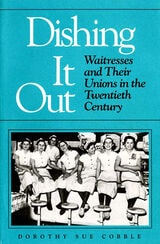
Dishing It Out
Waitresses and Their Unions in the Twentieth CenturyDorothy Sue Cobble
University of Illinois Press, 1991
Back when SOS or Adam and Eve on a raft were things to order if you were hungry but a little short on time and money, nearly one-fourth of all waitresses belonged to unions. By the time their movement peaked in the 1940s and 1950s, the women had developed a distinctive form of working-class feminism, simultaneously pushing for equal rights and pay and affirming their need for special protections.
Dorothy Sue Cobble shows how sexual and racial segregation persisted in wait work, but she rejects the idea that this was caused by employers' actions or the exclusionary policies of male trade unionists. Dishing It Out contends that the success of waitress unionism was due to several factors: waitresses, for the most part, had nontraditional family backgrounds, and most were primary wage-earners. Their close-knit occupational community and sex-separate union encouraged female assertiveness and a decidedly unromantic view of men and marriage. Cobble skillfully combines oral interviews and extensive archival records to show how waitresses adopted the basic tenets of male-dominated craft unions but rejected other aspects of male union culture. The result is a book that will expand our understanding of feminism and unionism by including the gender conscious perspectives of working women.
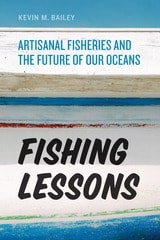
Fishing Lessons
Artisanal Fisheries and the Future of Our OceansKevin M. Bailey
University of Chicago Press, 2018
Bailey knows these waters, the artisanal fisheries, and their relationship with larger ocean ecology intimately. In a series of place-based portraits, he shares stories of decline and success as told by those at the ends of the long lines and hand lines, channeling us through the changing dynamics of small-scale fisheries and the sustainability issues they face—both fiscal and ecological. We encounter Paolo Vespoli and his tiny boat, the Giovanni Padre,in the Gulf of Naples; Wenche, a sea Sámi, one of the indigenous fisherwomen of Norway; and many more. From salmon to abalone, the Bay of Fundy to Monterey and the Amazon, Bailey’s catch is no fish tale. It is a global story, casting a net across waters as vast and distinct as Puget Sound and the Chilean coast. Sailing across the world, Bailey explores the fast-shifting current of how we gather food from the sea, what we gain and what we lose with these shifts, and potential solutions for the murky passage ahead.
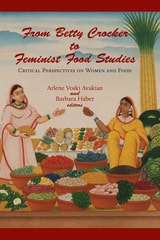
From Betty Crocker to Feminist Food Studies
Critical Perspectives on Women and FoodArlene Voski Avakian
University of Massachusetts Press, 2005
Applying the insights of feminist scholarship to the study of food, the thirteen essays in this volume are arranged under four headings—the marketplace, histories, representations, and resistances. The editors open the book with a substantial introduction that traces the history of scholarly writing on food and maps the terrain of feminist food studies. In the essays that follow, contributors pay particular attention to the ways in which gender, race, ethnicity, class, colonialism, and capitalism have both shaped and been shaped by the production and consumption of food.
In the first section, four essays analyze the influence of large corporations in determining what came to be accepted as proper meals in the United States, including what mothers were expected to feed their babies. The essays in the second section explore how women have held families together by keeping them nourished, from the routines of an early nineteenth-century New Englander to the plight of women who endured the siege of Leningrad.
The essays in the third section focus on the centrality of gender and race in the formation of identities as enacted through food discourse and practices. These case studies range from the Caribbean to the San Luis Valley of Colorado. The final section documents acts of female resistance within the contexts of national or ethnic oppression. From women in colonial India to Armenian American feminists, these essays show how food has served as a means to assert independence and personal identity.
In addition to the editors, contributors include Amy Bentley, Carole M. Counihan, Darra Goldstein, Nancy Jenkins, Alice P. Julier, Leslie Land, Laura Lindenfield, Beheroze F. Shroff, Sharmila Sen, Laura Shapiro, and Jan Whitaker.
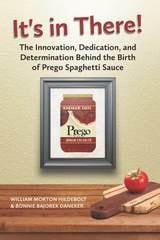
It's in There!®
William Morton Hildebolt and Bonnie Bajorek Daneker
The Ohio State University Press, 2017
Prego Spaghetti Sauce has been a flagship product in Campbell Soup Company’s portfolio for more than thirty years. This book showcases the creativity, science, and determination that were key to Prego’s development. From the tomato breeding to the recipe formulation to the engineering and mechanical feats necessary for production—not to mention the marketing research and advertising efforts needed to position Prego in the marketplace—It's In There!® is a memoir-based product history of an iconic brand found today in kitchens around the world.
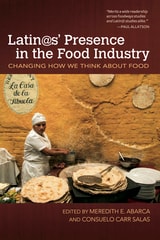
Latin@s' Presence in the Food Industry
Changing How We Think about FoodMeredith E. Abarca
University of Arkansas Press, 2016
The networks Latin@s create, the types of identities they fashion through food, and their relationship to the US food industry are analyzed to understand Latin@s as active creators of food-based communities, as distinctive cultural representations, and as professionals. This vibrant new collection acknowledges issues of labor conditions, economic politics, and immigration laws—structural vulnerabilities that certainly cannot be ignored—and strives to understand more fully the active and conscious ways that Latina@s create spaces to maneuver global and local food systems.
Local Vino
The Winery Boom in the HeartlandJames R. Pennell
University of Illinois Press, 2016
In Local Vino, James R. Pennell tracks among the hardy vines and heartland terroir of wineries across Illinois, Iowa, Indiana, and Ohio. Blending history and observation, Pennell gives us a top-down view of the business from cuttings and cultivation to sales and marketing. He also invites entrepreneurs to share stories of their ambitions, hard work, and strategies. Together, author and subjects trace the hows and whys of progress toward that noblest of goals: a great vintage that puts their winery on the map.
Making It
Success in the Commercial KitchenEllen T. Meiser
Rutgers University Press, 2025
Making It explores how the career path of restaurant workers depends on their accumulation of kitchen capital, a cultural asset based not only on their ability to cook but also on how well they can fit into the workplace culture and negotiate its hierarchical structures. After spending 120 hours working in a restaurant kitchen and interviewing fifty chefs and cooks from fine-dining establishments and greasy-spoon diners across the country, sociologist Ellen Meiser discovers many strategies for accumulating kitchen capital. For some, it involves education and the performance of expertise; others climb the ranks by controlling their own emotions or exerting control over coworkers. Making It offers a close and personal look at how knowledge, power, and interpersonal skills come together to determine who succeeds and who fails in the high-pressure world of the restaurant kitchen.
Making Mill City
Flour and Fortune in MinneapolisRobert M. Frame III
University of Minnesota Press, 2026
A richly illustrated history of the flour factories that transformed the milling industry worldwide—and forever changed the culture and architecture of Minneapolis
Among the most consequential advances of the Industrial Revolution was the invention of the modern roller mill, which sent the traditional millstone into obsolescence and fundamentally changed the production of a key ingredient to feeding the world. The culture and landscape of its hometown, Minneapolis, Minnesota, was altered as well, and Making Mill City tells the story of how revolutionary technologies originating at St. Anthony Falls on the Mississippi River put Minneapolis on the map and cemented its global status as “Mill City.”
With deep historical detail and abundant illustrations, Robert M. Frame III charts the dramatic transformation of Minneapolis milling—and urban life—between the early 1870s and 1920s. Two machines propelled this change: the middlings purifier and the modern roller mill. Enabling millers to grind hard Upper Midwestern spring wheat, these innovations gave rise to the “mammoth mills” and ever-expanding flour factories that would soon dominate the Minneapolis riverfront. Prominent entrepreneurs like those who gave their names to the Washburn and Pillsbury A Mills were significant, but Frame foregrounds the crucial roles of the millers, millwrights, and engineers who designed and equipped the massive new factories, as well as the editor of the legendary weekly trade publication Northwestern Miller, to paint a picture of the vibrant and diverse culture that grew around this industrial phenomenon.
A rich narrative describing how Minneapolis became the largest producer and exporter of wheat flour for more than fifty years, Making Mill City captures a critical chapter in the history of the city. Art and architecture inspired by mills and millers stand today as National Historic Landmarks, and the development and success of the current thriving metropolis have strong foundations in its milling history.

Milk Shake
Abundance and Loss in America’s DairylandGarbo Wedde
Wisconsin Historical Society Press, 2027
The story of how today’s dairy farmers are navigating a historic crossroads of agriculture and rural life in a rapidly changing world.
For generations, the dairy farmer has embodied the character, resilience, and values of the Midwest. Yet between 2005 and 2020, Wisconsin—known as America’s Dairyland—lost half of its dairy farms, marking one of the most profound economic and cultural transformations in its history. In Milk Shake: Abundance and Loss in America’s Dairyland, journalist Garbo Wedde delivers a thorough and emotionally resonant portrait of the farm families living through this time of change in rural life.
Drawing on extensive research and candid conversations with dozens of dairy farmers and industry stakeholders, Wedde looks beyond statistics to reveal the human stories behind the decline of the small family dairy farm. At the heart of the book are four Wisconsin farm families grappling with an uncertain future and how to respond: one leaves the industry, one embraces automation, one finds hope in a new generation willing to carry on the work, and one faces mounting financial strain that culminates in tragedy.
Interwoven among these narratives is a penetrating examination of the rise of large-scale industrial farms, their economic and environmental impacts, and the ways communities are responding. Wedde also explores the political, economic, demographic, and cultural forces reshaping dairy farming, from environmental regulation and labor shortages to gerrymandering, changing consumer preferences, and growing consolidation of small farms into agribusiness.
Richly observed scenes—from dairy breakfasts and farm auctions to public hearings on concentrated animal feeding operations (CAFOs)—bring readers inside a world that is both quintessentially American and increasingly endangered. Part social history and part elegy, Milk Shake captures a pivotal moment in America’s Dairyland while exploring questions that reach far beyond Wisconsin: What is lost when family farms disappear, and what does that loss mean for the communities, traditions, and values they sustain?

Mind and Labor on the Farm in Black-Earth Russia, 1861-1914
David Kerans
Central European University Press, 2001

Outbreak
Foodborne Illness and the Struggle for Food SafetyTimothy D. Lytton
University of Chicago Press, 2019
With Outbreak, Timothy D. Lytton provides an up-to-date history and analysis of the US food safety system. He pays particular attention to important but frequently overlooked elements of the system, including private audits and liability insurance.
Lytton chronicles efforts dating back to the 1800s to combat widespread contamination by pathogens such as E. coli and salmonella that have become frighteningly familiar to consumers. Over time, deadly foodborne illness outbreaks caused by infected milk, poison hamburgers, and tainted spinach have spurred steady scientific and technological advances in food safety. Nevertheless, problems persist. Inadequate agency budgets restrict the reach of government regulation. Pressure from consumers to keep prices down constrains industry investments in safety. The limits of scientific knowledge leave experts unable to assess policies’ effectiveness and whether measures designed to reduce contamination have actually improved public health. Outbreak offers practical reforms that will strengthen the food safety system’s capacity to learn from its mistakes and identify cost-effective food safety efforts capable of producing measurable public health benefits.

Pure Adulteration
Cheating on Nature in the Age of Manufactured FoodBenjamin R. Cohen
University of Chicago Press, 2019
In the latter nineteenth century, extraordinary changes in food and agriculture gave rise to new tensions in the ways people understood, obtained, trusted, and ate their food. This was the Era of Adulteration, and its concerns have carried forward to today: How could you tell the food you bought was the food you thought you bought? Could something manufactured still be pure? Is it okay to manipulate nature far enough to produce new foods but not so far that you question its safety and health? How do you know where the line is? And who decides?
In Pure Adulteration, Benjamin R. Cohen uses the pure food crusades to provide a captivating window onto the origins of manufactured foods and the perceived problems they wrought. Cohen follows farmers, manufacturers, grocers, hucksters, housewives, politicians, and scientific analysts as they struggled to demarcate and patrol the ever-contingent, always contested border between purity and adulteration, and as, at the end of the nineteenth century, the very notion of a pure food changed.
In the end, there is (and was) no natural, prehuman distinction between pure and adulterated to uncover and enforce; we have to decide. Today’s world is different from that of our nineteenth-century forebears in many ways, but the challenge of policing the difference between acceptable and unacceptable practices remains central to daily decisions about the foods we eat, how we produce them, and what choices we make when buying them.

Sick Planet
Corporate Food and MedicineStan Cox
Pluto Press, 2008
Neoliberals often point to improvements in public health and nutrition as examples of globalisation's success, but this book argues that the corporate food and medicine industries are destroying environments and ruining living conditions across the world.
Scientist Stan Cox expertly draws out the strong link between Western big business and environmental destruction. This is a shocking account of the huge damage that drug manufacturers and large food corporations are inflicting on the health of people and crops worldwide. Companies discussed include Wal-Mart, GlaxoSmithKline, Tyson Foods and Monsanto. On issues ranging from the poisoning of water supplies in South Asia to natural gas depletion and how it threatens global food supplies, Cox shows how the demand for profits is always put above the public interest.
While individual efforts to "shop for a better world" and conserve energy are laudable, Cox explains that they need to be accompanied by an economic system that is grounded in ecological sustainability if we are to find a cure for our Sick Planet.

Slaughterhouse
Chicago's Union Stock Yard and the World It MadeDominic A. Pacyga
University of Chicago Press, 2015
Slaughterhouse tells the story of the Union Stock Yard, chronicling the rise and fall of an industrial district that, for better or worse, served as the public face of Chicago for decades. Dominic A. Pacyga is a guide like no other—he grew up in the shadow of the stockyards, spent summers in their hog house and cattle yards, and maintains a long-standing connection with the working-class neighborhoods around them. Pacyga takes readers through the packinghouses as only an insider can, covering the rough and toxic life inside the plants and their lasting effects on the world outside. He shows how the yards shaped the surrounding neighborhoods and controlled the livelihoods of thousands of families. He looks at the Union Stock Yard’s political and economic power and its sometimes volatile role in the city’s race and labor relations. And he traces its decades of mechanized innovations, which introduced millions of consumers across the country to an industrialized food system.
Once the pride and signature stench of a city, the neighborhood is now home to Chicago’s most successful green agriculture companies. Slaughterhouse is the engrossing story of the creation and transformation of one of the most important—and deadliest—square miles in American history.
Supersizing Urban America
How Inner Cities Got Fast Food with Government HelpChin Jou
University of Chicago Press, 2017
What doesn’t get mentioned in all this? The fact that the federal government helped create the obesity crisis in the first place—especially where it is strikingly acute, among urban African-American communities. Supersizing Urban America reveals the little-known story of how the U.S. government got into the business of encouraging fast food in inner cities, with unforeseen consequences we are only beginning to understand. Chin Jou begins her story in the late 1960s, when predominantly African-American neighborhoods went from having no fast food chain restaurants to being littered with them. She uncovers the federal policies that have helped to subsidize that expansion, including loan guarantees to fast food franchisees, programs intended to promote minority entrepreneurship, and urban revitalization initiatives. During this time, fast food companies also began to relentlessly market to urban African-American consumers. An unintended consequence of these developments was that low-income minority communities were disproportionately affected by the obesity epidemic.
In the first book about the U.S. government’s problematic role in promoting fast food in inner-city America, Jou tells a riveting story of the food industry, obesity, and race relations in America that is essential to understanding health and obesity in contemporary urban America.

Sweet Greeks
First-Generation Immigrant Confectioners in the HeartlandAnn Flesor Beck
University of Illinois Press, 2020
Ann Flesor Beck's charming personal account recreates the atmosphere of her grandfather's candy kitchen with its odors of chocolate and popcorn and the comings-and-goings of family members. "The Store" represented success while anchoring the business district of Gus's chosen home. It also embodied the Midwest émigré experience of chain migration, immigrant networking, resistance and outright threats by local townspeople, food-related entrepreneurship, and tensions over whether later generations would take over the business.
An engaging blend of family memoir and Midwest history, Sweet Greeks tells how Greeks became candy makers to the nation, one shop at a time.
Taking the Heat
Women Chefs and Gender Inequality in the Professional KitchenHarris, Deborah A
Rutgers University Press, 2015
Click here to access the Taking the Heat teaching guide (https://d3tto5i5w9ogdd.cloudfront.net/wp-content/uploads/2021/09/02142601/Taking-the-Heat-Questions-for-Instructors.docx).

The Collectivization of Agriculture in Communist Eastern Europe
Comparison and EntanglementsConstantin Iordachi
Central European University Press, 2014
The Fair Trade Scandal
Marketing Poverty to Benefit the RichNdongo Sylla
Ohio University Press, 2014
This critical account of the fair trade movement explores the vast gap between the rhetoric of fair trade and its practical results for poor countries, particularly those of Africa. In the Global North, fair trade often is described as a revolutionary tool for transforming the lives of millions across the globe. The growth in sales for fair trade products has been dramatic in recent years, but most of the benefit has accrued to the already wealthy merchandisers at the top of the value chain rather than to the poor producers at the bottom.
Ndongo Sylla has worked for Fairtrade International and offers an insider’s view of how fair trade improves—or doesn’t—the lot of the world’s poorest. His methodological framework first describes the hypotheses on which the fair trade movement is grounded before going on to examine critically the claims made by its proponents. By distinguishing local impact from global impact, Sylla exposes the inequity built into the system and the resulting misallocation of the fair trade premium paid by consumers. The Fair Trade Scandal is an empirically based critique of both fair trade and traditional free trade; it is the more important for exploring the problems of both from the perspective of the peoples of the Global South, the ostensible beneficiaries of the fair trade system.
The Problem with Feeding Cities
The Social Transformation of Infrastructure, Abundance, and Inequality in AmericaAndrew Deener
University of Chicago Press, 2020
The Problem with Feeding Cities is a sociological and historical examination of how this remarkable network of abundance and convenience came into being over the last century. It looks at how the US food system transformed from feeding communities to feeding the entire nation, and it reveals how a process that was once about fulfilling basic needs became focused on satisfying profit margins. It is also a story of how this system fails to feed people, especially in the creation of food deserts. Andrew Deener shows that problems with food access are the result of infrastructural failings stemming from how markets and cities were developed, how distribution systems were built, and how organizations coordinate the quality and movement of food. He profiles hundreds of people connected through the food chain, from farmers, wholesalers, and supermarket executives, to global shippers, logistics experts, and cold-storage operators, to food bank employees and public health advocates. It is a book that will change the way we see our grocery store trips and will encourage us all to rethink the way we eat in this country.
The Slow Food Story
Politics and PleasureGeoff Andrews
Pluto Press, 2008
The Slow Food movement was set up in Italy as a response to the dominance of fast food chains, supermarkets and large-scale agribusiness. It seeks to defend what it calls 'the universal right to pleasure' and promotes an alternative approach to food production and consumption based on the promotion of 'good, clean and fair' local products.
This is the first in-depth study of the fascinating politics of Slow Food, which in twenty years has grown into an international organisation with more than 80,000 members in over 100 countries. With its roots in the 1960s and 1970s counter-culture, Slow Food's distinctive politics lie in the unity between gastronomic pleasure and environmental responsibility. The movement crosses the left-right divide to embrace both the conservative desire to preserve traditional rural communities and an alternative 'virtuous' idea of globalisation.
Geoff Andrews shows that the alternative future embodied in Slow Food extends to all aspects of modern life. The Slow Food Story presents an extensive new critique of fast-moving, work-obsessed contemporary capitalist culture.