Results by title
4 books match the query 'Food law and legislation'
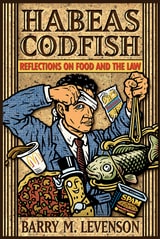
Habeas Codfish
Reflections on Food and the LawBarry M. Levenson
University of Wisconsin Press, 2001
From the McDonald’s hot coffee case to the cattle ranchers’ beef with Oprah Winfrey, from the old English "Assize of Bread" to current nutrition labeling laws, what we eat and how we eat are shaped as much by legal regulations as by personal taste. Barry M. Levenson, the curator of the world-famous (really!) Mount Horeb Mustard Museum and a self-proclaimed "recovering lawyer," offers in Habeas Codfish an entertaining and expert overview of the frustrating, frightening, and funny intersections of food and the law.
Discover how Mr. Peanut shaped the law of trademark infringement for the entire food industry. Consider the plight of the restaurant owner besmirched by a journalist’s negative review. Find out how traditional Jewish laws of kashrut ran afoul of the First Amendment. Prison meals, butter vs. margarine, definitions of organic food, undercover ABC reporters at the Food Lion, the Massachusetts Supreme Court case that saved fish chowder, even recipes—it’s all in here, so tuck in!
Knowing Where It Comes From
Labeling Traditional Foods to Compete in a Global MarketFabio Parasecoli
University of Iowa Press, 2017
Labeling regimes have moved beyond intellectual property to embrace community-based protections, intangible cultural heritage, cultural landscapes, and indigenous knowledge. Reflecting a rich array of juridical, regulatory, and activist perspectives, these approaches seek to level the playing field on which food producers and consumers interact.
Outlawed Pigs
Law, Religion, and Culture in IsraelDaphne Barak-Erez
University of Wisconsin Press, 2007
Daphne Barak-Erez specifically traces the course of two laws, one that authorized municipalities to ban the possession and trading in pork within their jurisdiction and another law that forbids pig breeding throughout Israel, except for areas populated mainly by Christians. Her analysis offers a comprehensive, decade-by-decade discussion of the overall relationship between law and culture since the inception of the Israeli nation-state.
By examining ever-fluctuating Israeli popular opinion on Israel's two laws outlawing the trade and possession of pigs, Barak-Erez finds an interesting and accessible way to explore the complex interplay of law, religion, and culture in modern Israel, and more specifically a microcosm for the larger question of which lies more at the foundation of Israeli state law: religion or cultural tradition.
The Politics of Purity
Harvey Washington Wiley and the Origins of Federal Food PolicyClayton A. Coppin and Jack High
University of Michigan Press, 1999