Results by title
24 books match the query 'Scholarship'
A Century of Scholarship
University of Arkansas School of Law Faculty Scholarship 1924–2023Steven R. Probst
Arkansas Scholarly Editions , 2024
Professor and librarian Steven R. Probst has served as head of public services for the University of Arkansas School of Law’s Young Law Library since 2019. He has taught and written extensively on legal research.
Beyond Method
Philosophical Conversations in Healthcare Research and ScholarshipEdited by Pamela M. Ironside
University of Wisconsin Press, 2005
Confronting Margaret Mead
Scholarship, Empire, and the South Pacificedited by Lenora Foerstel and Angela Gilliam
Temple University Press, 1994
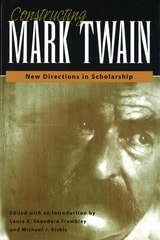
Constructing Mark Twain
New Directions in ScholarshipEdited with an introduction by Laura E. Skandera-Trombley and Michael J. Kiskis
University of Missouri Press, 2001
The thirteen essays in this collection combine to offer a complex and deeply nuanced picture of Samuel Clemens. With the purpose of straying from the usual notions of Clemens (most notably the Clemens/Twain split that has ruled Twain scholarship for over thirty years), the editors have assembled contributions from a wide range of Twain scholars. As a whole, the collection argues that it is time we approach Clemens not as a shadow behind the literary persona but as a complex and intricate creator of stories, a creator who is deeply embedded in the political events of his time and who used a mix of literary, social, and personal experience to fuel the movements of his pen.
The essays illuminate Clemens's connections with people and events not usually given the spotlight and introduce us to Clemens as a man deeply embroiled in the process of making literary gold out of everyday experiences. From Clemens's wonderings on race and identity to his looking to family and domesticity as defining experiences, from musings on the language that Clemens used so effectively to consideration of the images and processes of composition, these essays challenge long-held notions of why Clemens was so successful and so influential a writer. While that search itself is not new, the varied approaches within this collection highlight markedly inventive ways of reading the life and work of Samuel Clemens.
Feminist Biblical Studies in the Twentieth Century
Scholarship and MovementElisabeth Schüssler Fiorenza
SBL Press, 2014
Chart the development of feminist approaches and theories of interpretation during the period when women first joined the ranks of biblical scholars
This collection of essays on feminist biblical studies in the twentieth century seeks to explore four areas of inquiry demanding further investigation. In the first section, articles chart the beginnings and developments of feminist biblical studies as a conversation among feminists around the world. The second section introduces, reviews, and discusses the hermeneutic religious spaces created by feminist biblical studies. The third segment discusses academic methods of reading and interpretation that dismantle androcentric language and kyriarchal authority. The fourth section returns to the first with work that transgresses academic boundaries in order to exemplify the transforming, inspiring, and institutionalizing feminist work that has been and is being done to change religious mindsets of domination and to enable wo/men to engage in critical readings of the Bible.
Features:
- Essays examine the rupture or break in the malestream reception history of the Bible
- Exploration of the term feminism in different social-cultural and theoretical-religious locations
- Authors from around the world present research and future directions for research challenging the next generation of feminist interpreters

Framing Information Literacy (PIL#73) Volume Five
Scholarship as ConversationJanna L. Mattson
American Library Association, 0
Greater Chaco Landscape
Ancestors, Scholarship, and AdvocacyRuth M. Van Dyke
University Press of Colorado, 2020
Contributors analyze many different dimensions of the Chacoan landscape and present the most effective, innovative, and respectful means of studying them, focusing on the significance of thousand-year-old farming practices; connections between early great houses outside the canyon and the rise of power inside it; changes to Chaco’s roads over time as observed in aerial imagery; rock art throughout the greater Chaco area; respectful methods of examining shrines, crescents, herraduras, stone circles, cairns, and other landscape features in collaboration with Indigenous colleagues; sensory experiences of ancient Chacoans via study of the sightlines and soundscapes of several outlier communities; and current legal, technical, and administrative challenges and options concerning preservation of the landscape.
An unusually innovative and timely volume that will be available both in print and online, with the online edition incorporating video chapters presented by Acoma, Diné, Zuni, and Hopi cultural experts filmed on location in Chaco Canyon, The Greater Chaco Landscape is a creative collaboration with Native voices that will be a case study for archaeologists and others working on heritage management issues across the globe. It will be of interest to archaeologists specializing in Chaco and the Southwest, interested in remote sensing and geophysical landscape-level investigations, and working on landscape preservation and phenomenological investigations such as viewscapes and soundscapes.
Contributors: R. Kyle Bocinsky, G. B. Cornucopia, Timothy de Smet, Sean Field, Richard A. Friedman, Dennis Gilpin, Presley Haskie, Tristan Joe, Stephen H. Lekson, Thomas Lincoln, Michael P. Marshall, Terrance Outah, Georgiana Pongyesva, Curtis Quam, Paul F. Reed, Octavius Seowtewa, Anna Sofaer, Julian Thomas, William B. Tsosie Jr., Phillip Tuwaletstiwa, Ernest M. Vallo Jr., Carla R. Van West, Ronald Wadsworth, Robert S. Weiner, Thomas C. Windes, Denise Yazzie, Eurick Yazzie
Hacking the Academy
New Approaches to Scholarship and Teaching from Digital HumanitiesDaniel J. Cohen and Tom Scheinfeldt, Editors
University of Michigan Press, 2013
On May 21, 2010, Daniel J. Cohen and Tom Scheinfeldt posted the following provocative questions online:
“Can an algorithm edit a journal? Can a library exist without books? Can students build and manage their own learning management platforms? Can a conference be held without a program? Can Twitter replace a scholarly society?”
As recently as the mid-2000s, questions like these would have been unthinkable. But today serious scholars are asking whether the institutions of the academy as they have existed for decades, even centuries, aren’t becoming obsolete. Every aspect of scholarly infrastructure is being questioned, and even more importantly, being hacked. Sympathetic scholars of traditionally disparate disciplines are canceling their association memberships and building their own networks on Facebook and Twitter. Journals are being compiled automatically from self-published blog posts. Newly minted PhDs are forgoing the tenure track for alternative academic careers that blur the lines between research, teaching, and service. Graduate students are looking beyond the categories of the traditional CV and building expansive professional identities and popular followings through social media. Educational technologists are “punking” established technology vendors by rolling out their own open source infrastructure.
Here, in Hacking the Academy, Daniel J. Cohen and Tom Scheinfeldt have gathered a sampling of the answers to their initial questions from scores of engaged academics who care deeply about higher education. These are the responses from a wide array of scholars, presenting their thoughts and approaches with a vibrant intensity, as they explore and contribute to ongoing efforts to rebuild scholarly infrastructure for a new millennium.
History and Hope in the Heart of Dixie
Scholarship, Activism, and Wayne Flynt in the Modern SouthEdited by Gordon E. Harvey, Richard D. Starnes and Glenn Feldman
University of Alabama Press, 2006
Exploring the history, challenges, and promise of a changing South through the legacy of Wayne Flynt.
This collection of essays on the social and political history of the modern South consider the region’s poor, racial mores and race relations, economic opportunity, Protestant activism, political coalitions and interest groups, social justice, and progressive reform. History and Hope in the Heart of Dixie illuminates the dual role of historian and public advocate in modern America. In a time when the nation’s eyes have been focused by Hurricanes Katrina and Rita onto the vulnerability and dire condition of poor people in the South, the applicability of research, teaching, and activism for this voiceless element seems all the more relevant.
Responding to the example of Wayne Flynt, whose fierce devotion to his state of Alabama and its region has not blinded his recognition of the inequities and despair that define southern life for so many, the scholars assembled in this work present contributions to the themes Flynt so passionately explored in his own work.Two seasoned observers of southern history and culture—John Shelton Reed and Dan T. Carter—offer assessments of Flynt’s influence on the history profession as a whole and on the region of the South in particular.
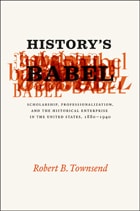
History's Babel
Scholarship, Professionalization, and the Historical Enterprise in the United States, 1880 - 1940Robert B. Townsend
University of Chicago Press, 2012
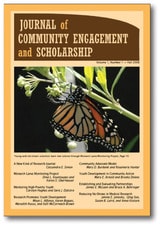
Journal of Community Engagement and Scholarship, Vol 1 No 1
Fall 2008Cassandra E. Simon
University of Alabama Press, 2008
The Journal of Community Engagement and Scholarship (JCES) is a peer-reviewed international journal through which faculty, staff, students, and community partners disseminate scholarly works. JCES integrates teaching, research, and community engagement in all disciplines, addressing critical problems identified through a community-participatory process.
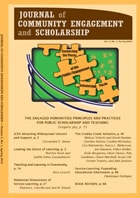
Journal of Community Engagement and Scholarship, Vol 3, No 1
Spring 2010Cassandra E. Simon
University of Alabama Press, 2010
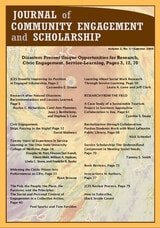
Journal of Community Engagement and Scholarship, Vol. 2 No. 1
Summer 2009Cassandra E. Simon
University of Alabama Press, 2010
Migration Stories
Connecting Activism, Policy, and ScholarshipEdited by Benjamin Gatling
University of Illinois Press, 2025
Ranging from oral history projects to the asylum process to calls for decolonial justice, the contributors’ analyses illuminate how migrants’ and refugees’ personal narratives influence both perceptions and policies. Their merger of perspectives provides a nuanced understanding of migration and emphasizes the importance of how storytelling can foster empathy, challenge stereotypes, and drive social change. At the same time, the essays center migrants’ and refugees’ voices within public debates and in work done to humanize the reality they face.
Original and multifaceted, Migration Stories provides a vital addition to how we study and frame immigration.
On Making in the Digital Humanities
The Scholarship of Digital Humanities Development in Honour of John BradleyEdited by Julianne Nyhan, Geoffrey Rockwell, Stéfan Sinclair, and Alexandra Ortolja-Baird
University College London, 2023
On Making in the Digital Humanities fills a gap in our understanding of digital humanities projects and craft by exploring the processes of making as much as the products that arise from it. Focusing on the interwoven layers of human and technological textures that constitute digital humanities scholarship, it assembles a group of well-known, experienced, and emerging scholars in the digital humanities to reflect on various forms of making. The chapters gathered here are individually important, but together provide a very human view of what it is to do the digital humanities, in the past, present, and future. This book will accordingly be of interest to researchers, teachers, and students of the digital humanities; creative humanities, including maker spaces and culture; information studies; the history of computing and technology; and the history of science and the humanities.
Politics and Scholarship
Feminist Academic Journals and the Production of KnowledgePatrice McDermott
University of Illinois Press, 1994
-- J'nana Morse Sellery, coauthor of Elizabeth Bowen: A Bibliography

Scholarship In The Sandbox
Amy Jackson
Assoc of College & Research Libraries, 2019
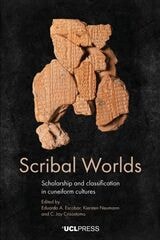
Scribal Worlds
Scholarship and Classification in Cuneiform CulturesEdited by Eduardo A. Escobar, Kiersten Neumann, and C. Jay Crisostomo
University College London, 2026
Revealing the scholarly worlds behind the world’s first writing system, this volume explores how cuneiform cultures classified, transmitted, and interpreted knowledge.
Cuneiform is the world’s first preserved writing system, yet cuneiform texts and the associated cultures and practices remain undervalued across several disciplines. Scribal Worlds: Scholarship and Classification in Cuneiform Cultures explores the history of the earliest writing cultures of the ancient Middle East. Case studies reconstruct the intellectual frameworks and the transmission of knowledge of scribal cultures to show how specific texts and objects can be interpreted within their cultural contexts.
The Grounded Instruction Librarian
Participating in The Scholarship of Teaching and LearningMelissa Mallon
Assoc of College & Research Libraries, 2019
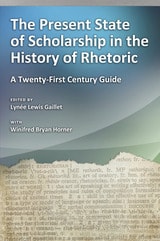
The Present State of Scholarship in the History of Rhetoric
A Twenty-First Century GuideEdited by Lynée Lewis Gaillet & Winifred Bryan Horner
University of Missouri Press, 2010
Adopting research methodologies of revision and recovery, this latest edition includes all new material while still following the format of the original and is constructed around bibliographical surveys of both primary and secondary works addressing the Classical, Medieval, Renaissance, and eighteenth through twentieth century periods within the history of rhetoric. The Present State of Scholarship in the History of Rhetoric doesn’t simply update but rather recasts study in the history of rhetoric.
The authors—experienced and well-known scholars in their respective fields—redefine existing strands of rhetorical study within the periods, expand the scope of rhetorical engagement, and include additional figures and their works. The globalization and expansion of rhetoric are demonstrated in each of these parts and seen clearly in the inclusion of more female rhetors, discussions of historical and contemporary electronic resources, and examinations of rhetorical practices falling outside the academy and the traditional canon.
As programs incorporating rhetorical studies continue to expand at the university level, students and researchers are in need of up-to-date bibliographical resources. No other work matches the scope and approach of The Present State of Scholarship in the History of Rhetoric, which carries scholarship on rhetoric into the twenty-first century.

The Present State of Scholarship in the History of Rhetoric
A Twenty-First Century GuideEdited by Lynée Lewis Gaillet & Winifred Bryan Horner
University of Missouri Press, 0
The Signs Reader
Women, Gender, and ScholarshipEdited by Elizabeth Abel and Emily K. Abel
University of Chicago Press, 1983
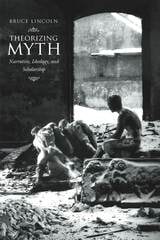
Theorizing Myth
Narrative, Ideology, and ScholarshipBruce Lincoln
University of Chicago Press, 2000
He begins by showing that mythos yielded to logos not as part of a (mythic) "Greek miracle," but as part of struggles over political, linguistic, and epistemological authority occasioned by expanded use of writing and the practice of Athenian democracy. Lincoln then turns his attention to the period when myth was recuperated as a privileged type of narrative, a process he locates in the political and cultural ferment of the eighteenth and nineteenth centuries. Here, he connects renewed enthusiasm for myth to the nexus of Romanticism, nationalism, and Aryan triumphalism, particularly the quest for a language and set of stories on which nation-states could be founded.
In the final section of this wide-ranging book, Lincoln advocates a fresh approach to the study of myth, providing varied case studies to support his view of myth—and scholarship on myth—as ideology in narrative form.
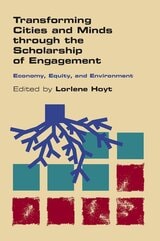
Transforming Cities and Minds through the Scholarship of Engagement
Economy, Equity, and EnvironmentLorlene Hoyt
Vanderbilt University Press, 2013
Across the country from Camden to Oakland, the contributors engaged with community partners--hospitals, churches, community development corporations, community foundations, and other rooted institutions--to help restore old cities to life. Their collaborative thesis project engaged them with one another and university staff; it may offer a new paradigm for graduate education.