Results by title
52 books match the query 'Foreign speakers' and 7 start with a
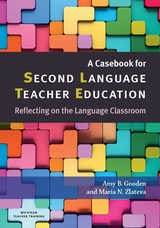
A Casebook for Second Language Teacher Education
Reflecting on the Language ClassroomAmy B. Gooden and Maria N. Zlateva
University of Michigan Press, 2018
The cases represent a range of classroom contexts: K–12 ESL/sheltered English immersion, modern foreign language, and post-secondary EAP; private, charter, and public schools; and urban and suburban settings. The book is ideally suited to College/School of Education and MA TESOL courses but will also be useful in professional development workshops for all types of language teachers.
A Practical Guide to Assessing English Language Learners
Christine Coombe, Keith Folse, and Nancy Hubley
University of Michigan Press, 2007
Tips to improve students’ test-taking strategies are offered, and each chapter ends with a helpful list of Ten Things to Remember, as well as informative case studies featuring two teachers and their assessment decisions. Incorporating its own principles, A Practical Guide to Assessing English Language Learners opens with a short quiz for the reader called Are You Testwise? that quickly determines how each teacher will benefit from this indispensable guide.

Academic Listening Strategies
A Guide to Understanding LecturesJulia Salehzadeh
University of Michigan Press, 2005
Unit 1 begins with a diagnostic exercise to help students identify areas of lecture comprehension that may be most difficult for them. In Unit 2, students are introduced to some key bottom-up features (sound or word-level patterns) in everyday speech and given helpful strategies to begin unscrambling the stream of language that they will encounter in lectures. Unit 3 gives students a detailed look at common patterns in lectures and presents additional strategies that will help them to understand definitions, opinions, and jokes.
By the end of the book, students will gain the skills necessary to:
" Prepare for lectures
" Listen more effectively during lectures
" Recognize what information may have been missed
" Compensate for missed information with methods other than reading and rereading the assigned texts.
The book is also sold packaged with the DVDs. The DVDs are NOT sold separately.
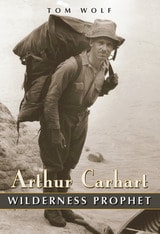
Arthur Carhart
Wilderness ProphetTom Wolf
University Press of Colorado, 2025
Arthur Carhart (1892-1978), America's first champion of wilderness, the first Forest Service landscape architect, and the most popular conservation writer of mid-century America, never won the titan status of his contemporary, Aldo Leopold. A political maverick, he refused to side with any major advocacy group and none has made him its saint. Carhart was a grassroots thinker in a top-down era.
Arthur Carhart, the first biography of this Republican environmentalist and major American thinker, writer, and activist, reveals the currency of his ideas. Tom Wolf elucidates Carhart 's vision of conservation as "a job for all of us," with citizens, municipal authorities, and national leaders all responsible for the environmental effects of their decisions. Carhart loved the local and decried interest groups—from stockmens' associations to wilderness lobbies—as cliques attempting blanket control. He pressured land management agencies to base decisions on local ecology and local partnerships. A lifelong wilderness advocate who proposed the first wilderness preserve at Trappers Lake, Colorado, in 1919, Carhart chose to oppose the Wilderness Act, heartsick at its compromises with lobbies.
Because he shifted his stance and changed his views in response to new information, Carhart is not an easy subject for a biography. Wolf traces Carhart's twists and turns to show a man whose voice was distinctive and contrary and who spoke from a passionate concern for the land and couldn't be counted on for anything else. Readers of American history and outdoor writing will enjoy this portrait of a historic era in conservation politics and the man who so often eschewed politics in favor of the land and people he loved.
Assessing English Language Learners in the Content Areas
A Research-into-Practice Guide for EducatorsFlorin M. Mihai
University of Michigan Press, 2010
Assessing English Language Learners in the Content Areas: A Research-into-Practice Guide for Educators seeks to provide guidance to classroom teachers, staff developers, and test-item designers who want to improve ELL assessment outcomes, particularly in the areas of math, science and social studies. The first two chapters of the book establish the background for the discussion of content-area assessment for ELLs, examining several important characteristics of this rapidly growing student population (as well as critical legislation affecting ELLs) and providing a description of various forms of assessment, including how ELL assessment is different from the assessment of English-proficient students. Important assessment principles that educators should use in their evaluation of tests or other forms of measurement are provided.
Other chapters review ELL test accommodations nationwide (because, surprisingly, most teachers do not know what they can and cannot allow) and the research on the effectiveness of these types of accommodations. The book analyzes the characteristics of alternative assessment; it discusses three popular alternative assessment instruments (performance assessment, curriculum-based measurement, and portfolios) and makes recommendations as to how to increase the validity, reliability, and practicality of alternative assessments. The book proposes fundamental assessment practices to help content area teachers in their evaluation of their ELL progress.
Assessing English Learners in the Content Areas, Second Edition
A Research-into-Practice Guide for EducatorsFlorin M. Mihai
University of Michigan Press, 2017
Significant modifications in education legislation since the publication of the first edition have necessitated this new volume, which includes updated EL demographics as they relate to the Common Core Standards and Every Student Succeeds Act and revised state-by-state test accommodation information. New to this edition is information about the assessment of language arts (in addition to math, science, and social studies). The Second Edition also features new research-based recommendations for large-scale and classroom-based assessments.
Like the previous edition, the first two chapters of the book establish the background for the discussion of content-area assessment for ELs, examining several important characteristics of this rapidly growing student population and providing a description of various forms of assessment, including how EL assessment is different from the assessment of English-proficient students. Important assessment principles that educators should use in their evaluation of tests or other forms of measurement are provided.
Other chapters review EL test accommodations nationwide (because, surprisingly, most teachers do not know what they can and cannot allow) and the research on the effectiveness of these types of accommodations. The book analyzes the characteristics of alternative assessment and makes recommendations as to how to increase the validity, reliability, and practicality of alternative assessments. The book proposes fundamental assessment practices to help content area teachers in their evaluation of their students’ progress. Two extensive appendixes outline TESOL Proficiency Standards and academic vocabulary for the content areas.
Assessment in the Second Language Writing Classroom
Deborah Crusan
University of Michigan Press, 2010
Assessment in the Second Language Writing Classroom is a teacher and prospective teacher-friendly book, uncomplicated by the language of statistics. The book is for those who teach and assess second language writing in several different contexts: the IEP, the developmental writing classroom, and the sheltered composition classroom. In addition, teachers who experience a mixed population or teach cross-cultural composition will find the book a valuable resource. Other books have thoroughly covered the theoretical aspects of writing assessment, but none have focused as heavily as this book does on pragmatic classroom aspects of writing assessment. Further, no book to date has included an in-depth examination of the machine scoring of writing and its effects on second language writers.
Crusan not only makes a compelling case for becoming knowledgeable about L2 writing assessment but offers the means to do so. Her highly accessible, thought-provoking presentation of the conceptual and practical dimensions of writing assessment, both for the classroom and on a larger scale, promises to engage readers who have previously found the technical detail of other works on assessment off-putting, as well as those who have had no previous exposure to the study of assessment at all.