Results by title
15 books match the query 'Forestry'
An Environmental History of Knowledge and Politics
Forestry in Nineteenth- and Twentieth-Century HungaryRobert Balogh
Central European University Press, 2026

Balsam Fir
A Monographic ReviewE.V. Bakuzis and H.L. Hansen
University of Minnesota Press, 1965
Balsam Fir was first published in 1965. Minnesota Archive Editions uses digital technology to make long-unavailable books once again accessible, and are published unaltered from the original University of Minnesota Press editions.
Professors Bakuzis and Hansen, with the assistance of a number of co-authors of individual chapters, present an exhaustive survey of the literature on the balsam fir, providing a coherent picture of the species and its place in nature and forestry practice. The balsam fir is used extensively in the pulp and paper industry, and it is known to millions as a traditional Christmas tree. In North America it is a major tree species in Canada, in the northeastern United States, and in the Great Lakes region.
In the search of the literature, over 2000 sources were consulted and considerably more than half of them are cited in the book. The references, organized in an ecological framework, cover the period from the seventeenth century to the present. The authors have reviewed and integrated these data in a unified, but multipurposed, book. In the integration of the source material the authors also made contributions of their own. The book contains the following chapters: Botanical Foundations, Geography and Synecology, Ecological Factors, Microbiology, Entomology, Reproduction, Stand Development, Growth and Yield, and Utilization. Appendixes list fungi and myxomycetes and insects associated with balsam fir. There are 30 illustrations, including a frontispiece drawing by the noted nature artist Francis Lee Jaques.
The book will appeal to a wide range of readers specifically concerned with forestry, including research workers, educators, entomologists, pathologists, and managing foresters, as well as conservationists and wildlife biologist in general.

Chainsaw Love
Field Notes on the World's Most Dynamic Power ToolJames Card
Wisconsin Historical Society Press, 2025
Behold the mighty chainsaw and discover its history, its influence, and its people
Considered the most powerful of all hand tools, the chainsaw has been vital to contemporary life in ways large, small, and sometimes surprising since it first came on the market in the 1940s. In Chainsaw Love, author James Card celebrates this formidable implement in unflinching style, sharing stories and reflections about the world of chainsaws and the people who use and appreciate them.
Card describes the personal freedom that comes from harvesting your own trees for firewood and introduces readers to lumberjack competitors, hot-saw builders, and the sculpture carvers who take sawing to new heights. Chainsaw Love asserts the key role chainsaws play in clearing the right-of-way for powerlines to keep the electrical grid humming; in forestry and conservation efforts to maintain desirable ecosystems; and in the sciences, where ecologists and astronomers use chainsaws to age trees for scientific research. Card also considers the chainsaw’s place in pop culture, from movies to rock songs to presidential photo ops.
Readers of Chainsaw Love will discover the lore and terminology of forests and wood cutting— widow makers and windthrows, witness trees and barber chairs, pumpkin pine, devil’s forks, cat faces, and schoolmarms. Additionally, the book offers insights into chainsaw variations and parts, guidelines for saw care and maintenance, safety recommendations, and other hard-won tips and tricks. Dozens of photos from the field, as well as helpful diagrams, add to readers’ understanding of the saw’s evolution and modern use.
Part homage, part social history, and part field guide, Chainsaw Love is the perfect book for chainsaw users of all stripes—from loggers to conservationists, woodworkers to weekend cabin-dwellers—and anyone curious about this magnificent and underappreciated machine.
Christmas Trees for Pleasure and Profit
Wray, Robert D
Rutgers University Press, 2008
A perennial bestseller, this illustrated guide covers selecting land, choosing species, planting, harvesting, and managing a plantation. Wray provides guidance for choosing species suitable for the grower's situation, where and how to get planting stock, and how to care for it. The planting process is described in detail, including both hand and machine methods. The book presents useful techniques for protecting the growing trees from weeds, animals, fire, insects, and disease, and offers a full description of shearing or shaping trees to improve their form and densityùkeys to a successful crop.
As the grower's job is not done until the trees are sold, issues of grading, harvesting, advertising, and marketing are examined. A chapter on finances deals with costs, profits, and taxes. From novice to experienced grower, there is something in this book for everyone.
Economics of Forestry and Rural Development
An Empirical Introduction from AsiaWilliam F. Hyde and Gregory S. Amacher, and Colleagues
University of Michigan Press, 2000
Environmental Ethics and Forestry
Peter List
Temple University Press, 2000
This rising tide of public scrutiny has led many foresters to suspect that their "contract" with society to manage forests using their best professional judgment has been undermined. Some of these professionals, as well as some of their critics, have begun to reexamine their old beliefs and to look for new ways of practicing forestry. Part of this reflective process has entailed new directions in environmental ethics and environmental philosophy.
This reader brings together some of the new thinking in this area. Here students of the applied environmental and natural resource sciences, as well as the interested general reader, will discover a rich sampling of writings in environmental ethics and philosophy as they apply to forestry. Readings focus on basic ethical systems in forestry and forest management, philosophical issues in forestry ethics, codes of ethics in forestry and related natural resource sciences such as fisheries science and wildlife biology, Aldo Leopold's land ethic in forestry, ethical advocacy and whistleblowing in government resource agencies, the ethics of new forestry, ecoforestry, and public debate in forestry, as well as ethical issues in global forestry such as the responsibilities of forest corporations, environmentalists, and individual wood consumers.
The volume contains materials from the founders of forestry ethics, such as Bernhard Fernow, Giford Pinchot, John Muir, and Aldo Leopold; from such organizations as the Society of American Foresters, the Wildlife Society, the American Fisheries Society, Forest Service Employees for Environmental Ethics, and the Ecoforesters group, in addition to the writings by a variety of well-known environmental philosophers and foresters, including Holmes Rolston, Robin Attfield, Lawrence Johnson, Michael McDonald, Paul Wood, James E. Coufal, Raymond Craig, Kristin Shrader-Frechette, Jeff DeBonis, Jim L. Bowyer, Alasdair Gunn, Doug Daigle, Alan G. McQuillan, Stephanie Kaza, Alan Drengson, Duncan Taylor, and Kathleen Dean Moore.
From Backwoods to Boardrooms
The Rise of Institutional Investment in TimberlandDaowei Zhang
Oregon State University Press, 2021
Through a historical examination of key events and players, prevailing management philosophies, public policy, and institutional factors, Daowei Zhang searches for an economic explanation and assesses the impact of these ownership revolutions with a three-pronged approach. First, he explains why industrial firms were able to profit from owning forestlands, and how the shift to institutional ownership came about. Second, he compares private timberland investments and public equity investments with respect to risk-adjusted returns and other dimensions of interest to investors and forest managers, including alignment of interests, capacity to exploit market inefficiencies, and their forest management and conservation records. Finally, he provides thoughtful commentary on the future of institutional timberland investments and global forest sustainability.
From Backwoods to Boardrooms is essential reading for forest managers, investors, and anyone interested in understanding the workings of the modern forest sector and the future of forest sustainability.
Green Gold
Alabama's Forests and Forest IndustriesJames E. Fickle
University of Alabama Press, 2014
Green Gold is a thorough and valuable compilation of information on Alabama’s timber and forest products industry, the largest manufacturing industry in the state.
Alabama has the third-largest commercial forest in the nation, after only Georgia and Oregon. Fully two-thirds of the state’s land supports the growth of over fifteen billion trees on twenty-two million acres, which explains why Alabama looks entirely green from space. Green Gold presents the story of human use of and impact on Alabama’s forests from pioneer days to the present, as James E. Fickle chronicles the history of the industry from unbridled greed and exploitation through virtual abandonment to revival, restoration, and enlightened stewardship.
As the state’s largest manufacturing industry, forest products have traditionally included naval stores such as tar, pitch, and turpentine, especially in the southern longleaf stands; sawmill lumber, both hardwood and pine; and pulp and paper milling. Green Gold documents all aspects of the industry, including the advent of “scientific forestry” and the development of reforestation practices with sustained yields. Also addressed are the historical impacts of Native Americans and of early settlers who used axes, saws, and water- and steam-powered sawmills to clear and utilize forests. Along with an account of railroad logging and the big mills of the lumber bonanza days of the late nineteenth and early twentieth centuries, the book also chronicles the arrival of professional foresters to the state, who began to deal with the devastating legacy of “cut out and get out” logging and to fight the perennial curse of woods arson. Finally, Green Gold examines the rise of the tree farm movement, the rebirth of large-scale lumbering, the advent of modern environmental concerns, and the movement toward the “Fourth Forest” in Alabama.
A Copublication with the Alabama Forestry Foundation
Haywire
Discord in Maine's Logging Woods and the Unraveling of an IndustryAndrew Egan
University of Massachusetts Press, 2022
Logging in the northern forest has been romanticized, with images of log drives, plaid shirts, and bunkhouses in wide circulation. Increasingly dismissed as a quaint, rural pastime, logging remains one of the most dangerous jobs in the United States, with loggers occupying a precarious position amid unstable markets, expanding global competition, and growing labor discord. Examining a time of transition and decline in Maine’s forest economy, Andrew Egan traces pathways for understanding the challenges that have faced Maine’s logging community and, by extension, the state’s forestry sector, from the postwar period through today.
Seeking greater profits, logging companies turned their crews loose at midcentury, creating a workforce of independent contractors who were forced to purchase expensive equipment and compete for contracts with the mills. Drawing on his own experience with the region’s forest products industry, interviews with Maine loggers, media coverage, and court documents, Egan follows the troubled recent history of the industry and its battle for survival.
Hidden Forest, The
The Biography of an EcosystemJon R. Luoma
Oregon State University Press, 2006
The tallest species of spruce, hemlock, fir, cedar, and pine trees on earth coexist in the old growth of the H. J. Andrews Experimental Forest in Oregon’s Cascade Range. Set aside as a living laboratory by the U.S. Forest Service in 1948, the 16,000 acres represent a vital scientific endeavor: the long-term study of a single contained ecosystem. Here, for the first time, researchers from an enormous range of disciplines—forest scientists, botanists, entomologists, wildlife ecologists, soil biologists, and others—have assembled to examine the role of every working element in the life of a forest.
In The Hidden Forest, veteran science writer Jon Luoma offers an absorbing account of how these scientists came to recognize the importance of natural forest ecosystems and how their research is revolutionizing forest management.
Luoma takes readers into the hidden forest where researchers have discovered a host of species previously unknown to science, and interactions in the forest ecosystem that no one previously imagined. He describes projects dealing with the forest canopy, rotting logs, insects, fungi, wildlife, streams, and the effects of flood, fire, clear cutting, and volcanic eruption. And he tells the human story behind the research, capturing the shared excitement and wonder of scientific discovery. Along the way, Luoma provides a short course in such complex issues as forest succession, biodiversity, and the politics of forestry.
In a new foreword, Jerry Franklin discusses the importance of dedicated, long-term research sites and comments on new discoveries that have emerged from forest ecosystem research since The Hidden Forest was first published.
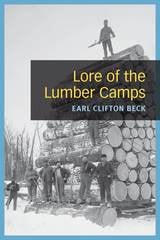
Lore of the Lumber Camps
Earl Clifton Beck
University of Michigan Press, 1948
The text discusses the cultural life of the lumberjacks, who, despite their rugged lifestyle, adhered to a chivalrous code of conduct. Beck details their traditions, storytelling, music, and dance, emphasizing the rich folklore that emerged from the camps. The book promises further exploration of the log-marking system, notable lumber figures, and the impact of deforestation on Michigan’s landscape.
Salmon and Acorns Feed Our People
Colonialism, Nature, and Social ActionKari Marie Norgaard
Rutgers University Press, 2019
Since time before memory, large numbers of salmon have made their way up and down the Klamath River. Indigenous management enabled the ecological abundance that formed the basis of capitalist wealth across North America. These activities on the landscape continue today, although they are often the site of intense political struggle. Not only has the magnitude of Native American genocide been of remarkable little sociological focus, the fact that this genocide has been coupled with a reorganization of the natural world represents a substantial theoretical void. Whereas much attention has (rightfully) focused on the structuring of capitalism, racism and patriarchy, few sociologists have attended to the ongoing process of North American colonialism. Salmon and Acorns Feed Our People draws upon nearly two decades of examples and insight from Karuk experiences on the Klamath River to illustrate how the ecological dynamics of settler-colonialism are essential for theorizing gender, race and social power today.

The Green Archipelago
Forestry in Preindustrial JapanConrad Totman
Ohio University Press, 1998
This inaugural volume in the Ohio University Press Series in Ecology and History is the paperback edition of Conrad Totman’s widely acclaimed study of Japan’s environmental policies over the centuries.
Professor Totman raises the critical question of how Japan’s steeply mountainous woodland has remained biologically healthy despite centuries of intensive exploitation by a dense human population that has always been dependent on wood and other forest products. Mindful that in global terms this has been a rare outcome, and one that bears directly on Japan’s recent experience as an affluent, industrial society, Totman examines the causes, forms, and effects of forest use and management in Japan during the millennium to 1870. He focuses mainly on the centuries after 1600 when the Japanese found themselves driven by their own excesses into programs of woodland protection and regenerative forestry.

The Ground at My Feet
Sustaining a Family and a ForestAnn Stinson
Oregon State University Press, 2021
The Ground at My Feet is a memoir about loss and grief as well as a portrait of a family, a region, and an industry. Combining personal story and research, Stinson weaves essays, poems, history, and science into a rich and layered account of life in a family forest in the Pacific Northwest. She maps interactions between the land and its people over two centuries: the Cowlitz peoples, homesteaders, and several generations of logging families who have worked the property. She follows her family’s logs as they become lumber for fence boards and suburban homes, touring a local cedar mill and traveling with her father to visit mills in Japan.
Stinson adds a landowner’s voice to conversations about the human tendency to demand more of the land than it can sustain. With its uniquely personal view of the Pacific Northwest’s timber and forestry heritage, The Ground at My Feet is an engaging addition to the literature of the landscape and ecology of the West.
The Making of the Northwest Forest Plan
The Wild Science of Saving Old Growth EcosystemsK. Norman Johnson
Oregon State University Press, 2023
Tree sitters. Logger protests. Dying timber towns. An iconic species on the brink. The Timber Wars consumed the Pacific Northwest in the late 1980s and early1990s and led political leaders to ask scientists for a solution. The Northwest Forest Plan was the result.
For most of the twentieth century, the central theme of federal forest management in the Pacific Northwest had been logging old-growth forests to provide a sustained yield of timber. During the 1970s and 1980s, however, a series of studies by young scientists highlighted the destructive impact of that logging on northern spotted owls, salmon, and the old-growth ecosystem itself.
Combining this new science with newly minted environmental laws like the Endangered Species Act, environmental activists obtained court injunctions to stop old-growth logging on federal land, setting off a titanic struggle in the Pacific Northwest to find a way to accommodate conservation imperatives as well as the logging that provided employment for tens of thousands of people. That effort involved years of controversy and debate, federal courts, five science assessments, Congress, and eventually the president of the United States. It led to creation of the Northwest Forest Plan, which sharply and abruptly shifted the primary goal of federal forestry toward conserving the species and ecosystems of old-growth forests. Scientists went from spectators to planners and guides, employing their latest scientific findings and expertise to create a forest plan for 20 million acres that would satisfy the courts. The largest upheaval in federal forest management in history had occurred, along with a precipitous decline in timber harvest, and there was no going back.
In this book, three of the scientists who helped craft that change tell the story as they know it: the causes, development, adoption, and implementation of the Northwest Forest Plan. The book also incorporates personal reflections from the authors, short commentaries and histories from key figures— including spotted owl expert Eric Forsman—and experiences from managers who implemented the Plan as best they could. Legal expert Susan Jane M. Brown helped interpret court cases and Debora Johnson turned spatial data into maps. The final chapters cover the Plan’s ongoing significance and recommendations for conserving forest and aquatic ecosystems in an era of megafires and climate change.