Results by title
19 books match the query 'Former Soviet republics'
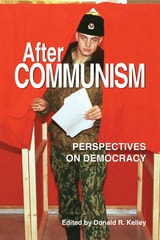
After Communism
Perspectives on DemocracyDonald R. Kelley
University of Arkansas Press, 2003
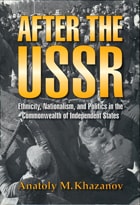
After the USSR
Ethnicity, Nationalism, and Politics in the Commonwealth of Independent StatesAnatoly M. Khazanov
University of Wisconsin Press, 1996
A world-renowned anthropologist, Anatoly M. Khazanov offers a witty, insightful, and cautionary analysis of ethnic nationalism and its pivotal role in the collapse of the Soviet empire.
“Khazanov’s encyclopedic knowledge of the history and culture of post-Soviet societies, combined with field research there since the 1960s, informs the case studies with a singular authoritative voice. This volume is destined to be an absolutely necessary reference for the understanding of ethnic relations and the politics of minorities in the ex-USSR into the next century.”—Leonard Plotnicov, editor of Ethnology
First Paperback Edition
Altering States
Ethnographies of Transition in Eastern Europe and the Former Soviet UnionDaphne Berdahl, Matti Bunzl, and Martha Lampland, Editors
University of Michigan Press, 2000
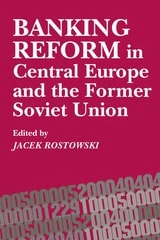
Banking Reform in Central Europe and the Former Soviet Union
Jacek Rostowski
Central European University Press, 1995
From Berlin to the Bering Strait, the business of banking has sprung to life. This analysis considers the impact of banking reform on macroeconomic stabilization and the suitability of universal banks, the role of banking regulation and the advantages of 'narrow banks' during transition, the cleaning up of bad debts, and the reform of the payments system.
The book assesses the lessons which can be drawn from reforms in Central Europe for the later reformers in the former Soviet Union and the Balkans. It considers the impact of banking reform on macroeconomic stabilization and the suitability of German-type universal banks; the role of banking regulation and the advantages of 'narrow banks' during transition; the cleaning-up of bad debts; bank privatization and reform of the payments system. Five chapters follow which review the experience of some of the 'second-wave' countries: Estonia, Georgia, Romania, Russia and Ukraine.
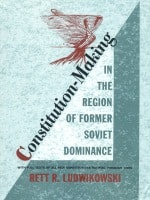
Constitution-Making in the Region of Former Soviet Dominance
Rett R. Ludwikowski
Duke University Press, 1996
Beginning with a review of the constitutional traditions of Eastern and Central Europe, Ludwikowski goes on to offer analysis of the recent process of political change in the region. A second section focuses specifically on the the new constitutions and such issues as the selection of the form of government, concepts of divisions of power, unicameralism vs. bicameralism, the flexibility or rigidity of constitutions as working documents, and the process of reviewing the constitutionality of laws. Individual states as framed in these documents are analyzed in economic, political, and cultural terms. Although it is too soon to fully consider the implementation of these constitutions, special attention is devoted to the effect of reform on human rights protection, a notorious problem of continuing concern in the region. A final section offers an insightful comparative study of constitutional law by reviewing the post-Soviet process of constitution-making against the backdrop of Western constitutional traditions.
Constitution-Making in the Region of Former Soviet Dominance is both a comprehensive study of constitutional developments in the former Soviet bloc and a primary reference tool for scholars of constitutional law, and Eastern European and post-Soviet studies.
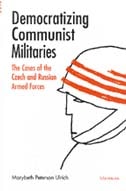
Democratizing Communist Militaries
The Cases of the Czech and Russian Armed ForcesMarybeth Peterson Ulrich
University of Michigan Press, 2000
In a groundbreaking study, Marybeth Peterson Ulrich explores the attitudes of the leaders of the armed forces in Russia and the Czech Republic toward the new democratic governments and suggests ways in which we might encourage the development of politically neutral militaries in these states. Building on the work of Samuel Huntington and others on the relationship between the military and the state, the author suggests that norms of military professionalism must change if the armies in countries making a transition from communist rule are to become strong supporters of the democratic state. The Czech Republic and Russia are interesting cases, because they have had very different experiences in the transition; they have different geopolitical goals; and they experienced different military-civilian relationships during the Soviet period. The author also explores American and NATO programs to promote democratization in these militaries and suggests changes in the programs.
Marybeth Peterson Ulrich is Associate Professor of Government, U.S. Army War College.
Disinflation in Transition Economies
Marek Dabrowski
Central European University Press, 2003
Environmental Assessment in Countries in Transintion
Norman Lee
Central European University Press, 2000

Fieldwork Dilemmas
Anthropologists In Postsocialist StatesHermine G. De Soto
University of Wisconsin Press, 2000
In Fieldwork Dilemmas ten anthropologists disclose the political and physical dangers inherent in field research. Focusing on former socialist states, they vividly depict the upheavals of everyday life in eastern Euorpe, revealing how their informants and the communities in which they live undergo political and economic dislocations, plummeting living standards, emerging gender inequalities, and ethnic and nationalist violence.
Reports from Armenia, Bulgaria, eastern Germany, Kyrgyzstan, Macedonia, Russia, Serbia, and Uzbekistan show how fieldworkers struggle to reconcile previous experiences with postsocialist stereotypes about Soviet culture, the West, and the effects of the penetration of capitalism into noncapitalist societies. These fieldwork dilemmas are analyzed by anthropologists who are learning to position themselves professionally and personally in the field under often unstable, unpredictable situations. This volume will interest not only anthropologists but fieldworkers of all kinds, and not only scholars of eastern Europe but all those who study rapid societal changes.

Ibn Khaldun
An Essay in ReinterpretationAziz Al-Azmeh
Central European University Press, 2003
Since its publication in 1981, this book has established itself as the major new interpretation of the historical concept of Ibn Khaldûn, the great figure of Arab-Islamic letters and of historical thought overall--a figure generally thought to be on a par with Thucydides, Vico, Herder and others of similar stature.
The author has eschewed the ahistorical interpretations to which Ibn Khaldûn has normally been subjected, both by authors who have sought unduly to modernise his thought, and by those who sought to freeze it in stereotypical models of Islamic philosophy.
Ibn Khaldûn is not only a true historical source of his time; he is also taken as the unchallenged sociological and cultural interpreter of medieval North Africa and much of medieval and modern Arab-Islamic culture as well. The validity of his discourse is considered to be so universal as to confer upon his ideas the status of progenitor--or, at least, anticipator--of a great variety of modern ideas.
Labour Statistics for a Market Economy
Challenges and Solutions in the Transition Countries of Central and Eastern Europe and the Former Soviet UnionIgor Chernyshev
Central European University Press, 1995
Minimum Wages in Central and Eastern Europe
From Protection to DestitutionGuy Standing
Central European University Press, 1995
Post-Communism
An IntroductionLeslie Holmes
Duke University Press, 1997
Rites of Place
Public Commemoration in Russia and Eastern EuropeJulie Buckler and Emily D Johnson
Northwestern University Press, 2013
Ranging widely across time and geography, Rites of Place is to date the most comprehensive and diverse example of memory studies in the field of Russian and East European studies. Leading scholars consider how public rituals and the commemoration of historically significant sites facilitate a sense of community, shape cultural identity, and promote political ideologies. The aims of this volume take on unique importance in the context of the tumultuous events that have marked Eastern European history—especially the revolutions of 1905 and 1917, World War II, and the collapse of the Soviet Union. With essays on topics such as the founding of St. Petersburg, the battle of Borodino, the Katyn massacre, and the Lenin cult, this volume offers a rich discussion of the uses and abuses of memory in cultures where national identity has repeatedly undergone dramatic shifts and remains riven by internal contradictions.

Soviet Signoras
Personal and Collective Transformations in Eastern European MigrationMartina Cvajner
University of Chicago Press, 2019
Cvajner details the personal and collective changes brought about by the experience of migration for these women: from the first hours arriving in a new country with no friends, relatives, or existing support networks, to later remaking themselves for their new environment. In response to their traumatic displacement, the women of Soviet Signoras—nearly all of whom found work in their new Western homes as elder care givers—refashioned themselves in highly sexualized, materialistic, and intentionally conspicuous ways. Cvajner’s focus on overt sexuality and materialism is far from sensationalist, though. By zeroing in on these elements of personal identity, she reveals previously unexplored sides of the social psychology of migration, coloring our contemporary discussion with complex shades of humanity.
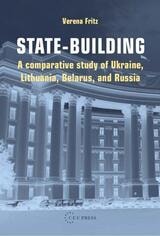
State-building
A Comparative Study of Ukraine, Lithuania, Belarus, and RussiaVerena Fritz
Central European University Press, 2007
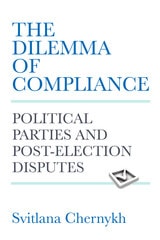
The Dilemma of Compliance
Political Parties and Post-Election DisputesSvitlana Chernykh
University of Michigan Press, 2024
To answer these questions, this book draws on an original dataset of post-election responses encompassing over 300 political parties, which participated in 270 elections held in twenty-two countries of Eastern Europe and the former Soviet Union over a period of more than two decades. In doing so, it offers a new theoretical framework for studying electoral compliance in comparative perspective and advances research on democratic transition, democracy promotion, post-election protests, and party politics.
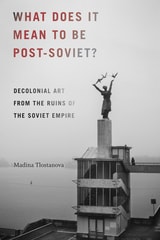
What Does It Mean to Be Post-Soviet?
Decolonial Art from the Ruins of the Soviet EmpireMadina Tiostanova
Duke University Press, 2018
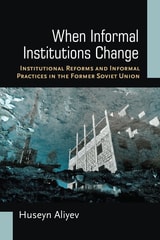
When Informal Institutions Change
Institutional Reforms and Informal Practices in the Former Soviet UnionHuseyn Aliyev
University of Michigan Press, 2017
When Informal Institutions Change engages with a growing body of literature on informal practices and institutions in political science, economics, sociology, and beyond. Aliyev proposes expanding the analysis of the impact of institutional reforms on informal institutions beyond disciplinary boundaries, and combines theoretical insights from comparative politics with economic and social theories on informal relations. In addition, Aliyev offers insights that are relevant to democratization, institutionalism, and human geography. Detailed case studies of three transitional post-Soviet regimes—Georgia, Moldova, and Ukraine—illustrate the contentious relationship between democratic institutional reforms and informality in the broader post-Soviet context.
Aliyev shows that in order for institutional reform to succeed in strengthening, democratizing, and formalizing institutions, it is important to approach informal practices and institutions as instrumental for its effectiveness. These findings have implications not only for hybrid regimes, but also for other post-Soviet or post-communist countries.