Results by title
7 books match the query 'Fort Worth'
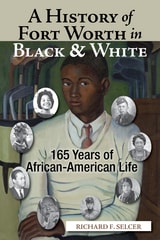
A History of Fort Worth in Black & White
165 Years of African-American LifeRichard F. Selcer
University of North Texas Press, 2015

Fort Worth from World War II to 1960
Harold Rich
University of North Texas Press, 2025
Goldee's Bar-B-Q
A CookbookJalen Heard, Lane Milne, and Jonny White, with Lisa Fain. Photography by Wiil Milne.
University of Texas Press, 2025
The top joint in Texas shares its secrets to award-winning barbecue.
Goldee's Bar-B-Q, which sits in a quiet corner of Dallas–Fort Worth, opened only a few weeks before COVID-19 closed the dining room, and for months the restaurant eked out a living with curbside service and catering. The owners didn’t expect their barbecue to be crowned the best in the state by Texas Monthly, yet they earned that honor in 2021. What separates Goldee's from other joints is their pitmasters’ attention to craft and an inclusive attitude toward sharing their work. They understand that the secret ingredient in barbecue is not a particular spice in the rub, but hours of paying attention to fire and meat.
Goldee’s Bar-B-Q shows you how to make classics such as brisket, ribs, sausages, beans, coleslaw, potato salad, and banana pudding. Goldee’s pitmasters share how to trim, season, and smoke meat, as well as tips for managing a fire and monitoring temperature, which are key to elevating your barbecue. Goldee’s Bar-B-Q also captures the heart of the restaurant, the story of best friends coming together to make a place where they could share their love of cooking. A must-have for barbecue aficionados, meat lovers, and chefs looking to perfect their techniques, Goldee’s Bar-B-Q will help you make your barbecue exceptional.
Gulf To Rockies
The Heritage of the Fort Worth and Denver–Colorado and Southern Railways, 1861–1898By Richard C. Overton
University of Texas Press, 1953
Gulf to Rockies is a chapter in the business and economic history of the American West and the story of two of the most colorful railroad builders of the nineteenth century.
Throughout the 1860s the mineral treasures of Colorado were virtually inaccessible for lack of railroads. Even after a hectic decade of building in the 1870s, the state faced a new sort of isolation: every railroad crossing her borders was controlled by the Union Pacific or the Santa Fe. As a result, the Rocky Mountain region could not hope to compete with the Midwest for the business of the Atlantic seaboard.
To remedy this situation, John Evans, former governor of Colorado, organized in 1881 a railroad to run southward from Denver as the first link in a cheap rail-water route via the Gulf of Mexico to the East. Meanwhile ambitious Fort Worth citizens had incorporated the Fort Worth and Denver City in 1873. Not a rail was laid on either road, however, until General Grenville M. Dodge, famed builder of the Union Pacific and the Texas Pacific, took up the Texas project and joined forces with Evans to create the Gulf-to-Rockies route.
It took seven years for these men and their associates to mobilize funds and complete the Fort Worth–Denver line, and another decade to establish the system’s independence and solve its financial problems in the face of drought, depression, and intense competition.
Gulf to Rockies was written under special agreements with Northwestern University and the Chicago, Burlington & Quincy Railroad, whereby the university relieved Mr. Overton of a part of his duties in order that he might have time for research and writing and the railroad undertook to bear the cost of the research. The Burlington also permitted him free access to all company records and granted him unrestricted freedom to publish his findings.
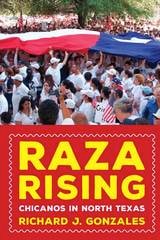
Raza Rising
Chicanos in North TexasRichard J. Gonzales
University of North Texas Press, 2016
Rehab on the Range
A History of Addiction and Incarceration in the American WestHolly M. Karibo
University of Texas Press, 2024
2026 Texas Christian University (TCU) Texas Book Award Winner
2025 Coral Horton Tullis Memorial Prize, Texas State Historical Association
2025 Outstanding Academic Title, CHOICE
The first study of the Fort Worth Narcotic Farm, an institution that played a critical role in fusing the War on Drugs, mass incarceration, and public health in the American West.
In 1929, the United States government approved two ground-breaking and controversial drug addiction treatment programs. At a time when fears about a supposed rise in drug use reached a fevered pitch, the emergence of the nation’s first “narcotic farms” in Fort Worth, Texas, and Lexington, Kentucky, marked a watershed moment in the treatment of addiction. Rehab on the Range is the first in-depth history of the Fort Worth Narcotic Farm and its impacts on the American West. Throughout its operation from the 1930s to the 1970s, the institution was the only federally funded drug treatment center west of the Mississippi River. Designed to blend psychiatric treatment, physical rehabilitation, and vocational training, the Narcotic Farm, its proponents argued, would transform American treatment policies for the better. The reality was decidedly more complicated.
Holly M. Karibo tells the story of how this institution—once framed as revolutionary for addiction care—ultimately contributed to the turn towards incarceration as the solution to the nation’s drug problem. Blending an intellectual history of addiction and imprisonment with a social history of addicts’ experiences, Rehab on the Range provides a nuanced picture of the Narcotic Farm and its cultural impacts. In doing so, it offers crucial historical context that can help us better understand our current debates over addiction, drug policy, and the rise of mass incarceration.
The McLaurys in Tombstone, Arizona
An O.K. Corral ObituaryPaul Lee Johnson
University of North Texas Press, 2012