Results by title
4 books match the query 'Fortress'

Every Factory a Fortress
The French Labor Movement in the Age of Ford and HitlerMichael Torigian
Ohio University Press, 1999
French trade unions played a historical role in the 1930s quite unlike that of any other labor movement. Against a backdrop of social unrest, parliamentary crisis, and impending world war, industrial unionists in the great metal-fabricating plants of the Paris Region carried out a series of street mobilizations, factory occupations, and general strikes that were virtually unique in Western history.
The unionization of the metal industry, following a series of anti-fascist demonstrations and plant seizures, would constitute the defining episode in modern French labor history and one of the great chapters in European social history. Yet little is known of these extraordinary events.
With a style that captures the vivid character of these experiences, Every Factory a Fortress tells the story of the Paris metal workers, who succeeded in organizing the largest Communist union in the Western world, reshaping the parameters of French social relations, and, ultimately, altering the course of French destinies.

Every Home a Fortress
Cold War Fatherhood and the Family Fallout ShelterThomas Bishop
University of Massachusetts Press, 2020
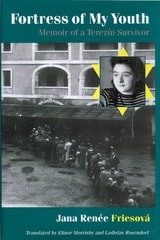
Fortress of My Youth
Memoir of a Terezín SurvivorJana Renée Friesová
University of Wisconsin Press, 2011
Jana Renée Friesová was fifteen when she was imprisoned by the Nazis in the Czech ghetto town of Terezín. Her memoir tells the poignantly familiar story of a young girl who, even under the most abominable circumstances, engages in intense adolescent friendships, worries with her companions over her looks, and falls in love.
Anne Frank’s diary ends with deportation to a concentration camp; Fortress of My Youth, in contrast, takes the reader deep into the horrors of daily life in a camp that were faced by a young girl and her family. But Friesová also tells of love, joy, sacrifice, and the people who shared in the most profound experiences of her life.

The Fortress
A NovelMesa Selimovic, translated from the Serbian by Edward Dennis Goy and Jasna Levinger-Goy
Northwestern University Press, 1999
Set in Bosnia in the late 1700s, the novel sometimes functions as an artful metaphor for the communist Yugoslavia of Selimovic's day. At other times, the author explores the nuances of Ottoman rule in the Balkans. Muslim Ahmet's sustaining marriage to a young Christian woman provides a multicultural tension that strongly resonates with contemporary readers and sensibilities.