Results by title
38 books match the query 'Fragments'
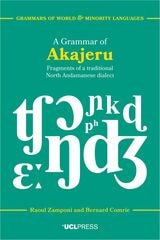
A Grammar of Akajeru
Fragments of a Traditional North Andamanese DialectRaoul Zamponi and Bernard Comrie
University College London, 2021
Originally spoken across the northern Andamanese Islands in the Bay of Bengal, the Akajeru language is spoken today by only three people. A Grammar of Akajeru describes this unique grammatical system as it was reported at the turn of the twentieth century. Based primarily on research conducted by Victorian anthropologists Alfred R. Radcliffe-Brown and Edward Horace Man, this book offers a linguistic analysis of all extant Akajeru material as well as the scant documentation of adjacent dialects Akabo and Akakhora. This volume includes a grammatical sketch of Akajeru, an English-Akajeru lexicon, and a comparison between Akajeru and present-day Andamanese.
A Revolution in Fragments
Traversing Scales of Justice, Ideology, and Practice in BoliviaMark Goodale
Duke University Press, 2019

Arnold Wesker
Fragments and VisionsEdited by Anne Etienne and Graham Saunders
Intellect Books, 2021
Edited by leading scholars in the field and with contributions from important scholars of postwar theater, this volume considers, for the first time, the whole body of Wesker’s work. It includes chapters on Wesker’s reception in Europe, his representation of and attitude towards women, his relationship to his Jewish origins and identity, and his attitude toward politics and community. Building on existing scholarship, drawing extensively from the Arnold Wesker archive at the Harry Ransom Center at the University of Texas at Austin, and introducing new insights and perspectives, this important new essay collection remedies the recent critical neglect of the dramatist.
Cut/Copy/Paste
Fragments from the History of BookworkWhitney Trettien
University of Minnesota Press, 2021
How do early modern media underlie today’s digital creativity?
In Cut/Copy/Paste, Whitney Trettien journeys to the fringes of the London print trade to uncover makerspaces and collaboratories where paper media were cut up and reassembled into radical, bespoke publications. Bringing these long-forgotten objects back to life through hand-curated digital resources, Trettien shows how early experimental book hacks speak to the contemporary conditions of digital scholarship and publishing. As a mixed-media artifact itself, Cut/Copy/Paste enacts for readers what Trettien argues: that digital forms have the potential to decenter patriarchal histories of print.
From the religious household of Little Gidding—whose biblical concordances and manuscripts exemplify protofeminist media innovation—to the queer poetic assemblages of Edward Benlowes and the fragment albums of former shoemaker John Bagford, Cut/Copy/Paste demonstrates history’s relevance to our understanding of current media. Tracing the lives and afterlives of amateur “bookwork,” Trettien creates a method for identifying and comprehending hybrid objects that resist familiar bibliographic and literary categories. In the process, she bears witness to the deep history of radical publishing with fragments and found materials.
With many of Cut/Copy/Paste’s digital resources left thrillingly open for additions and revisions, this book reimagines our ideas of publication while fostering a spirit of generosity and inclusivity. An open invitation to cut, copy, and paste different histories, it is an inspiration for students of publishing or the digital humanities, as well as anyone interested in the past, present, and future of creativity.
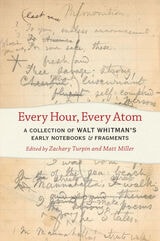
Every Hour, Every Atom
A Collection of Walt Whitman's Early Notebooks and FragmentsWalt Whitman, Zachary Turpin and Matt Miller
University of Iowa Press, 2020
Some of the dimmest years in Walt Whitman’s life precede the advent of Leaves of Grass in 1855, when he was working as a journalist and fiction writer. Starting around 1850, what he’d begun writing in his personal notebooks was far more enigmatic than anything he’d done before.
One of Whitman’s most secretive projects during this timeframe was a novel, Life and Adventures of Jack Engle; serialized anonymously in the spring of 1852, and rediscovered and properly published in 2017. The key to the novel’s later discovery were plot notes Whitman had made in one of his private notebooks.
Whitman’s invaluable notebooks have been virtually inaccessible to the public, until now. Maintaining the early notebooks’ wild, syncretic feel and sample illustrations of Whitman’s beautiful and unkempt pages, scholars Zachary Turpin and Matt Miller’s thorough transcriptions have made these notebooks available to all; sharing Whitman’s secret space for developing his poetry, his writing, his philosophy, and himself.
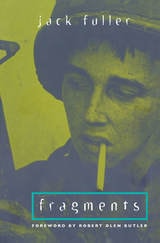
Fragments
Jack Fuller
University of Chicago Press, 1997
"[Fragments] makes the usual semi-autobiographical account [of the Vietnam War] . . . seem flimsy and discursive in comparison. . . . The shapeliness and sense of larger design [is] so elegantly executed in Fragments."—Michiko Kakutani, New York Times
"The plot is believable, the characters sharply drawn, the prose clean and distinctive. . . . Stand[s] with Tim O'Brien's Going After Cacciato, James Webb's Fields of Fire, Josiah Bunting's The Lionheads and John Del Vecchio's The 13th Valley. . . . A strong, compelling novel."—Marc Leepson, Washington Post
"There have been many books on Vietnam, and there will be many others. This is more a novel than the rest. . . . Fuller has reassembled the exploded grenade."—Bob MacDonald, Boston Sunday Globe
"Should our children ask about Vietnam, we would not go wrong to place this book in their hands. . . . [Fragments] purveys more than information—it gives the war a literary form."—David Myers, New York Times
"The best novel yet about the Vietnam War. . . . It ranks with Norman Mailer's The Naked and the Dead and James Jones's From Here to Eternity."—Daniel Kornstein, Wall Street Journal
Fragments and Assemblages
Forming Compilations of Medieval LondonArthur Bahr
University of Chicago Press, 2013
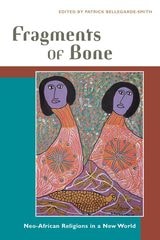
Fragments of Bone
Neo-African Religions in a New WorldEdited by Patrick Bellegarde-Smith
University of Illinois Press, 2005
Contributors: Osei-Mensah Aborampah, Niyi Afolabi, Patrick Bellegarde-Smith, Randy P. Conner, T. J. Desch-Obi, Ina Johanna Fandrich, Kean Gibson, Marilyn Houlberg, Nancy B. Mikelsons, Roberto Nodal, Rafael Ocasio, Miguel "Willie" Ramos, and Denise Ferreira da Silva

Fragments of Culture
The Everyday of Modern TurkeyKandiyoti, Deniz
Rutgers University Press, 2002
In this volume, some of the most innovative scholars of post 1980s Turkey address the complex ways that suburbanization and the growth of a globalized middle class have altered gender and class relations, and how Turkish society is being shaped and redefined through consumption. They also explore the increasingly polarized cultural politics between secularists and Islamists, and the ways that previously repressed Islamic elements have reemerged to complicate the idea of an "authentic" Turkish identity. Contributors examine a range of issues from the adjustments to religious identity as the Islamic veil becomes marketed as a fashion item, to the media's increased attention in Turkish transsexual lifestyle, to the role of folk dance as a ritualized part of public life. Fragments of Culture shows how attention to the minutiae of daily life can successfully unravel the complexities of a shifting society. This book makes a significant contribution to both modern Turkish studies and the scholarship on cross-cultural perspectives in Middle Eastern studies.
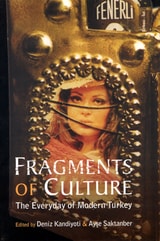
Fragments of Culture
The Everyday of Modern TurkeyKandiyoti, Deniz
Rutgers University Press, 2002
In this volume, some of the most innovative scholars of post 1980s Turkey address the complex ways that suburbanization and the growth of a globalized middle class have altered gender and class relations, and how Turkish society is being shaped and redefined through consumption. They also explore the increasingly polarized cultural politics between secularists and Islamists, and the ways that previously repressed Islamic elements have reemerged to complicate the idea of an "authentic" Turkish identity. Contributors examine a range of issues from the adjustments to religious identity as the Islamic veil becomes marketed as a fashion item, to the media's increased attention in Turkish transsexual lifestyle, to the role of folk dance as a ritualized part of public life. Fragments of Culture shows how attention to the minutiae of daily life can successfully unravel the complexities of a shifting society. This book makes a significant contribution to both modern Turkish studies and the scholarship on cross-cultural perspectives in Middle Eastern studies.
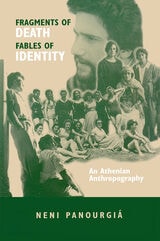
Fragments of Death, Fables of Identity
An Athenian AnthropographyEleni Panourgia
University of Wisconsin Press, 1996
The death of her grandfather sets Neni Panourgiá and her readers on a path through the rituals of mourning and memory in modern urban Greece. Blending emotional richness and intellectual rigor, the anthropologist returns home in this exploration of kinship and identity within her own family and native city of Athens. What emerges is not only a new anthropological view of contemporary Greek culture, but also a reflective consideration of the self and subject.
Following men and women grappling with questions of mortality, Panourgiá moves through the streets and neighborhoods of Athens, seaside resorts and pistachio groves, the corridors and rooms of the Cancer Institute, wakes in apartments and observances in cemeteries. She mingles popular culture, venerable traditions, and contemporary theory as she considers how individuals define their identity as Athenians, as members of a family, as subjects of a polity, in sickness and in health, in death or in mourning. Memory is their guide as it negotiates their relationships with a personal, collective, and cultural past—and the memory of many deaths challenges and reaffirms, deconstructs and reconstructs who they are.
As intellectually ambitious as it is moving, Fragments of Death, Fables of Identity reconfigures the subject and object of anthropological study and recasts the line where experience ends and analysis begins.
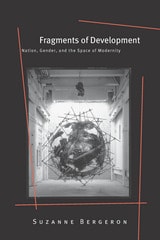
Fragments of Development
Nation, Gender, and the Space of ModernitySuzanne Bergeron
University of Michigan Press, 2005
---Isabella C. Bakker, York University
"Bergeron's pathbreaking analysis challenges orthodox development theories, questions current feminist economic thinking and highlights crucial new gendered challenges to globalization."
---Jane Parpart, Dalhousie University
"Cutting-edge scholarship. Bergeron deftly engages the complexity of current debates while retaining clarity, improving analyses, and illuminating alternatives."
---V. S. Peterson, University of Arizona
By tracing out the intersection between the imagined space of the national economy and the gendered construction of "expert" knowledge in development thought, Suzanne Bergeron provides a provocative analysis of development discourse and practice. By elaborating a framework of including/excluding economic subjects and activities in development economics, she provides a rich account of the role that economists have played in framing the contested political and cultural space of development.
Bergeron's account of the construction of the national economy as an object of development policy follows its shifting meanings through modernization and growth models, dependency theory, structural adjustment, and contemporary debates about globalization and highlights how intersections of nation and economy are based on gendered and colonial scripts. The author's analysis of development debates effectively demonstrates that critics of development who ignore economists' nation stories may actually bolster the formation they are attempting to subvert. Fragments of Development is essential reading for those interested in development studies, feminist economics, international political economy, and globalization studies.
Fragments of Lives
Chronicles of the GulagJacques Rossi
Karolinum Press, 2018
An impassioned reminder to always question one’s beliefs, to have the courage to give up one’s illusions at the risk of one’s life, Fragments of Lives lays bare, with acute observations and biting wit, the falsity of the Soviet utopia that transformed Rossi’s home into a “huge Potemkin village, a farcical sham dissimulating oceans of mud and blood.”
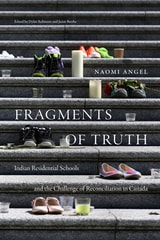
Fragments of Truth
Residential Schools and the Challenge of Reconciliation in CanadaNaomi Angel. Edited by Dylan Robinson and Jamie Berthe.
Duke University Press, 2022
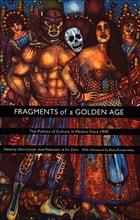
Fragments of a Golden Age
The Politics of Culture in Mexico Since 1940Gilbert M. Joseph, Anne Rubenstein, and Eric Zolov, eds.
Duke University Press, 2001
Each essay in its own way addresses the fragmentation of a cultural consensus that prevailed during the “golden age” of post–revolutionary prosperity, a time when the state was still successfully bolstering its power with narratives of modernization and shared community. Combining detailed case studies—both urban and rural—with larger discussions of political, economic, and cultural phenomena, the contributors take on such topics as the golden age of Mexican cinema, the death of Pedro Infante as a political spectacle, the 1951 “caravan of hunger,” professional wrestling, rock music, and soap operas.
Fragments of a Golden Age will fill a particular gap for students of modern Mexico, Latin American studies, cultural studies, political economy, and twentieth century history, as well as to others concerned with rethinking the cultural dimensions of nationalism, imperialism, and modernization.
Contributors. Steven J. Bachelor, Quetzil E. Castañeda, Seth Fein, Alison Greene, Omar Hernández, Jis & Trino, Gilbert M. Joseph, Heather Levi, Rubén Martínez, Emile McAnany, John Mraz, Jeffrey M. Pilcher, Elena Poniatowska, Anne Rubenstein, Alex Saragoza, Arthur Schmidt, Mary Kay Vaughan, Eric Zolov
Fragments of a Mortal Mind
A Nonfiction NovelDonald Anderson
University of Nevada Press, 2021
At once a memoir, a reading journal, and a novel, Fragments of a Mortal Mind is a daring, contemporary commonplace book. Donald Anderson, critically acclaimed author of Gathering Noise from My Life and Below Freezing, shows us how the disparate elements of our lives collect to construct our deepest selves and help us to make sense of it all. Anderson layers his personal experiences and reflections with those of others who have wrestled with inner and outer social, cultural, and political memories that are not as accurate as history might suggest but that each of us believe nonetheless. He challenges the reader’s sense of memory and fact, downplaying the latter in explaining how each of us crafts our own personal histories.
As Anderson weaves his voice among numerous other voices and ideas that rest upon other ideas, we are faced with larger issues of human existence: war, memory, trauma, mortality, religion, fear, joy, ugliness, and occasional beauty. What we have here is a meditation on living in America. We are shown how the world we consume becomes us as we metabolize it. How we, as humans, through our own fragments of memories, influences, and experiences become our true selves. By charting fragments of thoughts over a lifetime, Anderson exposes a way of thinking and perceiving the world that is refreshingly intuitive and desperately needed. Fragments of a Mortal Mind is a powerful masterpiece that closely resembles our lived experiences and is a vivid reflection of our time.
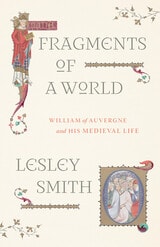
Fragments of a World
William of Auvergne and His Medieval LifeLesley Smith
University of Chicago Press, 2023
Today, William of Auvergne (1180?–1249) is remembered for his scholarship about the afterlife as well as the so-called Trial of the Talmud. But the medieval bishop of Paris also left behind nearly 600 sermons delivered to all manner of people—from the royal court to the poorest in his care. In Fragments of a World, Lesley Smith uses these sermons to paint a vivid picture of this extraordinary cleric, his parishioners, and their bustling world. The first modern biography of the influential teacher, bishop, and theologian, Fragments of a World casts a new image of William of Auvergne for our times—deeply attuned to both the spiritual and material needs of an ever-changing populace in the medieval city.
Fragments of an Anarchist Anthropology
David Graeber
Prickly Paradigm Press, 2004
This pamphlet ponders what that response would be, and explores the implications of linking anthropology to anarchism. Here, David Graeber invites readers to imagine this discipline that currently only exists in the realm of possibility: anarchist anthropology.
Fragments
The Existential Situation of Our Time: Selected Essays, Volume 1David Tracy
University of Chicago Press, 2020
In the first volume, Fragments, Tracy gathers his most important essays on broad theological questions, beginning with the problem of suffering across Greek tragedy, Christianity, and Buddhism. The volume goes on to address the Infinite, and the many attempts to categorize and name it by Plato, Aristotle, Rilke, Heidegger, and others. In the remaining essays, he reflects on questions of the invisible, contemplation, hermeneutics, and public theology. Throughout, Tracy evokes the potential of fragments (understood both as concepts and events) to shatter closed systems and open us to difference and Infinity. Covering science, literature, philosophy, psychoanalysis, and non-Western religious traditions, Tracy provides in Fragments a guide for any open reader to rethink our fragmenting contemporary culture.

Friedrich Schlegel’s Lucinde and the Fragments
Translated by Peter FirchowIntroduction by Peter Firchow
University of Minnesota Press, 1971
Friedrich Schlegel's Lucinde and the Fragments was first published in 1971. Minnesota Archive Editions uses digital technology to make long-unavailable books once again accessible, and are published unaltered from the original University of Minnesota Press editions.
For the last century and a half, Friedrich Schlegel (1772–1829) has enjoyed a reputation for being the critical grey eminence behind the coming to power of the Romantic Movement. It was Schlegel, in his three series of aphoristic fragments (Lyceum, Athenaeum, and Ideas), who actually first defined and employed the word "romantic" in the present sense; and it was he who in a chaotic, fragmentary, and often mysterious but forceful manner first proclaimed the doctrine that was to usher in the modern age in literature. He too was among the first to put his new program into practice in the shape of his unfinished Lucinde,a work variously denounced as pornography and heralded as a forerunner of modern novelistic experimentation, and probably the most famous novel to come out of German Romanticism.
Both the Fragments and Lucinde,along with a brilliant tour de force, the "Essay on Incomprehensibility," are available now for the first time in a complete English translation in this volume, together with a brief scholarly introduction. This translation will enable non-German readers to examine at first hand the work of a man whom Rene Wellck has called "one of the greatest critics of history." At a time when the function of criticism is coming once again under close skeptical scrutiny, Friedrich Schlegel's unorthodox, unsystematic but seminal critical mind—all of literature, philosophy, art, and history were grist to his mill—should find many sympathetic readers. The book will be of particular interest to theorists of literature and fiction, comparative literature scholars, and historians of the intellectual history of Germany, and it is appropriate for course use in German and comparative literature classes.
Grievance
In FragmentsGrant Farred
Prickly Paradigm Press, 2024
Grievance is an American mode of being that can be traced back to the Declaration of Independence, that is at the root of the Civil War and accounts in large measure for the failure of Reconstruction, that runs through the Civil Rights moment, and that showed itself again in the events of January 6, 2021. Grievance, in America, always concatenates with racism and evinces itself most violently in those moments when white supremacy, fallaciously, presents itself as being under attack. This book explores this elemental yet destructive thread of the American character.
L. Annaeus Cornutus
Greek Theology, Fragments, and TestimoniaGeorge Boys-Stones
SBL Press, 2018
The first English translation of Greek Theology
The first-century CE North African philosopher Cornutus lived in Rome as a philosopher and is best known today for his surviving work Greek Theology, which explores the origins and names of the Greek gods. However, he was also interested in the language and literature of the poets Persius and Lucan and wrote one of the first commentaries on Virgil. This book collects and translates all of our evidence for Cornutus for the first time and includes the first published English translation of Greek Theology. This collection offers entirely fresh insight into the intellectual world of the first century.
Features
- Translation based on the latest critical text
- The first truly holistic picture of Cornutus’s intellectual profile
- A new account of the early debate over Aristotle’s Categories and the Stoic contribution to it

Landbridge
Life in FragmentsY-Dang Troeung
Duke University Press, 2024
Latin America and the Transports of Opera
Fragments of a Transatlantic DiscourseRoberto Ignacio Díaz
Vanderbilt University Press, 2023
Latin America and the Transports of Opera studies a series of episodes in the historical and textual convergence of a hallowed art form and a part of the world often regarded as peripheral. Perhaps unexpectedly, the archives of opera generate new arguments about several issues at the heart of the established discussion about Latin America: the allure of European cultural models; the ambivalence of exoticism; the claims of nationalism and cosmopolitanism; and, ultimately, the place of the region in the global circulation of the arts. Opera’s transports concern literal and imagined journeys as well as the emotions that its stories and sounds trigger as they travel back and forth between Europe—the United States, too—and Latin America.
Focusing mostly on librettos and other literary forms, this book analyzes Calderón de la Barca’s baroque play on the myth of Venus and Adonis, set to music by a Spanish composer at Lima’s viceregal court; Alejo Carpentier’s neobaroque novella on Vivaldi’s opera about Moctezuma; the entanglements of opera with class, gender, and ethnicity throughout Cuban history; music dramas about enslaved persons by Carlos Gomes and Hans Werner Henze, staged in Rio de Janeiro and Copenhagen; the uses of Latin American poetry and magical realism in works by John Adams and Daniel Catán; and a novel by Manuel Mujica Lainez set in Buenos Aires’s Teatro Colón, plus a chamber opera about Victoria Ocampo with a libretto by Beatriz Sarlo. Close readings of these texts underscore the import and meanings of opera in Latin American cultural history.
This book is the recipient of the 2024 Norman L. and Roselea J. Goldberg Prize from Vanderbilt University Press for the best book in the area of art or medicine.
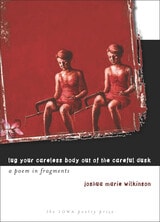
Lug Your Careless Body out of the Careful Dusk
A Poem in FragmentsJoshua Marie Wilkinson
University of Iowa Press, 2006
Drawing from the paintings of Susan Rothenberg, Gwyneth Scally, and Eric Fischl as well as from the photography of Allison Maletz, Joshua Marie Wilkinson’s Lug Your Careless Body out of the Careful Dusk is a book-length poem written in small fragments. Comprised of seven sections, the poem is formed as much by the poet’s travels through Turkey, the Baltics, and Eastern Europe as it is by the movies of Rainer Werner Fassbinder, Krzysztof Kieslowski, and Bill Morrison. The painters Francis Bacon and Lucian Freud are here alongside whispers of Emily Dickinson and Wallace Stevens. Lug Your Careless Body out of the Careful Dusk is a book of cinematic images and fragments, of small stories overheard and quickly abandoned, of hidden letters and phone booths, and of ghosts who return with questions.
Born and raised in Seattle’s Haller Lake neighborhood, Joshua Marie Wilkinson is the author of one other book of poetry, Suspension of a Secret in Abandoned Rooms, and the chapbook A Ghost as King of the Rabbits. He holds an MFA from the University of Arizona and an MA in film studies from University College Dublin. Presently he lives in Denver, Colorado, where he is pursuing his doctorate in English and creative writing and completing his first film.
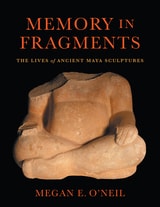
Memory in Fragments
The Lives of Ancient Maya SculpturesMegan E. O'Neil
University of Texas Press, 2024
An exploration of how the ancient Maya engaged with their history by using, altering, and burying stone sculptures.
For the ancient Maya, monumental stone sculptures were infused with agency. As they were used, reused, altered, and buried, such sculptures retained ceremonial meaning. In Memory in Fragments, Megan E. O'Neil explores how ancient Maya people engaged with history through these sculptures, as well as how they interacted with the stones themselves over the course of the sculptures’ long “lives.” Considering Maya religious practices, historiography, and conceptions of materials and things, O’Neil explores how Maya viewers perceived sculptures that were fragmented, scarred, burned, damaged by enemies, or set in unusual locations. In each case, she demonstrates how different human interactions, amid dynamic religious, political, and historical contexts, led to new episodes in the sculptures' lives.
A rare example of cross-temporal and geographical work in this field, Memory in Fragments both compares sculptures within ancient Maya culture across Honduras, Guatemala, Mexico, and Belize over hundreds of years and reveals how memory may accrue around and be evoked in material remains.
Memory
Fragments of a Modern HistoryAlison Winter
University of Chicago Press, 2011
Picture your twenty-first birthday. Did you have a party? If so, do you remember who was there? Now step back: how clear are those memories? Should we trust them to be accurate, or is there a chance that you’re remembering incorrectly? And where have the many details you can no longer recall gone? Are they hidden somewhere in your brain, or are they gone forever?
Such questions have fascinated scientists for hundreds of years, and, as Alison Winter shows in Memory: Fragments of a Modern History, the answers have changed dramatically in just the past century. Tracing the cultural and scientific history of our understanding of memory, Winter explores early metaphors that likened memory to a filing cabinet; later, she shows, that cabinet was replaced by the image of a reel of film, ever available for playback. That model, too, was eventually superseded, replaced by the current understanding of memory as the result of an extremely complicated, brain-wide web of cells and systems that together assemble our pasts. Winter introduces us to innovative scientists and sensationalistic seekers, and, drawing on evidence ranging from scientific papers to diaries to movies, explores the way that new understandings from the laboratory have seeped out into psychiatrists' offices, courtrooms, and the culture at large. Along the way, she investigates the sensational battles over the validity of repressed memories that raged through the 1980s and shows us how changes in technology—such as the emergence of recording devices and computers—have again and again altered the way we conceptualize, and even try to study, the ways we remember.
Packed with fascinating details and curious episodes from the convoluted history of memory science, Memory is a book you'll remember long after you close its cover.

Necklace/Choker
then, meanwhile, now./a small novel in fragments/Jana Bodnárová
Seagull Books, 2021
In this highly acclaimed novel, Jana Bodnárová offers an engrossing portrayal of a small Slovak town and its inhabitants in the north of the country against the backdrop of the tumultuous history of the twentieth century. As Sara, the protagonist of Necklace/Choker, returns to her native town after many years in exile to sell the old family house and garden, she begins to piece together her family’s history from snippets and fragments of her own memory and the diaries of her artist father, Imro. A talented painter, he survived the Holocaust only to be crushed by the constraints imposed on his art by Stalinist censorship, and Sara herself was later driven into exile after dreams of socialism with a human face were shattered by the Soviet-led invasion of Czechoslovakia in 1968.
Through their stories, and that of Sara’s friend, Iboja, the daughter of a hotelier, readers will be immersed in key moments of Slovak history and their bearing on the people in this less familiar part of Central Europe.

Red Business
Walt Whitman’s Notebooks and Fragments of the Civil War and the Reconstruction EraMatt Miller
University of Iowa Press, 2027
In Red Business, Walt Whitman readers can explore nearly all his notebooks and manuscript fragments from the Civil War and the Reconstruction Era. In addition to Whitman’s numerous accounts of Civil War soldiers, Red Business contains the infamous notebook in which Whitman records his feverish obsession with his young companion Peter Doyle, as well as several difficult to find, unpublished poems and essays.
Matt Miller and Zachary Turpin’s meticulous transcriptions of Whitman’s written materials allow readers to explore the often-neglected final chapter of Whitman’s life, as he battled ailments, prepared speeches, and received famous visitors, all the while continuing to write revealing new poems.
Shattered
Fragments of a Black LifeMatthieu Chapman
West Virginia University Press, 2023
From a distance, Matthieu Chapman’s life and accomplishments serve as an example of racial progress in America: the first in his family to go to college, he earns two master’s degrees and a doctorate and then becomes a professor of theater. Despite his personal and academic success, however, the specter of antiblackness continues to haunt his every moment and interaction.
Told through fragments, facets, shards, slivers, splinters, and absences, Shattered places Chapman’s own story in dialogue with US history and structural analysis of race to relay the experience of being very alive in a demonstrably antiblack society—laying bare the impact of the American way on black bodies, black psyches, and black lives. From the Church of Jesus Christ of Latter-day Saints to the offices of higher education, from a Loyal White Knights flyer on his windshield to a play with black students written by a black playwright, Chapman’s life story embodies the resistance that occurs, the shattering, collapsing, and reconfiguring of being that happens in the collisions between conceptions of blackness. Shattered is a heartrending and thought-provoking challenge to narratives of racial progress and postracial America—an important reminder that systemic antiblack racism affects every black person regardless of what they achieve in spite of it.
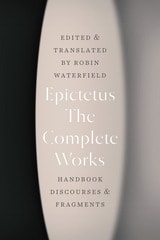
The Complete Works
Handbook, Discourses, and FragmentsEpictetus
University of Chicago Press, 2022
“Some things are up to us and some are not.”
Epictetus was born into slavery around the year 50 CE, and, upon being granted his freedom, he set himself up as a philosophy teacher. After being expelled from Rome, he spent the rest of his life living and teaching in Greece. He is now considered the most important exponent of Stoicism, and his surviving work comprises a series of impassioned discourses, delivered live and recorded by his student Arrian, and the Handbook, Arrian’s own take on the heart of Epictetus’s teaching.
In Discourses, Epictetus argues that happiness depends on knowing what is in our power to affect and what is not. Our internal states and our responses to events are up to us, but the events themselves are assigned to us by the benevolent deity, and we should treat them—along with our bodies, possessions, and families—as matters of indifference, simply making the best use of them we can. Together, the Discourses and Handbook constitute a practical guide to moral self-improvement, as Epictetus explains the work and exercises aspirants need to do to enrich and deepen their lives. Edited and translated by renowned scholar Robin Waterfield, this book collects the complete works of Epictetus, bringing to modern readers his insights on how to cope with death, exile, the people around us, the whims of the emperor, fear, illness, and much more.
CUSTOMER NOTE: THE HARDCOVER IS FOR LIBRARIES AND HAS NO JACKET.
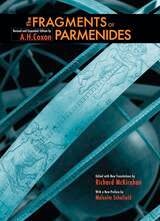
The Fragments of Parmenides
A Critical Text With Introduction and Translation, the Ancient Testimonia and a CommentaryA. H, Coxon
Parmenides Publishing, 2009
With a New Preface by Malcolm Schofield
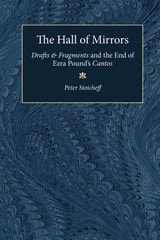
The Hall of Mirrors
Drafts & Fragments and the End of Ezra Pound's CantosPeter Stoicheff
University of Michigan Press, 1995
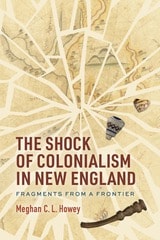
The Shock of Colonialism in New England
Fragments from a FrontierMeghan C. L. Howey
University of Alabama Press, 2025
Explores the untold impacts of colonialism in New England through diverse colonist lives, Indigenous encounters, and environmental legacies.
In The Shock of Colonialism in New England, archaeologist Meghan C. L. Howey uses excavations in the seventeenth-century colonial frontier of the Great Bay Estuary/P8bagok in today’s New Hampshire to trace the connection between European global colonialism and the planetary climate crises. Howey shows how this landscape holds forgotten stories of what it meant to live through the shock of colonialism.
These stories reveal an unexpected diversity and dynamism among English colonists, multifaceted encounters with Indigenous peoples, and lasting environmental damage from labor-intensive industries. Early Euro-American maps and stunning archaeological finds, such as a broken pickaxe embedded in a hearth, and a historical marker for the Oyster River “Massacre” of 1694 complicate our limited views of a shared past.
The reality of English colonialism in the dispossession of Indigenous lands and its wake is not commemorated. Howey’s work is a powerful corrective that traces the rise of intergenerational colonial wealth made possible by land commodified as property, the increased labor required to work newly opened land, the importation of indentured Scots and enslaved Africans to provide that labor, and the resulting degradation of the natural environment. Through Howey’s insights into the stories they tell, these fragments from a frontier can help contemporary readers better understand the past as they seek a more just and sustainable future.
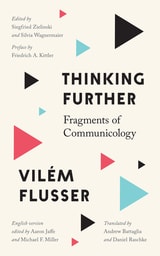
Thinking Further
Fragments of CommunicologyVilém Flusser
University of Minnesota Press, 2026
The first English-language translation of Vilém Flusser’s final series of lectures: the definitive introduction to his methods and ideas in new media theory
In summer 1991, shortly before his death, Vilém Flusser gave a series of lectures as guest professor at Ruhr University Bochum at the invitation of Friedrich Kittler. Flusser intended for these lectures to be the definitive introduction to his “communicology,” the study of human communication and the means by which acquired information is saved, processed, and passed on. In Thinking Further, Aaron Jaffe and Michael F. Miller have curated “fragments” from these lectures—first published in German in 2008—to present the most exciting and timely parts of Flusser’s foundational contributions to what is now known as media studies.
These fragments capture Flusser’s engagements with a wide range of theories, approaches, and interventions, including ecocriticism, posthumanities, game theory, cybernetics, and translinguistic exchanges. Offering sustained engagements with the ideas of Walter Benjamin, Michel Foucault, Michel Serres, and Jean Baudrillard, Thinking Further models possibilities for thinking through and clarifying the most obscure and obdurate implications of technology and modernity.
As they demonstrate Flusser’s contextual positionality and antiuniversalism, the writings presented here also underscore the pleasures and the power of his aphoristic style. Focusing less on Flusser-as-philosopher and more on his role as wry sage at the end of history, Thinking Further is a comprehensive but approachable introduction to his boundary-transcending exploration of the possibilities for communication, writing, and the human condition.
Retail e-book files for this title are screen-reader friendly.
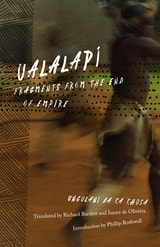
Ualalapi
Fragments from the End of EmpireUngulani Ba Ka Khosa
Tagus Press, 2017
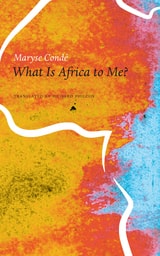
What Is Africa to Me?
Fragments of a True-to-Life AutobiographyMaryse Condé
Seagull Books, 2017
What Is Africa to Me? traces the late 1950s to 1968, chronicling Condé’s life in Sékou Touré’s Guinea to her time in Kwame N’Krumah’s Ghana, where she rubbed shoulders with Malcolm X, Che Guevara, Julius Nyerere, and Maya Angelou. Accusations of subversive activity resulted in Condé’s deportation from Ghana. Settling down in Sénégal, Condé ended her African years with close friends in Dakar, including filmmakers, activists, and Haitian exiles, before putting down more permanent roots in Paris.
Condé’s story is more than one of political upheaval, however; it is also the story of a mother raising four children as she battles steep obstacles, of a Guadeloupean seeking her identity in Africa, and of a young woman searching for her freedom and vocation as a writer. What Is Africa to Me? is a searing portrait of a literary genius—it should not be missed.
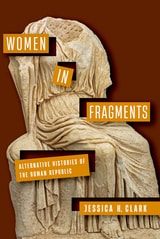
Women in Fragments
Alternative Histories of the Roman RepublicJessica H. Clark
University of Wisconsin Press, 2026
Our sources of knowledge about women in the ancient Roman Republic are flawed. Roman historians were uniformly male, as were most historians of ancient Rome until quite recently. In the historiography handed down by Enlightenment-era scholars, women generally played marginal and often sexualized roles, relegated to the footnotes by historians who assumed the Roman Republic to be fully androcentric. The evidence, however, suggests otherwise. In this detailed and insightful volume, Jessica H. Clark returns to the source material to gain insight into how Roman men understood the lives, roles, and contributions of the women they wrote about.
Reexamining the puzzle pieces of ancient literature, Clark proposes that the earliest Roman historians represented women in complex ways, revealing their appreciation of women’s communities and women’s engagement in the project of the Republic, in contrast to the attitudes assumed by scholars in the eighteenth and nineteenth centuries. She attributes those scholars’ assumptions to the social and political circumstances of their own times and demonstrates how these assumptions have continued to inform our own perceptions of Roman women and therefore Roman society more generally. This study ultimately uncovers not only the women of the Roman Republic but also how modern preconceptions have distorted their image and the stories we tell about ancient Rome.