Results by title
3 books match the query 'Framework'
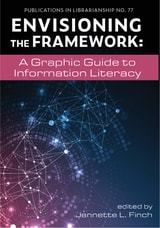
Envisioning the Framework
Jannette Finch
Assoc of College & Research Libraries, 2021
Data visualization—making sense of the world through images that tell a story—has a history that parallels human existence. The strength of visualization lies in its ability to reveal truth out of information that may remain hidden in lines of text, large data sets, or complex ideas. The Framework for Information Literacy for Higher Education presents complex threshold concepts, developed intentionally without prescriptive lists of skills and with flexible options for implementation, which can be explored and understood through visualization.
Envisioning the Framework offers a visual opportunity for thought, discovery, and sense-making of the Framework and its concepts. Seventeen chapters packed with full-color illustrations and tables explore topics including:
Twenty-first-century information literacy involves the metaliterate learner, reflects seismic changes in the duties and roles of teaching librarians, requires new partnerships with faculty and instructional designers, and emphasizes continuous assessment practices. Envisioning the Framework can help you use symbols and visuals for deeper understanding of the Framework, to map the Framework with teaching and learning objectives, and to tell a coherent story to students featuring the frames and the Framework.
Envisioning the Framework offers a visual opportunity for thought, discovery, and sense-making of the Framework and its concepts. Seventeen chapters packed with full-color illustrations and tables explore topics including:
- LibGuides creation through conceptual integration with the Framework
- fostering interdisciplinary transference
- the convergence of metaliteracy with the Framework
- teaching multimodalities and data visualization
- mapping a culturally responsive information literacy journal for international students
Twenty-first-century information literacy involves the metaliterate learner, reflects seismic changes in the duties and roles of teaching librarians, requires new partnerships with faculty and instructional designers, and emphasizes continuous assessment practices. Envisioning the Framework can help you use symbols and visuals for deeper understanding of the Framework, to map the Framework with teaching and learning objectives, and to tell a coherent story to students featuring the frames and the Framework.
[more]
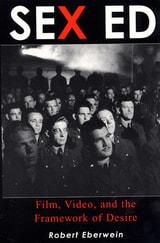
Sex Ed
Film, Video, and the Framework of DesireEberwein, Robert
Rutgers University Press, 1999
In a 1914 movie, Damaged Goods, a doctor shows a character the horrific effects of venereal disease. In contrast, many of today's sex ed videos encourage viewers to realize their sexuality more fully as a source of pleasure. In Sex Ed, Robert Eberwein demonstrates how films and videos used for sex education have provided a complex ideological framework in which questions of sexuality, gender, and race are compellingly foregrounded.
Eberwein starts his investigation in the silent and early sound eras with educational films used both to warn audiences about venereal disease and to provide basic contraception information. World War II movies, he states, waged their own war against venereal disease-in the armed services and at home. Newer works deal with birth control and focus in particular on AIDS.
Sex Ed also highlights the classroom. Eberwein draws connections between the earliest and most recent examples of educational films as he analyzes their ideological complexity. He concludes by examining marriage-manual films of the early 1970s and very recent videos for couples and individuals seeking instruction in sexual techniques to increase pleasure.
[more]
Teaching Information Literacy by Discipline
Using and Creating Adaptations of the FrameworkScott P. Libson
Assoc of College & Research Libraries, 2025
The Framework for Information Literacy for Higher Education has broad applicability that can be customized for different areas of study. Librarians have created companion documents and subject-specific information literacy applications that show the ways the Framework applies to their various fields.
In nine thorough sections, Teaching Information Literacy by Discipline shows the great diversity in how librarians understand, adapt, and apply the Framework. It explores how frames are applied when drafting learning outcomes, building research guides, crafting assignments, designing curricula for a particular discipline, and more.
In nine thorough sections, Teaching Information Literacy by Discipline shows the great diversity in how librarians understand, adapt, and apply the Framework. It explores how frames are applied when drafting learning outcomes, building research guides, crafting assignments, designing curricula for a particular discipline, and more.
- Arts
- Writing
- Humanities
- Interdisciplinary Studies
- Social Sciences
- Business
- Education and Behavioral Studies
- Health
- Sciences
[more]