Results by title
12 books match the query 'Frank Lloyd Wright'
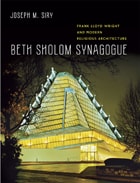
Beth Sholom Synagogue
Frank Lloyd Wright and Modern Religious ArchitectureJoseph M. Siry
University of Chicago Press, 2011
In a suburb just north of Philadelphia stands Beth Sholom Synagogue, Frank Lloyd Wright’s only synagogue and among his finest religious buildings. Designated a National Historic Landmark in 2007, Beth Sholom was one of Wright’s last completed projects, and for years it has been considered one of his greatest masterpieces.
Death in a Prairie House
Frank Lloyd Wright and the Taliesin MurdersDrennan
University of Wisconsin Press, 2008
In response to the scandal generated by his open affair with the proto-feminist and free love advocate Mamah Borthwick Cheney, Wright had begun to build Taliesin as a refuge and "love cottage" for himself and his mistress (both married at the time to others).
Conceived as the apotheosis of Wright’s prairie house style, the original Taliesin would stand in all its isolated glory for only a few months before the bloody slayings that rocked the nation and reduced the structure itself to a smoking hull.
Supplying both a gripping mystery story and an authoritative portrait of the artist as a young man, Drennan wades through the myths surrounding Wright and the massacre, casting fresh light on the formulation of Wright’s architectural ideology and the cataclysmic effects that the Taliesin murders exerted on the fabled architect and on his subsequent designs.
Design in the Age of Darwin
From William Morris to Frank Lloyd WrightStephen F Eisenman
Northwestern University Press, 2008
Charles Darwin’s monumental The Origin of Species, published in 1859, forever changed the landscape of natural science. The scientific world of the time had already established the principle of the “intelligent design” of a Creator; the art world had spent centuries devoting itself to the celebration of such a Designer’s creation. But the language of the book, and its implications, were stunning, and the ripples Darwin made when he rocked the boat spread outward: if he could question the Designer, what effect might there be on the art world, and on mortal designers’ renderings of Creation.
Published in partnership with the Mary and Leigh Block Museum of Art to accompany its exhibit, this catalog of essays and more than fifty color exhibition plates invokes these two senses of “intelligent design”—one from the debates between science and theology and the other from the world of art, particularly architecture and the decorative arts. The extensive exhibition includes furniture, metalware, glassware, textiles, and designs on loan from public and private collections in the United States and England. Among the artwork included are items from William Morris, C. R. Ashbee, Christopher Dresser, C. F. A. Voysey, Frank Lloyd Wright, and Louis Sullivan. Through these pieces and the accompanying examinations, the book explores how popular conceptions of the theory of evolution were used or rejected by British and American artists in the years that followed Darwin’s publication.
Frank Lloyd Wright and His Manner of Thought
Jerome Klinkowitz
University of Wisconsin Press, 2014
Klinkowitz presents a critical biography driven by the architect's own work and intellectual growth, focusing on the evolution of Wright's thinking and writings from his first public addresses in 1894 to his last essay in 1959. Did Wright reject all of Victorian thinking about the home, or do his attentions to a minister's sermon on "the house beautiful" deserve closer attention? Was Wright echoing the Transcendentalism of Ralph Waldo Emerson, or was he more in step with the philosophy of William James? Did he reject the Arts and Crafts movement, or repurpose its beliefs and practices for new times? And, what can be said of his deep dissatisfaction with architectural concepts of his own era, the dominant modernism that became the International Style? Even the strongest advocates of Frank Lloyd Wright have been puzzled by his objections to so much that characterized the twentieth century, from ideas for building to styles of living.
In Frank Lloyd Wright and His Manner of Thought, Klinkowitz, a widely published authority on twentieth-century literature, thought, and culture, examines the full extent of Wright's books, essays, and lectures to show how he emerged from the nineteenth century to anticipate the twenty-first.
Outstanding Book, selected by the American Association of School Librarians
Best Books for General Audiences, selected by the Public Library Reviewers
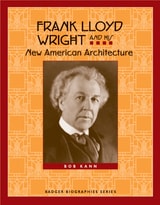
Frank Lloyd Wright and His New American Architecture
Bob Kann
Wisconsin Historical Society Press, 2010
From boyhood adventures to the creation of visionary buildings like the Guggenheim Museum, Frank Lloyd Wright and His New American Architecture chronicles the vibrant life of one of the world's most famous architects.
Wright's love of architecture was nurtured early on-from paintings of European cathedrals hung in his childhood room; to "Froebel Gifts" building blocks, which he crafted into crude structures; to long walks near the Wisconsin River, where his mother pointed out patterns and colors in nature. Wright also learned, from summers spent on his uncle's Spring Green farm, that adversity is part of life. And perhaps this helped him weather a life beset with both tragedy and triumph.
Wright's prolific career spanned more than 70 years, and he created more than 1,100 designs. Author Bob Kann brings readers into the eccentric stories behind some of Wright's landmark buildings. Find out about Wright's Oak Park home, known to locals as "the house with a tree growing through it;" the Robie House, which is shaped like a battleship; and Fallingwater, which is built on a waterfall. Learn how Wright successfully built the Imperial Hotel in Tokyo to withstand earthquakes, and how the Johnson Wax Building and Guggenheim Museum set new standards in institutional architecture.
Frank Lloyd Wright
A BiographyMeryle Secrest
University of Chicago Press, 1998
The result is the most engaging and thorough account ever of Wright's life, work, and professional and personal circle, a gripping account of a complicated, challenging genius.
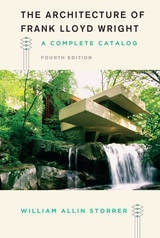
The Architecture of Frank Lloyd Wright, Fourth Edition
A Complete CatalogWilliam Allin Storrer
University of Chicago Press, 2017
William Allin Storrer is one of the experts leading this charge, and his definitive guide, The Architecture of Frank Lloyd Wright, has long been the resource of choice for anyone interested in Wright. Thanks to the work of Storrer and his colleagues at the Rediscovering Wright Project, thirty-seven new sites have recently been identified as the work of Wright. Together with more photos, updated and expanded entries, and a new essay on the evolution of Wright’s unparalleled architectural style, this new edition is the most comprehensive and authoritative catalog available.
Organized chronologically, the catalog includes full-color photos, location information, and historical and architectural background for all of Wright’s extant structures in the United States and abroad, as well as entries for works that have been demolished over the years. A geographic listing makes it easy for traveling Wright fans to find nearby structures and a new key indicates whether a site is open to the public.
Publishing for Wright’s sesquicentennial, this new edition will be a trusted companion for anyone embarking on their own journeys through the wonder and genius of Frank Lloyd Wright.
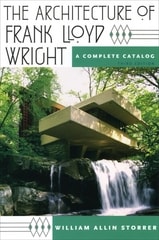
The Architecture of Frank Lloyd Wright
A Complete CatalogWilliam Allin Storrer
University of Chicago Press, 2002
This edition includes a number of new features. It provides information on Frank Lloyd Wright buildings discovered since the first edition. It features full-color photographs to highlight those buildings that remain essentially as they were first built. To facilitate its use as a convenient field guide, this durable flexibound edition gives full addresses with each entry, as well as GPS coordinates, and offers maps giving the shortest route to each building. Preserving the chronological order of past editions, the catalog allows readers to trace the progression of Frank Lloyd Wright's built designs from the early Prairie school works to the last building constructed to Wright's specifications on the original site—the Aime and Norman Lykes residence.
The Architecture of Frank Lloyd Wright will be indispensable for anyone fascinated with Wright's unique architectural genius.
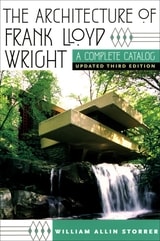
The Architecture of Frank Lloyd Wright
A Complete Catalog, Updated 3rd EditionWilliam Allin Storrer
University of Chicago Press, 2007
This updated third edition revisits each of Wright’s extant structures, tracing the architect’s development from his Prairie works, such as the Frederick Robie house in Chicago, to the last building constructed to his specifications, the magnificent Aime and Norman Lykes residence in Arizona. Renowned expert William Storrer deftly incorporates a series of key revisions and brings each structure’s history up to the present day, as some buildings have been refurbished, some moved, and others sadly abandoned or destroyed by natural disasters like Hurricane Katrina—including the James Charnley bungalow in Ocean Springs, Mississippi.
Organized chronologically, this updated third edition features full-color photographs of all extant work along with a description of each building and its history. Storrer also provides full addresses, GPS coordinates, and maps of locations throughout the United States, England, and Japan, indicating the shortest route to each building—perfect for Wright aficionados on the go.
From Fallingwater to the Guggenheim, Frank Lloyd Wright is the undisputed master of American architecture. Now fully revised, The Architecture of Frank Lloyd Wright: A Complete Catalog will be indispensable for anyone fascinated with the architect’s unique genius.
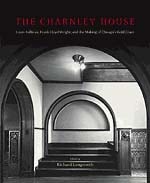
The Charnley House
Louis Sullivan, Frank Lloyd Wright, and the Making of Chicago's Gold CoastEdited by Richard Longstreth
University of Chicago Press, 2004
In this collection of original essays, six well-known architectural historians illuminate various aspects of the house, both inside and out, as they consider its remarkable formal and spatial qualities, its historical significance in the development of Chicago's elite residential neighborhood, and its place in the context of American domestic architecture. Equally important, the contributors tackle the knotty, decades-old issue concerning the building's designer. While many have ascribed the scheme to Frank Lloyd Wright, Louis Sullivan's chief assistant at the time, this book sheds new light on how the house relates significantly to the work of both master and apprentice.
The continuing debate over the house's "authorship" highlights the importance of the Charnley house in the history of modern architecture as the seminal work of residential design in the United States. These thoroughly researched interpretations, supplemented by an abundance of never before published illustrations, analyze this house of distinction with the care and detail it deserves. Beautifully restored in late 1980s, the Charnley house now has a book worthy of it.
The Oak Park Studio of Frank Lloyd Wright
Lisa D. Schrenk
University of Chicago Press, 2021
With a rich narrative voice and meticulous detail, Schrenk tracks the practice’s evolution: addressing how the studio fit into the Chicago-area design scene; identifying other architects working there and their contributions; and exploring how the suburban setting and the nearby presence of Wright’s family influenced office life. Built as an addition to his 1889 shingle-style home, Wright’s studio was a core site for the ideological development of the prairie house, one of the first truly American forms of residential architecture. Schrenk documents the educational atmosphere of Wright’s office in the context of his developing design ideology, revealing three phases as he transitioned from colleague to leader. This heavily illustrated book includes a detailed discussion of the physical changes Wright made to the building and how they informed his architectural thinking and educational practices. Schrenk also addresses the later transformations of the building, including into an art center in the 1930s, its restoration in the 1970s and 80s, and its current use as a historic house museum.
Based on significant original and archival research, including interviews with Wright’s family and others involved in the studio and 180 images, The Oak Park Studio of Frank Lloyd Wright offers the first comprehensive look at the early independent office of one of the world’s most influential architects.
The Robie House of Frank Lloyd Wright
Joseph Connors
University of Chicago Press, 1984