Results by title
19 books match the query 'Friends'
A Nation of Family and Friends?
Sport and the Leisure Cultures of British Asian Girls and WomenAarti Ratna
Rutgers University Press, 2024
Ratna also examines two key cultural objects - the popular films "Bend it Like Beckham" and “Dhan Dhana Dhan Goal” - to examine in detail the gendered representation of South Asian soccer players’ engagement in amateur and elite levels of the sport. She critiques studies of women’s football fandom and sport that fail to acknowledge social differences relating to race, class, age, disability, and sexuality. By linking the social forces (across time and space) that differentially affect their sporting choices and leisure lifestyles, Ratna portrays the women of the South Asian diaspora as active agents in the shaping of their life courses and as skilled navigators of the complexities affecting their own identities. Ultimately Ratna examines the intersections of class, caste, age, generation, gender, and sexuality, to provide a rich and critical exploration of British Asian women's sport and leisure choices, pleasures, and lived realities.

A Psychiatric Primer for the Veteran’s Family and Friends
Alexander G. Dumas and Grace Graham Keen
University of Minnesota Press, 1945
A Psychiatric Primer for the Veteran's Family and Friends was first published in 1945. Minnesota Archive Editions uses digital technology to make long-unavailable books once again accessible, and are published unaltered from the original University of Minnesota Press editions.
For the individual as for the nation, war is not done with when the guns stop firing and the soldiers come home. Its continuing effects are easily recognized in the lives of the maimed and the disfigured; they are no less distressingly real for those whose injuries are of the mind and emotions and nerves. And of these a half million or more have been discharged from the armed services.
What can families and friends do to help these men on their road back to health? A Psychiatric Primer answers this question in direct and practical terms. Affection and the best of intentions cannot alone tell one how to deal wisely and effectively with war torn nerves in a husband, son, friend, or fellow worker. One needs also intelligent understanding and a sound knowledge of the truly helpful attitude and behavior in a given situation. It is this understanding and this knowledge that A Psychiatric Primer offers to families and friends of returned servicemen.

Adolescent Relations with Mothers, Fathers and Friends
James Youniss and Jacqueline Smollar
University of Chicago Press, 1987
"A must for anyone interested in adolescent behavior."—Edward Z. Dager, Contemporary Sociology
Adventures of Rabbah and Friends
The Talmud's Strange Tales and Their ReadersJames Adam Redfield
SBL Press, 2025

Behind the Walls
A Guide for Families and Friends of Texas Prison InmatesJorge Antonio Renaud
University of North Texas Press, 2002
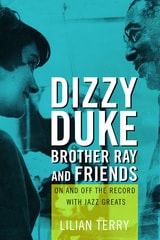
Dizzy, Duke, Brother Ray, and Friends
On and Off the Record with Jazz GreatsLillian Terry
University of Illinois Press, 2017
Drawing on Terry’s long friendships and professional associations, Dizzy, Duke, Brother Ray, and Friends offers readers a rare opportunity to hear intimate conversations with some of the world’s greatest musical figures. Dizzy Gillespie offers his thoughts on playing with “sanctified” rhythm and the all-important personal touch in performance. Duke Ellington discourses on jazz history and concludes an interview to sing a self-written ditty in Italian. Ray Charles gives candid thoughts on race and politics while taking charge of Terry’s tape recorder. Abbey Lincoln, Max Roach, Horace Silver, Bill Evans—all provide Terry and her readers with unforgettable encounters. The result is a collection of profiles, some stretching over a decade or more, that reveal these performers in ways that illuminate their humanity and expand our appreciation of their art.

Even More Great Ideas for Libraries and Friends
Sally Gardner Reed
American Library Association, 2008
Feminism and the Politics of Childhood
Friends or Foes?Edited by Rachel Rosen and Katherine Twamley
University College London, 2018
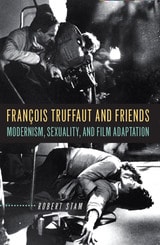
François Truffaut and Friends
Modernism, Sexuality, and Film AdaptationStam, Robert
Rutgers University Press, 2006
Drawing on this film and others by Truffaut, Robert Stam provides the first in-depth examination of the multifaceted relationship between Truffaut and Roch. In the process, he provides a unique lens through which to understand how adaptation works-from history to novel, and ultimately to film-and how each form of expression is inflected by the period in which it is created. Truffaut's adaptation of Roch's work, Stam suggests, demonstrates how reworkings can be much more than simply copies of their originals; rather, they can become an immensely creative enterprise-a form of writing in itself.
The book also moves beyond Truffaut's film and the mnage--trois involving Roch, Hessel, and Grund to explore the intertwined lives and work of other famous artists and intellectuals, including Marcel Duchamp, Walter Benjamin, and Charlotte Wolff. Tracing the tangled webs that linked these individuals' lives, Stam opens the door to an erotic/writerly territory where the complex interplay of various artistic sensibilities-all mulling over the same nucleus of feelings and events-vividly comes alive.
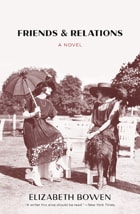
Friends and Relations
A NovelElizabeth Bowen
University of Chicago Press, 2012
In his introduction to a collection of criticism on the Anglo-Irish author Elizabeth Bowen, Harold Bloom wrote, “What then has Bowen given us except nuance, bittersweet and intelligent? Much, much more.” Born in 1899, Bowen became part of the famous Bloomsbury scene, and her novels have a much-deserved place in the modernist canon. In recent years, however, her work has not been as widely read or written about, and as Bloom points out, her evocative and sometimes enigmatic prose requires careful parsing. Yet in addition to providing a fertile ground for criticism, Bowen’s novels are both wonderfully entertaining, with rich humor, deep insight, and a tragic sense of human relationships.
Friends and Relations follows the exploits of four wealthy families whose lives are changed forever by a torrid affair. The Studdart sisters each take a husband; for beautiful Laurel there is Edward Tilney, and for the introverted Janet there is Rodney Meggatt. But the marriages are complicated by changeable passions, and each character must navigate the conflict between familial piety and individual desire. With Bowen’s signature blend of tragedy and comedy, Friends and Relations is truly an investigation into the human heart, and the book is as beautiful, mysterious, and moving as its subject.

Friends of Alice Wheeldon
Sheila Rowbotham
Pluto Press, 1986

Friends of the Unrighteous Mammon
Northern Christians and Market Capitalism, 1815-1860Stewart Davenport
University of Chicago Press, 2008
Drawing on diverse primary sources, Davenport identifies three distinct Christian responses to market capitalism: assurance from clerical economists who believed in the righteousness of economic development; opposition from contrarians who resisted the changes around them; and adaptation by the pastoral moralists who modified their faith to meet the ethical challenges of the changing economy. Delving into the minds of antebellum Christians as they considered themselves, their God, and their developing American economy, Friends of the Unrighteous Mammon is an ambitious intellectual history of an important development in American religious and economic life.
Quakers Or Our Neighbors, the Friends
William Whalen
QuakerPress, 1982
Selected Passages from Correspondence with Friends
Nikolai Vasilevich Gogol
Vanderbilt University Press, 1969

Still Connected
Family and Friends in America Since 1970Claude S. Fischer
Russell Sage Foundation, 2011

Surviving Modern Medicine
How to Get the Best From Doctors, Family, and FriendsClarke, Peter
Rutgers University Press, 1998
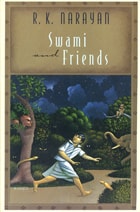
Swami and Friends
R. K. Narayan
University of Chicago Press, 1980
Offering rare insight into the complexities of Indian middle-class society, R. K. Narayan traces life in the fictional town of Malgudi. The Dark Room is a searching look at a difficult marriage and a woman who eventually rebels against the demands of being a good and obedient wife. In Mr. Sampath, a newspaper man tries to keep his paper afloat in the face of social and economic changes sweeping India. Narayan writes of youth and young adulthood in the semiautobiographical Swami and Friends and The Bachelor of Arts. Although the ordinary tensions of maturing are heightened by the particular circumstances of pre-partition India, Narayan provides a universal vision of childhood, early love and grief.
"The experience of reading one of his novels is . . . comparable to one's first reaction to the great Russian novels: the fresh realization of the common humanity of all peoples, underlain by a simultaneous sense of strangeness—like one's own reflection seen in a green twilight."—Margaret Parton, New York Herald Tribune
"The novels of R.K. Narayan are the best I have read in any language for a long time. . . . His work gives the conviction that it is possible to capture in English, a language not born of India, the distinctive characteristics of Indian family life."—Amit Roy, Daily Telegraph

The Color of Strangers, the Color of Friends
Alan Peshkin
University of Chicago Press, 1991
"Peshkin strikes a hopeful chord, revealing what social encounters among ethnic groups—at their best—can be like in America."—Education Digest

The Dylan Tapes
Friends, Players, and Lovers Talkin’ Early Bob DylanAnthony Scaduto
University of Minnesota Press, 2021
The raw material and interviews behind Anthony Scaduto’s iconic biography of Bob Dylan draw an intimate and multifaceted portrait of the singer-songwriter who defined his era
When Anthony Scaduto’s Bob Dylan: An Intimate Biography was first published in 1971, the Nobel Prize–winning songwriter, at thirty, had already released some of the most iconic albums of the 1960s, including Highway 61 Revisited and Blonde on Blonde. Scaduto’s book was one of the first to take an investigative journalist’s approach to its subject and set the standard for rock music biography. The Dylan Tapes, compiled from thirty-six hours of interviews, is a behind-the-scenes look at the making of Scaduto’s landmark book—and a close-up encounter with pivotal figures in Dylan’s life. These reel-to-reel tapes, found in a box in Scaduto’s basement, are a never-bootlegged trove of archival material about Dylan, drawn from conversations with those closest to him during the early years of his career.
In the era of ten-second takes, these interviews offer uncommon depth and immediacy as we listen to friends and lovers recall the Dylan they knew as he created his professional persona and perfected his craft—from folk music, protest songs, and electric rock through the traumatic impact of a motorcycle crash to his later, more self-reflecting songwriting. Echo Helstrom, Dylan’s “Girl from the North Country,” is here, as are Suze Rotolo, who graced the cover of the Freewheelin’ album, and Joan Baez, remembering her relationship “to Bobby.” We hear from Mike Porco, who gave Dylan his first gig in New York City; Sid and Bob Gleason, who introduced him to his hero Woody Guthrie; folk artists from Greenwich Village, like Phil Ochs and Ramblin’ Jack Eliot; John Hammond Sr., who gave him his first record contract; plus a host of musicians, activists, folk historians, and archivists—and, of course, Dylan himself.
From these reflections and frank conversations, many published here for the first time, a complex, finely observed picture emerges of one of the best known yet most enigmatic musicians of our time.