Results by title
9 books match the query 'Fuchs, Christian'
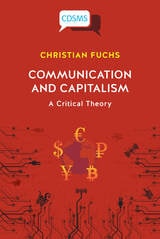
Communication and Capitalism
A Critical TheoryChristian Fuchs
University of Westminster Press, 2020
‘An authoritative analysis of the role of communication in contemporary capitalism and an important contribution to debates about the forms of domination and potentials for liberation in today’s capitalist society.’ — Professor Michael Hardt, Duke University, co-author of the tetralogy Empire, Commonwealth, Multitude, and Assembly
‘A comprehensive approach to understanding and transcending the deepening crisis of communicative capitalism. It is a major work of synthesis and essential reading for anyone wanting to know what critical analysis is and why we need it now more than ever.’ — Professor Graham Murdock, Emeritus Professor, University of Loughborough and co-editor of The Handbook of Political Economy of Communications
Communication and Capitalism outlines foundations of a critical theory of communication. Going beyond Jürgen Habermas’ theory of communicative action, Christian Fuchs outlines a communicative materialism that is a critical, dialectical, humanist approach to theorising communication in society and in capitalism. The book renews Marxist Humanism as a critical theory perspective on communication and society.
The author theorises communication and society by engaging with the dialectic, materialism, society, work, labour, technology, the means of communication as means of production, capitalism, class, the public sphere, alienation, ideology, nationalism, racism, authoritarianism, fascism, patriarchy, globalisation, the new imperialism, the commons, love, death, metaphysics, religion, critique, social and class struggles, praxis, and socialism.
Fuchs renews the engagement with the questions of what it means to be a human and a humanist today and what dangers humanity faces today.
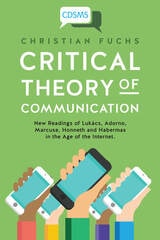
Critical Theory of Communication
New Readings of Lukács, Adorno, Marcuse, Honneth and Habermas in the Age of the InternetChristian Fuchs
University of Westminster Press, 2016
Critical Theory of Communication offers a vital set of new insights on how communication operates in the age of information, digital media and social media, arguing that we need to transcend the communication theory of Habermas by establishing a dialectical and cultural-materialist critical theory of communication.
It is the first title in a major new book series 'Critical Digital and Social Media Studies' published by the University of Westminster Press.
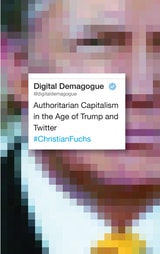
Digital Demagogue
Authoritarian Capitalism in the Age of Trump and TwitterChristian Fuchs
Pluto Press, 2018
This book delves into new political-economic structures as expressed through political communication to explain the rise of authoritarian capitalism, nationalism and right-wing ideology throughout the world. Christian Fuchs does this through updating Marxist theory and the Frankfurt School's critical theory. He re-invigorates the works on authoritarianism of Franz L. Neumann, Theodor W. Adorno, Erich Fromm, Herbert Marcuse, Max Horkheimer, Wilhelm Reich, Leo Lowenthal and Klaus Theweleit in the age of Trump and Twitter.
In the age of big data and social media, Digital Demagogue studies the expressions of ideology, nationalism and authoritarianism today and discusses prospects for overcoming capitalism and renewing the Left.
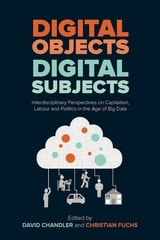
Digital Objects, Digital Subjects
Interdisciplinary Perspectives on Capitalism, Labour and Politics in the Age of Big DataDavid Chandler and Christian Fuchs
University of Westminster Press, 2019
This volume explores activism, research and critique in the age of digital subjects and objects and Big Data capitalism after a digital turn said to have radically transformed our political futures. Optimists assert that the ‘digital’ promises: new forms of community and ways of knowing and sensing, innovation, participatory culture, networked activism, and distributed democracy. Pessimists argue that digital technologies have extended domination via new forms of control, networked authoritarianism and exploitation, dehumanization and the surveillance society. Leading international scholars present varied interdisciplinary assessments of such claims – in theory and via dialogue – and of the digital’s impact on society and the potentials, pitfalls, limits and ideologies, of digital activism. They reflect on whether computational social science, digital humanities and ubiquitous datafication lead to digital positivism that threatens critical research or lead to new horizons in theory and society.
An electronic version of this book is freely available, thanks to the support of libraries working with Knowledge Unlatched. KU is a collaborative initiative designed to make high quality books Open Access for the public good. More information about the initiative and details about KU’s Open Access programme can be found at www.knowledgeunlatched.org.
Rereading Marx in the Age of Digital Capitalism
Christian Fuchs
Pluto Press, 2019
The Online Advertising Tax as the Foundation of a Public Service Internet
a CAMRI extended policy reportChristian Fuchs
University of Westminster Press, 2018
Online advertising will soon form the largest share of global advertisement revenues. Google and Facebook netted profits of US $29 billion in 2016. While these two giants control more than 66% of all online advertising revenues complex legal company structures have minimised their tax liabilities. This extended policy report considers where they should be taxed and where the value of their activities is actually created. It argues that tax paid by those platforms should be levied in the country where platform users are located when they click on or view an advertisement. Furthermore, the report examines the practical steps needed to ensure transparent accounting of taxed transactions in order to avoid long term negative effects for media and democracy.
Considering counter-arguments the author makes the case for an online advertising tax alongside a public service Internet strategy that could support other viable platforms and counter the dangers of duopoly or oligopoly and the high risks of financial bubbles in a world where advertising is the Internet's dominant business model.
The Online Advertising Tax
A Digital Policy InnovationChristian Fuchs
University of Westminster Press, 2018
Google and Facebook currently control close to two-thirds of global advertising revenue. While dominating the online advertising market, these two companies have thus far avoided paying adequate taxes.
This CAMRI policy brief presents a new policy innovation, the online advertising tax. Considering the key role of user activity and user data for the value of Google and Facebook’s services, it explains how digital advertising companies’ revenues could be taxed based on the respective country in which targeted users are located.
The author reviews existing policy arguments and policy options and sets out practical steps to ensure that tax avoidance by online advertising companies is mitigated. Furthermore, he illustrates how tax revenues could be used to support public service internet platforms.
The Public Service Media and Public Service Internet Manifesto
Christian Fuchs and Klaus Unterberger
University of Westminster Press, 2021
This book presents the collectively authored Public Service Media and Public Service Internet Manifesto and accompanying materials.The Internet and the media landscape are broken. The dominant commercial Internet platforms endanger democracy. They have created a communications landscape overwhelmed by surveillance, advertising, fake news, hate speech, conspiracy theories, and algorithmic politics. Commercial Internet platforms have harmed citizens, users, everyday life, and society. Democracy and digital democracy require Public Service Media. A democracy-enhancing Internet requires Public Service Media becoming Public Service Internet platforms – an Internet of the public, by the public, and for the public; an Internet that advances instead of threatens democracy and the public sphere. The Public Service Internet is based on Internet platforms operated by a variety of Public Service Media, taking the public service remit into the digital age. The Public Service Internet provides opportunities for public debate, participation, and the advancement of social cohesion.
Accompanying the Manifesto are materials that informed its creation: Christian Fuchs’ report of the results of the Public Service Media/Internet Survey, the written version of Graham Murdock’s online talk on public service media today, and a summary of an ecomitee.com discussion of the Manifesto’s foundations.
The Manifesto can be signed by visiting http://bit.ly/signPSManifesto
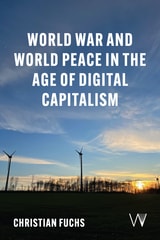
World War and World Peace in the Age of Digital Capitalism
By Christian Fuchs
University of Westminster Press, 2025
In World War and World Peace in the Age of Digital Capitalism, Christian Fuchs asks: how do violence and war manifest themselves in global digital capitalism? How do digital capitalism and digital technologies manifest themselves in violence and warfare? What are the prospects for world peace today?
To prevent world war and advance world peace we need a better understanding of war and violence and their contexts and causes. We need to ask what war is, what violence is, what war and peace look like today and how they have changed in the 21st century. This book addresses these urgent questions and provides possible answers.