Results by title
10 books match the query 'Gandhi, Mahatma'

Disarming Manhood
Roots of Ethical ResistanceDavid A.J. Richards
Ohio University Press, 2005
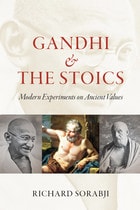
Gandhi and the Stoics
Modern Experiments on Ancient ValuesRichard Sorabji
University of Chicago Press, 2012
Gandhi in India
In His Own WordsMahatma Gandhi and Martin Green
Brandeis University Press, 1987
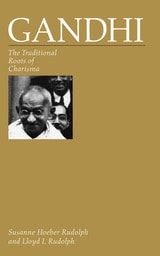
Gandhi
The Traditional Roots of CharismaSusanne Hoeber Rudolph and Lloyd I. Rudolph
University of Chicago Press, 1983

Imperfect Solidarities
Tagore, Gandhi, Du Bois, and the Global AnglophoneMadhumita Lahiri
Northwestern University Press, 2021
A century ago, activists confronting racism and colonialism—in India, South Africa, and Black America—used print media to connect with one another. Then, as now, the most effective medium for their undertakings was the English language. Imperfect Solidarities: Tagore, Gandhi, Du Bois, and the Global Anglophone tells the story of this interconnected Anglophone world. Through Rabindranath Tagore’s writings on China, Mahatma Gandhi’s recollections of South Africa, and W. E. B. Du Bois’s invocations of India, Madhumita Lahiri theorizes print internationalism. This methodology requires new terms within the worldwide hegemony of the English language (“the global Anglophone”) in order to encourage alternate geographies (such as the Global South) and new collectivities (such as people of color).
The women of print internationalism feature prominently in this account. Sonja Schlesin, born in Moscow, worked with Indians in South Africa. Sister Nivedita, an Irish woman in India, collaborated with a Japanese historian. Jessie Redmon Fauset, an African American, brought the world home to young readers through her work as an author and editor.
Reading across races and regions, genres and genders, Imperfect Solidarities demonstrates the utility of the neologism for postcolonial literary studies.

Intimate Relations
Exploring Indian SexualitySudhir Kakar
University of Chicago Press, 1990
Kakar's sources are primarily textual, celebrating the primacy of the story in Indian life. He practices a cultural psychology that distills the psyches of individuals from the literary products and social institutions of Indian culture. These include examples of lurid contemporary Hindi novels; folktales; Sanskrit, Tamil, and Hindi proverbs; hits of the Indian cinema; Gandhi's autobiography; interviews with women from the slums of Delhi; and case studies from his own psychoanalytic practice. His attentive readings of these varied narratives from a vivid portrait of sexual fantasies and realities, reflecting the universality of sexuality as well as cultural nuances specific to India.
Moving from genre to genre, Kakar offers a brilliant reading of verses from the Laws of Manu, the original source of Hindu religious laws, to uncover their psychological foundations—male terror of the female sexual appetite that shields itself by idealizing women's maternal role. Kakar also examines the psychosexual history of Gandhi at length, though his near-lifelong celibacy makes him an atypical subject. Gandhi's story is universal, Kakar says, because "we all wage war on our wants."
In India's lore and tradition, complex symbols abound—snakes that take the shape of sensual women or handsome men, celibates sleep with naked women, gods rape their daughters, and a goddess fries a king in oil. With the analyst's "third ear," Kakar listens, decodes, and translates the psychological longings that find expression in Indian sexual relations.

Mad and Divine
Spirit and Psyche in the Modern WorldSudhir Kakar
University of Chicago Press, 2009
Sudhir Kakar, India’s foremost practitioner of psychoanalysis, has focused his career on infusing this preeminently Western discipline with ideas and views from the East. In Mad and Divine, he takes on the separation of the spirit and the body favored by psychoanalysts, cautioning that a single-minded focus on the physical denies a person’s wholeness. Similarly, Kakar argues, to focus on the spirit alone is to hold in contempt the body that makes us human.
Mad and Divine looks at the interplay between spirit and psyche and the moments of creativity and transformation that occur when the spirit overcomes desire and narcissism. Kakar examines this relationship in religious rituals and healing traditions— both Eastern and Western—as well as in the lives of some extraordinary men: the mystic and guru Rajneesh, Gandhi, and the Buddhist saint Drukpa Kunley.
Enriched with a novelist’s felicity of language and an analyst’s piercing insights and startling interpretations, Mad and Divine is a valuable addition to the literature on the integration of the spirit and psyche in the evolving psychology of the individual.
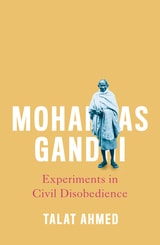
Mohandas Gandhi
Experiments in Civil DisobedienceTalat Ahmed
Pluto Press, 2016
This biography examines his campaigns from South Africa to India to evaluate the successes and failures of non-violent resistance. Seventy years after his death, his legacy remains contested: was he a saint, revolutionary, class conciliator, or self-obsessed spiritual zealot?
The contradictions of Gandhi’s politics are unpicked through an analysis of the social forces at play in the mass movement around him. Entrusted to liberate the oppressed of India, his key support base were industrialists, landlords and the rich peasantry. Gandhi’s moral imperatives often clashed with these vested material interests, as well as with more radical currents to his left.
Today, our world is scarred by permanent wars, racism and violence, environmental destruction and economic crisis. Can non-violent resistance win against state and corporate power? This book explores Gandhi’s experiments in civil disobedience to assess their relevance for struggles today.
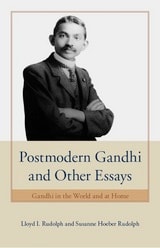
Postmodern Gandhi and Other Essays
Gandhi in the World and at HomeLloyd I. Rudolph and Susanne Hoeber Rudolph
University of Chicago Press, 2006
Gandhi, with his loincloth and walking stick, seems an unlikely advocate of postmodernism. But in Postmodern Gandhi, Lloyd and Susanne Rudolph portray him as just that in eight thought-provoking essays that aim to correct the common association of Gandhi with traditionalism.
Combining core sections of their influential book Gandhi: The Traditional Roots of Charisma with substantial new material, the Rudolphs reveal here that Gandhi was able to revitalize tradition while simultaneously breaking with some of its entrenched values and practices. Exploring his influence both in India and abroad, they tell the story of how in London the young activist was shaped by the antimodern “other West” of Ruskin, Tolstoy, and Thoreau and how, a generation later, a mature Gandhi’s thought and action challenged modernity’s hegemony. Moreover, the Rudolphs argue that Gandhi’s critique of modern civilization in his 1909 book Hind Swaraj was an opening salvo of the postmodern era and that his theory and practice of nonviolent collective action (satyagraha) articulate and exemplify a postmodern understanding of situational truth.
This radical interpretation of Gandhi's life will appeal to anyone who wants to understand Gandhi’s relevance in this century, as well as students and scholars of politics, history, charismatic leadership, and postcolonialism.
Waiting for Mahatma
R. K. Narayan
University of Chicago Press, 1955
"The experience of reading one of his novels is . . . comparable to one's first reaction to the great Russian novels: the fresh realization of the common humanity of all peoples, underlain by a simultaneous sense of strangeness—like one's own reflection seen in a green twilight."—Margaret Parton, New Herald Tribune Book Review
"The hardest of all things for a novelist to communicate is the extraordinary ordinariness of most human happiness. . . . Jane Austen, Soseki, Chekhov: a few bring it off. Narayan is one of them."—Francis King, Spectator
"The novels of R.K. Narayan are the best I have read in any language for a long time."—Amit Roy, Daily Telegraph