Results by title
3 books match the query 'Gastronomy in literature'
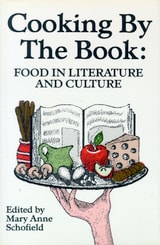
Cooking by the Book
Food in Literature and CultureEdited by Mary Anne Schofield
University of Wisconsin Press, 1989
The essays collected here explore the power and sensuality that food engenders within literature. The book permits the reader to sample food as a rhetorical structure, one that allows the individual writers to articulate the abstract concepts in a medium that is readily understandable.
The second part of Cooking by the Book turns to the more diverse food rhetorics of the marketplace. What, for example, is the fast food rhetoric? Why are there so many eating disorders in our society? Is it possible to teach philosophy through cookery? How long has vegetarianism been popular?
The second part of Cooking by the Book turns to the more diverse food rhetorics of the marketplace. What, for example, is the fast food rhetoric? Why are there so many eating disorders in our society? Is it possible to teach philosophy through cookery? How long has vegetarianism been popular?
[more]

Dining in a Classical Context
William J. Slater, Editor
University of Michigan Press, 1991
An investigation of the role of the feast as a cultural focus for the classical world
[more]
The Ambiguity of Taste
Freedom and Food in European RomanticismJocelyne Kolb
University of Michigan Press, 1995
Between the political revolutions of 1789 and 1848 no other subject so directly challenged the notion of "good taste" in literature as food. To be "in good taste," a work of the high style excluded references to literal taste; culinary allusions in tragedy and lyric poetry therefore represented an ironic attack on literary decorum and a liberation from the constraints of figurative taste.
In The Ambiguity of Taste, Jocelyne Kolb attempts to define changes in genre and metaphorical usage by undertaking close readings of six authors. She looks first at Molière and Fielding, whose culinary allusions herald poetic revolution but whose works do not themselves escape the limits of a neoclassical aesthetic. Byron and Heine, known as renegades, are treated in separate chapters and in the greatest detail. The penultimate chapter joins Goethe and Hugo as champions of poetic freedom, and in the final chapter Kolb briefly considers Thomas Mann and Proust, whose works display the gains of poetic revolution.
This book will be savored by students of comparative literature and European Romanticism. Its accessible style will tempt nonspecialists and food enthusiasts as well.
Jocelyne Kolb is Professor of German Studies, Smith College. This book was the winner of the 1995 American Conference on Romanticism Book Prize.
[more]