Results by title
13 books match the query 'Ghost towns'
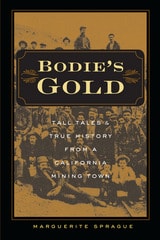
Bodie’s Gold
Tall Tales and True History from a California Mining TownMarguerite Sprague
University of Nevada Press, 2011
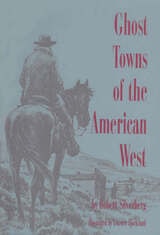
Ghost Towns of the American West
Robert Silverberg
Ohio University Press, 1990
The story of the American mining frontier can be traced through the ghost towns that dot the western landscape to this day, from the camps of California’s forty-niners to the twentieth-century ruins in the Nevada desert. These abandoned towns mark an epoch of high adventure, of quick wealth and quicker poverty, of gambling and gunslinging and hell-raising. Those who have seen the Old West movies sometimes think that the legends of the Wild West were invented by screenwriters. The ghost towns remain, and their battered ruins testify that the legends are true. Behind the tall tales is a history where a fortune could be made in a week and lost over the course of an evening.
With a historian’s attention to fact and a novelist’s gift for dramatic storytelling, celebrated science fiction author Robert Silverberg brings these adventures back to life in the rowdy splendor of their heyday in Ghost Towns of the American West. History and travelers’ tales are woven together with clarity and wit to create a lively account of a fascinating era in our history. Lorence Bjorklund’s illustrations, rich in detail, portray the ghost towns in their glory and in their dusty decline.
Ghosts of the Colorado Plains
Perry Eberhart
Ohio University Press, 1996
Since the second quarter of the nineteenth century, changing conditions have built and emptied small and large towns across the Colorado plain. At the time when Denver was little more than an overpopulated campsite along Cherry Creek there were numerous other settlements to the east and south, each with its own dreams of growth, gold or silver strikes, railroad connections, and rising influence over the surrounding territory. In Ghosts of the Colorado Plains, Eberhart traces some 150 of these ill-fated settlements, providing accounts of their birth, peak activity, and ultimate demise.
As early trapping, mining, cattle, farming, and transportation industries brought successive waves of “easterners” into the territory, they created some of the most colorful communities of their time. The trail towns Boston and Trail City were reputed to be two of the roughest towns in the entire west. Real estate schemers and promoters offered dreams of civilization and respectability in the “cow towns.” Elsewhere, the stage stations, side of the road settlements, and farm centers arose out of the basic necessities of commerce and from a simple desire of far-flung settlers, trappers, and others for a place to congregate, celebrate, trade, brawl, and receive news from the east. Though the personalities and events which animated these communities are all but forgotten, the towns themselves are the legacy of the competing forces that opened and developed the Colorado territory.
Readers of Guide to Colorado Ghost Towns and Mining Camps will welcome Ghosts of the Colorado Plains as an extension of Eberhart’s colorful blend of history and on-site information to a larger and much neglected area of the state. Through historical records, vignettes of personalities, and over 250 photos and 80 maps, Eberhart provides ready access to the towns and settlment sites of eastern Colorado’s past. For travelers, Ghosts of the Colorado Plains offers numerous pleasant excursions and investigations; for those less inclined to take to the field in search of artifacts and sites, the book offers fascinating glimpses of Colorado’s disappearing past.
Guide to the Colorado Ghost Towns and Mining Camps
And Mining CampsPerry Eberhart
Ohio University Press, 1969
"This is not a history book. Rather it is a directory of towns, and compilation of known information about those towns. In undertaking the stud, I was amazed at the amount of legend and contradictory information Colorado history has collected in just one hundred years. Who was it that said: 'History is the perpetuation of saleable gossip'? (Perhaps, nobody has said it yet. In that case, it's mine, all mine.)
"As of this moment, this is the most complete compilation of Colorado mining towns—ghost or going—available.
"For the fourth edition, over 100 towns have been added. Also, I have included a new chapter (XXVI. Addendum, page 466), the first couple of pages of which can well be read as a second Preface to the book."
— Perry Eberhart, Preface, 1959 and 1969
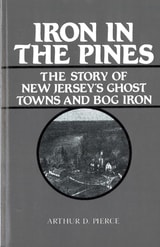
Iron in the Pines
The Story of New Jersey's Ghost Towns and Bog IronPierce, Arthur
Rutgers University Press, 1966
With warmth and accuracy, Arthur D. Pierce tells the story of the years when iron was king, and around it rose a rustic feudal economy. There were glass factories, paper mills, cotton mills, and brickmaking establishments. Here, too, were men who made those years exciting: Benedict Arnold and his first step toward treason; Charles Read, who dreamed of an empire and died in exile; Revolutionary heroes and heroines, privateers, and rogues. The author's vivid pictures of day-to-day life in the old iron communities are based upon careful research. This book proves that the human drama of documented history belies any notion that fiction is stranger than truth.
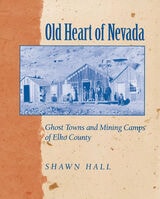
Old Heart Of Nevada
Ghost Towns And Mining Camps Of Elko CountyShawn Hall
University of Nevada Press, 1998
Elko County, in the old heart of Nevada, is rich in historic sites, many of them hitherto uncharted and some verging on disappearing. For the first time, historian Shawn Hall identifies and locates the ghost towns and old mining camps of Elko County and recounts their colorful histories. Following a guidebook format, Hall divides the county into five easily accessible regions, then lists the historic sites within each region and provides directions to reach them. He offers a brief history of each site as well as a description of its extant structures and their present condition. The result is a lively compilation of local history and mining and ranching lore that records the dramatic past of Nevada’s northeast corner, its pioneers and prospectors, its towns and mines, its outlaws, ranchers, merchants, mining concerns, and civic leaders. The book offers never-before available information about the old heart of Nevada and the people who settled there. It will be of enduring value to tourists and weekend explorers, historic preservationists, and all those interested in the history and artifacts of this region.
Preserving The Glory Days
Ghost Towns And Mining Camps Of Nye County, NevadaShawn Hall
University of Nevada Press, 1999
Nye County is Nevada’s largest and least populated county, but it is also the site of many of the state’s most colorful ghost towns and mining camps. The county’s economy throughout its history has been largely based on its mines--first, exploiting veins of gold and silver, and more recently deposits of raw materials for modern industry, such as molybdenum and barite. It was here that famous boomtowns like Tonopah and Rhyolite sprang up after the discovery of nearby lodes brought in rushes of prospectors and the merchants who supported them. But the county includes many smaller, shorter-lived camps and numerous abandoned stagecoach and railroad stops associated with defunct mining operations.This book offers a lively, informative record of Nevada’s isolated interior. Hall first published a guide to Nye County’s ghost towns in 1981. Since then, he has continued his research into the county’s past and has uncovered much new information and corrected some errors. To prepare this revised and greatly expanded edition, he revisited all 175 sites recorded earlier and has added more than 20 previously unlisted sites.
Romancing Nevada's Past
Ghost Towns And Historic Sites Of Eureka, Lander, And White Pine CountiesShawn Hall
University of Nevada Press, 1993
Skidoo
A Journey through the Ghost Towns of the American WestAlex Capus
Haus Publishing, 2013
Walking in the footsteps of bank robbers and grave diggers, desperadoes and Native Americans, beer brewers and child brides, Capus uncovers story after story of adventure, violence, and exploration. Near Salt Wells, Nevada, he learns the story of a luckless inventor whose corpse was discovered frozen in the desert, an icicle hanging from its nose. In Skidoo, California, he tells us of a brawling bartender, Hootch Simpson, who was hanged twice—once by a mob, once by the law—before being beheaded during his autopsy. And in Flagstaff, Arizona, Capus traces the long-lost origins of Route 66, as a narrow, isolated trail for Edward Fitzgerald Beale’s Camel Corps.
Packed with period detail, and told with a verve and enthusiasm to rival Pecos Bill, the stories in Skidoo are sure to enchant any lover of Western tales or America’s wild history.
Stampede To Timberline
Ghost Towns & MiningMuriel Sibell Wolle
Ohio University Press, 1974
The author searched the Colorado Rockies from the time she saw and sketched her first ghost town until she had rediscovered and painted the vanishing mining camps. Twenty-two maps give the location of each one and serve as a guide for those who want to reach them by car or jeep, by horseback or on foot.
The hardships of the early prospectors, the strikes they made, the gold and silver mines they uncovered, the towns they established, and the rise and fall of their fortunes are vividly recorded.
Names and dates are given of the earliest finds, of the most important mines and the money they made, of the newspapers printed, and of the hotels, churches and theaters erected. The difficult supply routes into the rocky fastnesses are also clearly traced. But all these facts are humanized by an author who is an artist rather than a historian, and to whom all this mining in the Colorado Rockies is essentially the story of heroic pioneer effort—the men and women behind the deeds.
The book contains 212 separate sketches made by the artist-author on the spot at the oftentimes remote and completely deserted mining camps. These pictures, as well as her 1200 other lithographic sketches of Colorado towns, form an invaluable record of places which are rapidly disappearing under the ravages of fire, wind and snow.

Sutherland Springs, Texas
Saratoga on the CiboloRichard B. McCaslin
University of North Texas Press, 2017
Timberline Tailings
Tales Of Colorado'S Ghost Towns And Mining CampsMuriel Sibell Wolle
Ohio University Press, 1993