Results by title
6 books match the query 'Gifted children'
Bricks and Mortar
The Making of a Real Education at the Stanford Online High SchoolJeffrey Scarborough and Raymond Ravaglia
CSLI, 2014
This volume shows how a group of online-learning believers built the best high school in the world without laying a single brick: the Stanford Online High School (SOHS). By chronicling SOHS’s distinctive approach to curriculum, gifted education, and school community over SOHS’s first seven years, Bricks and Mortar makes the case that the dynamic use of technology and the best traditional methodologies in education are not, in fact, mutually exclusive. Indeed, while SOHS has redefined what is possible online, a great education is ultimately the product of an interactive community of teachers and students.
Educating Able Learners
Programs and Promising PracticesBy June Cox, Neil Daniel, and Bruce O. Boston
University of Texas Press, 1985
American education has long been under a microscope. In a time when all aspects of our school system face close scrutiny, educators, administrators, and parents are asking critical questions about how we educate those superior students we call “able learners.”
Our schools reward behavior inappropriate for an independent thinker, researcher, or artist. Programming for our most capable students is fragmented and discontinuous. And yet there are schools and programs that hold significant promise.
This four-year national study from the Sid W. Richardson Foundation provides a broad database, looks into the backgrounds of a few unusually creative individuals, and examines programs with a record of success. It argues in favor of comprehensive programming for able learners, providing a steady challenge for all students, helping to insure that no individual talent withers for want of opportunity. Included are recommendations for discovering and nurturing talent in students (including traditionally neglected groups, the economically disadvantaged, and the culturally diverse), building and administering sound programs, developing appropriately trained staff and teachers, and evaluating effectiveness of programs to assure accountability and add credibility.
Compiling data from diverse sources—including 35 MacArthur Foundation Fellows, 400 schools, 1,172 school districts, and countless school personnel and students—the study looks at programs for able learners throughout the country, from Project Pegasus in Iowa to Oaks Academy in Texas, from Bronx High School of Science in New York to Bishop Carroll High School in Alberta, Canada. The authors’ conclusions based on this broad investigation provide an impassioned call for coordinated schooling and cooperation among all segments of society to develop a new generation of creative, self-motivated students.

Excellent Books for Early and Eager Readers
Kathleen T. Isaacs
American Library Association, 2016
Individual Differences in Online Computer-based Learning
Gifted and Other Diverse PopulationsPatrick Suppes
CSLI, 2013
Perspectives from the Disciplines
Stanford Online High SchoolJeffrey Scarborough and Raymond Ravaglia
CSLI, 0
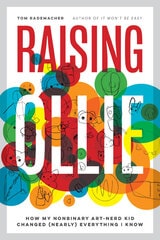
Raising Ollie
How My Nonbinary Art-Nerd Kid Changed (Nearly) Everything I KnowTom Rademacher
University of Minnesota Press, 2021
The account of one radically new school year for a Teacher of the Year and for his nonbinary, art-obsessed, brilliant child
Seven-year-old Ollie was researching local advanced school programs—because every second grader does that, right? Ollie, who used to hate weekends because they meant no school, was crying on the way to school almost every day. Sure, there were the slings and arrows of bullies and bad teachers, but, maybe worse, Ollie, a funny, anxious, smart kid with a thing for choir and an eye for graphic art, was gravely underchallenged and also struggling with identity and how to live totally as themselves. Ollie begged to switch to a new school with “kids like me,” where they wouldn’t feel so alone, or so bored, and so they made the change.
Raising Ollie is dad Tom Rademacher’s story (really, many stories) of that eventful and sometimes painful school year, parenting Ollie and relearning every day what it means to be a father and teacher. As Ollie—who is nonbinary and uses they/them pronouns, and prefers art to athletics, vegetables to cake, and animals to most humans—flourishes in their new school, Rademacher is making an eye-opening adjustment to a new school of his own, one that’s whiter and more suburban than anywhere he has previously taught, with a history of racial tension that he tries to address and navigate.
While Ollie is learning to code, 3D model, animate, speak Japanese, and finally feel comfortable at school, Rademacher increasingly sees how his own educational struggles, anxieties, and childhood upbringing are reflected in his teaching, writing, and parenting, as well as in Ollie’s experience. And with this story of one anything-but-academic year of inquiry and wonder, doubt and revelation, he shows us how raising a kid changes everything—and how much raising a kid like Ollie can teach us about who we are and what we’re doing in the world.