Results by title
15 books match the query 'Global'
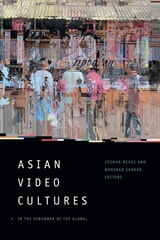
Asian Video Cultures
In the Penumbra of the GlobalJoshua Neves and Bhaskar Sarkar, editors
Duke University Press, 2017
Contributors. Conerly Casey, Jenny Chio, Michelle Cho, Kay Dickinson, Bishnupriya Ghosh, Feng-Mei Heberer, Tzu-hui Celina Hung, Rahul Mukherjee, Joshua Neves, Bhaskar Sarkar, Nishant Shah, Abhigyan Singh, SV Srinivas, Marc Steinberg, Chia-chi Wu, Patricia Zimmerman

Feminist Locations
Global and Local, Theory and PracticeDeKoven, Marianne
Rutgers University Press, 2001
Contemporary feminist scholarship has done much to challenge the many binary constructions at the heart of Western culture: white/nonwhite, theory/practice, and, most notably, masculine/feminine. Feminist criticism has reshaped these conceptions by breaking them apart and reconfiguring them into intersecting, relational fields of difference. The contributors to this collection look to the future of feminist theory and practice, specifically in terms of their complex relationship with the global and local configurations of postmodernity.
In the first part of this book, current feminist theory is assessed for possible future directions. Part two focuses primarily on political issues and part three on questions of the body. Topics include feminist success versus social backlash, global womens human rights, postcolonial feminism, the politics of reproduction, and narratives of womens aging in postmodern culture.
Contributors: Karen Barad, Anne C. Bellows, Charlotte Bunch, Nao Bustamante, Elaine K. Chang, Marianne DeKoven, Leela Fernandes, Susan Stanford Friedman, Coco Fusco, Radha S. Hegde, Cheryl Johnson-Odim, E. Ann Kaplan, Debra J. Liebowitz, Rajeswari Sunder Rajan, Cynthia Saltzman, Lynne Segal
Figurations of Modernity
Global and Local Representations in Comparative PerspectiveEdited by Vincent Houben and Mona Schrempf
Campus Verlag, 2008
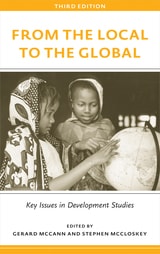
From the Local to the Global, Third Edition
Key Issues in Development StudiesEdited by Gerard McCann and Stephen McCloskey
Pluto Press, 2015
This completely revised third edition takes stock of the international development environment as it embarks on new policy frameworks to confront new challenges, ensuring that From the Local to the Global will continue to serve as an indispensable introduction to key development issues such as aid, debt, trade, migration, security, gender, and climate change.

Imagining the Global
Transnational Media and Popular Culture Beyond East and WestFabienne Darling-Wolf
University of Michigan Press, 2014

Local Church, Global Church
Stephen J.C. Andes
Catholic University of America Press, 2016

Media Travels
Toward an Atlas of Global MediaJuan Llamas-Rodriguez
Amherst College Press, 2025
Media studies courses, particularly introductory courses, are often narrowly focused on US and Western European canons. Instructors for introductory media studies courses wishing to expand the offerings in their curricula will find in these essays new ways of approaching foundational concepts and issues in the field, including globalization, social difference, and diverse media cultures. Scholars wishing to expand their research into specific media forms or representational issues can also turn to these case studies for approaches from beyond the US. By including a variety of media and several geographical areas, the collection introduces readers to the formal, technological, and cultural diversity of global media studies.
Edited by Juan Llamas-Rodriguez with contributions from Anthony Adah and Añulika Agina, Maria Corrigan, Benjamin Han, Anna Shah Hoque, Meryem Kamil, Angelica Marie Lawson, Lilia Adriana Perez Limon, Sonia Robles, Kuhu Tanvir, David Tenorio, and Rachel van der Merwe.

Mimetic Politics
Dyadic Patterns in Global PoliticsRoberto Farneti
Michigan State University Press, 2015
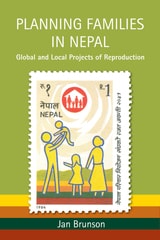
Planning Families in Nepal
Global and Local Projects of ReproductionBrunson, Jan
Rutgers University Press, 2016
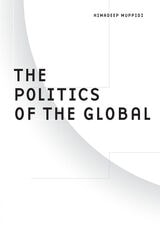
Politics Of The Global
Himadeep Muppidi
University of Minnesota Press, 2004
Examines globalism as a social production, opening up new paths of resistance
Though presented often as an objective process, globalization is frequently analyzed from subjective perspectives that are closed to their own historical and geographical specificity. Refusing the false choice between objectivity and subjectivity, Himadeep Muppidi considers the production of the global as an intersubjective process involving the interplay of meanings, identities, and practices from historically different locations.
Muppidi illustrates how the politics of globalization are played out in two multicultural democracies, India and the United States—particularly rich examples given the increasing interactions between them in the areas of global economy and security. Software experts and skilled professionals flow from India to the United States; the United States outsources service sector jobs to India. Although they differ in their approaches to worldwide regulation of weapons of mass destruction, India and the United States cooperate in opposing terrorism. Treating globalization as an intersubjective process reveals the different political possibilities (e.g., colonial coercion, postcolonial ambivalence, and postcolonial co-option) that are opened by global relays of meanings, identities, and power. Muppidi concludes by exploring a variety of spaces and strategies for resisting the colonization of the global.
Punk Identities, Punk Utopias
Global Punk and MediaEdited by Russ Bestley, Mike Dines, Matt Grimes, Paula Guerra
Intellect Books, 2021
Punk Identities, Punk Utopias unpacks punk and the factors that shape its increasingly complex and indefinable social, political, and economic setting. The third offering in Intellect’s Global Punk series, produced in collaboration with the Punk Scholars Network, this volume examines the broader social, political, and technological concerns that affect punk scenes around the world, from digital technology and new media to gender, ethnicity, identity, and representation.
Drawing on scholarship in cultural studies, musicology, and social sciences, this interdisciplinary collection will add to the academic discussion of contemporary popular culture, particularly in relation to punk and the critical understanding of transnational and cross-cultural dialogue.

The Postcolonial and the Global
Revathi Krishnaswamy
University of Minnesota Press, 2007
This interdisciplinary work brings the humanities and social sciences into dialogue by examining issues such as globalized capital, discourses of antiterrorism, and identity politics. Essayists from the fields of postcolonial studies and globalization theory address the ethical and pragmatic ramifications of opposing interpretations of these issues and, for the first time, seek common ground.
Contributors: Pal Ahluwalia, U of California, San Diego; Arjun Appadurai, New School U; Geoffrey Bowker, Santa Clara U; Timothy Brennan, U of Minnesota; Ruth Buchanan, U of British Columbia; Verity Burgmann, U of Melbourne; Pheng Cheah, U of California, Berkeley; Inderpal Grewal, U of California, Irvine; Ramon Grosfoguel, U of California, Berkeley; Barbara Harlow, U of Texas, Austin; Anouar Majid, U of New England; John McMurtry, U of Guelph; Walter D. Mignolo, Duke U; Sundhya Pahuja, U of Melbourne; R. Radhakrishnan, U of California, Irvine; Ileana Rodriguez, Ohio State U; E. San Juan, Philippine Forum, New York; Saskia Sassen, U of Chicago; Ella Shohat, New York U; Leslie Sklair, London School of Economics; Robert Stam, New York U; Madina Tlostanova, Russian Peoples’ Friendship U; Harish Trivedi, U of Delhi.
Revathi Krishnaswamy is associate professor of English at San Jose State University.
John C. Hawley is professor and chair of English at Santa Clara University.
The Punk Reader
Research Transmissions from the Local and the GlobalEdited by Mike Dines, Alastair "Gords" Gordon, Paula Guerra, and Russ Bestley
Intellect Books, 2019
The first offering in Intellect’s new Global Punk series, The Punk Reader: Research Transmissions from the Local and the Global is the first edited volume to explore and critically interrogate punk culture in relation to contemporary, radicalized globalization. Documenting disparate international punk scenes, including Mexico, China, Malaysia, and Iran, The Punk Reader is a long-overdue addition to punk studies and a valuable resource for readers seeking to know more about the global influence of punk beyond the 1970s.

The Web of Violence
From Interpersonal to GlobalEdited by Jennifer Turpin and Lester Kurtz
University of Illinois Press, 1996
Violence is a topic of concern everywhere--in the media, in churches, in the halls of governments. In every land and in every culture violence is considered by most to be taboo, a last resort. Yet under certain conditions, from the level of the family to the level of nations, violence is used as a mechanism of social control. Various rationalizations thus emerge to distinguish between legitimate and illegitimate violence.
The Web of Violence explores the interrelationship among personal, collective, national, and global levels of violence. This unique collection brings together a number of internationally known contributors to address the genesis and manifestations of violence in the search for a remedy for this confounding social problem.
As the global community becomes more intimate, we must better understand the nature of violence. The Web of Violence supports this aim by examining the dangerous human phenomenon from many perspectives, at different levels, and using multiple methodologies.
Contributors: Robert Jay Lifton, Christopher G. Ellison, John P. Bartkowski, Yuan-Horng Chu, Philip Smith, Robert Elias, Birgit Brock-Utne, Riane Eisler, Johan Galtung

Virus Research in Twentieth-Century Uganda
Between Local and GlobalJulia Ross Cummiskey
Ohio University Press, 2024
Virus Research in Twentieth-Century Uganda presents the stories of scientists at the Uganda Virus Research Institute (UVRI), a biomedical center founded in 1936. The book analyzes the strategies and conditions that allowed the institute to endure and thrive through successive political and scientific regimes of the interwar period, the postwar period, the transition to independence, the conflicts of the 1970s and 1980s, and the Museveni presidency. Julia Ross Cummiskey combines methods and themes from the history of medicine and public health, science and technology studies, and African studies to show that the story of the UVRI and the people who worked there transforms our understanding of the nature of local and international expertise and the evolution of global health research over the course of the twentieth century.
Global health is one of the chief areas in which African and foreign institutions interact today. Billions of dollars are invested in global health projects on the continent, many involving strategically selected “local partners.” In the discourse of these projects, local and global are often framed as complementary but distinct categories of people, institutions, traditions, and practices. But the history of biomedical research at the UVRI shows that these distinctions are unstable and mutable and that people and institutions have mobilized both categories to attract funding, professional prestige, and research opportunities. The book complicates the local/global binary that is implicit (and sometimes explicit) in many studies of colonial, international, and global health and medical research, especially in Africa. Moreover, it challenges assumptions about global health as an enterprise dominated by researchers based in the Global North and recenters the history of biomedicine in Africa.