Results by title
10 books match the query 'Global Politics'
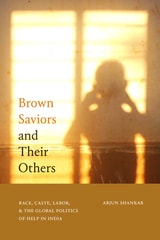
Brown Saviors and Their Others
Race, Caste, Labor, and the Global Politics of Help in IndiaArjun Shankar
Duke University Press, 2023
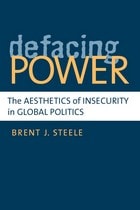
Defacing Power
The Aesthetics of Insecurity in Global PoliticsBrent J. Steele
University of Michigan Press, 2012
"Combining a rich and varied set of theoretical insights with a subtle analysis of the politics of American foreign policy, Defacing Power marks an important contribution toward understanding the power of identity in world politics. Engagingly written and rigorously argued, Steele's challenging analysis is incisive, important, and rewarding."
---Michael C. Williams, Graduate School of Public and International Affairs, University of Ottawa
"Brent Steele's marvelous excavation of the aesthetic dimensions of power is strikingly irreverent, inasmuch as he displays no commitment to ex ante disciplinary or substantive constraints in his quest to disclose those moments of creative action so often overlooked by theories and theorists wedded to the grandiose and the transhistorical. Steele samples and remixes a myriad of sources, arranging them so as to produce a transgressively insightful account of how 'work on the Self,' often condemned as self-indulgent by prior generations of intellectuals, might just point in the direction of a more sustainably secure world."
---Patrick Thaddeus Jackson, School of International Service, American University
"Defacing Power successfully integrates work from Dewey to Morgenthau to Foucault, as well as a wide range of contemporary international relations scholars, in its genealogy of power conceptualizations and characteristics. This book is theoretically sophisticated and serious. It should be of interest to students of international politics, international theory, social theory, and foreign policy."
---Cecelia Lynch, Center for Global Peace and Conflict Studies, University of California, Irvine
Defacing Power investigates how nation-states create self-images in part through aesthetics and how these images can be manipulated to challenge those states' power. Although states have long employed media, such as radio, television, and film, for their own image-making purposes, counterpower agents have also seized upon new telecommunications technologies. Most recently, the Internet has emerged as contested territory where states and other actors wage a battle of words and images.
Moving beyond theory, Brent Steele illustrates his provocative argument about the vulnerability of power with examples from recent history: the My Lai Massacre and the Tet Offensive, September 11 and the al-Qaeda communiqués, the atrocities at Fallujah and Abu Ghraib, and the U.S. response to the Asian tsunami of December 2004. He demonstrates how a nation-state---even one as powerful as the United States---comes to feel threatened not only by other nation-states or terrorist organizations but also by unexpected events that challenge its self-constructed image of security. At the same time, Steele shows that as each generation uses available media to create and re-create a national identity, technological innovations allow for the shifting, upheaval, and expansion of the cultural structure of a nation.
Brent J. Steele is Associate Professor of Political Science at the University of Kansas.

Global Politics of Regionalism
Theory and PracticeEdited by Mary Farrell, Bjorn Hettne, and Luk Van Langenhove
Pluto Press, 2005
The book reviews the major theoretical approaches to regional cooperation including perspectives from international relations, political economy, economics and sociology. It is divided into three main sections: theoretical approaches to regionalism; issues of regional cooperation (such as security, monetary issues, identity and integration); and an exploration of specific case studies including the Middle East, Africa, the Americas, China, Europe, Asia and the Pacific.
With an international range of contributors, including Bjorn Hettne, Louise Fawcett and Andrew Hurrell, this in-depth and multi-disciplinary guide will be of interest to students across the social sciences and to the wider policy community.
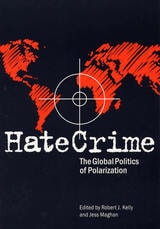
Hate Crime
The Global Politics of PolarizationEdited by Robert J. Kelly and Jess Maghan
Southern Illinois University Press, 1998
These twelve previously unpublished essays explore the international phenomenon of hate crime, examining the socio-psychological dynamics of these crimes and the settings in which they occur, the relationships between offenders and their victims, the emotional states of the participants, and the legal and law enforcement responses to these crimes.
The essays address religious, racial, ethnic, and sexual crimes in the United States, Latin America, Africa, Europe, and the Middle East. The essayists provide historical reviews of the problems and the ways local authorities understand and cope with the dilemmas as well as prognoses about the persistence of hate crime and the measures that can be taken to control and contain it.
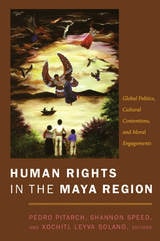
Human Rights in the Maya Region
Global Politics, Cultural Contentions, and Moral EngagementsPedro Pitarch, Shannon Speed, and Xochitl Leyva Solano, eds.
Duke University Press, 2008
The collection includes a reflection on the effects of truth-finding and documenting particular human rights abuses, a look at how Catholic social teaching validates the human rights claims advanced by indigenous members of a diocese in Chiapas, and several analyses of the limitations of human rights frameworks. A Mayan intellectual seeks to bring Mayan culture into dialogue with western feminist notions of women’s rights, while another contributor critiques the translation of the United Nations Declaration of Human Rights into Tzeltal, an indigenous language in Chiapas. Taken together, the essays reveal a broad array of rights-related practices and interpretations among the Mayan population, demonstrating that global-local-state interactions are complex and diverse even within a geographically limited area. So too are the goals of indigenous groups, which vary from social reconstruction and healing following years of violence to the creation of an indigenous autonomy that challenges the tenets of neoliberalism.
Contributors: Robert M. Carmack, Stener Ekern, Christine Kovic, Xochitl Leyva Solano, Julián López García, Irma Otzoy, Pedro Pitarch, Álvaro Reyes, Victoria Sanford, Rachel Sieder, Shannon Speed, Rodolfo Stavenhagen, David Stoll, Richard Ashby Wilson
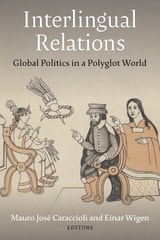
Interlingual Relations
Global Politics in a Polyglot WorldMauro J. Caraccioli and Einar Wigen, Editors.
University of Michigan Press, 2026
International politics is often conducted in two languages or more, and since no two languages are exactly the same, what is possible to say in one language may be impossible to say in another. Translation is at the heart of global politics, and interlingual relations traverse time, space, culture, and state borders. Interlingual Relations builds on emergent literature on translation in International Relations (IR) to propose a unique research agenda for scholars of global politics, offering multiple directions and sets of principles for sustained study.
The contributors use various methodologies to explore these interfaces and encounters in different sites, bringing together multiple subfields, approaches, and disciplinary paradigms across IR’s history. Together they offer a more truly global perspective on international affairs, going beyond the hegemony of English to demonstrate the interconnectedness between “high” politics and everyday life. They show the role of translation in global politics as one of world-making, whereby social roles, rules, and responsibilities establish the semblance of order despite not sounding or meaning the same to all actors. In establishing Interlingual Relations as a foundational part of IR, the book offers another key to studying global interactions and the high political stakes in the theories, methods, and ethics of translation.
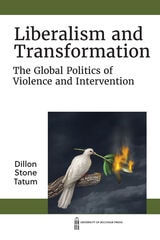
Liberalism and Transformation
The Global Politics of Violence and InterventionDillon Stone Tatum
University of Michigan Press, 2021
Liberalism and Transformation is the first scholarly work that explores the historical, philosophical, and intellectual development of global liberalism since the nineteenth century in the context of the deployment of violence, force, and intervention. Using an approach that includes interpretive and contextual analysis of texts from writers, philosophers, and policy-makers across nearly two centuries, as well as historiographical and historical analysis of archival documents (some of which have been recently declassified) and other media, Liberalism and Transformation narrates the messy history of emancipatory liberalism and its engagement with issues of war and peace. The book contributes to both a rethinking of liberal democracy and its relationship to world politics, as well as the effects of liberal internationalism on global processes. Furthermore, Liberalism and Transformation invites readers to reflect on global ethics and transformation in world politics. In the first place, it shows how ethical imaginings of the world have direct effects on actions of transformative importance. In the second place, it suggests that discourses are fluid, changing, and complex.
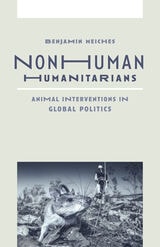
Nonhuman Humanitarians
Animal Interventions in Global PoliticsBenjamin Meiches
University of Minnesota Press, 2023
Examining the appearance of nonhuman animals laboring alongside humans in humanitarian operations
Both critical and mainstream scholarly work on humanitarianism have largely been framed from anthropocentric perspectives highlighting humanity as the rationale for providing care to others. In Nonhuman Humanitarians, Benjamin Meiches explores the role of animals laboring alongside humans in humanitarian operations, generating new ethical possibilities of care in humanitarian practice.
Nonhuman Humanitarians examines how these animals not only improve specific practices of humanitarian aid but have started to transform the basic tenets of humanitarianism. Analyzing case studies of mine-clearance dogs, milk-producing cows and goats, and disease-identifying rats, Nonhuman Humanitarians ultimately argues that nonhuman animal contributions problematize foundational assumptions about the emotional and rational capacities of humanitarian actors as well as the ethical focus on human suffering that defines humanitarianism.
Meiches reveals that by integrating nonhuman animals into humanitarian practice, several humanitarian organizations have effectively demonstrated that care, compassion, and creativity are creaturely rather than human and that responses to suffering and injustice do not—and cannot—stop at the boundaries of the human.

Transnational Celebrity Activism in Global Politics
Changing the World?Edited by Liza Tsaliki, Christos A. Frangonikolopoulos, and Asteris Huliaras
Intellect Books, 2011
In recent years, celebrities from George Clooney to Bono to Angelina Jolie have attempted to play an increasingly important role in global politics. Celebrity activism is an ever-growing, internationally visible phenomenon—yet the impact of these high-profile humanitarians on public awareness, government support, and mobilization of resources remains under-researched. Bringing together a diverse group of contributors from media studies and public diplomacy, Transnational Celebrity Activism in Global Politics aims to fill that void with a new interdisciplinary framework for the analysis of celebrity activism in international relations.
Understanding Al Qaeda
Changing War and Global PoliticsMohammad-Mahmoud Ould Mohamedou
Pluto Press, 2011
This book controversially argues that Al Qaeda has clear aims, and that the only way to defeat it is to engage with its arguments in a serious way.
Since the publication of the first edition in 2006, Mohamedou has brought the text right up-to-date. Starting with Al Qaeda's creation almost twenty years ago, and sketching its global mutation, Mohamedou explains that there is a cogent strategy to Al Qaeda's actions. He shows that the 'war on terror' is failing, only serving to recruit more terrorists to Al Qaeda's cause. He also puts forward a case for how the international community can best respond.
Arguing that it is dangerous to dismiss Al Qaeda as illogical and irrational, this incisive and original book is important for policy-makers and ideal for undergraduates in international relations, Middle East studies and peace/conflict studies.