Results by title
24 books match the query 'Golden Age'
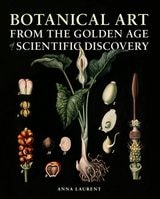
Botanical Art from the Golden Age of Scientific Discovery
Anna Laurent
University of Chicago Press, 2016
This beautifully illustrated oversized book gives the humble wall chart its due, reproducing more than two hundred of them in dazzling full color. Each wall chart is accompanied by captions that offer accessible information about the species featured, the scientists and botanical illustrators who created it, and any particularly interesting or innovative features the chart displays. And gardeners will be pleased to discover useful information about plant anatomy and morphology and species differences. We see lilies and tulips, gourds, aquatic plants, legumes, poisonous plants, and carnivorous plants, all presented in exquisite, larger-than-life detail.
A unique fusion of art, science, and education, the wall charts gathered here offer a glimpse into a wonderful scientific heritage and are sure to thrill naturalists, gardeners, and artists alike.

Civic Charity in a Golden Age
ORPHAN CARE IN EARLY MODERN AMSTERDAMAnne E. C. McCants
University of Illinois Press, 1997
can see the start of profound social and economic changes in early modern
Amsterdam, Civic Charity in a Golden Age explores the connections
between the developing capitalist economy, the functioning of the government,
and the provision of charitable services to orphans in Amsterdam during
the seventeenth and eighteenth centuries, the period of the city's greatest
prosperity and subsequent decline.
Anne McCants skillfully interprets details of the orphanage's expenditures,
especially for food; its population; the work records of those who were
reared there; and the careers of the regents who oversaw it. The establishment
of the orphanage itself was called for by the changing economic needs
of rapidly expanding commercial centers and the potential instability
of a government that depended on taxes from a large, politically powerless
segment of the population.
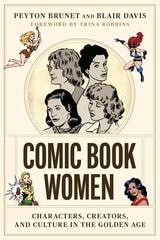
Comic Book Women
Characters, Creators, and Culture in the Golden AgeBy Peyton Brunet and Blair Davis; foreword by Trina Robbins
University of Texas Press, 2022
2023 Ray and Pat Browne Best Single Work by One or More Authors in Popular and American Culture, Popular and American Culture Association (PACA) / Popular Culture Association (PCA)
2023 Ray and Pat Browne Best Edited Reference/Primary Source Work in Popular Culture Award (Honorable Mention), Popular and American Culture Association (PACA) / Popular Culture Association (PCA)
2023 Peter C. Rollins Book Award, Southwest Texas Popular Culture and American Culture Associations (SWPACA)
A revisionist history of women's pivotal roles as creators of and characters in comic books.
The history of comics has centered almost exclusively on men. Comics historians largely describe the medium as one built by men telling tales about male protagonists, neglecting the many ways in which women fought for legitimacy on the page and in publishers’ studios. Despite this male-dominated focus, women played vital roles in the early history of comics. The story of how comic books were born and how they evolved changes dramatically when women like June Tarpé Mills and Lily Renée are placed at the center rather than at the margins of this history, and when characters such as the Black Cat, Patsy Walker, and Señorita Rio are analyzed.
Comic Book Women offers a feminist history of the golden age of comics, revising our understanding of how numerous genres emerged and upending narratives of how male auteurs built their careers. Considering issues of race, gender, and sexuality, the authors examine crime, horror, jungle, romance, science fiction, superhero, and Western comics to unpack the cultural and industrial consequences of how women were represented across a wide range of titles by publishers like DC, Timely, Fiction House, and others. This revisionist history reclaims the forgotten work done by women in the comics industry and reinserts female creators and characters into the canon of comics history.
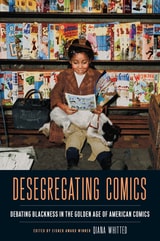
Desegregating Comics
Debating Blackness in the Golden Age of American ComicsQiana Whitted
Rutgers University Press, 2023
Shortlisted for the Best Academic / Scholarly Work Eisner Award
Honorable Mention for the Harry Shaw and Katrina Hazzard-Donald Award for Outstanding Work in African-American Popular Culture Studies from the Popular Culture Association
Some comics fans view the industry’s Golden Age (1930s-1950s) as a challenging time when it comes to representations of race, an era when the few Black characters appeared as brutal savages, devious witch doctors, or unintelligible minstrels. Yet the true portrait is more complex and reveals that even as caricatures predominated, some Golden Age comics creators offered more progressive and nuanced depictions of Black people.
Desegregating Comics assembles a team of leading scholars to explore how debates about the representation of Blackness shaped both the production and reception of Golden Age comics. Some essays showcase rare titles like Negro Romance and consider the formal innovations introduced by Black comics creators like Matt Baker and Alvin Hollingsworth, while others examine the treatment of race in the work of such canonical cartoonists as George Herriman and Will Eisner. The collection also investigates how Black fans read and loved comics, but implored publishers to stop including hurtful stereotypes. As this book shows, Golden Age comics artists, writers, editors, distributors, and readers engaged in heated negotiations over how Blackness should be portrayed, and the outcomes of those debates continue to shape popular culture today.
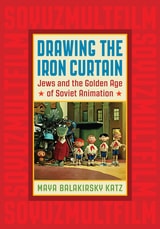
Drawing the Iron Curtain
Jews and the Golden Age of Soviet AnimationMaya Balakirsky Katz
Rutgers University Press, 2016
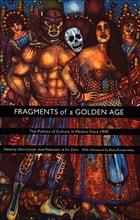
Fragments of a Golden Age
The Politics of Culture in Mexico Since 1940Gilbert M. Joseph, Anne Rubenstein, and Eric Zolov, eds.
Duke University Press, 2001
Each essay in its own way addresses the fragmentation of a cultural consensus that prevailed during the “golden age” of post–revolutionary prosperity, a time when the state was still successfully bolstering its power with narratives of modernization and shared community. Combining detailed case studies—both urban and rural—with larger discussions of political, economic, and cultural phenomena, the contributors take on such topics as the golden age of Mexican cinema, the death of Pedro Infante as a political spectacle, the 1951 “caravan of hunger,” professional wrestling, rock music, and soap operas.
Fragments of a Golden Age will fill a particular gap for students of modern Mexico, Latin American studies, cultural studies, political economy, and twentieth century history, as well as to others concerned with rethinking the cultural dimensions of nationalism, imperialism, and modernization.
Contributors. Steven J. Bachelor, Quetzil E. Castañeda, Seth Fein, Alison Greene, Omar Hernández, Jis & Trino, Gilbert M. Joseph, Heather Levi, Rubén Martínez, Emile McAnany, John Mraz, Jeffrey M. Pilcher, Elena Poniatowska, Anne Rubenstein, Alex Saragoza, Arthur Schmidt, Mary Kay Vaughan, Eric Zolov

Friday Night Fighter
Gaspar "Indio" Ortega and the Golden Age of Television BoxingTroy Rondinone
University of Illinois Press, 2013
Friday Night Fighter relives a lost moment in American postwar history, when boxing ruled as one of the nation's most widely televised sports. During the 1950s and 1960s, viewers tuned in weekly, sometimes even daily, to watch widely recognized fighters engage in primordial battle; the Gillette Cavalcade of Sports Friday Night Fights was the most popular fight show. Troy Rondinone follows the dual narratives of the Friday Night Fights show and the individual story of Gaspar "Indio" Ortega, a boxer who appeared on prime-time network television more than almost any other boxer in history. From humble beginnings growing up poor in Tijuana, Mexico, Ortega personified the phenomenon of postwar boxing at its greatest, appearing before audiences of millions to battle the biggest names of the time, such as Carmen Basilio, Tony DeMarco, Chico Vejar, Benny "Kid" Paret, Emile Griffith, Kid Gavilan, Florentino Fernández, and Luis Manuel Rodriguez.
Rondinone explores the factors contributing to the success of televised boxing, including the rise of television entertainment, the role of a "reality" blood sport, Cold War masculinity, changing attitudes toward race in America, and the influence of organized crime. At times evoking the drama and spectacle of the Friday Night Fights themselves, this volume is a lively examination of a time in history when Americans crowded around their sets to watch the main event.
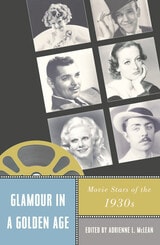
Glamour in a Golden Age
Movie Stars of the 1930sMcLean, Adrienne L
Rutgers University Press, 2010
Stardom is approached as an effect of, and influence on, the particular historical and industrial contexts that enabled these actors and actresses to be discovered, featured in films, publicized, and to become recognized and admired-sometimes even notorious-parts of the cultural landscape. Using archival and popular material, including fan and mass market magazines, other promotional and publicity material, and of course films themselves, contributors also discuss other artists who were incredibly popular at the time, among them Ann Harding, Ruth Chatterton, Nancy Carroll, Kay Francis, and Constance Bennett.

History Afield
Stories from the Golden Age of Wisconsin Sporting LifeRobert C Willging
Wisconsin Historical Society Press, 2011
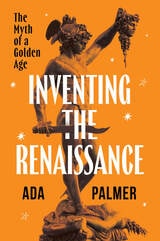
Inventing the Renaissance
The Myth of a Golden AgeAda Palmer
University of Chicago Press, 2025
WINNER OF THE HUGO AWARD
A New Yorker Best Book of 2025
An irreverent new take on the Renaissance, which reveals it as anything but Europe’s golden age.
From the darkness of a plagued and war-torn Middle Ages, the Renaissance (we’re told) heralds the dawning of a new world—a halcyon age of art, prosperity, and rebirth. Hogwash! or so says award-winning novelist and historian Ada Palmer. In Inventing the Renaissance, Palmer turns her witty and irreverent eye on the fantasies we’ve told ourselves about Europe’s not-so-golden age, myths she sets right with sharp clarity.
Palmer’s Renaissance is altogether desperate. Troubled by centuries of conflict, she argues, Europe looked to a long-lost Roman Empire (even its education practices) to save it from unending war. Later historians met their own political challenges with a similarly nostalgic vision, only now they looked to the Renaissance and told a partial story. To right this wrong, Palmer offers fifteen provocative portraits of Renaissance men and women (some famous, some obscure) whose lives reveal a far more diverse, fragile, and wild Renaissance than its glowing reputation suggests.
Inventing the Renaissance
The Myth of a Golden AgeAda Palmer
University of Chicago Press, 2025
WINNER OF THE HUGO AWARD
A New Yorker Best Book of 2025
An irreverent new take on the Renaissance, which reveals it as anything but Europe’s golden age.
From the darkness of a plagued and war-torn Middle Ages, the Renaissance (we’re told) heralds the dawning of a new world—a halcyon age of art, prosperity, and rebirth. Hogwash! or so says award-winning novelist and historian Ada Palmer. In Inventing the Renaissance, Palmer turns her witty and irreverent eye on the fantasies we’ve told ourselves about Europe’s not-so-golden age, myths she sets right with sharp clarity.
Palmer’s Renaissance is altogether desperate. Troubled by centuries of conflict, she argues, Europe looked to a long-lost Roman Empire (even its education practices) to save it from unending war. Later historians met their own political challenges with a similarly nostalgic vision, only now they looked to the Renaissance and told a partial story. To right this wrong, Palmer offers fifteen provocative portraits of Renaissance men and women (some famous, some obscure) whose lives reveal a far more diverse, fragile, and wild Renaissance than its glowing reputation suggests.
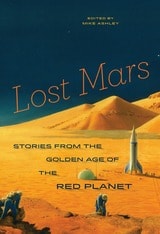
Lost Mars
Stories from the Golden Age of the Red PlanetEdited by Mike Ashley
University of Chicago Press, 2018
An antique-shop owner gets a glimpse of the Red Planet through an intriguing artifact. A Martian’s wife contemplates the possibility of life on Earth. A resident of Venus describes his travels across the two alien planets. From an arid desert to an advanced society far superior to that of Earth, portrayals of Mars have differed radically in their attempts to uncover the truth about our neighboring planet.
Since the 1880s, after an astronomer first described “channels” on the surface of Mars, writers have been fascinated with the planet, endlessly speculating on what life on Mars might look like and what might happen should we make contact with the planet's inhabitants. This wonderful collection offers ten wildly imaginative short stories from the golden age of science fiction by such classic sci-fi writers as H.G. Wells, Ray Bradbury, and J. G. Ballard, as well as hard-to-find stories by unjustly forgotten writers from the genre.
Assembled and introduced by acclaimed anthologist Mike Ashley, these stories vividly evoke a time when notions of life on other planets—from vegetation and water to space invaders and utopian societies—were new and startling. As we continue to imagine landing people on Mars, these stories are well worth revisiting as gripping and vivid dispatches from futurists past.
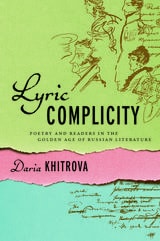
Lyric Complicity
Poetry and Readers in the Golden Age of Russian LiteratureDaria Khitrova
University of Wisconsin Press, 2019
Lyric Complicity helps modern readers recover Russian poetry’s former uses and functions—life situations that moved people to quote or perform a specific passage from a poem or a forgotten occasion that created unforgettable verse.
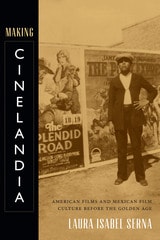
Making Cinelandia
American Films and Mexican Film Culture before the Golden AgeLaura Isabel Serna
Duke University Press, 2014
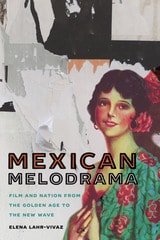
Mexican Melodrama
Film and Nation from the Golden Age to the New WaveElena Lahr-Vivaz
University of Arizona Press, 2016
Mexico’s Golden Age of film—the period from the 1930s to the 1950s—is considered “golden” due to both the prestige of the era’s stars and the critical and popular success of the films released. Golden Age directors often turned to the tropes of melodrama and allegory to offer spectators an image of an idealized Mexico and to spur the formation of a spectatorship united through shared tears and laughter. In contrast, Lahr-Vivaz demonstrates that new-wave directors of the 1990s and 2000s use the melodramatic mode to present a vision of fragmentation and to open a space for critical resistance. In so doing, new-wave directors highlight the limitations rather than the possibilities of a unified spectatorship, and point to the need for spectators to assume a critical stance in the face of the exigencies of the present.
Written in an accessible style, Mexican Melodrama offers a timely comparative analysis of critically acclaimed films that will serve as key referents in discussions of Mexican cinema for years to come.
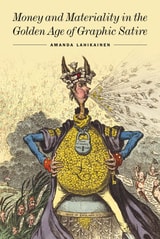
Money and Materiality in the Golden Age of Graphic Satire
Amanda Lahikainen
University of Delaware Press, 2022
This book examines the entwined and simultaneous rise of graphic satire and cultures of paper money in late eighteenth- and early nineteenth-century Britain. Asking how Britons learned to value both graphic art and money, the book makes surprising connections between two types of engraved images that grew in popularity and influence during this time. Graphic satire grew in visual risk-taking, while paper money became a more standard carrier of financial value, courting controversy as a medium, moral problem, and factor in inflation. Through analysis of satirical prints, as well as case studies of monetary satires beyond London, this book demonstrates several key ways that cultures attach value to printed paper, accepting it as social reality and institutional fact. Thus, satirical banknotes were objects that broke down the distinction between paper money and graphic satire altogether.
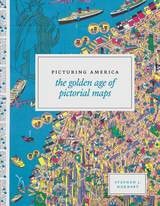
Picturing America
The Golden Age of Pictorial MapsStephen J. Hornsby
University of Chicago Press, 2017
Picturing America is the first book to showcase this vivid and popular genre of maps. Geographer Stephen J. Hornsby gathers together 158 delightful pictorial jewels, most drawn from the extensive collections of the Library of Congress. In his informative introduction, Hornsby outlines the development of the cartographic form, identifies several representative artists, describes the process of creating a pictorial map, and considers the significance of the form in the history of Western cartography. Organized into six thematic sections, Picturing America covers a vast swath of the pictorial map tradition during its golden age, ranging from “Maps to Amuse” to “Maps for War.” Hornsby has unearthed the most fascinating and visually striking maps the United States has to offer: Disney cartoon maps, college campus maps, kooky state tourism ads, World War II promotional posters, and many more. This remarkable, charming volume’s glorious full-color pictorial maps will be irresistible to any map lover or armchair traveler.
The Golden Age of Boston Television
Terry Ann Knopf
University Press of New England, 2017
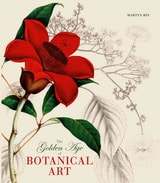
The Golden Age of Botanical Art
Martyn Rix
University of Chicago Press, 2012
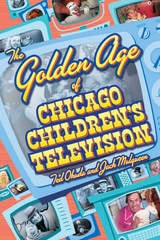
The Golden Age of Chicago Children's Television
Ted Okuda and Jack Mulqueen
Southern Illinois University Press, 2004
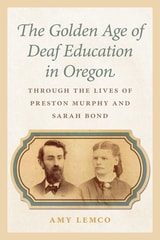
The Golden Age of Deaf Education in Oregon
Through the Lives of Preston Murphy and Sarah BondAmy Lemco
Oregon State University Press, 2027
Preston Murphy and Sarah Bond traveled west to Oregon on separate wagon trains in the 1850s. Both were children of Protestant minister fathers who followed the Oregon Trail to claim land and establish towns and institutions. Preston and Sarah married in 1874 and went on to build their lives in Oregon’s Willamette Valley, running a boot shop and raising six children. They were also both deaf.
The Golden Age of Deaf Education in Oregon is one of the first books to explore Deaf history in the Pacific Northwest. Drawing from primary sources, Amy Lemco explores the history of Deaf culture in early Oregon through the lives of Preston Murphy and Sarah Bond. Their stories offer a glimpse into the growth of Deaf education in the developing American West and provide a unique lens to explore the intertwining of global, national, and regional histories and their effect on Deaf culture at the turn of the century.
While Preston became deaf after a childhood illness in Illinois, Sarah, along with two of her brothers, was born deaf in Iowa. In Oregon their varied deaf experiences would pave the way for the Oregon School for the Deaf but also illuminate how deaf Oregonians navigated daily life and remained closely connected to their hearing communities. It is the hidden experiences of Preston and Sarah’s ordinary lives that make their stories extraordinary.
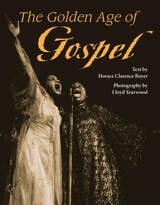
The Golden Age of Gospel
Text by Horace Clarence BoyerPhotography by Lloyd Yearwood
University of Illinois Press, 1995
Skillfully blending music history and social context, Boyer traces the development of gospel from its earliest beginnings through the Golden Age (1945-55) and into the 1960s when gospel entered the concert hall. He introduces dozens of the genre's most gifted contributors, from Thomas A. Dorsey and Mahalia Jackson to the Soul Stirrers and Aretha Franklin, evoking their distinctive styles and distinguishing among the characteristic sounds of gospel music in Chicago, Philadelphia, Detroit, St. Louis, and other locations.
Capturing the essence of a thrilling performance tradition, The Golden Age of Gospel clearly establishes gospel's importance as an authentic American art form and a musical statement of profound belief.
The Golden Age of Phenomenology at the New School for Social Research, 1954–1973
Lester Embree
Ohio University Press, 2017
This collection focuses on the introduction of phenomenology to the United States by the community of scholars who taught and studied at the New School for Social Research from 1954 through 1973. During those years, Dorion Cairns, Alfred Schutz, and Aron Gurwitsch—all former students of Edmund Husserl—came together in the department of philosophy to establish the first locus of phenomenology scholarship in the country. This founding trio was soon joined by three other prominent scholars in the field: Werner Marx, Thomas M. Seebohm, and J. N. Mohanty. The Husserlian phenomenology that they brought to the New School has subsequently spread through the Anglophone world as the tradition of Continental philosophy.
The first part of this volume includes original works by each of these six influential teachers of phenomenology, introduced either by one of their students or, in the case of Seebohm and Mohanty, by the thinkers themselves. The second part comprises contributions from twelve leading scholars of phenomenology who trained at the New School during this period. The result is a powerful document tracing the lineage and development of phenomenology in the North American context, written by members of the first two generations of scholars who shaped the field.
Contributors: Michael Barber, Lester Embree, Jorge García-Gómez, Fred Kersten, Thomas M. T. Luckmann, William McKenna, J. N. Mohanty, Giuseppina C. Moneta, Thomas Nenon, George Psathas, Osborne P. Wiggins, Matthew M. Seebohm, and Richard M. Zaner.

Twilight of a Golden Age
Selected Poems of Abraham Ibn EzraWeinberger, Leon J.
University of Alabama Press, 1997