Results by title
39 books match the query 'Gospel'
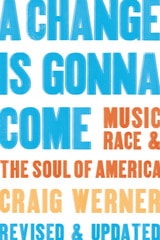
A Change Is Gonna Come
Music, Race & the Soul of AmericaCraig Werner
University of Michigan Press, 2006
—Notes
"No one has written this way about music in a long, long time. Lucid, insightful, with real spiritual, political, intellectual, and emotional grasp of the whole picture. A book about why music matters, and how, and to whom."
—Dave Marsh, author of Louie, Louie and Born to Run: The Bruce Springsteen Story
"This book is urgently needed: a comprehensive look at the various forms of black popular music, both as music and as seen in a larger social context. No one can do this better than Craig Werner."
—Henry Louis Gates, Jr., W.E.B. Du Bois Professor of the Humanities, Harvard University
"[Werner has] mastered the extremely difficult art of writing about music as both an aesthetic and social force that conveys, implies, symbolizes, and represents ideas as well as emotion, but without reducing its complexities and ambiguities to merely didactic categories."
—African American Review
A Change Is Gonna Come is the story of more than four decades of enormously influential black music, from the hopeful, angry refrains of the Freedom movement, to the slick pop of Motown; from the disco inferno to the Million Man March; from Woodstock's "Summer of Love" to the war in Vietnam and the race riots that inspired Marvin Gaye to write "What's Going On."
Originally published in 1998, A Change Is Gonna Come drew the attention of scholars and general readers alike. This new edition, featuring four new and updated chapters, will reintroduce Werner's seminal study of black music to a new generation of readers.
Craig Werner is Professor of Afro-American Studies at the University of Wisconsin, and author of many books, including Playing the Changes: From Afro-Modernism to the Jazz Impulse and Up Around the Bend: An Oral History of Creedence Clearwater Revival. His most recent book is Higher Ground: Stevie Wonder, Aretha Franklin, Curtis Mayfield, and the Rise and Fall of American Soul.
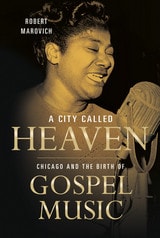
A City Called Heaven
Chicago and the Birth of Gospel MusicRobert Marovich
University of Illinois Press, 2015
A City Called Heaven celebrates a sound too mighty and too joyous for even church walls to hold.
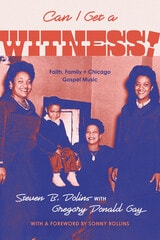
Can I Get a Witness!
Faith, Family, and Chicago Gospel MusicSteven B. Dolins with Gregory Donald Gay
University of Chicago Press, 2026
The remarkable story of pastor Donald Gay and his family’s lasting contributions to gospel music and Chicago culture.
When the preacher Gregory Donald Gay joined his sisters onstage at Carnegie Hall in 1950, on a sold-out bill they shared with Mahalia Jackson and the Clara Ward Singers, he became a participant in a landmark moment: the first concert in the venue to feature entirely gospel music. He was just five years old.
The Gay Sisters—Evelyn, Geraldine, and Mildred—were key figures in gospel’s Golden Age, and their youngest brother had a front-row seat. Evelyn and Geraldine each innovated singular approaches to gospel piano, while Mildred sang. Together, they toured and performed on a series of influential gospel recordings from 1948 to 1973, playing the Apollo Theatre and crossing paths with musical luminaries like Sister Rosetta Tharpe, Sam Cooke, Pops Staples, and Dizzy Gillespie. But despite a hit record and prodigious talent, the Gay Sisters faded from the limelight. In the ensuing years, they weathered personal trials while their mother, Fannie, devoted her attention to another family undertaking: starting a church.
Can I Get a Witness! is a call-and-response between Steven B. Dolins, founder of The Sirens Records, and Donald Gay, who vividly describes his boyhood in Chicago’s Woodlawn neighborhood, his family’s remarkable place in gospel history, his mother’s work as a faith leader, and his own calling as a pastor. The book spotlights the rich contributions of a family remembered not only for the songs they recorded but also for their unwavering kindness to others, a legacy that the legendary Sonny Rollins recounts in a moving foreword.
Commentary on the Gospel of John, Books 1-10
Catholic University of America Press, 1989
Commentary on the Gospel of John, Chapters 6-12
Thomas Aquinas
Catholic University of America Press, 2010
Commentary on the Gospel of John
Chapters 1-5Thomas Aquinas
Catholic University of America Press, 2010
Commentary on the Gospel of John
Chapters 13-21Thomas Aquinas
Catholic University of America Press, 2010
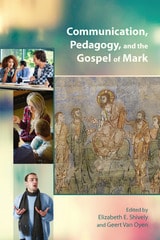
Communication, Pedagogy, and the Gospel of Mark
Elizabeth E. Shively
SBL Press, 2016
Using Mark as a test case, scholars address questions like: How should my research and my approach to the text play out in the classroom? What differences should my academic context and my students' expectations make? How should new approaches and innovations inform interpretation and teaching? This resource enables biblical studies instructors to explore various interpretative approaches and to begin to engage pedagogical issues in our changing world.
Features:
- Ideas that may be adapted for teaching any biblical text
- Diverse perspectives from nine experts in their fields
- Essays include tips, ideas, and lesson plans for the classroom
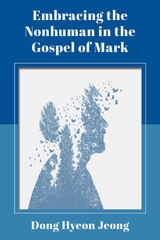
Embracing the Nonhuman in the Gospel of Mark
Dong Hyeon Jeong
SBL Press, 2023
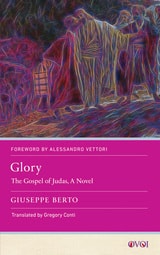
Glory
The Gospel of Judas, A NovelGiuseppe Berto
Rutgers University Press, 2024
In Glory, Italian modernist Giuseppe Berto’s final novel, Judas finally tells his side of the story. From his perspective, Jesus is the betrayer, a would-be political activist and social reformer who fails to live up to his promises. And by fulfilling his predestined role in the drama of Christ’s death and resurrection, Judas himself is partly responsible for humanity’s salvation, enabling them to be redeemed by Christ’s sacrifice. As the novel probes into the psychological motivations behind his rejection of Jesus’ authority, Judas emerges as a compelling conflicted character, a man who seeks to have agency even when he knows his actions are being scripted by a higher power. Through Judas’s searing tortured monologues, this late masterpiece from one of Italy’s greatest writers investigates deep questions about the nature of faith, rebellion, fate, and free will.
Harmonic Function in Chromatic Music
A Renewed Dualist Theory and an Account of Its PrecedentsDaniel Harrison
University of Chicago Press, 1994
One of Harrison's central innovations is his reconstruction of the notion of harmony. Harrison understands harmonic power to flow not from chords as such but from the constituents of chords, reckoned for the most part as scale degrees of a key. This insight proves especially useful in analyzing the unusual progressions and key relations that characterize chromatic music.
Complementing the theoretical ideas is a critical history of nineteenth-century German harmonic theory in which Harrison traces the development of Hugo Riemann's ideas on dualism and harmonic function and examines aspects of Riemannian theory in the work of later theorists. Combining theoretical innovations with a sound historical understanding of those innovations, Harmonic Function in Chromatic Music will aid anyone studying this pivotal period of Western music history.
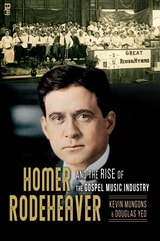
Homer Rodeheaver and the Rise of the Gospel Music Industry
Kevin Mungons and Douglas Yeo
University of Illinois Press, 2021
Homer Rodeheaver merged evangelical hymns and African American spirituals with popular music to create a potent gospel style. Kevin Mungons and Douglas Yeo examine his enormous influence on gospel music against the backdrop of Christian music history and Rodeheaver's impact as a cultural and business figure. Rodeheaver rose to fame as the trombone-playing song leader for evangelist Billy Sunday. As revivalism declined after World War I, Rodeheaver leveraged his place in America's newborn celebrity culture to start the first gospel record label and launch a nationwide radio program. His groundbreaking combination of hymnal publishing and recording technology helped define the early Christian music industry. In his later years, he influenced figures like Billy Graham and witnessed the music's split into southern gospel and black gospel.
Clear-eyed and revealing, Homer Rodeheaver and the Rise of the Gospel Music Industry is an overdue consideration of a pioneering figure in American music.
Interpreting the Gospel of John in Antioch and Alexandria
Miriam DeCock
SBL Press, 2020
A nuanced study of early Christian exegesis
Miriam DeCock analyzes four important early Christian treatments of the Gospel of John, including commentaries by Origen and Cyril from the Alexandrian tradition and the homilies of John Chrysostom and the commentary of Theodore of Mopsuestia, which represent Antiochian traditions. DeCock maintains that the traditional distinction between nonliteral and literal interpretations in these two early Christian centers remains helpful despite recent challenges to the paradigm. She argues that a major and abiding distinction between the two schools lies in the manner in which Alexandrian and Antiochian authors apply the gospel text to their respective communities. DeCock demonstrates that the Antiochenes find primarily literal moral examples and doctrinal teachings in John's Gospel, whereas the Alexandrians find both these and nonliteral teachings concerning the immediate situation of the church and of its individual members.
Features
- An examination of each author's interpretations of a selection of texts
- Focused explorations of John 2; 4; and 9-11 in early Christian exegesis
- A study of early literal non-literal interpretations of John's Gospel

Jonathan Edwards and the Gospel of Love
Ronald Story
University of Massachusetts Press, 2012
Jonathan Edwards has long epitomized the Puritan preacher as fiery scold, fixated on the inner struggle of the soul and the eternal flames of hell. In this book, Ronald Story offers a fundamentally different view of Edwards, revealing a profoundly social minister who preached a gospel of charity and community bound by love.
The first chapters trace Edwards's life and impact, examine his reputation as an intellectual, Calvinist, and revivalist, and highlight the importance for him of the gentler, more compassionate concepts of light, harmony, beauty, and sweetness. Story then explains what Edwards means by the “Gospel of Love”—a Christian faith that is less individual than interpersonal, and whose central feature is the practice of charity to the poor and the quest for loving community in this world, the chief signs of true salvation. As Edwards preached in his sermon “Heaven Is a World of Love,” the afterlife itself is social in nature because love is social.
Drawing on Edwards's own sermons and notebooks, Story reveals the minister's belief that divine love expressed in the human family should take us beyond tribalism, sectarianism, provincialism, and nationality. Edwards offers hope, in the manner of Walter Rauschenbusch, Karl Barth, Martin Luther King Jr., and other great “improvers,” for the coming of a world without want and war. Gracefully and compellingly written, this book represents a new departure in Edwards studies, revising the long-standing yet misleading stereotype of a man whose lessons of charity, community, and love we need now more than ever.
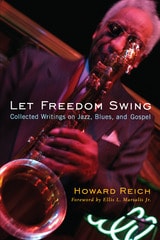
Let Freedom Swing
Collected Writings on Jazz, Blues, and GospelHoward Reich
Northwestern University Press, 2010
Each section of Let Freedom Swing composes a suite, focusing on either a person, place, or scene. Reich gives new life to the standards with his profiles and elegies for such giants as Gershwin, Ellington, and Sinatra. A profile of Louis Armstrong brings out the often angry side of Satchmo but also reveals a more remarkable musician and human being.
His open-mindedness makes Reich a particularly astute observer of the experimental and new, from Ornette Coleman to Chicago experimentalist Ken Vandermark. And his observations about street music open our ears to the songs of everyday life. Reich’s fearlessness is evident in his writing about daunting subjects, such as the New Orleans music scene after Katrina, the lost legacy of jazz in Panama, and the complicated legacy of "race music" in America.
Howard Reich combines a deep enthusiasm for music, a breadth of knowledge, and an ability to share his world with his readers, and Let Freedom Swing is essential reading for anyone interested in the continuing vitality of jazz, gospel, blues, and American music in general.
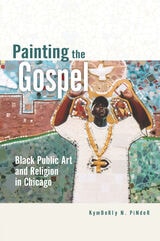
Painting the Gospel
Black Public Art and Religion in ChicagoKymberly Pinder
University of Illinois Press, 2016
Painting the Gospel includes maps and tour itineraries that allow readers to make conceptual, historical, and geographical connections among the works.
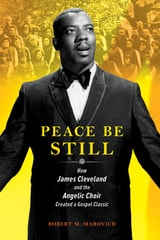
Peace Be Still
How James Cleveland and the Angelic Choir Created a Gospel ClassicRobert M. Marovich
University of Illinois Press, 2021
In September of 1963, Reverend Lawrence Roberts and the Angelic Choir of the First Baptist Church of Nutley, New Jersey, teamed with rising gospel star James Cleveland to record Peace Be Still. The LP and its haunting title track became a phenomenon. Robert M. Marovich draws on extensive oral interviews and archival research to chart the history of Peace Be Still and the people who created it. Emerging from an established gospel music milieu, Peace Be Still spent several years as the bestselling gospel album of all time. As such, it forged a template for live recordings of services that transformed the gospel music business and Black worship. Marovich also delves into the music's connection to fans and churchgoers, its enormous popularity then and now, and the influence of the Civil Rights Movement on the music's message and reception.
The first in-depth history of a foundational recording, Peace Be Still shines a spotlight on the people and times that created a gospel music touchstone.

Peter Comestor's Lectures on the Gospel of Luke and its Glosses
Peter Comestor
Catholic University of America Press, 0
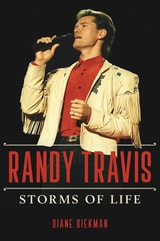
Randy Travis
Storms of LifeDiane Diekman
University of Illinois Press, 2025
Randy Travis’s 1986 breakthrough put him at the forefront of Nashville’s new traditionalist sound and, in the words of Garth Brooks, saved country music. The singer’s warm baritone and all-time classic songs like “Forever and Ever, Amen” landed him atop the charts sixteen times. His cross-genre appeal brought a level of multiplatinum success that no country artist before him had ever achieved.
Diane Diekman’s biography follows the life and career of one of country music’s most beloved figures. Steered from a troubled path as a teen, Travis served a long apprenticeship under manager and future wife Lib Hatcher before being rejected by the Nashville music industry as “too country.” The single “On the Other Hand” and his smash debut album did away with the doubters and began a dominant four-year run that stretched into ongoing success as a recording artist, trailblazing live performer, and actor in film and television. Diekman uses dozens of interviews and in-depth research to fill in the details of Travis’s pre-fame life and his enormous impact on country, popular, and gospel music. From there, she pivots to telling the story of the singer’s difficult divorce from Hatcher, subsequent problems with alcohol and run-ins with the law, and the challenges he overcame in the aftermath of a devastating 2013 stroke.
Informed by a wealth of new research and interviews, Randy Travis is the first in-depth biography of the country music legend.
Redescribing the Gospel of Mark
Barry S. Crawford
SBL Press, 2017
A collaborative project with a variety of critical essays
This final volume of studies by members of the Society of Biblical Literature’s consultation, and later seminar, on Ancient Myths and Modern Theories of Christian Origins focuses on Mark. As with previous volumes, the provocative proposals on Christian origins offered by Burton L. Mack are tested by applying Jonathan Z. Smith's distinctive social theorizing and comparative method. Essays examine Mark as an author’s writing in a book culture, a writing that responded to situations arising out of the first Roman-Judean war after the destruction of the Jerusalem temple in 70 CE. Contributors William E. Arnal, Barry S. Crawford, Burton L. Mack, Christopher R. Matthews, Merrill P. Miller, Jonathan Z. Smith, and Robyn Faith Walsh explore the southern Levant as a plausible provenance of the Gospel of Mark and provide a detailed analysis of the construction of Mark as a narrative composed without access to prior narrative sources about Jesus. A concluding retrospective follows the work of the seminar, its developing discourse and debates, and the continuing work of successor groups in the field.Features
- A thorough examination of the relation between structure and event in social and anthropological theory that provides conceptual tools for representing the project of the author of Mark
- An exploration of the southern Levant as a plausible provenance of the Gospel, a permanent site of successive imperial regimes and culturally related peoples
- A detailed analysis of the construction of Mark as a narrative composed without access to prior narrative sources about Jesus
Risen Indeed? Resurrection and Doubt in the Gospel of Mark
Austin Busch
SBL Press, 2022
Risen Indeed? Resurrection and Doubt in the Gospel of Mark traces the literary dynamics and explores the theological dimensions of the Gospel of Mark’s thematization of skepticism regarding resurrection. In every place where it seems to depict resurrection—Jesus's and others'—Mark evades the issue of whether resurrection actually occurs. Austin Busch argues that, despite Mark's abbreviated and ambiguous conclusion, this gospel does not downplay resurrection but rather foregrounds it, imagining Jesus’s death and restoration to life as a divine plot to overcome Satan through cunning deception. Risen Indeed? constitutes a careful literary reading of Mark's Gospel, as well as an assessment of Mark's impact on the traditions of Christian literature and theology that emerged in its wake.
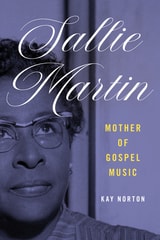
Sallie Martin, Mother of Gospel Music
Kay Norton
University of Illinois Press, 2026
Spirituals and the Birth of a Black Entertainment Industry
Sandra Jean Graham
University of Illinois Press, 2018

The Glory Road
A Gospel Gypsy LifeAnita Faye Garner
University of Alabama Press, 2021
“This is a story central to the origins of country music: the marriage of Saturday night and Sunday morning, and the literal marriage of two musicians, sometimes at odds with each other creatively and personally.” —Rosanne Cash
An essential memoir of music, memory, and the American South.
Anita Faye Garner grew up in the South—just about every corner of it. She and her musical family lived in Texarkana, Bossier City, Hot Springs, Jackson, Vicksburg, Hattiesburg, Pascagoula, Bogalusa, Biloxi, Gulfport, New Orleans, and points between, picking up sticks every time her father, a Pentecostal preacher known as “Brother Ray,” took over a new congregation.
In between jump-starting churches, Brother Ray took his wife and kids out on the gospel revival circuit as the Jones Family Singers. Ray could sing and play, and “Sister Fern” (Mama) was a celebrated singer and songwriter, possessed of both talent and beauty. Rounding out the band were the young Garner (known as Nita Faye then) and her big brother Leslie Ray. At all-day singings and tent revivals across the South, the Joneses made a joyful noise for the faithful and loaded into the car for the next stage of their tour.
But growing up gospel wasn’t always joyous. The kids practically raised and fended for themselves, bonding over a shared dislike of their rootless life and strict religious upbringing. Sister Fern dreamed of crossing over from gospel to popular music and recording a hit record. An unlikely combination of preacher’s wife and glamorous performer, she had the talent and presence to make a splash, and her remarkable voice brought Saturday night rock and roll to Sunday morning music. Always singing, performing, and recording at the margins of commercial success, Sister Fern shared a backing band with Elvis Presley and wrote songs recorded by Johnny Cash and many other artists.
In her touching memoir The Glory Road, Anita Faye Garner re-creates her remarkable upbringing. The story begins with Ray’s attempts to settle down and the family’s inevitable return to the gospel circuit and concludes with Sister Fern’s brushes with stardom and the family’s journey west to California where they finally landed—with some unexpected detours along the way. The Glory Road carries readers back to the 1950s South and the intersections of faith and family at the very roots of American popular music.
For more information about the book and Anita Garner, visit www.thegloryroad.com or www.anitagarner.com
The Golden Age of Gospel
Text by Horace Clarence BoyerPhotography by Lloyd Yearwood
University of Illinois Press, 1995
Skillfully blending music history and social context, Boyer traces the development of gospel from its earliest beginnings through the Golden Age (1945-55) and into the 1960s when gospel entered the concert hall. He introduces dozens of the genre's most gifted contributors, from Thomas A. Dorsey and Mahalia Jackson to the Soul Stirrers and Aretha Franklin, evoking their distinctive styles and distinguishing among the characteristic sounds of gospel music in Chicago, Philadelphia, Detroit, St. Louis, and other locations.
Capturing the essence of a thrilling performance tradition, The Golden Age of Gospel clearly establishes gospel's importance as an authentic American art form and a musical statement of profound belief.
The Gospel of Family Planning
An Intimate Global HistoryNicole C. Bourbonnais
University of Chicago Press, 2025
In the twentieth century, the idea that people should consciously plan (and limit) the size of their families became a global cause. Historical accounts of the global family planning movement have largely focused on the most prominent activists and those at the helm of international organizations, philanthropic foundations, and government programs. In The Gospel of Family Planning, however, historian Nicole C. Bourbonnais shifts our attention to frontline workers—doctors, social workers, nurses, fieldworkers, consultants, church groups, and volunteers—who, she compellingly shows, played a central (if complicated) role in preaching contraception around the world.
Through a mix of collective biography and microhistory, Bourbonnais visits clinics, doorsteps, and bedrooms, revealing the everyday, ground-level workings of grassroots family planning campaigns, state population control programs, and the movements for reproductive rights and justice that arose to contest them. Throughout the book, Bourbonnais invites readers to consider how the intertwined histories of missionary work, humanitarianism, feminism, decolonization, and international development shaped intimate interventions into people’s reproductive lives around the world.

The Gospel of Happiness
How Secular Psychology Points to the Wisdom of Christian PracticeChristopher Kaczor
St. Augustine's Press, 2019
Just as Aristotelian metaphysics provided a new basis for the natural theology of Aquinas’s time, so too, positive psychology provides a basis for a natural moral theology in our own time. this book marshals the empirically verifiable findings of positive psychology that show the wisdom of the Christian tradition. Christian warnings about the dangers of greed, coveting a neighbor’s goods (social comparison), and pride find an empirical verification. Likewise, positive psychology vindicates the wisdom of Christian teaching on the importance of forgiveness, of gratitude, of humility, and of serving one’s neighbor. moreover, positive psychology also can be a service to Christian believers by helping them in their struggles with willpower, by providing new motivations for prayer, and by helping them identify their signature strengths. Finally, this book argues, in a variety of ways, that it is folly to think that even the best of psychology can serve as a replacement for Christianity.
The Gospel of John Marrant
Conjuring Christianity in the Black AtlanticAlphonso F. Saville IV
Duke University Press, 2024
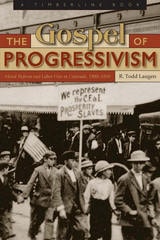
The Gospel of Progressivism
Moral Reform and Labor War in Colorado, 1900-1930R. Todd Laugen
University Press of Colorado, 2010
Sharing enemies like the party boss and corporate lobbyist who undermined honest and responsive government, Progressive leaders were determined to root out selfish political action with public exposure. Labor unions defied bosses and rallied for government protection of workers. Women's clubs appealed to other women as mothers, calling for social welfare, economic justice, and government responsiveness. Protestant church congregations formed a core of support for moral reform. Labor relations experts struggled to prevent the outbreak of violence through mediation between corporate employers and organized labor. Persevering through World War I, Colorado reformers faced their greatest challenge in the 1920s, when leaders of the Ku Klux Klan drew upon the rhetoric of Protestant Progressives and manipulated reform tools to strengthen their own political machine. Once in power, Klan legislators turned on Progressive leaders in the state government.
A story of promising alliances never fully realized, zealous crusaders who resisted compromise, and reforms with unexpected consequences, The Gospel of Progressivism will appeal to those interested in Progressive Era reform, Colorado history, labor relations, and women's activism.
The Gospel of Sustainability
Media, Market and LOHASMonica M. Emerich
University of Illinois Press, 2014
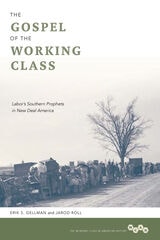
The Gospel of the Working Class
Labor's Southern Prophets in New Deal AmericaErik S. Gellman and Jarod Roll
University of Illinois Press, 2011
In this exceptional dual biography and cultural history, Erik S. Gellman and Jarod Roll trace the influence of two southern activist preachers, one black and one white, who used their ministry to organize the working class in the 1930s and 1940s across lines of gender, race, and geography. Owen Whitfield and Claude Williams, along with their wives Zella Whitfield and Joyce Williams, drew on their bedrock religious beliefs to stir ordinary men and women to demand social and economic justice in the eras of the Great Depression, New Deal, and Second World War.
The Sound of Light
A History of Gospel MusicDon Cusic
University of Wisconsin Press, 1990
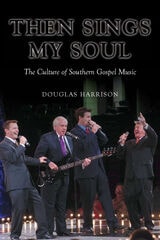
Then Sings My Soul
The Culture of Southern Gospel MusicDouglas Harrison
University of Illinois Press, 2012
Tractates on the Gospel of John 112–24; Tractates on the First Epistle of John
Saint Augustine
Catholic University of America Press, 1988
Tractates on the Gospel of John 11–27
Saint Augustine
Catholic University of America Press, 1988
Tractates on the Gospel of John 1–10
Saint Augustine
Catholic University of America Press, 1988
Tractates on the Gospel of John 28–54
Saint Augustine
Catholic University of America Press, 1988
Tractates on the Gospel of John 55–111
Saint Augustine
Catholic University of America Press, 1988
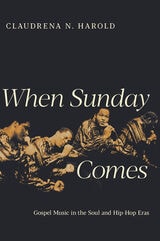
When Sunday Comes
Gospel Music in the Soul and Hip-Hop ErasClaudrena N. Harold
University of Illinois Press, 2020
Weaving insightful analysis into a collective biography of gospel icons, When Sunday Comes explores the music's essential place as an outlet for African Americans to express their spiritual and cultural selves.