Results by title
106 books match the query 'Grammar' and 25 start with a
A Concise Elementary Grammar of the Sanskrit Language
Jan Gonda
University of Alabama Press, 2006
A Gateway to Sindarin
A Grammar of an Elvish Language from JRR Tolkien's Lord of the RingsDavid Salo
University of Utah Press, 2004
From the 1910s to the 1970s, author and linguist J. R. R. Tolkien worked at creating plausibly realistic languages to be used by the creatures and characters in his novels. Like his other languages, Sindarin was a new invention, not based on any existing or artificial language. By the time of his death, he had established fairly complete descriptions of two languages, the "elvish" tongues Quenya and Sindarin. He was able to compose poetic and prose texts in both, and he also constructed a lengthy sequence of changes for both from an ancestral "proto-language," comparable to the development of historical languages and capable of analysis with the techniques of historical linguistics.
In A Gateway to Sindarin, David Salo has created a volume that is a serious look at an entertaining topic. Salo covers the grammar, morphology, and history of the language. Supplemental material includes a vocabulary, Sindarin names, a glossary of terms, and an annotated list of works relevant to Sindarin. What emerges is an homage to Tolkien's scholarly philological efforts.

A Grammar Of Misantla Totonac
Carolyn Mackay
University of Utah Press, 1999
A Grammar and Dictionary of the Timucua Language
Julian Granberry
University of Alabama Press, 1993
Preserving the voice of a vanished people through language, history, and scholarship.
Taken from the surviving contemporary documentary sources, Julian Granberry's volume describes the grammar and lexicon for the extinct 17th-century Timucua language of Central and North Florida and traces the origins of the 17th-century Timucua speakers and their language. Originally privately published in 1987, with limited circulation, this is the only available publication on the Timucuan language. It provides full grammatical analysis and complete lexical data, and it synthesizes both linguistic and archaeological data in order to provide a coherent picture of the Timucua peoples. Granberry traces the probable historical origins of Timucua speakers to a central Amazonian homeland at approximately 2,500 B.C. and proposes that Timucua speakers were responsible for introducing ceramic wares into North America.
A Grammar of Akajeru
Fragments of a Traditional North Andamanese DialectRaoul Zamponi and Bernard Comrie
University College London, 2021
Originally spoken across the northern Andamanese Islands in the Bay of Bengal, the Akajeru language is spoken today by only three people. A Grammar of Akajeru describes this unique grammatical system as it was reported at the turn of the twentieth century. Based primarily on research conducted by Victorian anthropologists Alfred R. Radcliffe-Brown and Edward Horace Man, this book offers a linguistic analysis of all extant Akajeru material as well as the scant documentation of adjacent dialects Akabo and Akakhora. This volume includes a grammatical sketch of Akajeru, an English-Akajeru lexicon, and a comparison between Akajeru and present-day Andamanese.

A Grammar of Boumaa Fijian
R. M. W. Dixon
University of Chicago Press, 1988
Fijian is an agglutinating language, one in which words are formed by the profligate combining of morphemes. There are no case inflections, and tense and aspect as shown by independent clitics or words within a predicate complex. Most verbs come in both transitive and intransitive forms, and nouns can be build up regularly from verbal parts and verbs from nouns. The language is also marked by a highly developed pronoun system and by a vocabulary rich in areas of social significance.
In the opening chapters, Dixon describes the Islands' political, social, and linguistic organization, outlines the main points of Fijian phonology, and presents an overview of the grammar. In succeeding chapters, he examines a number of grammatical topics in greater detail, including clause and phrase structure, verbal syntax, deictics, and anaphora. The volume also includes a full vocabulary of all forms treated in discussion and three of the fifteen texts recorded from monolingual village elders on which the grammar is based.
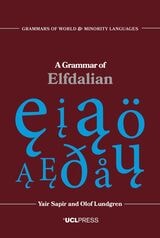
A Grammar of Elfdalian
Yair Sapir and Olof Lundgren
University College London, 2024
Elfdalian is the language traditionally spoken in Älvdalen, central Sweden. Due to its linguistic difference from Swedish, several attempts have been made in Sweden to acquire official recognition of it as a minority language. However, despite the growing interest in documenting and revitalizing Elfdalian, it is still regarded as a dialect.
As one of the best-preserved members of a larger but lesser-known sub-branch of the Scandinavian languages called Dalecarlian (or Dalmål), Elfdalian is a unique language to study. The purpose of this grammar is to account for Late Classical, or Preserved Elfdalian from linguistic, historical, and sociolinguistic angles, and to make the language, including both its archaic and innovative features, accessible to a wider audience.
Grammar of Elfdalian serves as a valuable resource for Ölvdan locals who wish to revitalize or retake their language, for those who wish to transmit the language to others through preschool, school, or adult instruction, and for people who wish to study a North Germanic language for the first time. Linguists may find Elfdalian interesting from the angle of its language structure, as well as from the perspectives of sociolinguistics and language policy.

A Grammar of Epigraphic Hebrew
Sandra Landis Gogel
SBL Press, 1998
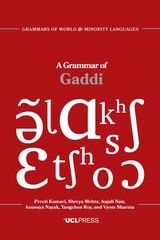
A Grammar of Gaddi
Preeti Kumari, Shreya Mehta, Anjali Nair, Anusuya Nayak, Yangchen Roy, and Vyom Sharma
University College London, 2026
The first comprehensive descriptive grammar of the understudied Indo-Aryan Pahari language, Gaddi.
A Grammar of Gaddi is the first long-form descriptive grammar of the Pahari Indo-Aryan language, Gaddi (also called Bharmauri), spoken by the Gaddi people, a traditionally pastoral community in India. The volume presents a meticulous linguistic analysis of Gaddi, showcasing its phonemic inventory, phonotactics, syllable structure, and its phonological and morpho-phonological processes.
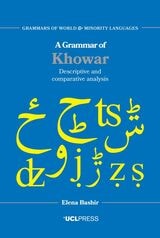
A Grammar of Khowar
Descriptive and Comparative AnalysisElena Bashir
University College London, 2025
Grammar of Khowar is the first comprehensive English-language study of Khowar, a unique Indo-Aryan language spoken in northern Pakistan. Drawing on over thirty years of field research, Elena Bashir provides a detailed snapshot of the language at a critical moment in its evolution, as increasing cultural and economic pressures accelerate linguistic change.
The book presents Khowar’s phonology, morphology, and syntax, alongside an in-depth analysis of how its grammatical structures shape the way speakers conceptualize the world. Rife with original example sentences—many sourced from oral texts recorded in multiple villages—this work preserves linguistic data that might otherwise be lost. A special appendix includes a thirty-page sample text in Khowar’s Perso-Arabic script, followed by a romanized transcription and English translation, offering an invaluable resource for scholars.
A critical contribution to South Asian linguistics, this book underscores the urgency of studying and preserving endangered mountain languages before they fade from use.
A Grammar of Mam, A Mayan Language
By Nora C. England
University of Texas Press, 1983
This is the first full-length reference grammar of Mam, a Mayan language spoken today by over 400,000 people in the western highlands of Guatemala and the state of Chiapas, Mexico. The result of over three years of extensive fieldwork in Guatemala, A Grammar of Mam, a Mayan Language is based on the dialect of Mam spoken by 12,000 people in San Ildefonso Ixtahuacan in the department of Huehuetenango, Guatemala.
England organizes A Grammar of Mam according to two complementary principles: to analyze Mam following basically traditional levels of grammatical description and to present material in such a way that the background information necessary for understanding each topic of discussion shall have been previously provided. Accordingly, England's analysis of the sound system and morphophonemic processes of Mam is followed by a description of the characteristics of root, inflectional, and derivational morphology. Chapters on phrase structure precede two chapters on sentence-level syntax.
A Grammar of Mam is of particular interest in analyzing a Mayan language that is both syntactically and morphologically ergative and that is innovative in the direction of strengthening the ergative system. Indeed at all levels of linguistic organization Mam is innovative, and for this reason it is uniquely interesting both historically and theoretically.

A Grammar of Murder
Violent Scenes and Film FormKarla Oeler
University of Chicago Press, 2009
The dark shadows and offscreen space that force us to imagine violence we cannot see. The real slaughter of animals spliced with the fictional killing of men. The missing countershot from the murder victim’s point of view. Such images, or absent images, Karla Oeler contends, distill how the murder scene challenges and changes film.
Reexamining works by such filmmakers as Renoir, Hitchcock, Kubrick, Jarmusch, and Eisenstein, Oeler traces the murder scene’s intricate connections to the great breakthroughs in the theory and practice of montage and the formulation of the rules and syntax of Hollywood genre. She argues that murder plays such a central role in film because it mirrors, on multiple levels, the act of cinematic representation. Death and murder at once eradicate life and call attention to its former existence, just as cinema conveys both the reality and the absence of the objects it depicts. But murder shares with cinema not only this interplay between presence and absence, movement and stillness: unlike death, killing entails the deliberate reduction of a singular subject to a disposable object. Like cinema, it involves a crucial choice about what to cut and what to keep.
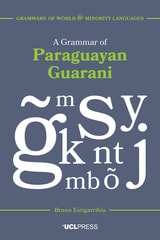
A Grammar of Paraguayan Guarani,
Bruno Estigarribia
University College London, 2020

A Grammar of Spoken Brazilian Portuguese
Earl W. Thomas
Vanderbilt University Press, 1987
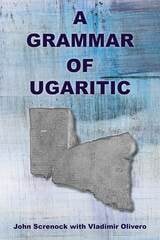
A Grammar of Ugaritic
John Screnock
SBL Press, 2022
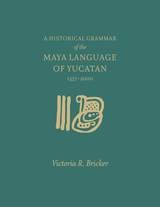
A Historical Grammar of the Maya Language of Yucatan
1557-2000Victoria R. Bricker
University of Utah Press, 2018
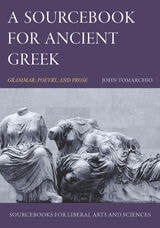
A Sourcebook for Ancient Greek
Grammar, Poetry, and ProseJohn Tomarchio
Catholic University of America Press, 2022

A Tohono O'odham Grammar
Ofelia Zepeda
University of Arizona Press, 1983
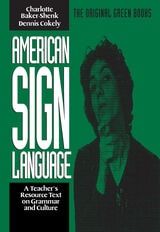
American Sign Language Green Books, A Teacher's Resource Text on Grammar and Culture
Charlotte Baker-Shenk
Gallaudet University Press, 1991
An Answer Key to 'A Primer of Ecclesiastical Latin'
John R. Dunlap
Catholic University of America Press, 2006
An Introduction to the Shoshoni Language
Dammen DaigwapeDrusilla Gould
University of Utah Press, 2003
Listen to the open source audio companion to this book:
An Introduction to the Shoshoni Language Chapter 1
An Introduction to the Shoshoni Language Chapter 2
An Introduction to the Shoshoni Language Chapter 3
An Introduction to the Shoshoni Language Chapter 4
An Introduction to the Shoshoni Language Chapter 5
An Introduction to the Shoshoni Language Chapter 6
An Introduction to the Shoshoni Language Chapter 7
An Introduction to the Shoshoni Language Chapter 8
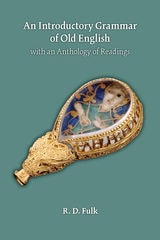
An Introductory Grammar of Old English with an Anthology of Readings
Robert D. Fulk
Arizona Center for Medieval and Renaissance Studies, 2014
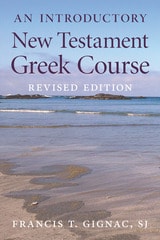
An Introductory New Testament Greek Course, Revised Edition
Francis T. Gignac, SJ
Catholic University of America Press, 2015
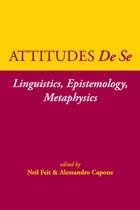
Attitudes De Se
Linguistics, Epistemology, MetaphysicsEdited by Neil Feit and Alessandro Capone
CSLI, 2013
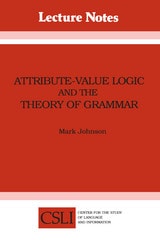
Attribute-Value Logic and the Theory of Grammar
Mark Johnson
CSLI, 1988