Results by title
7 books match the query 'Graphic Novel'
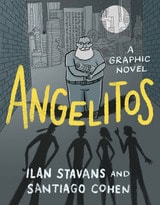
Angelitos
A Graphic NovelIlan Stavans and Santiago Cohen
The Ohio State University Press, 2018
Though Angelitos: A Graphic Novel is a fictional retelling of a desperate time, it draws on autobiographical elements to tell the real-life story of Alejandro García Durán de Lara, popularly known as Padre Chinchachoma, a complicated figure revered by some and reviled by others.

Back to Al Bak
A Graphic NovelDwa (Andriantsialonina Eric); Translated from the French by Allison M. Charette
Vanderbilt University Press, 2027
When Dwa left his birthplace at the age of eight, the village of Alatsinainy Bakaro (Al Bak) had no electricity or running water. Now, he is about to return to the tiny highlands village after twenty-seven years of living in the capital city of Antananarivo. With no family left in the village, he resorts to posting a message on Facebook. A local family responds and invites him to stay with them, without knowing that—by sheer chance—they hold the same positions at the regional junior high school that Dwa’s parents had. Returning to his origins, in the home of a family that could easily have been his own, Dwa falls deep into nostalgia for his childhood. But understanding is hard to come by, and it is a tremendous challenge to reconcile his two worlds, so very different from each other. In the rural highlands of Madagascar, being an artist isn’t a job, and creating graphic novels as a career is an entirely foreign concept. But this journey that Dwa takes—and takes the reader on with him—is made all the richer for its reflections, quandaries, and considerations. In Back to Al Bak, full-page watercolors alternate with comic-strip exchanges to craft a rich and sensitive portrait of Dwa’s journey back through time and memory.
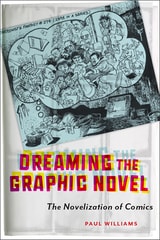
Dreaming the Graphic Novel
The Novelization of ComicsPaul Williams
Rutgers University Press, 2020
Honorable Mention, 2019-2020 Research Society for American Periodicals Book Prize
The term “graphic novel” was first coined in 1964, but it wouldn’t be broadly used until the 1980s, when graphic novels such as Watchmen and Maus achieved commercial success and critical acclaim. What happened in the intervening years, after the graphic novel was conceptualized yet before it was widely recognized?
Dreaming the Graphic Novel examines how notions of the graphic novel began to coalesce in the 1970s, a time of great change for American comics, with declining sales of mainstream periodicals, the arrival of specialty comics stores, and (at least initially) a thriving underground comix scene. Surveying the eclectic array of long comics narratives that emerged from this fertile period, Paul Williams investigates many texts that have fallen out of graphic novel history. As he demonstrates, the question of what makes a text a ‘graphic novel’ was the subject of fierce debate among fans, creators, and publishers, inspiring arguments about the literariness of comics that are still taking place among scholars today.
Unearthing a treasure trove of fanzines, adverts, and unpublished letters, Dreaming the Graphic Novel gives readers an exciting inside look at a pivotal moment in the art form’s development.
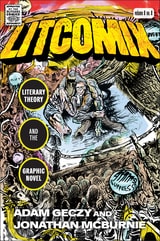
Litcomix
Literary Theory and the Graphic NovelAdam Geczy
Rutgers University Press, 2023
Using the methodology of Georg Lukács and his detailed defense of literary realism as a socially embedded practice, Litcomix tackles difficult questions about reading graphic novels as literature. What critical standards should we use to measure the quality of a graphic novel? How does the genre contribute to our understanding of ourselves and the world? What qualities distinguish it from other forms of literature?
LitComix hones its theoretical approach through case studies taken from across the diverse world of comics, from Yoshihiro Tatsumi’s groundbreaking manga to the Hernandez Brothers’ influential alt-comix. Whether looking at graphic novel adaptations of Proust or considering how Jack Kirby’s use of intertextuality makes him the Balzac of comics, this study offers fresh perspectives on how we might appreciate graphic novels as literature.
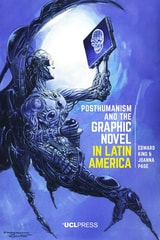
Posthumanism and the Graphic Novel in Latin America
Edward King and Joanna Page
University College London, 2017
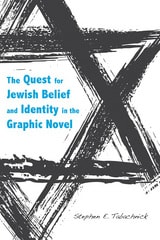
The Quest for Jewish Belief and Identity in the Graphic Novel
Stephen E. Tabachnick
University of Alabama Press, 2014
The creators of Superman (Jerry Siegel and Joe Shuster), Batman (Bob Kane and Bill Finger), and the Marvel superheroes (Stan Lee and Jack Kirby), were Jewish, as was the founding editor of Mad magazine (Harvey Kurtzman). They often adapted Jewish folktales (like the Golem) or religious stories (such as the origin of Moses) for their comics, depicting characters wrestling with supernatural people and events. Likewise, some of the most significant graphic novels by Jews or about Jewish subject matter deal with questions of religious belief and Jewish identity. Their characters wrestle with belief—or nonbelief—in God, as well as with their own relationship to the Jews, the historical role of the Jewish people, the politics of Israel, and other issues related to Jewish identity.
In The Quest for Jewish Belief and Identity in the Graphic Novel, Stephen E. Tabachnick delves into the vivid kaleidoscope of Jewish beliefs and identities, ranging from Orthodox belief to complete atheism, and a spectrum of feelings about identification with other Jews. He explores graphic novels at the highest echelon of the genre by more than thirty artists and writers, among them Harvey Pekar (American Splendor), Will Eisner (A Contract with God), Joann Sfar (The Rabbi’s Cat), Miriam Katin (We Are On Our Own), Art Spiegelman (Maus), J. T. Waldman (Megillat Esther), Aline Kominsky Crumb (Need More Love), James Sturm (The Golem’s Mighty Swing), Leela Corman (Unterzakhn), Ari Folman and David Polonsky (Waltz with Bashir), David Mairowitz and Robert Crumb’s biography of Kafka, and many more. He also examines the work of a select few non-Jewish artists, such as Robert Crumb and Basil Wolverton, both of whom have created graphic adaptations of parts of the Hebrew Bible.
Among the topics he discusses are graphic novel adaptations of the Bible; the Holocaust graphic novel; graphic novels about the Jews in Eastern and Western Europe and Africa, and the American Jewish immigrant experience; graphic novels about the lives of Jewish women; the Israel-centered graphic novel; and the Orthodox graphic novel. The book concludes with an extensive bibliography.
No study of Jewish literature and art today can be complete without a survey of the graphic novel, and scholars, students, and graphic novel fans alike will delight in Tabachnick’s guide to this world of thought, sensibility, and artfulness.
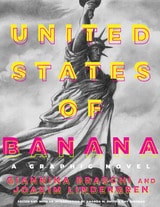
United States of Banana
A Graphic NovelGiannina Braschi and Joakim LindengrenEdited and with an introduction by Amanda M. Smith and Amy Sheeran
The Ohio State University Press, 2021