Results by title
5 books match the query 'Grateful Dead (Musical group)'
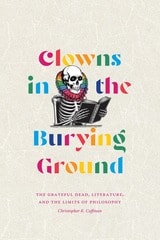
Clowns in the Burying Ground
The Grateful Dead, Literature, and the Limits of PhilosophyChristopher K. Coffman
Duke University Press, 2026
In Clowns in the Burying Ground, Christopher K. Coffman presents intertextual readings of the Grateful Dead and their lyrics to argue that the band’s lyricists were deeply and significantly engaged with the literary tradition. Through an analysis of their music, lyrics, and biographies, Coffman shows how the group and its individual members drew on the canons of European and American literature to shape both the form and content of their creative work. Coffman draws on the language of the “literary fragment,” as conceived by German Romantic philosophers and their intellectual heirs, to identify how the Grateful Dead’s lyricists employed intertextuality, allusion, and other strategies to explore how meaning takes shape at the boundary between poetry and philosophy. From Shakespeare to “Shakedown Street,” Clowns in the Burying Ground demonstrates the Dead’s literary depth and how their most successful lyrics and performances walk the line between creation and chaos.
[more]
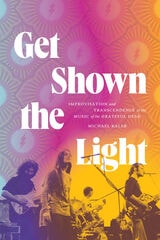
Get Shown the Light
Improvisation and Transcendence in the Music of the Grateful DeadMichael Kaler
Duke University Press, 2023
Of all the musical developments of rock in the 1960s, one in particular fundamentally changed the music’s structure and listening experience: the incorporation of extended improvisation into live performances. While many bands—including Cream, Pink Floyd, and the Velvet Underground—stretched out their songs with improvisations, no band was more identified with the practice than the Grateful Dead. In Get Shown the Light Michael Kaler examines how the Dead’s dedication to improvisation stemmed from their belief that playing in this manner enabled them to touch upon transcendence. Drawing on band testimonials and analyses of early recordings, Kaler traces how the Dead developed an approach to playing music that they believed would facilitate their spiritual goals. He focuses on the band’s early years, the significance of their playing Ken Kesey’s Acid Test parties, and their evolving exploration of the myriad musical and spiritual possibilities that extended improvisation afforded. Kaler demonstrates that the Grateful Dead developed a radical new way of playing rock music as a means to unleash the spiritual and transformative potential of their music.
[more]
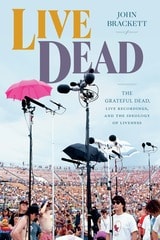
Live Dead
The Grateful Dead, Live Recordings, and the Ideology of LivenessJohn Brackett
Duke University Press, 2023
The Grateful Dead were one of the most successful live acts of the rock era. Performing more than 2,300 shows between 1965 and 1995, the Grateful Dead’s reputation as a “live band” was—and continues to be—sustained by thousands of live concert recordings from every era of the group’s long and colorful career. In Live Dead, musicologist John Brackett examines how live recordings—from the group’s official releases to fan-produced tapes, bootlegs to “Betty Boards,” and Dick’s Picks to From the Vault—have shaped the general history and popular mythology of the Grateful Dead for more than fifty years. Drawing on a diverse array of materials and documents contained in the Grateful Dead Archive, Live Dead details how live recordings became meaningful among the band and their fans not only as sonic souvenirs of past musical performances but also as expressions of assorted ideals, including notions of “liveness,” authenticity, and the power of recorded sound.
[more]
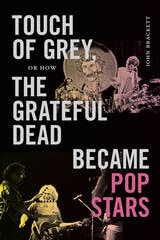
Touch of Grey, or How the Grateful Dead Became Pop Stars
John Brackett
Duke University Press, 2026
Touch of Grey, or How the Grateful Dead Became Pop Stars draws on extensive archival research to tell the behind-the-scenes story of how one song fundamentally transformed the legacy of one of rock’s most iconic groups.
Touch of Grey, or How the Grateful Dead Became Pop Stars tells the story of how one song transformed the popular legacy of one of rock’s most iconic musical groups. John Brackett traces the history of the song “Touch of Grey,” beginning with songwriter Robert Hunter’s lyrical sketches and the Grateful Dead’s earliest live arrangements, culminating in the group’s popular renaissance following the release of “Touch of Grey” and the album In the Dark in the summer of 1987. Brackett details how particular recording technologies, notable musical characteristics, modes of attending and listening, and the mechanics of the contemporary music industry shaped this defining moment in the group’s career. Drawing on extensive archival research, Touch of Grey examines how the band and their label worked to produce a hit record, a dynamic music video, and an effective promotional campaign that would propel the Grateful Dead from a group with a devoted cult following to become a pop culture phenomenon.
Touch of Grey, or How the Grateful Dead Became Pop Stars tells the story of how one song transformed the popular legacy of one of rock’s most iconic musical groups. John Brackett traces the history of the song “Touch of Grey,” beginning with songwriter Robert Hunter’s lyrical sketches and the Grateful Dead’s earliest live arrangements, culminating in the group’s popular renaissance following the release of “Touch of Grey” and the album In the Dark in the summer of 1987. Brackett details how particular recording technologies, notable musical characteristics, modes of attending and listening, and the mechanics of the contemporary music industry shaped this defining moment in the group’s career. Drawing on extensive archival research, Touch of Grey examines how the band and their label worked to produce a hit record, a dynamic music video, and an effective promotional campaign that would propel the Grateful Dead from a group with a devoted cult following to become a pop culture phenomenon.
[more]
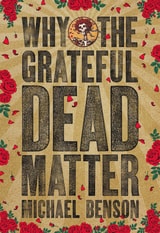
Why the Grateful Dead Matter
Michael Benson
University Press of New England, 2016
In Why the Grateful Dead Matter, veteran writer and lifelong Deadhead Michael Benson argues that the Grateful Dead are not simply a successful rock-and-roll band but a phenomenon central to American culture. He defends the proposition that the Grateful Dead are, in fact, a musical movement as transformative as any -ism in the artistic history of this century and the last. And a lot more fun than most. From the street festivals of Haight-Ashbury to the cross-country acid tests with the Merry Pranksters, and from the sound-and-light show at the Great Pyramid at Giza to the ecstatic outpouring of joy at Soldier Field in the summer of ’15, the Grateful Dead have been at the center of American life, music, and karmic flow for fifty years. In Why the Grateful Dead Matter, Michael Benson brings it all back to life and makes a compelling case for the band’s lasting cultural importance.
[more]