Results by title
1441 books match the query 'Great Britain' and 116 start with a

A Biographical Dictionary of Actors, Volume 2, Belfort to Byzand
Actresses, Musicians, Dancers, Managers, and Other Stage Personnel in London, 1660-1800Philip H. Highfill, Jr., Kalman A. Burnim, and Edward A. Langhans
Southern Illinois University Press, 1973
Tobe completed in 12volumes, this monumental work here begins publication with the first two volumes—Abaco to Bertie and Bertin to Byzard. When completed, it is expected that the biographical dictionary will include information on more than 8,500 individuals.
Hundreds of printed sources have been searched for this project, and dozens of repositories combed, and the names of personnel listed have been filtered through parish registers whenever possible. From published and unpublished sources, from wills, archives of professional societies and guilds, from records of colleges, universities, and clubs, and from the contributions of selfless scholars, the authors have here assembled material which illuminates theatrical and musical activity in London in the 1660–1800 period.
The information here amassed will doubtless be augmented by other specialists in Restoration and eighteenth-century theatre and drama, but it is not likely that the number of persons now known surely or conjectured finally to have been connected with theatrical enterprise in this period will ever be increased considerably. Certainly, the contributions made here add immeasurably to existing knowledge, and in a number of instances correct standard histories or reference works.
The accompanying illustrations, estimated to be some 1,400 likenesses—at least one picture of each subject for whom a portrait exists—may prove to be a useful feature of the Work. The authors have gone beyond embellishment of the text, and have attempted to list all original portraits any knowledge of which is now recoverable, and have tried to ascertain the present location of portraits in every medium.
A Brief History of the Bodleian Library
Mary Clapinson
Bodleian Library Publishing, 2015
A Brief History of the Bodleian Library takes readers through the Library’s history, from its founding in 1602 by Sir Thomas Bodley to the present day. Along the way, the book traces the development of the Library’s incomparable collection, complete with details that reveal the eccentricities of those who have helped shape it, including Bodley himself, who conceived of the Library as a “republic of the learned,” and King George VI, who inadvertently delayed the opening of the New Bodleian in 1946 when he broke the key in the lock. Covering the major moments in the Library’s history and with a great many fun facts—How did the Library come to own not one of Shakespeare’s First Folios but two?—the book also apprises readers of its present concerns, including the building of individual subject libraries across Oxford, the use of underground passages, and the perennial search for more space.
A Brief History of the Bodleian Library
Mary Clapinson
Bodleian Library Publishing, 2020
How did a library founded over four hundred years ago grow to become the world-renowned institution it is today, home to over thirteen million items? From its foundation by Sir Thomas Bodley in 1598 to the opening of the Weston Library in 2015, this illustrated account shows how the Library’s history has been involved with the British monarchy and political events throughout the centuries. The history of the Library is also a history of collectors and collections, and this book traces the story of major donations and purchases, making use of the Library’s own substantial archives to show how it came to house key items such as early confirmations of the Magna Carta, Shakespeare’s First Folio, and the manuscript of Jane Austen’s earliest writings, among many others.
This revised edition brings the history of the Bodleian Library up to the present moment. Beautifully illustrated with prints, portraits, manuscripts, and archival material, this book is essential reading for anyone interested in the history of libraries and collections.

A Collection of Ranter Writings
Spiritual Liberty and Sexual Freedom in the English RevolutionNigel Smith
Pluto Press, 2014
The Ranters - like the Levellers and the Diggers - were a group of religious libertarians who flourished during the English Civil War (1642–1651), a period of social and religious turmoil which saw, in the words of the historian Christopher Hill, 'the world turned upside down'.
A Collection of Ranter Writings is the most notable attempt to anthologise the key Ranter writings, bringing together some of the most remarkable, visionary and unforgettable texts. The subjects range from the limits to pleasure and divine right, to social justice and collective action.
The Ranters have intrigued and captivated generations of scholars and philosophers. This carefully curated collection will be of great interest to historians, philosophers and all those trying to understand past radical traditions.
A Contemporary Archaeology of London's Mega Events
From the Great Exhibition to London 2012Jonathan Gardner
University College London, 2022
This book explores the traces of London’s most significant modern “mega events”: the Great Exhibition of 1851, the 1951 Festival of Britain’s South Bank Exhibition, and the 2012 Olympic and Paralympic Games. Though only open for a few weeks or months, mega events permanently and disruptively reshape their host cities and societies: they demolish and rebuild whole districts, they draw in materials and participants from around the globe, and their organizers self-consciously seek to leave a “legacy” that will endure for decades or more. The book argues that these spectacles must thus be seen as long-lived and persistent, rather than simply transient or short-term phenomena. It explores the long-term history of each event through contemporary archaeology, examining the contents and building materials of the Great Exhibition’s Crystal Palace and their extraordinary afterlife at Sydenham, South London; how the Festival of Britain’s South Bank Exhibition employed displays of ancient history to construct a new postwar British identity; and how London 2012 dealt with competing visions of the past as archaeology, waste, and heritage in creating a vision of the future.
A Dance Through Time
Images of Western Social Dancing from the Middle Ages to Modern TimesJeremy Barlow
Bodleian Library Publishing, 2012
A Different Hunger
Writings on Black ResistanceA. Sivanandan
Pluto Press, 1991
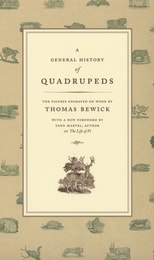
A General History of Quadrupeds
The Figures Engraved on WoodThomas Bewick
University of Chicago Press, 2009
In the late eighteenth century, the British took greater interest than ever before in observing and recording all aspects of the natural world. Travelers and colonists returning from far-flung lands provided dazzling accounts of such exotic creatures as elephants, baboons, and kangaroos. The engraver Thomas Bewick (1753–1828) harnessed this newfound interest by assembling the most comprehensive illustrated guide to nature of his day.
A General History of Quadrupeds, first published in 1790, showcases Bewick’s groundbreaking engraving techniques that allowed text and images to be published on the same page. From anteaters to zebras, armadillos to wolverines, this delightful volume features engravings of over four hundred animals alongside descriptions of their characteristics as scientifically understood at the time. Quadrupeds reaffirms Bewick’s place in history as an incomparable illustrator, one whose influence on natural history and book printing still endures today.

A Guide to the Naval Records in the National Archives of the UK
Edited by Randolph Cock and N. A. M. Rodger
University of London Press, 2008

A Historian and His World
A Life of Christopher Dawson, 1889-1970Christina Scott
Catholic University of America Press, 2023
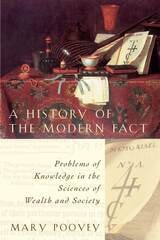
A History of the Modern Fact
Problems of Knowledge in the Sciences of Wealth and SocietyMary Poovey
University of Chicago Press, 1998
Mary Poovey explores these questions in A History of the Modern Fact, ranging across an astonishing array of texts and ideas from the publication of the first British manual on double-entry bookkeeping in 1588 to the institutionalization of statistics in the 1830s. She shows how the production of systematic knowledge from descriptions of observed particulars influenced government, how numerical representation became the privileged vehicle for generating useful facts, and how belief—whether figured as credit, credibility, or credulity—remained essential to the production of knowledge.
Illuminating the epistemological conditions that have made modern social and economic knowledge possible, A History of the Modern Fact provides important contributions to the history of political thought, economics, science, and philosophy, as well as to literary and cultural criticism.
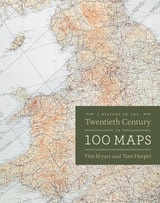
A History of the Twentieth Century in 100 Maps
Tim Bryars and Tom Harper
University of Chicago Press, 2014
As Bryars and Harper reveal, maps make ideal narrators, and the maps in this book tell the story of the 1900s—which saw two world wars, the Great Depression, the Swinging Sixties, the Cold War, feminism, leisure, and the Internet. Several of the maps have already gained recognition for their historical significance—for example, Harry Beck’s iconic London Underground map—but the majority of maps on these pages have rarely, if ever, been seen in print since they first appeared. There are maps that were printed on handkerchiefs and on the endpapers of books; maps that were used in advertising or propaganda; maps that were strictly official and those that were entirely commercial; maps that were printed by the thousand, and highly specialist maps issued in editions of just a few dozen; maps that were envisaged as permanent keepsakes of major events, and maps that were relevant for a matter of hours or days.
As much a pleasure to view as it is to read, A History of the Twentieth Century in 100 Maps celebrates the visual variety of twentieth century maps and the hilarious, shocking, or poignant narratives of the individuals and institutions caught up in their production and use.

A Kiss across the Ocean
Transatlantic Intimacies of British Post-Punk and US LatinidadRichard T. Rodríguez
Duke University Press, 2022
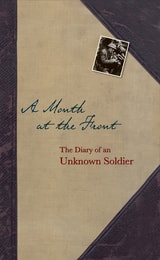
A Month at the Front
The Diary of an Unknown SoldierEdited by the Bodleian Library
Bodleian Library Publishing, 2006
A Month at the Front chronicles one month in the life of a soldier from the 12th East Surrey regiment, and the economical yet powerful narrative vividly brings to life the sights, sounds, and horrors of war. “The first night passed uneventfully, except that we were shelled”—so begins the young man in spare prose, and the quiet drama unfolds from there. Constant bombings and the sobering landscape of war—“It was nothing unusual to come across . . . a dead comrade lying waiting for burial”—are occasionally relieved by humorous events such as the discovery that a troop of advancing Germans was “nothing more than few short willow shrubs waving about in the breeze.” The young soldier describes how his comrades gradually fall one by one, until he and three remaining fellow soldiers are captured by the enemy, an event that abruptly ends the narrative.
A Month at the Front is not penned by a famous author, nor does it claim to offer any broad perspective. Rather, it is the lone voice of an unknown young man thrust into fatal circumstances.
A Nation of Family and Friends?
Sport and the Leisure Cultures of British Asian Girls and WomenAarti Ratna
Rutgers University Press, 2024
Ratna also examines two key cultural objects - the popular films "Bend it Like Beckham" and “Dhan Dhana Dhan Goal” - to examine in detail the gendered representation of South Asian soccer players’ engagement in amateur and elite levels of the sport. She critiques studies of women’s football fandom and sport that fail to acknowledge social differences relating to race, class, age, disability, and sexuality. By linking the social forces (across time and space) that differentially affect their sporting choices and leisure lifestyles, Ratna portrays the women of the South Asian diaspora as active agents in the shaping of their life courses and as skilled navigators of the complexities affecting their own identities. Ultimately Ratna examines the intersections of class, caste, age, generation, gender, and sexuality, to provide a rich and critical exploration of British Asian women's sport and leisure choices, pleasures, and lived realities.
A Necessary Luxury
Tea in Victorian EnglandJulie E. Fromer
Ohio University Press, 2008
In A Necessary Luxury: Tea in Victorian England, Julie E. Fromer analyzes tea histories, advertisements, and nine Victorian novels, including Alice’s Adventures in Wonderland, Wuthering Heights, and Portrait of a Lady. Fromer demonstrates how tea functions within the literature as an arbiter of taste and middle-class respectability, aiding in the determination of class status and moral position. She reveals the way in which social identity and character are inextricably connected in Victorian ideology as seen through the ritual of tea.
Drawing from the fields of literary studies, cultural studies, history, and anthropology, A Necessary Luxury offers in-depth analysis of both visual and textual representations of the commodity and the ritual that was tea in nineteenth-century England.
A Party with Socialists in It
A History of the Labour LeftSimon Hannah
Pluto Press, 2018
A Party with Socialists in It addresses those questions and more, telling the story of the Labour Party from its origins to today, showing how at every turn it has struggled with the tension between the rights and demands of workers and a more centrist position. As Jeremy Corbyn’s leadership attempts to revitalize the party after the initial success of the Blair years turned into disappointment and disenchantment, this clear-eyed history could not be more timely.
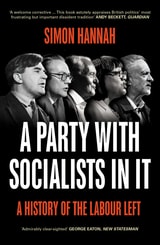
A Party with Socialists in It
A History of the Labour LeftSimon
Pluto Press, 2022
A smart and succinct history of the Labour left
*A Guardian Book of the Day*
The defeat of socialist firebrand Jeremy Corbyn as Labour Leader in 2019 confirmed Tony Benn's famous retort 'the Labour party has never been a socialist party, although there have always been socialists in it.'
For over a hundred years, the British Labour Party has been a bastion for working-class organization and struggle. However, has it ever truly been on the side of the workers? Where do its interests really lie? And can we rely on it to provide a barrier against right-wing forces?
Simon Hannah's smart and succinct history of the Labour left guides us through the twists and turns of the party, from the Bevanite movement and the celebrated government of Clement Attlee, through the emergence of a New Left in the 1970s and the Blairism of the 1990s, to Corbyn's defeat and his replacement by Keir Starmer.
This new edition is updated throughout, with a new final chapter and conclusion bringing the story up to date.
A Philosopher's Economist
Hume and the Rise of CapitalismMargaret Schabas and Carl Wennerlind
University of Chicago Press, 2020
Although David Hume’s contributions to philosophy are firmly established, his economics has been largely overlooked. A Philosopher’s Economist offers the definitive account of Hume’s “worldly philosophy” and argues that economics was a central preoccupation of his life and work. Margaret Schabas and Carl Wennerlind show that Hume made important contributions to the science of economics, notably on money, trade, and public finance. Hume’s astute understanding of human behavior provided an important foundation for his economics and proved essential to his analysis of the ethical and political dimensions of capitalism. Hume also linked his economic theory with policy recommendations and sought to influence people in power. While in favor of the modern commercial world, believing that it had and would continue to raise standards of living, promote peaceful relations, and foster moral refinement, Hume was not an unqualified enthusiast. He recognized many of the underlying injustices of capitalism, its tendencies to promote avarice and inequality, as well as its potential for political instability and absolutism.
Hume’s imprint on modern economics is profound and far-reaching, whether through his close friend Adam Smith or later admirers such as John Maynard Keynes and Friedrich Hayek. Schabas and Wennerlind’s book compels us to reconsider the centrality and legacy of Hume’s economic thought—for both his time and ours—and thus serves as an important springboard for reflections on the philosophical underpinnings of economics.
A Power to Do Justice
Jurisdiction, English Literature, and the Rise of Common LawBradin Cormack
University of Chicago Press, 2008
A Power to Do Justice shows how Renaissance writers engaged the practical and conceptual dynamics of jurisdiction, both as a subject for critical investigation and as a frame for articulating literature’s sense of itself. Reassessing the relation between English literature and law from More to Shakespeare, Cormack argues that where literary texts attend to jurisdiction, they dramatize how boundaries and limits are the very precondition of law’s power, even as they clarify the forms of intensification that make literary space a reality.
Tracking cultural responses to Renaissance jurisdictional thinking and legal centralization, A Power to Do Justice makes theoretical, literary-historical, and methodological contributions that set a new standard for law and the humanities and for the cultural history of early modern law and literature.
A Publisher's Paradise
Expatriate Literary Culture in Paris, 1890-1960Colette Colligan
University of Massachusetts Press, 2014
From 1890 to 1960, some of Anglo-America's most heated cultural contests over books, sex, and censorship were staged not at home, but abroad in the City of Light. Paris, with its extraordinary liberties of expression, became a special place for interrogating the margins of sexual culture and literary censorship, and a wide variety of English language “dirty books” circulated through loose expatriate publishing and distribution networks.
A Publisher's Paradise explores the political and literary dynamics that gave rise to this expatriate cultural flourishing, which included everything from Victorian pornography to the most daring and controversial modernist classics. Colette Colligan tracks the British and French politicians and diplomats who policed Paris editions of banned books and uncovers offshore networks of publishers, booksellers, authors, and readers. She looks closely at the stories the “dirty books” told about this publishing haven and the smut peddlers and literary giants it brought together in transnational cultural formations. The book profiles an eclectic group of expatriates living and publishing in Paris, from relatively obscure figures such as Charles Carrington, whose list included both The Picture of Dorian Gray and the pornographic novel Randiana, to bookshop owner Sylvia Beach, famous for publishing James Joyce's Ulysses in 1922.
A Publisher's Paradise is a compelling exploration of the little-known history of foreign pornography in Paris and the central role it played in turning the city into a modernist outpost for literary and sexual vanguardism, a reputation that still lingers today in our cultural myths of midnight in Paris.
A Room of His Own
A Literary-Cultural Study of Victorian ClublandBarbara Black
Ohio University Press, 2012
In nineteenth-century London, a clubbable man was a fortunate man, indeed. The Reform, the Athenaeum, the Travellers, the Carlton, the United Service are just a few of the gentlemen’s clubs that formed the exclusive preserve known as “clubland” in Victorian London—the City of Clubs that arose during the Golden Age of Clubs. Why were these associations for men only such a powerful emergent institution in nineteenth-century London? Distinctly British, how did these single-sex clubs help fashion men, foster a culture of manliness, and assist in the project of nation building? What can elite male affiliative culture tell us about nineteenth-century Britishness?
A Room of His Own sheds light on the mysterious ways of male associational culture as it examines such topics as fraternity, sophistication, nostalgia, social capital, celebrity, gossip, and male professionalism. The story of clubland (and the literature it generated) begins with Britain’s military heroes home from the Napoleonic campaign and quickly turns to Dickens’s and Thackeray’s acrimonious Garrick Club Affair. It takes us to Richard Burton’s curious Cannibal Club and Winston Churchill’s The Other Club; it goes underground to consider Uranian desire and Oscar Wilde’s clubbing and resurfaces to examine the problematics of belonging in Trollope’s novels. The trespass of French socialist Flora Tristan, who cross-dressed her way into the clubs of Pall Mall, provides a brief interlude. London’s clubland—this all-important room of his own—comes to life as Barbara Black explores the literary representations of clubland and the important social and cultural work that this urban site enacts. Our present-day culture of connectivity owes much to nineteenth-century sociability and Victorian networks; clubland reveals to us our own enduring desire to belong, to construct imagined communities, and to affiliate with like-minded comrades.

A Room of His Own
A Literary-Cultural Study of Victorian ClublandBarbara Black
Ohio University Press, 0
A Room of His Own sheds light on the mysterious ways of male associational culture as it examines such topics as fraternity, sophistication, nostalgia, social capital, celebrity, gossip, and male professionalism. The story of clubland (and the literature it generated) begins with Britain’s military heroes home from the Napoleonic campaign and quickly turns to Dickens’s and Thackeray’s acrimonious Garrick Club Affair. It takes us to Richard Burton’s curious Cannibal Club and Winston Churchill’s The Other Club; it goes underground to consider Uranian desire and Oscar Wilde’s clubbing and resurfaces to examine the problematics of belonging in Trollope’s novels. The trespass of French socialist Flora Tristan, who cross-dressed her way into the clubs of Pall Mall, provides a brief interlude. London’s clubland—this all-important room of his own—comes to life as Barbara Black explores the literary representations of clubland and the important social and cultural work that this urban site enacts. Our present-day culture of connectivity owes much to nineteenth-century sociability and Victorian networks; clubland reveals to us our own enduring desire to belong, to construct imagined communities, and to affiliate with like-minded comrades.

A Saltire in the German Lands
Scottish Benedictine Monasteries in Germany 1575-1862Thomas McInally
Aberdeen University Press, 2017

A Scientist's War
The war diary of Sir Clifford Paterson, 1939-45Robert Clayton
The Institution of Engineering and Technology, 1991
A Short History of Bath
Richard Tames
Haus Publishing, 2027
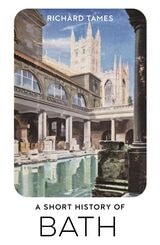
This highly readable guide to Bath details the entire history of the historic city, from the Roman period to the present day, as well as its historic architecture, thermal springs, and other attractions.
Any time spent in Bath is a pleasure. The historic city buzzes with vitality and its designation as one of UNESCO's World Heritage Sites is confirmed by the annual arrival of some four million visitors from Britain and all over the world. Whereas most accounts of Bath's history focus on the Roman and Georgian periods, skipping over much of the rest, this short history offers a chronological survey of the entire span of Bath's existence, supplemented by lively accounts of its food, its fashions, its theatrical and artistic heritage, its music, and its memorials. Almost two-thirds of the city center is a conservation area, the largest in Britain. One in six of the city's houses was built before 1850, almost half before the twentieth century. The city's highlights include not only the Roman baths, the elegant Pump Room, the majestic abbey, and half a dozen museums, but also one of only four bridges in the world with shops on both sides and Britain's last remaining Georgian pleasure gardens. With the opening of the striking new Thermae Spa complex, Bath entered the twenty-first century by reasserting its original identity as a uniquely therapeutic location.

A Short History of Cambridge
Richard Tames
Haus Publishing, 2025
A Short History of Cambridge provides a narrative of the city and university, from the Middle Ages to the present day. Going beyond the world-renowned research attractions of Cambridge University, this revised paperback edition explores the vast cultural output of the town, from art and literature to theater and comedy. Richard Tames sheds light on the very origins of academia in the area, the intricate lives of the students and scholars who studied there, and how this community interacted with the townsfolk over the past eight hundred years.
Cambridge offers the splendor of King's College Chapel and the beauty of “the Backs” as well as outstanding collections of fans and fritillaries, sculpture and stained glass, and medieval coins and oriental manuscripts. Attractions include the world-class Fitzwilliam Museum and Botanic Gardens, quirky Kettle’s Yard, and museums devoted to archaeology, anthropology, zoology, earth sciences, polar research, and the history of science, plus Britain's oldest bookshop. Enter the world of “Bumps and Bedders” and learn why May Week is in June. This joyful history of the town to which more than eight million visitors flock every year will delight both readers familiar with the cobbles of Cambridge and those who have seen no further than the stained-glass windows of King’s College Chapel.

A Short History of Cambridge
Richard Tames
Haus Publishing, 2025

A Short History of Parliament
1295-1642Faith Thompson
University of Minnesota Press, 1953
A Short History of Parliament was first published in 1953. Minnesota Archive Editions uses digital technology to make long-unavailable books once again accessible, and are published unaltered from the original University of Minnesota Press editions.
A Socialist History of the French Revolution
Jean Jaurés
Pluto Press, 2021
Jean Jaurès was the celebrated French Socialist Party leader, assassinated in 1914 for trying to use diplomacy and industrial action to prevent the outbreak of war. Published just a few years before his death, his magisterial A Socialist History of the French Revolution has endured for over a century.
Written in the midst of his activities as leader of the Socialist Party and editor of its newspaper, L'Humanite, Jaurès intended the book to serve as both a guide and an inspiration to political activity; even now it can serve to do just that.
Jaurès's verve, originality, and willingness to criticize all players in this epic drama make this a truly moving addition to the shelf of great books on the French Revolution. Mitchell Abidor's abridged translation of Jaurès's original six volumes makes this exceptional work truly accessible to an Anglophone audience.
A Suffragette in America
Reflections on Prisoners, Pickets and Political ChangeSylvia Pankhurst
Pluto Press, 2019
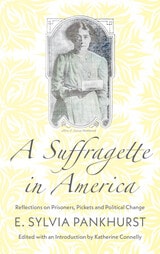
This book gathers Pankhurst’s writings from the year-long visit, in which she reveals her shock at the darkness hidden in American life, and draws parallels to her experiences of imprisonment and misogyny in her own country. Never before published, these writings mark an important stage in the development of the suffragette's thought, which she brought back to Britain to inform the burgeoning suffrage campaign there.
A Surgical Temptation
The Demonization of the Foreskin and the Rise of Circumcision in BritainRobert Darby
University of Chicago Press, 2005
Why Britain adopted a practice it had traditionally abhorred and then abandoned it after only two generations is the subject of A Surgical Temptation. Robert Darby reveals that circumcision has always been related to the question of how to control male sexuality. This study explores the process by which the male genitals, and the foreskin especially, were pathologized, while offering glimpses into the lives of such figures as James Boswell, John Maynard Keynes, and W. H. Auden. Examining the development of knowledge about genital anatomy, concepts of health, sexual morality, the rise of the medical profession, and the nature of disease, Darby shows how these factors transformed attitudes toward the male body and its management and played a vital role in the emergence of modern medicine.
A Tale of Two Capitalisms
Sacred Economics in Nineteenth-Century BritainSupritha Rajan
University of Michigan Press, 2015

A Tempered Wind
An AutobiographyKaren Gershon
Northwestern University Press, 2010
Poet Karen Gershon opens A Tempered Wind, the sequel to volume 1 of her autobiography A Lesser Child, in 1943. It begins tragically with the death of Karen’s sister Anne in England, where they had escaped from Nazi Germany with their third sister Lise via the Kindertransport mission. A Tempered Wind proceeds to chart the difficult period from 1939 to 1943 as Karen adapts to a new culture and undertakes the complicated passage from adolescence to adulthood in the British Isles.
Now orphans—their parents were murdered by the Nazis—the sisters are separated, and Karen is left haunted by feelings of abandonment by her sister as well as her parents who sent her away from them. Such feelings, along with her struggle with her imperiled Jewish identity, make their way into Karen’s writing, which includes stories, essays, and poems. In writing, she starts to find a home in language. Charting the creative growth of an astonishing Jewish author, A Tempered Wind concludes with Karen making her own urgent way as a writer with a mission to tell the world her archetypal German Jewish story.

A Thomas More Source Book
Gerard B. Wegemer
Catholic University of America Press, 2004

A Ticket to Work
Policies for the Young Unemployed in Britain and GermanyBettina Kohlrausch
Campus Verlag, 2009
In A Ticket to Work, Bettina Kohlrausch examines the differing approaches taken by Britain and Germany to assisting young people with the often difficult transition from school to full-time work. Detailing the workings of such programs as skills training and job-placement assistance, the volume places those vocational training methods in the context of the general political and economic climate of the two nations, drawing a contrast between Britain’s more liberal market economy and Germany’s more structured and coordinated regime.

A Time for Spies
Theodore Stephanovich Mally and the Era of the Great IllegalsWilliam E. Duff
Vanderbilt University Press, 1999

A Triptych from the Russian Theatre
An Artistic Biography of the Komissarzhevsky FamilyVictor Borovsky
University of Iowa Press, 2001
A True Account of My Life and Selected Meditations
Lady Anne Halkett
Iter Press, 2022
Born in the early 1620s, Anne, Lady Halkett (née Murray) grew up on the fringes of the English court during a period of increasing political tension. From 1644 to 1699, Halkett recorded her personal and political experiences in both England and Scotland in a series of manuscript meditations and an autobiographical narrative called A True Account of My Life. Royalism, romance, and contemporary religious debates are central to Halkett’s vivid portrayal of her life as a single woman, wife, mother, and widow. Collectively, the materials edited here offer the opportunity to explore how Halkett’s meditational practice informed her life writing in the only version of her writings to date available in a fully modernized edition. The forty-four meditations in this volume redefine the importance of Halkett’s contribution to seventeenth-century life writing.
A Very Queer Family Indeed
Sex, Religion, and the Bensons in Victorian BritainSimon Goldhill
University of Chicago Press, 2016
So begins A Very Queer Family Indeed, which introduces us to the extraordinary Benson family. Edward White Benson became Archbishop of Canterbury at the height of Queen Victoria’s reign, while his wife, Mary, was renowned for her wit and charm—the prime minister once wondered whether she was “the cleverest woman in England or in Europe.” The couple’s six precocious children included E. F. Benson, celebrated creator of the Mapp and Lucia novels, and Margaret Benson, the first published female Egyptologist.
What interests Simon Goldhill most, however, is what went on behind the scenes, which was even more unusual than anyone could imagine. Inveterate writers, the Benson family spun out novels, essays, and thousands of letters that open stunning new perspectives—including what it might mean for an adult to kiss and propose marriage to a twelve-year-old girl, how religion in a family could support or destroy relationships, or how the death of a child could be celebrated. No other family has left such detailed records about their most intimate moments, and in these remarkable accounts, we see how family life and a family’s understanding of itself took shape during a time when psychoanalysis, scientific and historical challenges to religion, and new ways of thinking about society were developing. This is the story of the Bensons, but it is also more than that—it is the story of how society transitioned from the high Victorian period into modernity.

A Voice in Their Own Destiny
Reagan, Thatcher, and Public Diplomacy in the Nuclear 1980sAnthony M. Eames
University of Massachusetts Press, 2023
On June 8, 1982, Ronald Reagan delivered a historic address to the British Parliament, promising that the United States would give people around the world “a voice in their own destiny” in the struggle against Soviet totalitarianism. While British Prime Minister Margaret Thatcher celebrated Reagan’s visit and thanked him for putting “freedom on the offensive,” over 100,000 Britons marched from Hyde Park to Trafalgar Square to protest his arrival and call for nuclear disarmament. Reagan’s homecoming was equally eventful, with 1,000,000 protesters marking his return with a rally for nuclear disarmament in Central Park—the largest protest in American history up to that point.
Employing a wide range of previously unexamined primary sources, Anthony M. Eames demonstrates how the Reagan and Thatcher administrations used innovations in public diplomacy to build back support for their foreign policy agendas at a moment of widespread popular dissent. A Voice in Their Own Destiny traces how competition between the governments of Reagan and Thatcher, the Anglo-American antinuclear movement, and the Soviet peace offensive sparked a revolution in public diplomacy.
A Weak Woman in a Strong Battle
Women and Public Execution in Early Modern EnglandJennifer Lillian Lodine-Chaffey
University of Alabama Press, 2022
A scholarly study of how women’s executions were staged, interpreted, and recorded in Renaissance England
A Weak Woman in a Strong Battle: Women and Public Execution in Early Modern England provides critical insights on representations of women on the scaffold, focusing on how female victims and those writing about them constructed meaning from the ritual. Jennifer Lodine-Chaffey draws on a wide range of genres, from accounts of martyrdom to dramatic works, to explore not only the words of women executed in Tudor and Stuart England, but also the ways that writers represented female bodies as markers of penitence or deviance.
A significant part of the execution spectacle—one used to assess the victim’s proper acceptance of death and godly repentance—was the final speech offered at the foot of the gallows or before the pyre. To ensure their final words held value for audiences, women adopted conventionally gendered language and positioned themselves as subservient and modest. The reception of women’s speeches, Lodine-Chaffey argues, depended on their performances of accepted female behaviors and language as well as physical signs of interior regeneration. Indeed, when women presented themselves or were represented as behaving in stereotypically feminine and virtuous ways, they were able to offer limited critiques of their fraught positions in society.
Just as important as their words, though, were the depictions of women’s bodies. The executed woman’s body, Lodine-Chaffey contends, functioned as a text, scrutinized by witnesses and readers for markers of innocence or guilt. The intense focus on the words and bodies of women facing execution during this period, Lodine-Chaffey argues, became a catalyst for a more thorough interest in and understanding of women’s roles not just as criminals but as subjects
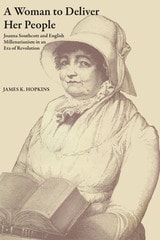
A Woman to Deliver Her People
Joanna Southcott and English Millenarianism in an Era of RevolutionBy James K. Hopkins
University of Texas Press, 1982
The Second Coming of Christ has been prophesied many times through the centuries but seldom by a figure so fascinating as Joanna Southcott (1750–1814), the domestic servant who at the age of forty-two declared that God had chosen her to announce His return. A Woman to Deliver Her People is the most comprehensive study of this remarkable woman and her movement yet written.
Dramatic social and political changes of the late eighteenth century—among them the revolutions in America and France—had a profound effect on the attitudes of English men and women at all levels of society. With events so far outside the range of ordinary experience, both the educated and the uneducated turned to the prophetic books of the Bible, seeking solace and explanation. A number of prophets and prophetesses appeared, claiming to have a special understanding of the biblical texts and offering startling new revelations which had been disclosed to them by God. The greatest and most influential of these was Joanna Southcott, who attracted tens of thousands of followers from the West Country, London, the Midlands, and the industrial North. Her "spiritual communications" filled some sixty-five books and pamphlets from 1801 until her death.
Most contemporary observers dismissed Southcott as a fanatic, and she was frequently the subject of caricature and ridicule. James Hopkins attempts to remedy this distortion by examining Southcott's life and the millenarian movement she led within the context of the social, political, and economic crises of the period. By tracing the psychological and popular roots of Southcott's piety, and casting her appeal against the backdrop of a revolutionary age, Hopkins not only vividly portrays the life of this fascinating woman but also offers a new perspective on the mentality of ordinary English men and women during the years of their transformation into a working class.

AMBASSADORIAL DIARIES
THE COURT OF ST. JAMES'S 1918-1921JULIA DAVIS
West Virginia University Press, 1993
John W. Davis (1873-1955) was the most important national politician to call West Virginia home. Nominated for president by the Democratic Party in 1924, Davis lost to the incumbent Calvin Coolidge. This diary is an engaging day-by-day account of Davis's service as U.S. ambassador to England at a pivotal point in modern history. The recent World War and Russian Revolution, the new thirst for oil, the old strife in Ireland, and the final days of the Wilson presidency fill this diary with enduring significance. Davis also offers a look at the personalities which shaped the post-war world and describes the pageantry and social life of America's most coveted ambassadorial assignment.
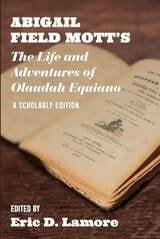
Abigail Field Mott's The Life and Adventures of Olaudah Equiano
A Scholarly EditionEric D. Lamore
West Virginia University Press, 2023
An adaptation of Olaudah Equiano’s Interesting Narrative published for Black children in 1829, now given new life in a major scholarly edition.
In 1829, Samuel Wood and Sons, a New York publisher of children’s literature, printed and sold the Quaker Abigail Field Mott’s Life and Adventures of Olaudah Equiano. Mott adapted Olaudah Equiano’s Interesting Narrative, a bestselling autobiography first published in London in 1789, for Black children studying at New York African Free Schools, one of the first educational systems to teach individuals of African descent in the United States.
By reissuing Mott’s neglected adaptation with contextualizing scholarly apparatus, Eric D. Lamore disrupts the editorial tradition of selecting a London edition of Equiano’s Interesting Narrative, and positions Equiano in the United States instead of Great Britain. Lamore’s volume contains Mott’s children’s book, which includes a series of illustrations, in a facsimile edition; instructive notes on Life and Adventures; a provocative essay on the adaptation; and selections from relevant texts on the New York African Free Schools and other related topics. With its focus on the intersections of early Black Atlantic and American studies, children’s literature, history of education, life writing, and book history, this edition offers a fresh take on Equiano and his autobiography for a variety of twenty-first-century audiences.
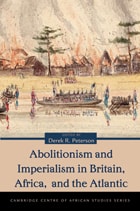
Abolitionism and Imperialism in Britain, Africa, and the Atlantic
Derek R. Peterson
Ohio University Press, 2010
The abolition of the slave trade is normally understood to be the singular achievement of eighteenth-century British liberalism. Abolitionism and Imperialism in Britain, Africa, and the Atlantic expands both the temporal and the geographic framework in which the history of abolitionism is conceived. Abolitionism was a theater in which a variety of actors—slaves, African rulers, Caribbean planters, working-class radicals, British evangelicals, African political entrepreneurs—played a part. The Atlantic was an echo chamber, in which abolitionist symbols, ideas, and evidence were generated from a variety of vantage points. These essays highlight the range of political and moral projects in which the advocates of abolitionism were engaged, and in so doing it joins together geographies that are normally studied in isolation.
Where empires are often understood to involve the government of one people over another, Abolitionism and Imperialism shows that British values were formed, debated, and remade in the space of empire. Africans were not simply objects of British liberals’ benevolence. They played an active role in shaping, and extending, the values that Britain now regards as part of its national character. This book is therefore a contribution to the larger scholarship about the nature of modern empires.
Contributors: Christopher Leslie Brown, Seymour Drescher, Jonathon Glassman, Boyd Hilton, Robin Law, Phillip D. Morgan, Derek R. Peterson, John K. Thornton
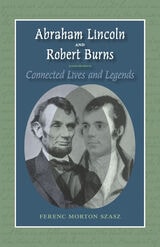
Abraham Lincoln and Robert Burns
Connected Lives and LegendsFerenc Morton Szasz
Southern Illinois University Press, 2008
Today the images of Robert Burns and Abraham Lincoln are recognized worldwide, yet few are aware of the connection between the two. In Abraham Lincoln and Robert Burns: Connected Lives and Legends, author Ferenc Morton Szasz reveals how famed Scots poet Robert Burns—and Scotland in general—influenced the life and thought of one of the most beloved and important U.S. presidents and how the legends of the two men became intertwined after their deaths. This is the first extensive work to link the influence, philosophy, and artistry of these two larger-than-life figures.
Lacking a major national poet of their own in the early nineteenth century, Americans in the fledgling frontier country ardently adopted the poignant verses and songs of Scotland’s Robert Burns. Lincoln, too, was fascinated by Scotland’s favorite son and enthusiastically quoted the Scottish bard from his teenage years to the end of his life. Szasz explores the ways in which Burns’s portrayal of the foibles of human nature, his scorn for religious hypocrisy, his plea for nonjudgmental tolerance, and his commitment to social equality helped shape Lincoln’s own philosophy of life. The volume also traces how Burns’s lyrics helped Lincoln develop his own powerful sense of oratorical rhythm, from his casual anecdotal stories to his major state addresses.
Abraham Lincoln and Robert Burns connects the poor-farm-boy upbringings, the quasi-deistic religious views, the shared senses of destiny, the extraordinary gifts for words, and the quests for social equality of two respected and beloved world figures. This book is enhanced by twelve illustrations and two appendixes, which include Burns poems Lincoln particularly admired and Lincoln writings especially admired in Scotland.
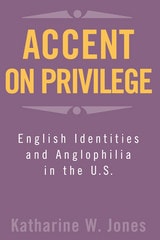
Accent On Privilege
English Identities & Anglophilia In The U.S.Katharine Jones
Temple University Press, 2001
The political and cultural ties between England and the US act as a backdrop for the identity negotiations of these English people, many of whom do not even consider themselves to be immigrants. This unique exploration of the workings of white privilege offers an important new understanding of the paradoxes of how class, gender, and race are formed in the US and, by implication, in the UK.
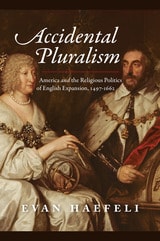
Accidental Pluralism
America and the Religious Politics of English Expansion, 1497-1662Evan Haefeli
University of Chicago Press, 2021
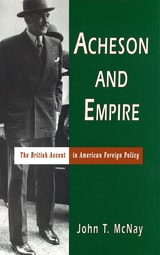
Acheson and Empire
The British Accent in American Foreign PolicyJohn T. McNay
University of Missouri Press, 2001
Acheson and Empire offers a compelling reassessment of Dean Acheson's policies toward the former colonial world during his period as secretary of state from 1949 to 1953. John T. McNay argues that Acheson inherited through his own personal history a way of understanding the world that encouraged imperial-style international relationships. This worldview represented a well-developed belief system rooted in his Ulster Protestant heritage that remained consistent throughout his life.
By exploring relationships of the United States with Britain and countries formerly or then controlled by Britain, such as India, Ireland, Iran, and Egypt, McNay shows the significance of Acheson's beliefs. McNay argues that Acheson's support of existing imperial relationships was so steadfast that it often led other nations to perceive that the United States was nothing more than a front for British interests. He believes this approach to foreign policy damaged American relations with emerging countries and misled the British regarding possibilities of an Anglo-American partnership.
Acheson and Empire contends that the widely accepted view of Acheson as a foreign policy realist is misleading and that historians should acknowledge that his affinity for the British Empire went beyond his clothing and mannerisms. McNay maintains that the widely accepted view of Acheson as one of a group of "wise men" who shaped the Cold War world by basing their decisions on cold calculation of American interests should be reconsidered.
Drawing from extensive research in archival sources, including the Truman Library, the National Archives, the Public Record Office in London, and Acheson's personal papers at Yale, Acheson and Empire offers a fresh look at Dean Acheson that runs counter to previous biographies and many histories of the Cold War.